If This Is How We Treat Our PwD Doctors, What Hope Do Patients Have?
The country owes its doctors respect, protection, and dignity. It owes its PwD medical students equity and inclusion. And it owes itself a healthcare system that honors the very people who keep it alive.
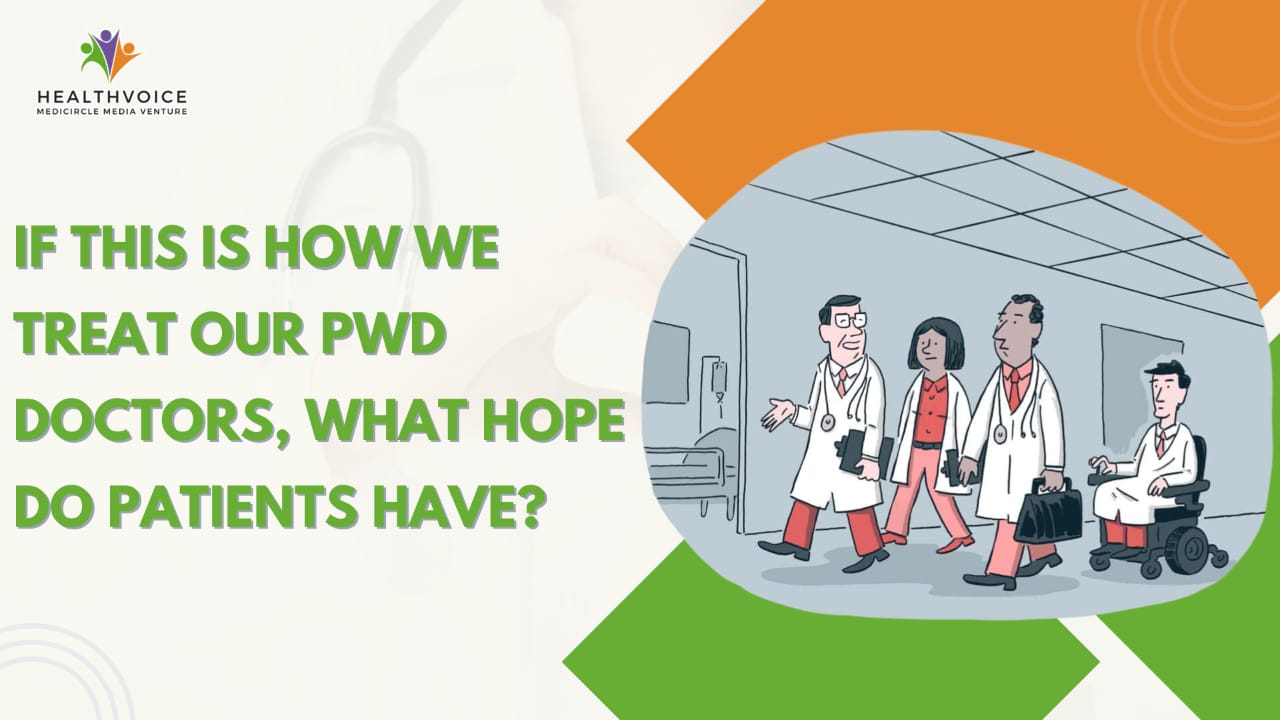
If This Is How We Treat Our PwD Doctors, What Hope Do Patients Have?
The world sees a doctor in a crisp white coat and imagines strength, clarity, and purpose. What the world rarely sees is the exhaustion under those coats, the weight of duty hours that stretch endlessly, and the struggles that young resident doctors carry within. The recent case emerging from Jawaharlal Nehru Medical College (JNMC), AMU, Aligarh, has become a mirror reflecting a disturbing truth that the healthcare system often avoids confronting. A young PwD medical student, a junior resident in the Department of Medicine, stepped into her residency with hope and determination, only to find herself trapped in excessive duty hours, discrimination, and a deeply unhealthy working environment that tested her physical and emotional limits.
Her voice, initially unheard, has now reached the Union Government. The Department of Empowerment of Persons with Disabilities under the Ministry of Social Justice and Empowerment has taken cognisance after receiving repeated representations from the United Doctors Front (UDF). The matter has now been forwarded to the Union Ministry of Education and the Union Health Ministry for necessary action. It is a sad to see how long it can take for a system to acknowledge the suffering of those who serve it, but it is also a turning point, because the concerns raised are not those of a single student. They reflect a larger, systemic problem in medical institutions across India, especially when it comes to the rights of Persons with Disabilities under the RPwD Act, the enforcement of residency duty hour norms, and the welfare of junior residents.
According to the Office Memorandum issued by the Ministry on 12 November 2025, the representation highlighted allegations of harassment, neglect, and discriminatory treatment faced by the doctor. The Ministry acknowledged that the issue had been raised earlier in June, and an Office Memorandum had already been sent on 2 July 2025 instructing compliance with the provisions under the Rights of Persons with Disabilities Act, 2016. Yet, despite formal communication and existing legal protections, the situation at JNMC allegedly remained unchanged. The PwD resident doctor continued to face long duty hours and an environment that showed little sensitivity towards her condition. The UDF’s letter pointed out that there was no defined protocol at the institution to assess the specific needs of PwD candidates, something mandated clearly under Sections 15 and 16 of the RPwD Act.
Since joining in February 2025, she reportedly faced 24-hour duty cycles repeatedly, a work pattern that is harmful even for fully able-bodied residents, let alone someone with disability-related health vulnerabilities. Her ordeal led to a toe ulcer, a visible reminder of the physical strain she was under. The deeper wounds affecting her mental health are harder to measure, but are often more damaging. She reportedly comes from a personal background marked by loss, with her father no longer alive. Her dream, as narrated by the UDF, was to serve the nation as a compassionate doctor, honoring her father’s memory. Instead of being nurtured, that dream now stands threatened by exhaustion, humiliation, and a serious fear of being forced to resign.
The thought of a young doctor feeling cornered into resignation because of discrimination and illegal duty hours should trouble every healthcare professional in the country. For medical students and resident doctors, these institutions are not just workplaces; they are spaces where they learn to save lives, develop confidence, and shape their futures. When these spaces turn toxic, the foundation of future healthcare is weakened. India already faces shortages of trained specialists and enormous pressure on medical colleges. Losing a doctor because the system refused to follow its own laws and guidelines is a tragedy with long-term consequences. In a country striving to strengthen its healthcare workforce, such an outcome is unacceptable.
The UDF representation makes a strong plea, urging the authorities to instruct JNMC to comply with the July Office Memorandum and ensure that all entitlements under the RPwD Act are provided without delay. The association demanded fixed, rational duty hours, mandatory weekly off days, and adherence to the Residency Scheme 1992, which sets a limit of 12 working hours per day and 48 hours per week. These norms exist for a reason: no resident doctor can provide safe, efficient patient care when pushed far beyond humane working limits. Excessive duty hours affect judgment, delay decision-making, weaken immunity, and endanger patients. Resident doctors form the backbone of government hospitals, and their physical and mental well-being is integral to patient safety and overall healthcare quality.
The UDF alarming statement that the doctor had already performed significantly more than the mandated 192 hours per month highlights the need for strict enforcement of duty hour rules across the country. Long hours have become normalized in medical training, seen almost as a ritual of toughness, but the time has come to challenge this culture. Medicine is a profession where mistakes can cost lives. No doctor weather disabled or not should be pushed into a state where fatigue erodes their ability to think clearly. In specialty departments like Medicine, where residents attend to critical patients, emergencies, and intensive care responsibilities, the burden becomes heavier, and the consequences of exhaustion more severe.
The association further warned that if the resident doctor resigns due to ongoing discrimination or denial of rights, the college should refuse to accept the resignation and should instead provide support, counseling, and accommodations to help her continue her residency. They added that if her resignation is accepted without addressing these issues, the institution should be held responsible for any potential harm that may follow, including deterioration of her mental health. This brings to light an uncomfortable reality in Indian medical education: the pressure on junior residents (academic, physical, emotional, and social) is immense, and many suffer due to a lack of support systems. Depression, burnout, and mental health struggles are not rare among residents, yet are often brushed aside in the name of discipline, training, or “character-building.”
The broader legal picture also cannot be ignored. India’s RPwD Act 2016 mandates equal opportunity, reasonable accommodation, and institutional support for persons with disabilities. This includes a clear responsibility for medical institutions to identify individual needs and provide structured accommodations that allow PwD students to learn and work safely. Duty modifications, reduced physical strain, and task reassignment are not privileges they are legal rights. The absence of these mechanisms reflects not just administrative oversight but a deeper problem of insensitivity and ignorance. In medical colleges that pride themselves on teaching empathy and ethics, this gap is both ironic and alarming.
This case has once again brought attention to the ongoing PIL filed by UDF in the Supreme Court against the inhumane working hours of resident doctors nationwide. The plea argues that the current working conditions violate basic constitutional rights and expose young doctors to exploitation under the guise of training. Doctors are expected to provide compassionate care, yet the system shows little compassion toward them. Patients expect attentive doctors, yet institutions exhaust their residents to the point where attentiveness becomes a luxury. It is a contradiction that affects everyone who interacts with the healthcare system from patients to consultants to nurses.
Doctors across India know that duty hour norms are violated regularly, often without any record or accountability. The Residency Scheme 1992 exists only on paper in many places. Residents continue to work 100-hour weeks, losing sleep, missing meals, and surviving on caffeine and adrenaline. When a PwD resident experiences this burden without proper safeguards, the neglect becomes even more severe. If institutions are unable to uphold the rights of disabled students, it raises doubts about how fairly they treat other vulnerable groups within the medical workforce.
For doctors and healthcare professionals reading this, the incident should strike a familiar chord. Many have walked through similar corridors of pressure, many have fought their own battles silently, and many have witnessed the suffering of colleagues who feared speaking up. This case offers a moment to reflect, advocate, and demand change. Protecting PwD medical students is not an act of generosity; it is an obligation rooted in human rights, medical ethics, and statutory law. It is time institutions adopt structured welfare protocols, grievance redressal mechanisms, and regular audits of duty hours to ensure compliance.
India cannot build a strong healthcare system on the exhaustion of its youngest doctors. It cannot strengthen medical education by allowing institutions to violate residency norms. It cannot claim inclusivity when PwD students struggle without institutional support. The system must grow with its people, not at their cost. When a young resident doctor says she is suffering, the nation must listen. When a PwD medical student asks for reasonable accommodation, the institution must respond. When laws demand compliance, administrators must act.
This case may become a watershed moment because it exposes a truth the healthcare community has known for years but rarely acknowledged publicly: resident doctors are overworked, understaffed, and underprotected. If anything good can come out of this distressing episode, it is the hope that institutions will begin to recognize the importance of humane working conditions. Patient care improves when doctors are cared for. Medical education thrives when residents feel valued. Healthcare reforms succeed when frontline workers feel safe.
As the country waits for the response from the Union Health Ministry and the Union Education Ministry, the story of this young PwD resident doctor continues to echo across medical campuses. Her courage in speaking up, and the UDF’s persistence in advocating for her rights, may well shape the future of residency norms in India. The struggle she endures should not be in vain. If her pain can lead to a more compassionate, lawful, and accountable medical system, then her voice has done more for healthcare reform than many policy documents.
In the end, the white coat represents hope, healing, and humanity. It should never become a symbol of silent suffering. The country owes its doctors respect, protection, and dignity. It owes its PwD medical students equity and inclusion. And it owes itself a healthcare system that honors the very people who keep it alive.
 Sunny Parayan
#ResidentDoctors #MedicalReform #HealthcareJustice #DoctorsRights #MedicalEducation #HealthcareAccountability #PatientSafety #MentalHealth #HumanizeHealthcare #ProtectOurDoctors #MedicalEthics #HealthcareSystem #IndianHealthcare #DoctorsOfIndia #healthvoice