Trapped Between Borders and Bureaucracy: The Forgotten Doctors of India
A nation that dreams of becoming a global healthcare leader cannot let its doctors-to-be remain trapped between borders and bureaucracy.

Trapped Between Borders and Bureaucracy: The Forgotten Doctors of India
It was not a protest born out of rebellion, but out of helplessness. Outside the National Medical Commission (NMC) office in Delhi, dozens of young faces stood under the afternoon sun carrying placards, clutching files filled with certificates, transcripts, and dreams. They were not strangers to discipline or diligence. Each one of them had endured the long, expensive journey of medical education abroad, returning home with the ambition to serve patients in their own country. Yet, their paths were blocked not by failure, but by delay. A delay that has stretched into years, stealing time, energy, and confidence from those who only wanted to wear the stethoscope with pride.
The issue at hand may appear procedural, but for thousands of Foreign Medical Graduates (FMGs), it is the difference between a life that moves forward and one that stands painfully still. These graduates have been waiting endlessly for the NMC to issue eligibility certificates, a document that is not just a formality but a crucial requirement to appear for the Foreign Medical Graduates Examination (FMGE) or begin their compulsory internship in India. Without this certificate, they cannot legally proceed. The system has left them stranded, qualified yet unemployable, trained yet unrecognized.
According to students, the delay has lasted anywhere from a year to two. Applications have been submitted, documents verified, and online acknowledgments received, but the certificates remain elusive. The frustration is visible in the words of the All FMGs Association (AFA), which has termed this a “systemic failure” and called out what they describe as the “irresponsible behaviour” of the NMC. The association has pleaded for intervention from the Union Health Minister and the Ministry of Health, asking them to address the issue that has left hundreds of medical graduates in limbo.
In a time when India constantly discusses doctor shortages, overworked public hospitals, and the need for more qualified practitioners in rural areas, the irony is hard to ignore. Here are individuals who have studied medicine in recognized universities abroad, spent lakhs of rupees, and endured the stress of foreign education. All now sitting idle, waiting for a piece of paper that confirms what is already known: that they have the right to serve.
To understand how things reached this point, one has to look back a few years. In 2018, the then Medical Council of India (MCI) had directed that any student wishing to pursue a medical degree abroad must first qualify for the National Eligibility cum Entrance Test (NEET-UG). This move was meant to ensure that only students with a basic level of medical aptitude went overseas for studies. Before this regulation, students had to obtain an eligibility certificate from MCI, confirming they met the necessary standards to study medicine abroad.
However, the transition was not smooth. Between 2018 and 2020, several students had already enrolled in pre-medical courses like the Bachelor of Science (B.S.) program in the Philippines or language-preparatory courses in other countries, expecting to move on to their MBBS-equivalent degrees. When the new rules took effect, these batches were caught in a grey zone i.e. neither fully exempted from the new NEET rule nor comfortably within the old guidelines.
The confusion deepened during the pandemic when travel restrictions, lockdowns, and exam cancellations disrupted academic calendars worldwide. Some students could not appear for NEET due to circumstances beyond their control. To address this, NMC issued a clarification on December 7, 2023, stating that students who began their pre-medical courses in 2018–2019 or 2019–2020 were still eligible to pursue MBBS abroad, provided they applied for an eligibility certificate under Section 13(4B) of the Indian Medical Council Act, 1956.
That clarification, though, has brought little relief. Many FMGs, especially those from the Philippines, say their applications for the eligibility certificate have been pending for over a year and a half, without any concrete update. The verification process, according to them, has turned into a black hole that swallows documents and hope alike. As one student representative, Dr. Kaushal from AFA, explained, “Earlier, when MCI was in charge, the eligibility certificate used to come within a few days. Now, it feels like the process has been buried under endless bureaucracy.”
He also mentioned another unsettling aspect: the rising cost. “The application fee for the eligibility certificate was much lower during MCI’s time,” he said. “Now, we are being charged more, only to wait endlessly. It’s disheartening when the system that should support future doctors becomes an obstacle in their journey.”
The intent behind introducing eligibility checks was to safeguard the quality of medical education and prevent students from enrolling in dubious institutions abroad. But in practice, the lack of transparency and accountability in processing these certificates has turned the regulation into a roadblock. Students who followed the rules, submitted all necessary documents, and complied with every guideline are now being punished with silence.
What makes the situation more tragic is that these graduates are losing time that cannot be regained. Every month of delay means another missed FMGE attempt, another missed internship intake, another year lost in waiting. Some have already crossed the upper age limit for government job applications. Others, emotionally and financially exhausted, are questioning whether their decision to study medicine was a mistake.
The psychological impact of such prolonged uncertainty is immense. Many FMGs, particularly those from middle-class families, have invested heavily in their education abroad sometimes even by taking loans or selling property. Now, after returning to India, they face endless waiting with no income, no internship, and no assurance. In their social media posts and letters to officials, one can sense the quiet despair of a generation that wanted to serve but is forced to stand still.
The protest at the NMC office represented the growing frustration among thousands of FMGs across India from Tamil Nadu to Punjab, Maharashtra to West Bengal. They are not demanding favours or exemptions; they are simply asking for the NMC to follow its own guidelines and issue the certificates in a time-bound manner. The AFA’s social media posts reflect this sentiment clearly, questioning how a verification process can take two years when all required documents are already provided.
For many, it represents a deeper problem in India’s regulatory framework for medical education. The NMC, established to replace the MCI with the promise of reform and transparency, was expected to streamline such processes. Instead, incidents like these highlight the persistence of bureaucratic inertia, where administrative procedures overshadow human needs.
Doctors, too, feel the effects of such inefficiencies. Senior practitioners often point out that India’s doctor-patient ratio remains far from ideal. Rural and semi-urban areas continue to face a shortage of trained medical professionals. Yet, hundreds of qualified graduates are waiting in cities, unable to contribute because of paperwork delays.
In the broader context of healthcare governance, this incident sheds light on how bureaucratic inertia can sabotage reform. The NMC was created with a vision to bring transparency, efficiency, and fairness to medical education in India. But efficiency cannot exist without empathy. Transparency cannot exist without accountability. And reform cannot succeed when the very people it was meant to empower are left waiting for years, unheard.
The sight of students waiting outside the NMC building is an image of a system that forgot its own purpose. A nation that dreams of becoming a global healthcare leader cannot let its doctors-to-be remain trapped between borders and bureaucracy. These students do not ask for shortcuts or special treatment. They ask for fairness, clarity, and respect.
The world calls them Foreign Medical Graduates. But they are, in truth, India’s own future doctors, its lost healers, and its waiting hope. Until their voices are heard and their certificates released, the silence of the system will echo louder than any protest.
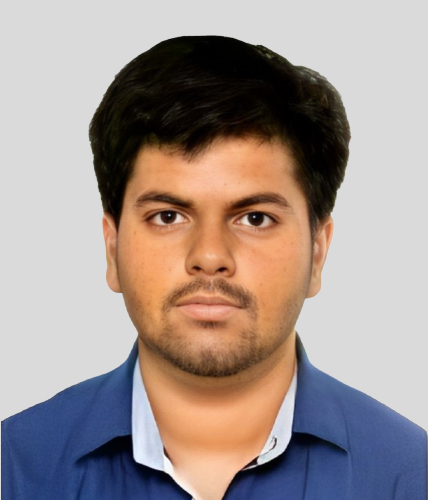 Sunny Parayan
#healthvoice #MedicalEducation #IndianDoctors #HealthcareIndia #MedicalGraduates #MedicalBureaucracy #FutureDoctors #HealIndia #MedicalProfession
