When India Decides to Build Its Own Medical Future
For today’s medical professionals, this moment is a reminder that the future of Indian healthcare will be shaped by those who choose to question, explore and innovate.
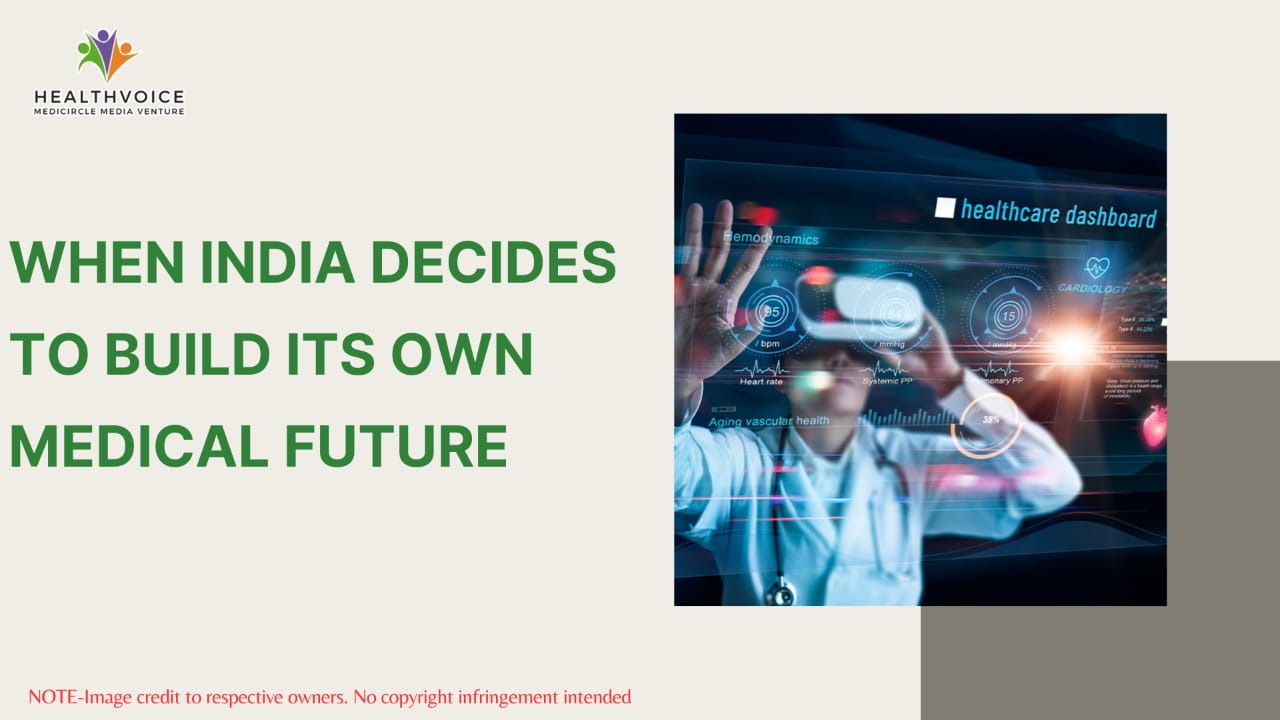
India’s healthcare system stands at a turning point, and for the first time in many years, the conversation is shifting from dependence to innovation. The announcement by the National Medical Commission (NMC) in partnership with the Indian Council of Medical Research (ICMR) to launch PhD programmes and intensify clinical research signals a new age where India wants to design its own medical destiny. When Dr Abhijat Sheth, the NMC chairman, shared this vision at the 3rd convocation of Bhaikaka University in Karamsad, it did not sound like another ceremonial speech. It sounded like a decisive moment for medical education, indigenous medical devices, clinical research and the evolution of India’s healthcare ecosystem.
What India is witnessing today is the beginning of a slow yet significant shift towards strengthening local research, expanding medical knowledge, and creating healthcare solutions shaped by the country’s own needs. This shift has been long overdue. For decades, Indian medicine has excelled in patient care, surgical brilliance and clinical outcomes, yet research and device innovation have lagged behind due to the absence of structured research pathways, funding opportunities, and academic recognition. The NMC–ICMR collaboration aims to rewrite this story by creating PhD programmes that allow medical graduates, postgraduates and clinicians to become researchers, innovators and creators of knowledge instead of being mere consumers.
Dr Sheth’s announcement that India has approved nearly 18,000 additional medical seats reflects the scale at which the country is expanding its healthcare capacity. It indicates that the country is preparing for a future where there will be more trained doctors, but it also raises an important question:-Will increasing the number of doctors automatically translate into better healthcare if research, clinical training, and innovation remain weak?
The answer is clear, it will not. India needs more than numbers. It needs depth, research culture and the ability to create homegrown solutions. That is why the effort to increase faculty positions, strengthen institutions and focus on training reforms becomes the missing link that ties this entire vision together. Expanding seats without strengthening the academic backbone only increases quantity, not quality, and the NMC is aware of this.
A large part of India’s healthcare burden now comes from non-communicable diseases. Lifestyle disorders such as diabetes, hypertension, heart disease, cancers are growing in every corner of the country. These diseases are no longer limited to metros, they are climbing rapidly in rural and semi-urban regions. Dr Sheth highlighted this rise and reminded the graduating class that preventive healthcare is no longer a soft topic in medical discussions. It is a survival strategy for India. This is why modules like ATCOM, which focus on ethics, professionalism, communication and self-awareness, are becoming the foundation of medical training. Medicine is no longer about diagnosing alone, it is about helping people understand diseases early, making choices that protect health and engaging communities with empathy.
The Covid-19 pandemic remains a turning point for every medical student and practitioner. It erased rigid boundaries between specialities, forced collaboration, and taught the global medical community that diseases do not wait for textbook definitions. Dr Sheth’s emphasis on preparedness is a reminder that the next health crisis will not announce itself. Preparedness is now a professional obligation, not an optional skill. The pandemic also exposed the limitations of relying on imported medical devices, PCR kits, ventilators, imaging tools and monitoring systems. India realised that innovation cannot be borrowed. It must be built. This is why strengthening clinical research and developing Indian medical devices is not just an academic exercise it is a national necessity.
The convocation ceremony, where 496 students received degrees and ten gold medalists were honoured, served as a symbolic moment for this transformation. Each graduating student stands at the edge of a changing landscape where medical careers may no longer follow traditional routes. The future doctor in India will not be just a clinician but may also be a researcher, a technologist, a policy advocate or an entrepreneur. The healthcare world is rapidly connecting with biotechnology, digital health, genomic science, robotics, epidemiology and population health. The NMC–ICMR research programmes can open pathways for young doctors to engage with these fields meaningfully instead of feeling restricted to clinical posts or academic positions.
At the same event, the H. M. Patel Memorial Lecture delivered by Dr Pravitra Mohan addressed equitable healthcare i.e. a subject that demands sharper attention today. India’s challenges are deeply layered. The country has world-class hospitals and, at the same time, entire communities where access to basic diagnostics remains uncertain. Any conversation about research innovation must acknowledge this divide. Indigenous medical devices, stronger clinical guidelines, and research-backed therapies will bring real meaning only when they reach the last mile. Innovation without accessibility creates knowledge, not impact.
The NMC’s broader vision carries an important message for doctors across the country. If India becomes strong in clinical research, if Indian scientists develop medical devices suited to local conditions, if Indian pharmacology leads the way in disease understanding, the entire healthcare system becomes more resilient, affordable and patient-centric. This transformation also carries massive consequences for the pharmaceutical industry, health-tech startups, and med-tech manufacturing. With global supply chains becoming unreliable and international costs soaring, India’s medical sector cannot afford to remain dependent on foreign technology and imported knowledge. Strengthening research capacity is therefore a form of healthcare security.
The decision to bring ICMR into the core of research-based medical education is crucial. It bridges the gap between clinical practice and scientific exploration. When research and clinical training coexist, knowledge becomes more dynamic. For example, India has unique disease patterns, unique genetics and unique environmental factors that foreign studies do not always capture. A medical device designed for European populations may not work the same way in Indian settings. Medicines metabolise differently in different populations. Without Indian clinical research, India continues to apply borrowed knowledge, hoping it fits. The NMC–ICMR collaboration aims to change this dependency.
Expanding medical seats to 18,000 is a huge step, but expanding research capacity is the real revolution. Increasing faculty positions is not just about teaching, it is about mentorship, guiding research, supervising clinical trials and building an academic atmosphere where innovation can flourish. India needs teachers who encourage questioning, experimentation, and new thinking. The future of Indian healthcare depends on how well faculty members are prepared to lead young doctors into the research space. A system cannot nurture scientific thinking unless its educators believe in it.
Ultimately, the NMC’s vision is not merely an academic reform. It is an invitation to the medical community to redefine India’s future. It asks doctors to think beyond the stethoscope, to think like innovators. It asks medical students to look beyond exams and imagine how their ideas can transform device manufacturing, pharmacology, diagnostics and preventive medicine. It asks institutions to create environments where research is respected, not sidelined. And it asks the healthcare system to realise that without a strong scientific backbone, the dream of accessible and equitable healthcare will remain incomplete.
India’s medical journey is entering a new chapter. The next decade will test how well the country blends clinical excellence with scientific discovery. If India succeeds, the world will look to Indian research for solutions. If India hesitates, the gap between need and innovation will grow wider. For today’s medical professionals, this moment is a reminder that the future of Indian healthcare will be shaped by those who choose to question, explore and innovate.
Source: EThealthworld.com
 Sunny Parayan
#MedicalResearch #NMC #ICMR #HealthcareInnovation #FutureOfMedicine #MedicalEducation #IndianHealthcare #MedicalInnovation #MedicalStudents #PublicHealth #HealthTech #IndiaRising #HealthcareReform #DigitalHealth #MedicalFuture #healthvoice