Why doctor burnout is rising and how to manage it
India’s doctors are silently struggling under immense emotional, physical and moral strain. This article explores the causes, impact and urgent need for systemic change to prevent burnout.
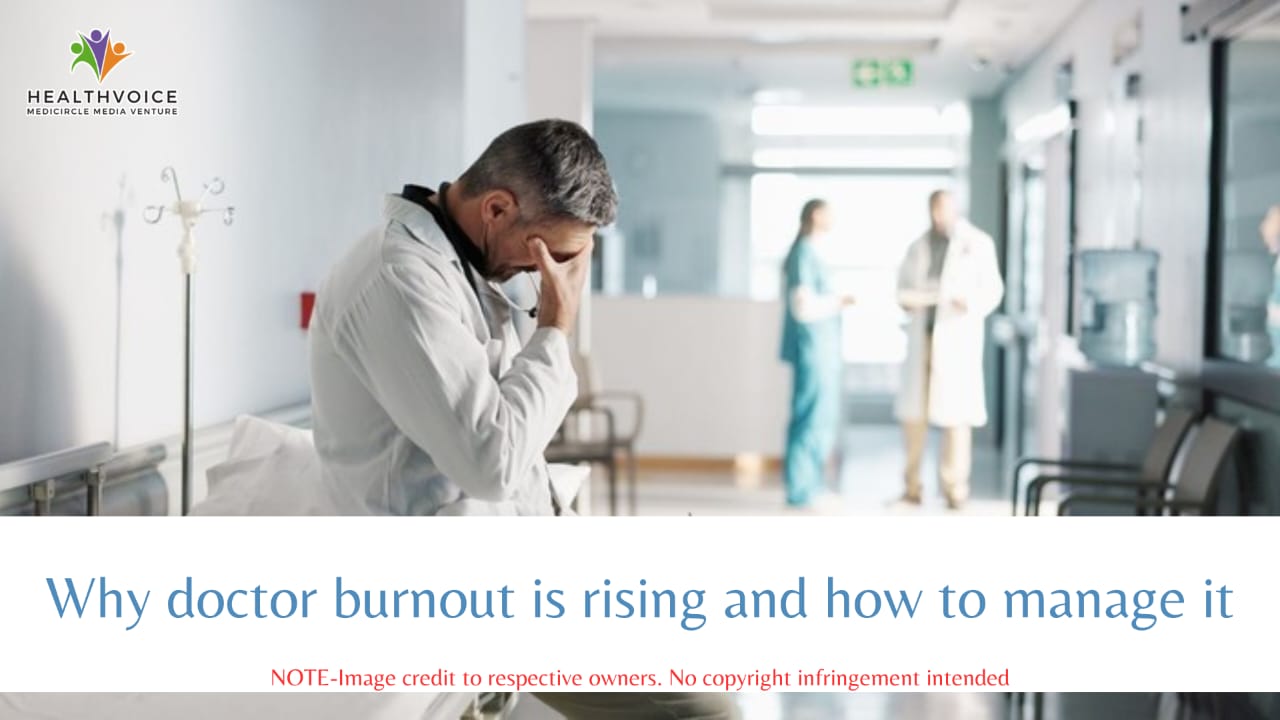
Walk into any busy hospital in India, from a major metro to a district town. Behind the efficient masks and swift movements, a story of profound exhaustion is unfolding. You might catch it in a doctor's weary glance or in the brief sigh before they enter the next patient’s room. This is not ordinary tiredness. It is the slow, steady drain of passion and energy, a condition we now recognize as doctor burnout.
Beyond exhaustion:
What does burnout truly mean for a doctor? It goes far beyond the physical demand of a 24 hour duty. Think of it as a three-part problem. First, there is the emotional tank running completely empty. Then, a sense of detachment creeps in, where patients become cases rather than people. Finally, doctors often start feeling that their hard work is not making a difference anymore. It is the quiet fading of the very passion that once called them to medicine.
The alarming reality:
The statistics paint a worrying picture for the medical community in India. Consider these findings:
- A staggering majority of doctors, especially women, report feeling mentally and emotionally drained by their work.
- For one out of every three doctors, finding even a single hour for themselves or their family is a daily challenge.
- Workweeks regularly stretch past 60 hours for half the medical force, with a significant portion crossing 80 hours.
- A deeply concerning number of women doctors report feeling unsafe in their workplaces, a figure that rises in smaller cities.
- Most telling is the regret among younger doctors, who feel the weight of their career’s personal costs early on.
Inside the pressure zone:
Why is this happening? The reasons are deeply woven into the fabric of India’s healthcare system.
The relentless clock:
The most immediate cause is the sheer imbalance between the number of patients and the number of doctors. Junior doctors in particular often face continuous shifts with little time for rest, meals or recovery. This is compounded by mountains of administrative paperwork, which steals precious time that could be spent with patients.
Heart’s heavy load:
Doctors carry an immense emotional burden. They constantly make critical decisions, deliver difficult news and support grieving families, all while being expected to remain composed. This continuous emotional labor leads to what is known as compassion fatigue, where the well of empathy begins to run dry. Furthermore, many face ethical dilemmas that conflict with their moral compass, creating a deep-seated sense of injury.
Environment of anxiety:
For a shocking number of healthcare professionals, the workplace does not feel like a safe space. This lack of safety, coupled with the persistent stigma around discussing mental health, forces many to suffer in silence. The fear of being seen as weak prevents them from seeking the very support they need.
The ripple effect:
When a doctor burns out, the impact is not confined to them. Studies show that exhausted physicians are more prone to making errors in judgment and diagnosis. Their ability to communicate with empathy can diminish and the quality of patient care can be directly affected. On a personal level, this unaddressed stress can lead to severe anxiety, depression and in tragic cases, even suicide. For the healthcare system, it means losing talented professionals to career changes or early retirement, deepening the existing crisis.
Path to recovery:
Solving this crisis requires effort from doctors, the hospitals they work in and the society they serve.
Steps a doctor can take:
- Guarding personal time: It is essential to consciously carve out time for rest, family and hobbies completely unrelated to medicine.
- Small mindful breaks: Even a few minutes of focused breathing between patients can help reset a frazzled nervous system.
- Building a support system: Reaching out to trusted colleagues or seeking professional counselling can break the isolation.
- Prioritizing health: Basic self-care like regular sleep, movement and nutritious food is the foundation of resilience.
Changes Hospitals can make:
- Shared responsibility: Some hospitals have adopted models where a team of consultants shares patient loads and decision-making, preventing individual overload.
- Flexible scheduling: Involving doctors in creating their schedules can restore a sense of control and autonomy.
- Reducing paperwork: Digitizing administrative tasks can free up significant time for patient care.
- Institutional support: Creating formal wellness programs and safe, confidential channels for mental health support is crucial.
How society can help:
As patients and community members, a little empathy goes a long way. Treating doctors with respect, understanding their human limitations and advocating for better working conditions for them are all part of the solution.
Healing the healers:
The rising tide of doctor burnout is a symptom of a system that needs care. It tells us that the people we trust with our health are not well themselves. The surgeon pushing through exhaustion, the young resident missing a family wedding, the physician questioning their career, they are all indicators of a system in distress.
Supporting our doctors is not a luxury; it is a fundamental necessity for a healthy nation. When we protect their wellbeing, we are ultimately protecting the quality of our own healthcare. The next time you meet a doctor, remember the person behind the professional facade. They carry not just stethoscopes and reports, but the hopes of a nation’s health. It is time we shared that load.
 Team Healthvoice
#CompassionFatigue #MedicalCommunity #Healthcare #BurnoutAwareness #mentalhealthmatters #selfcare #wellbeing #worklifebalance #supporthealthcareworkers #publichealth #hospitallife #stressmanagement #caregivers #healthvoice