Competency-Based Medical Education in India: Transforming How Doctors Are Trained
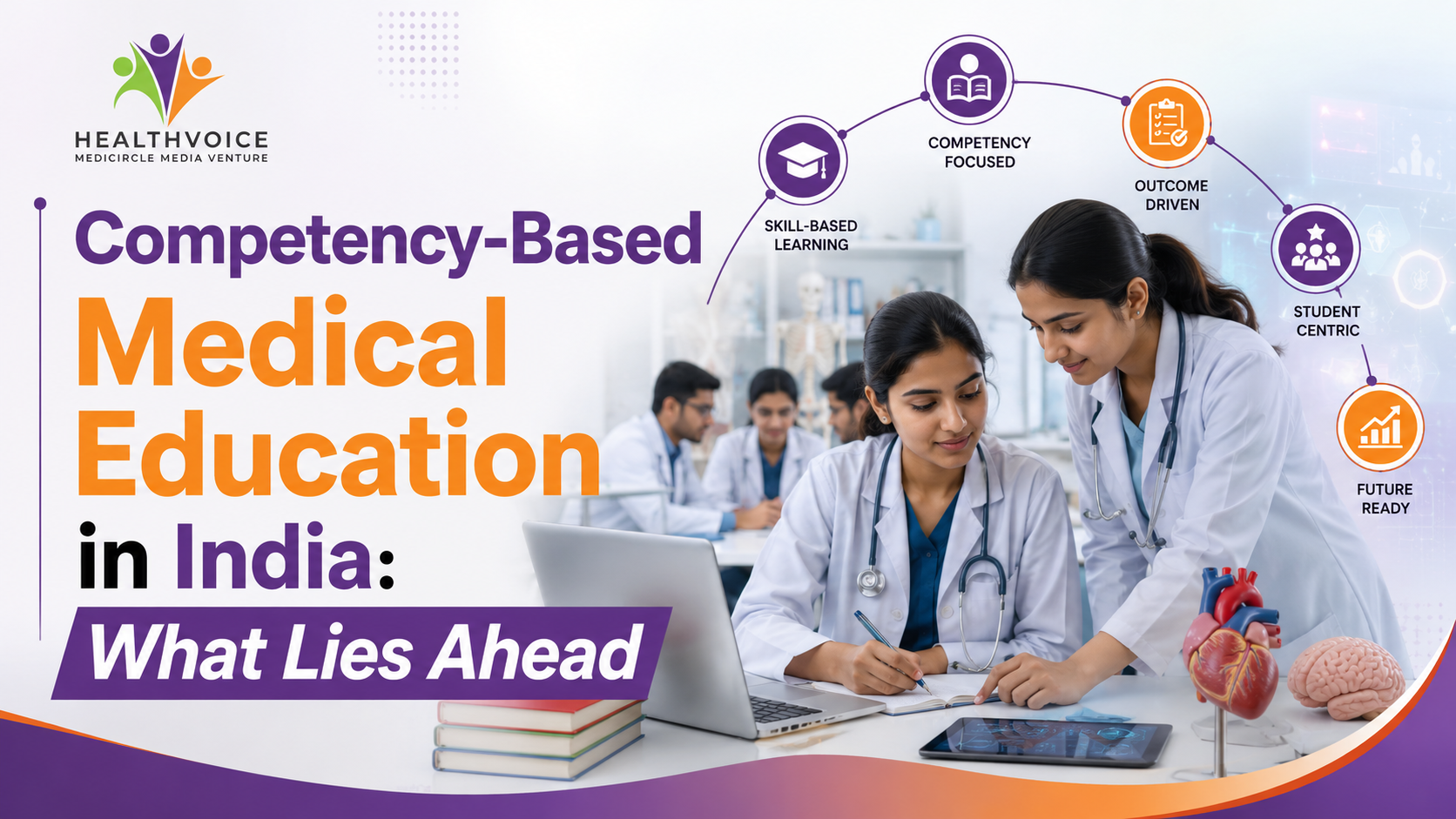
CBME transforms Indian medical education from time-based learning to outcomes-focused training, equipping medical graduates with clinical competencies, ethical values, and communication skills essential for India's diverse healthcare needs.
Introduction
Medical education in India has long been rooted in a tradition that prizes the accumulation of knowledge above nearly all else. Examinations tested what students could recall. Timetables were designed around subjects, not around the patient. A graduate could emerge from a five-year program with an impressive command of pharmacological pathways but struggle to communicate a diagnosis clearly, manage a team under pressure, or navigate an ethical dilemma with confidence. This gap between academic achievement and real-world clinical capability has been widely acknowledged within India's medical establishment for decades.
The introduction of Competency-Based Medical Education, commonly referred to as CBME, by the National Medical Commission in 2019 marked a defining shift in how India approaches the training of its medical graduates. Rather than measuring success by the number of hours spent in a classroom or the marks obtained in a final examination, CBME shifts the focus firmly toward outcomes. The question it asks is not how long a student has studied, but what that student is actually capable of doing safely and independently by the time training is complete.
For a country that produces among the largest numbers of medical graduates in the world, this reform carries significant implications. It shapes not only the doctors of the future but also the health outcomes of millions of patients across urban hospitals, rural primary health centres, and every setting in between. Platforms dedicated to doctor communities and medical associations, such as HealthVoice, play an important role in helping clinicians, educators, and healthcare leaders understand and contribute to such transformative changes.
Understanding Competency-Based Medical Education: The Core Concept
At its heart, CBME is an outcomes-based approach to the design, implementation, and evaluation of medical education programs. The traditional model measured progress by time. A student spent a fixed number of months in each phase, sat for examinations at the end, and advanced regardless of whether certain clinical skills or professional attitudes had been genuinely mastered. CBME challenges this assumption directly. It defines a set of competencies that every Indian Medical Graduate must possess, and it structures the entire educational experience around helping students achieve those competencies in measurable, observable ways.
A competency, in this context, is not a piece of knowledge stored in memory. It is the demonstrated ability to perform a clinical task, communicate effectively, apply ethical reasoning, or exercise professional judgment in a real situation. The Medical Council of India and subsequently the National Medical Commission have outlined several broad competency domains expected of the Indian Medical Graduate, including skills as a clinician, a communicator, a leader, a professional, and a lifelong learner.
Three foundational concepts underpin the architecture of CBME and deserve particular attention.
Competencies are the observable, measurable abilities that a graduate must demonstrate. They span cognitive knowledge, clinical skills, attitudes toward patients and colleagues, and communication behaviors. These are not aspirational qualities. They are defined outcomes against which student performance is consistently evaluated.
Entrustable Professional Activities (EPAs) bridge the gap between abstract competencies and actual clinical work. An EPA is a specific task or clinical responsibility that a doctor is expected to perform. The management of a patient presenting with tuberculosis at a primary health centre, for example, is an EPA. It demands medical knowledge, clinical reasoning, communication with the patient, and an understanding of public health protocols. EPAs give faculty a structured way to observe students in real settings and decide when they are ready to function independently.
Milestones represent the steps along the journey from novice to competent practitioner. Adapted from the Dreyfus model of skill acquisition, they progress from simple observation to supervised performance, then to independent practice, and finally to the ability to guide other learners. Milestones help faculty identify exactly where a student stands in their development and what is needed to help them progress.
What Prompted India to Adopt CBME?
The case for reform had been building for years. Critics of the traditional curriculum pointed out that it produced graduates who were examination-ready but not always practice-ready. Clinical skills were underdeveloped. Attitudes toward patients were inconsistently taught and rarely assessed. Ethics and communication were treated as peripheral subjects rather than core professional requirements. The burden of rote learning was enormous, yet the ability to apply knowledge flexibly in complex real-world situations remained uneven across graduates.
India's public health landscape added further urgency to the need for reform. With a population exceeding 1.4 billion, a significant rural-urban divide in health infrastructure, and a disease burden that spans both communicable and non-communicable illnesses, the country needs doctors who can function as clinicians of first contact across diverse and often resource-limited settings. The CBME curriculum was designed with this specific context in mind. It emphasises the competencies most relevant to the health needs of Indian communities, rather than adopting a generic global template.
Early Clinical Exposure, known as ECE, is one of the most discussed innovations in the new curriculum. Under ECE, students in the first phase of their MBBS training are introduced to clinical environments and patient interactions much earlier than was previously the case. The intention is to connect basic science learning with real human experiences from the outset, fostering motivation and contextualising what might otherwise seem abstract information. Reports from multiple medical institutions across India have noted positive student responses to ECE, with many finding that early patient contact makes their foundational studies more meaningful.
The AETCOM module, which stands for Attitude, Ethics, and Communication, represents another significant addition. It is a structured programme that runs across all phases of the undergraduate curriculum and is designed to develop professional values systematically rather than leaving them to chance. Through activities such as role play, reflective writing, panel discussions, and problem-oriented learning, AETCOM aims to produce graduates who are not only clinically skilled but also ethically grounded and capable of meaningful communication with patients and families.
The Structure of CBME Assessment in India
One of the most significant departures from the traditional model lies in how student performance is assessed. The conventional system relied heavily on summative examinations at the end of each professional year. CBME demands a far more continuous and multidimensional approach.
Assessment in CBME is designed to serve two purposes simultaneously. It certifies that a student has achieved a required level of competency, which is the traditional function. But it also functions as a tool for learning, helping students and faculty identify gaps, provide feedback, and plan targeted improvement. This dual purpose fundamentally changes the relationship between assessment and instruction.
Several tools have been introduced to support competency-based assessment in Indian medical colleges:
- The Mini Clinical Evaluation Exercise (Mini-CEX) involves direct observation of a student conducting a clinical encounter with a real patient, followed by structured feedback.
- Directly Observed Procedural Skills (DOPS) assess specific clinical procedures in real settings.
- Objective Structured Clinical Examinations (OSCEs) test multiple competencies across carefully designed stations.
- Logbooks track students' clinical experiences and the certifiable competencies they have achieved across different phases.
- Internal Assessment contributes meaningfully to the student's overall evaluation and must reflect all three learning domains: cognitive, psychomotor, and affective.
The shift toward formative assessment with regular feedback represents a cultural change as much as a structural one. Faculty are expected to observe, evaluate, and respond to student performance on an ongoing basis rather than waiting for an end-of-year examination to reveal deficiencies. For many departments, building this culture of continuous feedback has been one of the most challenging aspects of implementation.
Implementation Across Indian Medical Colleges: Progress and Persistent Challenges
The rollout of CBME across India's more than 700 medical colleges has produced a genuinely mixed picture. There are institutions that have embraced the new curriculum with creativity and commitment, and there are others where implementation has remained largely cosmetic. Understanding both the successes and the challenges is essential for anyone seeking to contribute to medical education reform.
On the positive side, ECE and interdisciplinary integration have gained genuine traction in many institutions. Faculty development programmes, including the revised Basic Course Workshop, the Advanced Course in Medical Education, and the Curriculum Implementation Support Program, have reached a large number of teachers across the country. Structured lesson plans, departmental academic planners, and integration mapping exercises have become more common. Where these tools are used well, students report a richer and more coherent learning experience.
However, several systemic challenges continue to limit the full realisation of CBME's potential.
The sheer volume of competencies defined in the curriculum, exceeding 2,500 across all subjects and phases, creates a genuine burden for faculty attempting to map teaching activities, assessments, and logbook entries to specific competencies. Without strong departmental coordination and phase committees that function effectively, integration risks becoming fragmented rather than coherent.
Faculty readiness remains uneven. Surveys conducted across multiple institutions have found that many faculty members have limited awareness of available training programmes, insufficient time for educational responsibilities alongside clinical duties, and inadequate preparation for newer pedagogical approaches such as facilitating self-directed learning or using simulation for assessment. A multicentric study found that a significant proportion of faculty display what researchers describe as a non-user profile toward CBME, indicating a need for training that goes well beyond what current programmes have been able to provide.
Infrastructure is another persistent constraint. CBME assumes access to functional skills laboratories, standardised patients, simulation facilities, and digital platforms. These resources are unevenly distributed across institutions, particularly among the newer medical colleges that have expanded intake in recent years without proportionate investment in infrastructure.
Assessment quality is perhaps the most critical unresolved challenge. Logbooks in many institutions have become formality rather than genuine documentation of clinical progression. Standardisation of assessment across departments, phases, and examiners is inconsistent. Providing meaningful, developmentally appropriate feedback on a routine basis requires both skill and time, and many faculty lack adequate training in both.
Student wellbeing is also an area that deserves greater attention. While CBME is designed to be learner-centred and to reduce the pressure associated with high-stakes end-of-year examinations, several studies from Indian institutions have found that first-phase students report significant academic stress. The restructuring of learning and assessment has, in some settings, added to the burden students feel rather than alleviating it.
The Road Ahead: From Implementation to Impact
The revision of the CBME curriculum in 2024 has raised both expectations and challenges. Commentators from within the medical education community have noted that implementation in some settings remains more of a challenge than an opportunity. This is not a reason for pessimism, but it is a clear call for more deliberate and adaptive leadership from all stakeholders.
The path forward requires focused action on at least three fronts.
Strengthening assessment quality must become a priority for institutions and regulatory bodies alike. Standardised, reliable workplace-based assessments are not a luxury within CBME. They are foundational. Regulators should provide clearer exemplars, assessment templates, and pathways for faculty certification in assessment literacy.
Enabling faculty must receive sustained institutional commitment. Teaching and assessment represent a significant investment of time and expertise. Medical colleges need to recognise educational contributions in career progression, protect time for faculty development, and involve all members of a department, including junior faculty and senior residents, in the assessment process. This not only improves reliability but also builds a genuine culture of educational ownership.
Ensuring infrastructure realism is equally important. The National Medical Commission should establish and enforce minimum standards for skill laboratories, simulation spaces, and digital learning platforms. Newer and resource-limited colleges in particular require targeted support rather than one-size-fits-all requirements.
The role of medical associations and professional communities in this journey cannot be understated. Forums that bring together clinicians, medical educators, association leaders, and healthcare decision-makers create the conditions for shared learning, peer accountability, and the kind of honest conversation that drives reform forward.
Conclusion
Competency-Based Medical Education represents the most ambitious restructuring of India's undergraduate medical curriculum in generations. It moves the conversation from what students know to what they can do, from how long they have studied to how well they are prepared. The intent is not simply to produce graduates who pass examinations, but to produce doctors who can be trusted with the health and wellbeing of patients across every corner of India.
The journey from intent to impact is not a simple one. It demands investment, sustained effort, genuine faculty commitment, and a regulatory environment that encourages innovation while maintaining standards. India's medical colleges have already demonstrated that progress is possible. ECE is happening. AETCOM is finding its footing. Integration is visible in institutions where leadership has prioritised it. The work now is to make these gains consistent, scalable, and durable enough to fulfil the promise that CBME holds for Indian healthcare.
Frequently Asked Questions
Q1: What is Competency-Based Medical Education in India?
CBME is an outcomes-driven approach to medical training adopted by India's National Medical Commission in 2019. It focuses on developing observable, measurable skills, attitudes, and communication abilities in medical graduates rather than relying solely on time-based or knowledge-heavy instruction.
Q2: When did CBME begin in Indian medical colleges?
The National Medical Commission (formerly the Medical Council of India) introduced the CBME curriculum for undergraduate medical education in 2019 through the Graduate Medical Education Regulations 2019.
Q3: What is AETCOM in CBME?
AETCOM stands for Attitude, Ethics, and Communication. It is a dedicated module within the CBME curriculum that trains medical students in professional values, ethical reasoning, and effective communication with patients, families, and healthcare teams.
Q4: What are Entrustable Professional Activities in CBME?
Entrustable Professional Activities, or EPAs, are specific clinical tasks that a medical graduate must be able to perform independently. They bridge the gap between theoretical competencies and real-world clinical practice by defining the actual work a doctor does.
Q5: What are the biggest challenges of implementing CBME in India?
Key challenges include a large and complex list of over 2,500 competencies, inconsistent faculty training, inadequate infrastructure in newer medical colleges, poor standardisation of assessment tools, and insufficient coordination between academic departments.
Resources
- National Medical Commission (NMC): Official regulatory body for medical education in India; publishes Graduate Medical Education Regulations and CBME implementation guidelines.
- Indian Council of Medical Research (ICMR): Provides research publications and evidence-based guidance on healthcare quality and medical training outcomes in India.
- PubMed / National Library of Medicine (pubmed.ncbi.nlm.nih.gov): Repository of peer-reviewed research on CBME implementation, faculty development, and assessment outcomes globally and in India.
- Ministry of Health and Family Welfare, Government of India (mohfw.gov.in): Source for national health policy documents and health workforce development frameworks.
- World Health Organization India (who.int/india): Provides guidance on health workforce competency standards and medical education reform aligned with global best practices.
Interlinking Keywords
Competency-Based Medical Education, Indian Medical Graduate, AETCOM module, Early Clinical Exposure, Entrustable Professional Activities, National Medical Commission, medical education reform India, formative assessment in MBBS, NMC CBME curriculum 2019, medical college faculty development
Medical Disclaimer
This article is intended for informational and educational purposes only. It does not constitute medical advice, clinical guidance, or regulatory instruction. Readers should refer to the official publications of the National Medical Commission of India and their respective institutional guidelines for authoritative information on curriculum implementation and assessment standards.
Last reviewed by:
HealthVoice Editorial and Medical Content Team on 24 July 2026
 Team Healthvoice
#MedicalEducation #CBME