How Toxic Hierarchies in Indian Healthcare Affect Mental Health of Doctors
A careless remark, a public insult, or an unjust denial of resources can leave scars far deeper than intended.
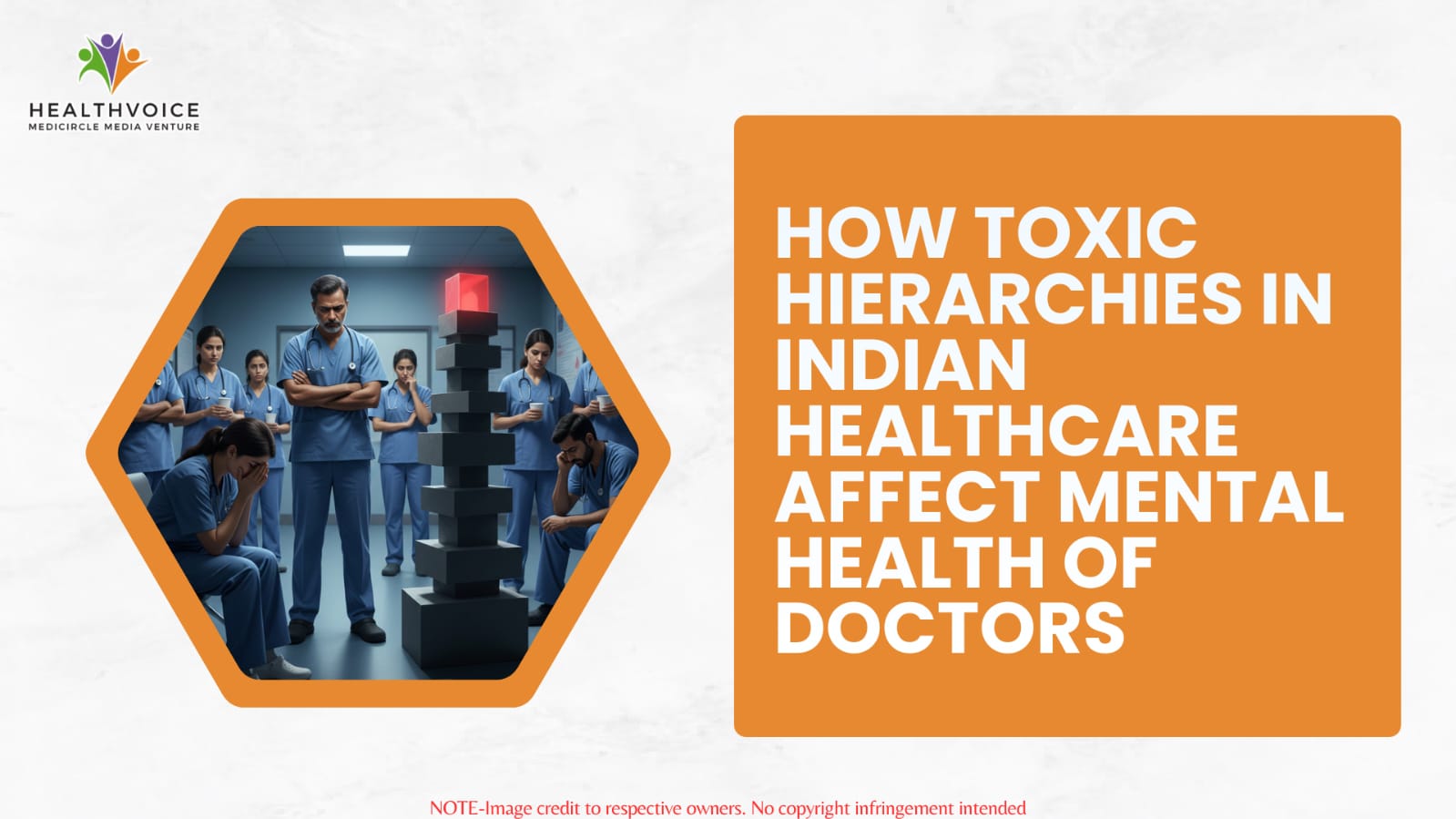
The death of a 24-year-old assistant professor from the Emergency and Trauma Department at AIIMS Bhopal has opened an uncomfortable window into the inner workings of India’s most respected medical institutions, forcing the healthcare community to confront a truth it often avoids. Hospitals save lives every day, yet for many doctors within their walls, survival itself becomes a daily struggle. This young doctor’s passing is not just a personal tragedy for her family; it is a mirror held up to a system that prides itself on excellence while tolerating emotional cruelty, hierarchy-driven humiliation, and silence around mental health.
According to reports carried by Medical Dialogues, the doctor had allegedly injected herself with an overdose of an anaesthetic drug at her home. She was rushed to AIIMS Bhopal and remained on ventilatory support for nearly 25 days. Despite continuous medical efforts, she never recovered. When she passed away, the hospital lost a promising academician and clinician. A seven-year-old child lost his mother. A husband lost his partner. And the medical fraternity lost yet another colleague to a pattern that is becoming disturbingly familiar.
What makes this case especially painful is the husband’s account of what preceded the incident. Also a doctor, he stated that there were no visible signs of distress at home. The family was following its usual routine. It was only when he checked on his wife that he found her unconscious. The shock was immediate, but so was the realization that the cause may not have been a single moment of despair, but a long accumulation of emotional wounds inflicted at the workplace.
The allegations he has made are grave. He described a work environment steeped in humiliation and intimidation. According to him, his wife, who had completed six years of residency at AIIMS, joined the trauma centre in December 2023 with hope and determination. Instead, she allegedly faced repeated insults, public scolding, and deliberate sidelining. She was humiliated during academic seminars, in front of junior doctors and colleagues. While juniors were provided with chambers, she was reportedly denied even basic office space. These may sound like small administrative issues on paper, but in the hierarchical ecosystem of medical institutions, they carry a deep psychological message: you do not belong, you are dispensable, you have no voice.
One of the most troubling claims relates to a complaint allegedly filed by a patient accusing her of misbehaving with junior doctors. The husband questioned the authenticity of this complaint, pointing out that it was written in polished English and commented on internal departmental dynamics that a patient would be unlikely to observe. If true, this raises questions about how complaints can be weaponized within institutions to target individuals, especially young faculty members who may lack power or protection.
What stands out in this narrative is the doctor’s own response to adversity. When advised by her husband to consider leaving AIIMS for the sake of her mental peace, she reportedly refused. She believed she was strong enough to face the hostility. She had trained at AIIMS and felt a deep sense of belonging to the institution. This sense of loyalty is common among doctors trained in premier institutes. AIIMS is not just a workplace; it is an identity. Walking away often feels like admitting defeat, even when the cost of staying is one’s mental health.
The removal of the head of department after the incident was seen by many as an attempt at accountability. However, the husband has publicly stated that this action was insufficient and possibly unrelated to his wife’s death. He pointed out that another doctor had earlier raised complaints and was transferred, suggesting that the toxic culture extended beyond one individual case. His statement hints at a deeper problem of multiple doctors experiencing humiliation, but the system responds with isolated, surface-level actions, the core issue remains untouched.
AIIMS Bhopal has constituted a high-level committee to conduct a confidential inquiry. While this is a necessary step, the lack of transparency around such investigations often fuels mistrust. Committees are formed, reports are written, and yet outcomes rarely translate into systemic change. For the grieving family, justice feels distant. For other doctors working within similar environments, fear and resignation persist.
Doctors are trained to function under pressure. Long hours, night duties, exposure to trauma, and life-and-death decisions are normalized early in medical training. Over time, emotional exhaustion becomes a badge of honour rather than a warning sign. When distress surfaces, it is often dismissed as weakness. In such a culture, harassment does not need to be loud or dramatic. It thrives quietly through sarcasm, exclusion, public belittling, and administrative neglect.
India has witnessed several cases of doctors, residents, and medical students dying by suicide over the past decade. Each case sparks brief outrage, followed by promises of reform. Yet the cycle continues. One reason is the rigid hierarchy embedded in medical institutions. Junior faculty members and residents often depend on seniors for evaluations, recommendations, and career progression. Speaking out can mean professional isolation or retaliation. Silence becomes a survival strategy, even when it slowly erodes mental well-being.
The Emergency and Trauma Department, in particular, is known for its intense work environment. High patient load, unpredictable cases, and constant exposure to suffering demand not just clinical skill but emotional resilience. When such departments lack supportive leadership, stress multiplies. A toxic work culture in such settings does not merely affect doctors; it can compromise patient care, academic growth, and institutional credibility.
The death of this young assistant professor also raises uncomfortable questions about gender dynamics in medical workplaces. Women doctors often face subtle discrimination, ranging from being overlooked for leadership roles to being judged more harshly for assertiveness. While the allegations in this case are not explicitly framed around gender, the experiences described resonate with what many women in healthcare quietly endure. Denial of basic resources like office space, public humiliation, and questioning of competence can carry a different weight when layered with gender bias.
For a country that reveres doctors as saviours, there is a reluctance to protect them as human beings. Mental health support for doctors remains inadequate. Counseling services, where available, are often stigmatized or poorly integrated into institutional culture. Reporting mechanisms for harassment exist on paper, but trust in these systems is fragile. When complaints are perceived as tools for retaliation rather than justice, victims withdraw further.
This tragedy should prompt every medical institution in India to introspect. Confidential committees are not enough. There must be transparent processes, independent oversight, and clear consequences for harassment, regardless of rank. Leadership training should emphasize emotional intelligence alongside academic excellence. Departments must be evaluated not only on patient outcomes and research output but also on workplace culture.
For young doctors entering the system, stories like this are deeply concerning. They question whether dedication and competence are enough to survive. They wonder if silence is safer than integrity. For senior doctors and administrators, this is a moment to reflect on the power they hold and the responsibility that comes with it. A careless remark, a public insult, or an unjust denial of resources can leave scars far deeper than intended.
The family left behind carries an irreplaceable loss. A seven-year-old child will grow up with memories shaped by absence. No inquiry report can fill that void. What it can do, if handled with honesty and courage, is prevent another family from experiencing the same fate. That requires institutions to move beyond damage control and embrace genuine reform.
The death of this assistant professor should not fade into another statistic. It should remain a reminder that hospitals are not just places of healing for patients, but workplaces for humans with limits, emotions, and vulnerabilities. When healers are broken in silence, the entire healthcare system fractures quietly with them.
If India truly values its doctors, it must create environments where strength is not measured by how much humiliation one can endure, but by how compassionately an institution treats its own. Until then, the white coat will continue to hide wounds that no anaesthetic can numb
 Sunny Parayan
#HealthcareWorkplace #ToxicHierarchy #MedicalProfession #MentalHealth #HealthcareCulture #DoctorsOfIndia #MedicalEducation #WorkplaceHarassment #PatientSafety #GenderEquity #HealthcareLeadership #PsychologicalSafety #EndToxicity #ProtectDoctors #healthvoice