Post-MI Lifestyle Counseling: Evidence-Based Strategies
Post-MI lifestyle counseling is a proven secondary prevention strategy. This article provides evidence-based, practical guidance on dietary modification, physical activity, smoking cessation, and cardiac rehabilitation for Indian clinical settings.
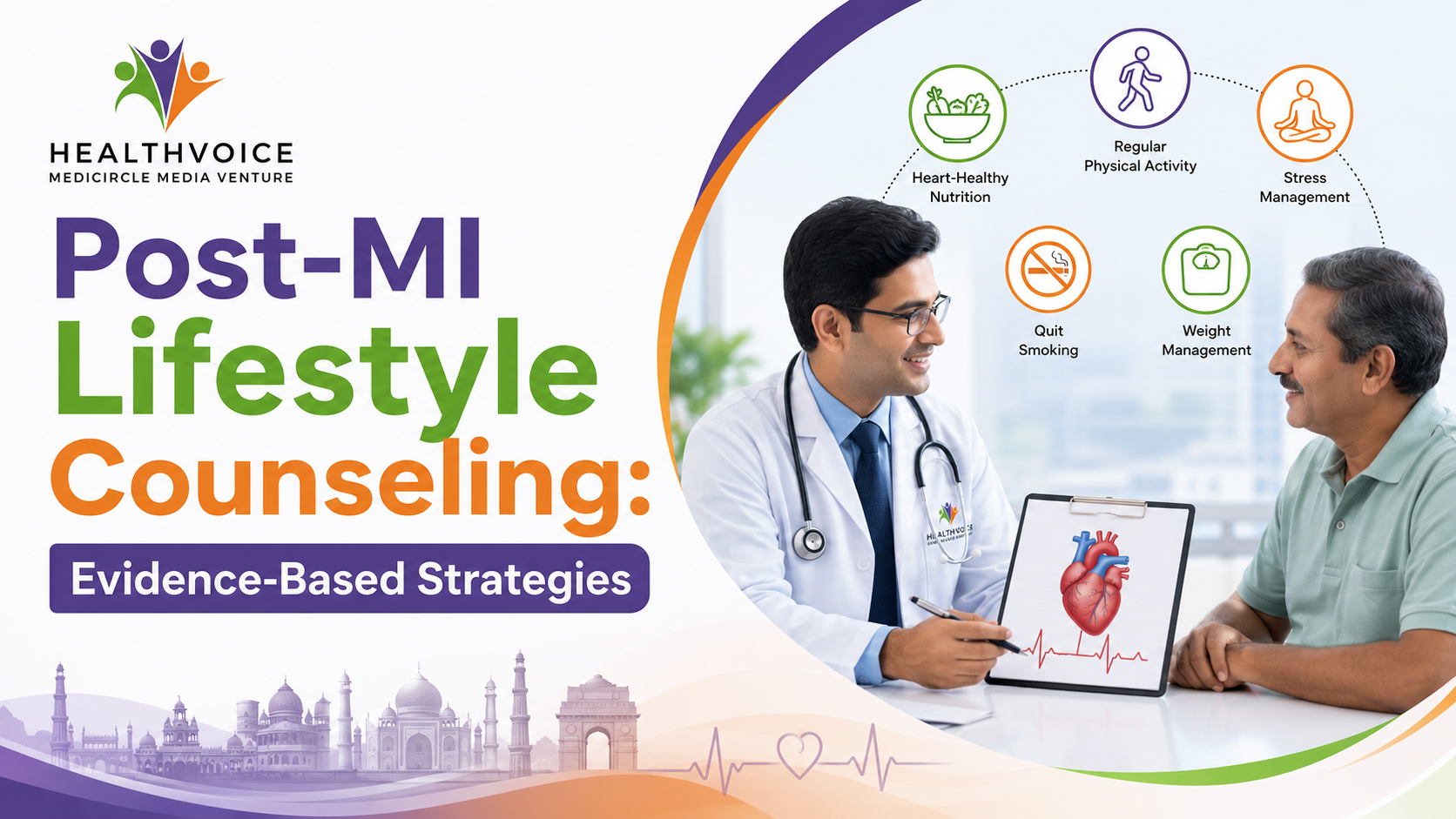
Post-MI Lifestyle Counseling: How to Make It Evidence-Based and Practical
Introduction
Surviving a myocardial infarction is not the end of the clinical journey. For most patients, it is the beginning of a long and demanding road that requires sustained behavioral change, careful medical management, and consistent professional guidance. In India, the burden of coronary artery disease has reached alarming proportions. According to the Indian Council of Medical Research and data published in the Global Burden of Disease report, coronary heart disease is now the leading cause of premature mortality among Indian adults, with the average age of a first heart attack in Indian men being nearly a decade younger than their Western counterparts.
Despite the availability of evidence-based secondary prevention protocols, the gap between what is recommended and what is actually delivered to patients during the post-MI phase remains wide. Lifestyle counseling, in particular, is frequently underutilized, insufficiently structured, or delivered too late to have a meaningful impact. Many post-MI patients in India return home from the hospital with little more than a prescription sheet and a vague instruction to "eat light and avoid stress."
This article is written for cardiologists, general physicians, cardiac rehabilitation teams, and healthcare professionals who work with post-MI patients. The goal is to examine how lifestyle counseling after a myocardial infarction can be made both evidence-based and genuinely practical, especially within the Indian clinical and cultural context.
Understanding the Post-MI Phase and Why Counseling Timing Matters
The period immediately following an acute cardiac event is widely recognized in behavioral medicine as a "teachable window." Patients during this phase are unusually receptive to lifestyle guidance. They have experienced a frightening event, they are emotionally engaged, and they are actively searching for ways to prevent recurrence. Research published in leading cardiology and patient education journals confirms that patients who receive lifestyle advice at multiple phases during the cardiac care trajectory, including during hospitalization, at discharge, during follow-up, and through cardiac rehabilitation, show a significantly greater intention to adopt and sustain healthy behavioral changes.
Unfortunately, studies consistently find that nearly half of post-MI patients report receiving no lifestyle advice during their hospital stay. This is a missed opportunity of serious consequence. The motivational momentum that exists in the acute and early post-acute phase is not infinite. Without timely, structured counseling, patients revert to old habits quickly, and the window of genuine behavioral openness narrows.
From a clinical standpoint, the teachable window should be treated as a clinical resource, not an afterthought. The cardiologist who takes five minutes during the post-procedure ward visit to speak clearly and compassionately about dietary change, smoking cessation, and physical activity is doing something with measurable long-term impact. Evidence shows that patients consistently rate advice from cardiologists as having the greatest self-reported impact when compared to other healthcare professionals, a finding that underscores how much authority the treating physician carries in shaping behavioral outcomes.
The Evidence Base for Post-MI Lifestyle Interventions
Before discussing practical implementation, it is important to understand what the evidence actually supports. Secondary prevention after MI rests on a combination of pharmacotherapy and lifestyle modification, and both arms of this strategy are independently effective, with their benefits being additive.
A systematic analysis of mortality risk reductions across lifestyle interventions found the following approximate reductions in all-cause and cardiovascular mortality:
- Smoking cessation: approximately 35 percent reduction
- Combined dietary modifications: approximately 45 percent reduction
- Regular physical activity: approximately 25 percent reduction
- Cardiac rehabilitation participation: 21 percent reduction in five-year mortality
These figures are comparable to, and in several cases exceed, the mortality benefits attributed to pharmacological agents such as statins, beta-blockers, and ACE inhibitors. The important clinical takeaway is that lifestyle intervention is not a soft adjunct to medication. It is a primary therapeutic strategy.
The Theory of Planned Behavior (TPB), a well-established behavioral science framework, provides a useful model for structuring these interventions. TPB proposes that behavioral intention, shaped by the individual's attitudes toward a behavior, the social norms around that behavior, and their perceived confidence in their ability to perform it, is the strongest predictor of actual behavioral change. Educational interventions designed around TPB principles have shown statistically significant improvements in self-care behaviors, lifestyle scores, and medication adherence in post-MI populations, including in studies conducted specifically in Asian clinical settings.
Dietary Counseling After MI: Moving Beyond Generic Advice
Dietary counseling is one of the most common post-MI recommendations and also one of the most poorly delivered. Telling a patient to "eat healthy" or "avoid fatty foods" without specificity, personalization, or cultural sensitivity almost never results in meaningful change.
The evidence supports several dietary patterns for secondary cardiovascular prevention. The Mediterranean diet, with its emphasis on vegetables, fruits, legumes, whole grains, olive oil, and fish, has demonstrated in the Lyon Diet Heart Study a 72 percent reduction in recurrent nonfatal MI and a 56 percent reduction in mortality over four years compared to standard dietary advice. The DASH diet has shown systolic blood pressure reductions of 5.5 to 11.4 mmHg, with additional benefits on coronary plaque regression.
In the Indian context, dietary counseling requires adaptation that respects regional food culture while making a meaningful clinical impact. Several specific considerations apply:
High sodium intake is deeply embedded in Indian eating habits through pickles, papads, preserved vegetables, and processed snacks. A post-MI patient who consumes these regularly faces real and preventable hypertension risk. Counseling must name these foods specifically, not speak in abstract terms about sodium.
Cooking oil habits differ widely across India. In northern states, ghee and dalda remain common. In coastal regions, coconut oil is traditional. Evidence shows that replacing saturated fats with polyunsaturated or monounsaturated fats, such as mustard oil, groundnut oil, or olive oil, lowers LDL cholesterol meaningfully. Counseling should work within these regional differences rather than against them.
Plant-based protein through lentils, dals, and legumes is already a cornerstone of Indian vegetarian diets and should be actively encouraged as a cardioprotective choice. Patients who consume significant quantities of red meat, particularly processed meats, should be counseled to reduce this, with practical substitutions offered.
Maida-based foods, including white bread, biscuits, and refined flour snacks, elevate postprandial blood glucose and contribute to cardiometabolic risk. Whole grain alternatives such as jowar, bajra, and ragi deserve specific mention in counseling sessions targeting diabetic or prediabetic post-MI patients.
The nutritionist or dietitian should ideally be part of the post-MI care team. However, in settings where this is not available, cardiologists and general physicians should be equipped with at least a basic framework for culturally appropriate dietary guidance.
Physical Activity Counseling: Overcoming Fear and Building Confidence
A significant barrier to physical activity after MI is patient fear. Many post-MI patients, particularly in India, where cardiac events carry considerable social stigma and anxiety, are afraid that any exertion will trigger another attack. This fear is understandable but often clinically unfounded, and addressing it is as important as prescribing exercise itself.
Current international guidelines recommend 150 to 300 minutes of moderate-intensity physical activity or 75 to 150 minutes of vigorous-intensity activity per week for post-MI patients, combining aerobic and resistance exercise. Evidence published in the SWEDEHEART registry found a 71 percent mortality reduction in post-MI patients who remained physically active and a 59 percent reduction in those who increased their physical activity, compared to those who remained sedentary.
The counseling approach should be graduated, specific, and reassuring. For most post-MI patients, walking is the ideal starting point. It requires no equipment, carries low injury risk, and is culturally accessible across all Indian socioeconomic strata. A practical counseling protocol might involve:
Starting with ten-minute walks twice daily in the first two weeks after discharge, then gradually extending duration and frequency over the following six to eight weeks. Patients should be taught to recognize warning signs that warrant stopping, including chest discomfort, unusual breathlessness, palpitations, or dizziness. These warning signs should be communicated clearly and written down for the patient to take home.
Resistance training can be introduced conservatively after six to eight weeks with medical clearance. Sedentary jobs, particularly common in urban India among office workers in Tier 1 cities, require specific counseling about breaking prolonged sitting time with short movement breaks every 30 to 45 minutes.
Physical activity counseling must also account for India's urban-rural divide. A post-MI patient in a semi-urban or rural setting may engage in daily agricultural labor that qualifies as moderate physical activity, while a corporate professional in Mumbai or Bengaluru may be almost entirely sedentary. Counseling must be individualized accordingly.
Smoking Cessation: A Non-Negotiable Clinical Priority
Smoking remains one of the most powerful independent risk factors for recurrent MI and premature cardiovascular death. A large population-based cohort study found that individuals who quit smoking after their initial MI experienced a 37 percent lower mortality risk compared to those who continued, over a 13-year follow-up period.
The post-MI hospitalization is clinically recognized as an optimal time for smoking cessation intervention. The patient's abstinence during hospitalization creates a brief window of forced cessation that can be capitalized upon. Research shows that depression, unemployment, and lung disease are associated with a lower likelihood of cessation, while participation in cardiac rehabilitation, having a supportive partner, and a stated intention to quit are associated with greater success.
Pharmacological support through nicotine replacement therapy, bupropion, or varenicline significantly improves cessation rates. Varenicline has the strongest evidence base, and large trials have confirmed its safety from both cardiovascular and neuropsychiatric standpoints. However, relapse remains common. One trial found that 60 percent of patients receiving varenicline returned to smoking within one year of their acute coronary event. This finding argues for extended counseling and follow-up rather than a single cessation intervention at the time of discharge.
In India, tobacco use extends beyond cigarettes to include beedis, gutka, pan masala, and khaini. Counselors must specifically ask about all forms of tobacco use, not just cigarette smoking. Many patients who self-report as "non-smokers" in clinical encounters are regular users of smokeless tobacco, and this distinction has real clinical consequences for secondary prevention.
Psychological Support as a Clinical Necessity
Post-MI depression is not a soft concern. It is a clinical condition with quantifiable mortality consequences. Approximately 20 to 33 percent of patients experience clinically significant depression following a myocardial infarction, a rate approximately three times higher than in the general population. Post-MI depression has been associated with a nearly threefold increase in all-cause mortality, cardiovascular mortality, and recurrent cardiac events.
Despite this, mental health screening remains poorly integrated into post-MI care pathways in most Indian hospitals. Cardiologists are often uncomfortable asking about mood, and patients, particularly in rural or semi-urban settings, may not associate emotional distress with heart health.
A validated screening tool such as the PHQ-2 or PHQ-9 can be incorporated into routine post-discharge follow-up consultations with minimal additional time. Patients who screen positive should be referred for psychological support, which may include cognitive-behavioral therapy, pharmacotherapy with SSRIs, or both, depending on the severity and clinical context.
Beyond formal depression, anxiety is prevalent in post-MI patients and is an independent cardiovascular risk factor. Counseling that addresses anxiety, provides clear information about what patients can and cannot do, and offers structured reassurance reduces unnecessary health-seeking behavior while improving adherence to rehabilitation.
Cardiac Rehabilitation: Building a Structured Recovery Framework
Cardiac rehabilitation remains the most comprehensive and evidence-supported framework for delivering post-MI lifestyle counseling and secondary prevention in a structured way. It combines supervised exercise training, nutritional guidance, psychological support, cardiovascular risk factor modification, and patient education into a coordinated program.
A large cohort study of patients eligible for cardiac rehabilitation demonstrated a 21 percent reduction in five-year mortality among participants compared to non-participants. The benefits are dose-dependent, with greater session attendance linked to better long-term outcomes.
Despite this evidence, cardiac rehabilitation participation rates remain critically low, both globally and in India. In many Indian cities, formal cardiac rehabilitation programs are available only at select tertiary hospitals and are largely inaccessible to patients in Tier 2 or Tier 3 cities, or to those in rural areas. Economic barriers, lack of transport, absence of institutional referral pathways, and limited awareness among physicians all contribute to underutilization.
Home-based cardiac rehabilitation, supported by telephone or digital follow-up, has demonstrated non-inferiority to facility-based programs in several international trials and offers a more accessible alternative for the Indian context. Mobile health platforms and telemedicine-based cardiac rehabilitation are increasingly viable options, particularly for post-MI patients in semi-urban settings who cannot regularly access specialized centers. Healthcare communities and professional bodies have a meaningful role to play in building awareness about cardiac rehabilitation access, creating referral cultures within the medical community, and advocating for policy-level inclusion of rehabilitation in insurance and government health scheme coverage under programs such as Ayushman Bharat.
Practical Counseling Principles That Improve Adherence
Evidence from patient education research consistently identifies several counseling characteristics that improve adherence to lifestyle recommendations. These apply directly to the post-MI context.
Advice must be specific, not generic. Telling a patient to "eat less salt" is less effective than advising them to check the sodium content on packaged food labels, reduce use of ready-made spice mixes, and avoid adding extra salt at the table.
Advice must be feasible within the patient's life. A counseling recommendation that ignores the patient's income, family cooking arrangements, or work schedule will not be followed, however medically sound it may be. Asking about the patient's daily routine and tailoring recommendations to it meaningfully improves follow-through.
Advice should align with the patient's own understanding of why they had a heart attack. Research shows that patients who receive advice consistent with their own perceived behavioral cause, for example, a patient who believes stress caused their MI, receiving specific stress management guidance, report higher adherence. Understanding the patient's explanatory model and working with it rather than against it strengthens the therapeutic relationship and improves outcomes.
Advice delivered with empathy and without judgment is more effective than confrontational or fear-based communication. Patients who feel respected and heard are more likely to engage with behavioral change recommendations.
Family involvement in counseling sessions, particularly in the Indian context where family members exert considerable influence over health decisions, food preparation, and daily routine, is a powerful enabler of sustained lifestyle change. Including a family member in at least one counseling session significantly strengthens the social support around behavioral change.
Frequently Asked Questions
Q1: What is the best time to begin lifestyle counseling after a myocardial infarction?
The optimal time is during the hospitalization itself, even before discharge. The acute post-MI phase represents a teachable window during which patients are most receptive to behavioral guidance. Counseling initiated in the hospital should be continued at every subsequent clinical contact, including discharge, follow-up appointments, and throughout cardiac rehabilitation. Research confirms that patients who receive lifestyle advice at multiple phases of their care trajectory show significantly greater intention to change and maintain healthier behaviors.
Q2: How can Indian dietary habits be practically adapted for post-MI secondary prevention?
Indian post-MI dietary counseling should address culturally specific risks, including high sodium intake from pickles and processed foods, excessive use of saturated fats such as ghee and dalda, low dietary fiber in urban populations dependent on refined grains, and festive eating patterns. Practical adaptations include switching to mustard or groundnut oil, increasing consumption of dals, vegetables, and whole grains like jowar and bajra, reducing maida-based foods, and limiting packaged snacks. Counseling must be region-specific and should involve the family member responsible for cooking, wherever possible.
Q3: Is physical activity safe for post-MI patients, and when can it be started?
For most post-MI patients, light physical activity such as short walks can be started within the first two weeks after discharge, with gradual progression. Current guidelines recommend targeting 150 to 300 minutes of moderate-intensity activity per week over time. Patients should be advised of warning symptoms that indicate they should stop exercising and seek medical review, including chest discomfort, unusual breathlessness, and palpitations. Cardiac rehabilitation provides the safest and most structured environment for reintroducing physical activity under medical supervision.
Q4: How significant is post-MI depression, and should cardiologists screen for it?
Post-MI depression is a clinically serious condition affecting approximately 20 to 33 percent of MI survivors and is independently associated with a nearly threefold increase in all-cause and cardiovascular mortality. Cardiologists and post-MI care teams should routinely screen for depression using validated tools such as the PHQ-2 or PHQ-9 at post-discharge follow-up visits. Patients who screen positive should receive timely referral for psychological support, which may include cognitive-behavioral therapy, pharmacological treatment with SSRIs, or both, in addition to their cardiac medications.
Q5: What is the role of cardiac rehabilitation in post-MI lifestyle counseling in India?
Cardiac rehabilitation provides the most comprehensive framework for delivering structured lifestyle counseling, supervised exercise, nutritional support, and psychological care in the post-MI period. Evidence shows a 21 percent reduction in five-year mortality among participants. In India, access remains limited to major urban centers, making home-based and telemedicine-supported cardiac rehabilitation critical alternatives that need wider implementation and policy support. Healthcare professionals and medical associations have an important advocacy role in promoting referral culture for cardiac rehabilitation and in expanding access through digital health solutions.
 Team Healthvoice
#HeartHealth #CardiacRehabilitation