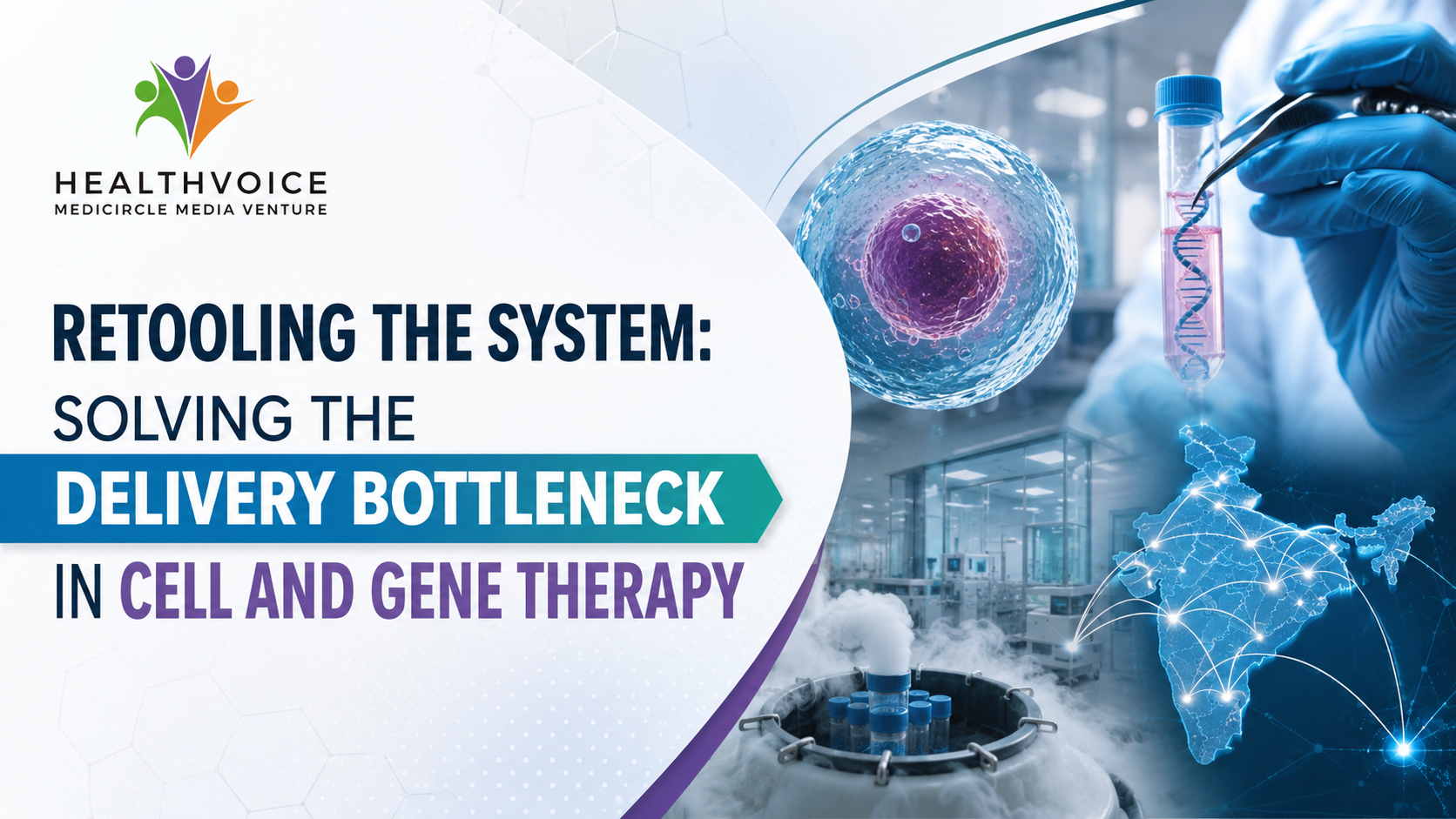
Retooling the System: Solving the Delivery Bottleneck in Cell and Gene Therapy
Cell and Gene Therapy is transforming modern medicine, but delivery infrastructure remains its biggest challenge. A centralized hub-and-spoke model enables hospitals to expand patient access, improve operational efficiency, and safely scale advanced therapies while maintaining regulatory compliance.
Retooling the System: Solving the Delivery Bottleneck in Cell and Gene Therapy
Cell and Gene Therapy (CGT) has transformed the treatment landscape for cancers and inherited genetic disorders. While scientific innovation has accelerated rapidly, healthcare systems continue to face significant challenges in delivering these therapies at scale. The biggest barrier is no longer scientific discovery but building a standardized, efficient, and digitally connected delivery infrastructure.
For hospital networks and healthcare providers, adopting a scalable hub-and-spoke model is emerging as the most practical strategy for expanding patient access while maintaining quality, compliance, and operational efficiency.
Why Cell and Gene Therapy Delivery Remains a Challenge
Although therapies such as CAR-T and gene editing have demonstrated remarkable clinical success, nearly 80% of eligible patients worldwide still do not receive these treatments due to logistical and operational limitations.
Unlike traditional medicines, cell therapies require personalized manufacturing, making every treatment unique to the individual patient.
The Key Operational Challenges
- Personalized manufacturing for every patient
- Strict Chain of Identity (COI) and Chain of Custody (COC)
- Cryogenic transportation requirements
- Complex regulatory compliance
- Limited manufacturing infrastructure
- High treatment costs
Why Traditional Pharmaceutical Supply Chains Don't Work
Conventional medicines are manufactured in bulk and distributed through standardized supply chains.
Cell therapies follow an entirely different workflow:
1. Patient Cell Collection
White blood cells are collected using leukapheresis under controlled clinical conditions.
2. Cryogenic Transportation
Collected cells are immediately cryopreserved and transported through temperature-controlled logistics to a manufacturing facility.
3. Genetic Engineering
Specialized laboratories modify and expand the patient's cells before preparing them for clinical use.
4. Patient Infusion
The engineered cells are returned to the treating hospital, where the patient undergoes conditioning therapy before receiving the personalized infusion.
Even a minor identification or temperature error can compromise an entire treatment, making digital tracking systems essential.
The Hub-and-Spoke Model: A Scalable Solution for Cell TherapyTo expand access beyond a few metropolitan academic hospitals, healthcare systems are increasingly adopting a Hub-and-Spoke operational model.
Central Hub: Advanced Manufacturing
The central hub performs:
Automated Cell Processing
- Closed-system manufacturing
- Automated cleanroom operations
- Standardized quality assurance
- Regulatory compliance
- Batch monitoring
Centralizing manufacturing reduces infrastructure costs while improving consistency and production capacity.
Regional Spoke Clinics: Patient-Centered Care
Regional hospitals focus on patient management rather than manufacturing.
Responsibilities of Spoke Clinics
- Patient evaluation
- Leukapheresis
- Coordination with manufacturing hub
- Conditioning chemotherapy
- Cell infusion
- Monitoring for adverse events such as Cytokine Release Syndrome (CRS)
This model enables patients to receive advanced therapies closer to home while maintaining centralized manufacturing quality.
Benefits of the Hub-and-Spoke ApproachImproved Patient Access
Patients no longer need to travel exclusively to major academic centers.
Better Resource Utilization
Expensive manufacturing facilities are shared across multiple hospitals instead of being duplicated.
Standardized Quality
Automated processing improves consistency while reducing contamination risks.
Lower Treatment Costs
Centralized production creates economies of scale that can reduce per-patient manufacturing expenses.
Regulatory Considerations for Indian Hospital NetworksScaling Cell and Gene Therapy in India requires compliance with regulations established by the Central Drugs Standard Control Organization (CDSCO).
Healthcare providers should prioritize:
Standardized Compliance Frameworks
- Institutional Biosafety Committee (IBSC) approvals
- Review Committee on Genetic Manipulation (RCGM) compliance
- Digital Chain of Identity documentation
- Uniform operational protocols across all hospitals
A centralized governance framework can significantly reduce implementation timelines across large hospital networks.
Strengthening Industry-Academia PartnershipsIndia's growing biotechnology ecosystem provides strong opportunities for technology transfer.
Research institutions and organizations are actively developing indigenous:
- CAR-T therapies
- Gene-editing platforms
- Viral vectors
- Precision genomic treatments
Strategic collaboration between hospitals, biotech companies, and research institutions can accelerate commercialization while reducing treatment costs.
The Future of Cell and Gene Therapy DeliveryThe next generation of therapies aims to eliminate complex manufacturing altogether through in vivo gene delivery.
Instead of modifying cells outside the body, future technologies may use:
- Lipid Nanoparticles (LNPs)
- Engineered viral vectors
- Direct gene-editing systems
These platforms could deliver genetic therapies directly inside the patient's body, reducing reliance on centralized manufacturing facilities.
While these innovations continue to evolve, the hub-and-spoke model remains the most practical pathway for expanding safe and scalable Cell and Gene Therapy services.
ConclusionThe future of Cell and Gene Therapy depends not only on scientific breakthroughs but also on building healthcare systems capable of delivering these treatments efficiently. By combining centralized automated manufacturing with decentralized patient care, hospital networks can improve accessibility, reduce operational costs, and establish Cell and Gene Therapy as a scalable standard of care.
 Team Healthvoice
#CellAndGeneTherapy #HealthcareInnovation