The Value of Medical Humanities: Helping Doctors Understand Patients Beyond Symptoms
Medical humanities strengthen modern doctor training by integrating ethics, patient narratives, reflective practice, arts, and social context, helping clinicians communicate better, reason ethically, understand patients deeply, and deliver human-centred care.
Introduction
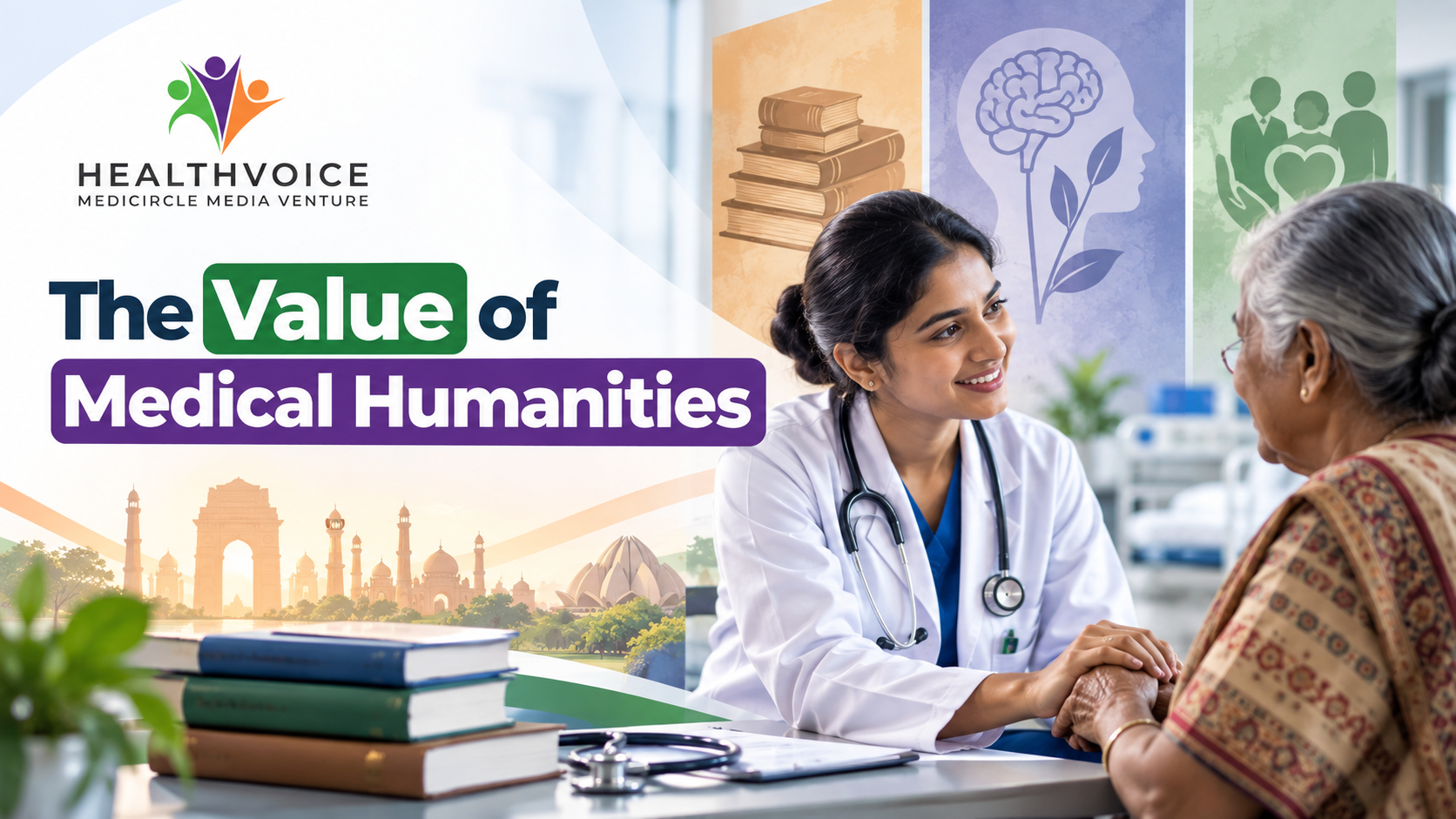
You are a medical student finishing long night shifts at a public hospital in Delhi, or a junior doctor at a busy district hospital in Maharashtra. A patient sits across from you—polite, anxious, and telling a story that doesn’t fit the neat checklist you learned in class. The lab values will help, but they won't explain why this person missed treatment, or why the family is reluctant to consent, or what matters most to them in the weeks ahead.
This is the place where medical humanities becomes not an optional enrichment but a practical tool. For readers in India—doctors, trainees, educators and policy makers—this article explains what medical humanities are, why they belong in medical education, how they work in Indian contexts, and how to begin applying them without creating unrealistic burdens on already stretched systems.
What it means
Medical humanities is an umbrella term. It brings literature, history, philosophy, ethics, visual arts, performing arts and social sciences into the world of clinical care and medical education. The goal is not to replace science but to broaden the frame by which doctors encounter patients.
Breaking down the components
- Literature and patient narrative: reading or writing stories helps clinicians recognise the arc of a patient’s life—social roles, losses, hopes and fears that sit behind symptoms.
- Ethics education: structured discussion of dilemmas sharpens moral reasoning around consent, confidentiality, resource allocation and end-of-life choices.
- Visual and performing arts: observation exercises using paintings or theatre pieces strengthen attention to detail, empathy in medicine and non-verbal cues.
- History and social sciences: contextualise disease in systems—how poverty, caste, gender, migration and policy shape health experiences.
- Reflective practice: guided reflection (journals, peer groups) helps clinicians process uncertainty and avoid burnout.
Jargon explained
- Reflective practice: an intentional habit of thinking about one’s clinical experiences, emotions, actions and assumptions to learn from them.
- Patient narrative: the story a patient tells about their illness, which includes personal, social and cultural meanings beyond clinical facts.
- Human centred care: an approach that places the patient’s preferences, needs and values at the centre of clinical decisions.
Why it matters
Improving the doctor patient relationship
In India’s diverse clinical settings—from urban multi-speciality hospitals to remote primary health centres—the doctor patient relationship can be strained by time, language, or systemic barriers. Medical humanities cultivate skills that make every minute of a clinical encounter more meaningful.
Understanding a patient’s narrative can reveal non-medical barriers to adherence: an elder may stop medication because of the cost, a daily-wage worker may avoid hospital admission because it threatens family survival, or a woman may conceal symptoms due to stigma. When clinicians recognise these factors, they can adapt plans pragmatically and compassionately.
Enhancing communication and empathy in medicine
Communication is learnable. Empathy isn't just an innate trait; it can be practised through narrative exercises, role-play and reflective writing. These methods help clinicians listen beyond presenting complaints and respond in ways that patients perceive as caring.
Better communication has practical benefits: clearer explanations, improved adherence, fewer misunderstandings and more realistic shared decision-making. In India’s crowded outpatient departments, even small gains in quality of communication matter.
Strengthening ethical reasoning and professional identity
Ethics education grounded in real stories equips doctors to handle dilemmas—consent in emergencies, confidentiality in adolescent care, or the limits of treatment when resources are scarce. Medical humanities encourage practitioners to see themselves not only as technicians, but as professionals who must balance science with values.
Supporting clinician well-being and reflective practice
Clinical work involves moral distress and repeated exposure to suffering. Reflective practices such as writing, debriefing and peer discussion create space to process these experiences. This is not psychotherapy; it is support that preserves the clinician’s capacity to provide human centred care.
Addressing cultural competence and health system realities
India’s social diversity means culture influences health behaviour profoundly. Medical humanities tools—case narratives, ethnographic insights and history—help clinicians avoid one-size-fits-all solutions and design interventions sensitive to local realities.
Practical guidance
Integrating medical humanities into Indian medical education
It is reasonable to ask: with crowded curricula and exam pressures, where do humanities fit? The answer is pragmatic: integration, not separation.
- Embed short modules within existing rotations. For example, during community medicine postings, include narrative interviews with patients and reflective write-ups.
- Use bedside narrative rounds. Set aside 10–15 minutes in teaching rounds for a trainee to present the patient’s social context and a short reflective point about the encounter.
- Conduct ethics case discussions in small groups. Use cases drawn from local practice to make ethics education tangible and relevant.
- Assign reflective journals. Short, guided prompts are easier for busy learners than open-ended essays. Prompts can focus on communication challenges, moments of uncertainty, or a memorable patient interaction.
- Partner with humanities departments. Collaborations with departments of literature, sociology or performing arts can provide low-cost, high-impact sessions on narrative and observation.
Teaching methods that work in low-resource settings
- Narrative interviews with family members can reveal economic and social pressures affecting care decisions.
- Photo-voice projects, where patients or health workers take pictures to document lived realities, can be adapted to local settings with simple mobile phones.
- Role-play and simulation using peer actors require minimal equipment and reinforce communication skills.
Faculty development and assessment
Faculty unfamiliar with humanities can start with small steps: attend a workshop, co-facilitate a reflective session, or adopt a single humanities exercise each term.
When it comes to assessment, avoid high-stakes tests that encourage superficial compliance. Consider formative assessments: reflective portfolios, observed structured clinical examinations (OSCEs) with communication stations, and narrative feedback from patients and peers.
Examples from Indian practice
- In a district hospital, a junior doctor notices repeated defaults on TB treatment. A brief patient narrative exercise reveals that travel time and lost wages are the main barriers; the team then coordinates with local community health workers to arrange evening DOTS sessions.
- During a tertiary hospital rotation, students read a short patient memoir and discuss end-of-life values. The discussion helps them approach palliative care conversations with greater sensitivity and fewer assumptions.
Practical limits and realistic expectations
Medical humanities will not solve structural problems like understaffing, stockouts or inequitable access. It won’t replace clinical knowledge. The real value is incremental: better listening, clearer communication, improved ethical clarity, and modest reductions in avoidable conflicts.
Common questions
Who benefits from medical humanities—students, practising doctors or patients?
All three. Students develop habits early, practicing doctors refresh their communicative and reflective skills, and patients receive care that attends to their full personhood beyond diagnosis.
Will humanities training affect exam scores or career prospects?
Humanities improve abilities that matter in practice—communication, ethics and leadership. While they may not directly translate into higher marks on knowledge tests, they support competencies valued in clinical workplaces and can enhance patient satisfaction metrics.
What if faculty or institutions resist adding humanities content?
Start small and demonstrate value. Pilot a half-day workshop, collect feedback from learners and patients, and use qualitative stories to show impact. Engaging local champions—senior clinicians who value patient-centred care—makes uptake easier.
Can humanities be delivered online?
Yes. Narrative reading groups, reflective writing workshops, and ethics case discussions work well in virtual formats. However, in-person role-play and bedside narrative rounds often provide richer skill development.
Are there cultural sensitivities to consider in India?
Absolutely. Ensure patient narratives and arts exercises respect local customs, privacy and language. Avoid imposing Western frameworks uncritically; contextualise content for regional languages, caste and gender dynamics, and socioeconomic realities.
Limitations, risks and cautions
- Tokenism: A single lecture on 'compassion' is not the same as sustained reflective practice. Guard against checkbox implementation.
- Assessment pressure: If humanities activities are summatively assessed inappropriately, they risk becoming exercises in performance rather than genuine engagement.
- Faculty capacity: Many medical teachers lack humanities training. Invest in faculty development and partnerships with humanities scholars.
- Professional boundaries: Reflective groups are not a substitute for professional mental health support. If reflective exercises reveal significant distress, learners should be directed to appropriate counselling or occupational health services.
When to seek professional help
This article discusses education and professional practice, not individual medical care. If you are a patient experiencing symptoms, or a clinician concerned about a patient’s risk (self-harm, unstable medical condition), seek timely clinical assessment from qualified professionals or contact emergency services.
If you are a clinician experiencing burnout, overwhelming distress, or thoughts of harming yourself, please seek confidential professional help through institutional counselling services, mental health professionals or trusted colleagues—this article is not a substitute for clinical or mental health care.
Conclusion
Medical humanities are neither a luxury nor an abstract indulgence. In the daily reality of Indian healthcare—crowded clinics, resource constraints, diverse cultures and complex family dynamics—they provide practical tools that make care more humane and often more effective.
By integrating literature, ethics, reflective practice and the arts into medical education, we help doctors see patients as whole persons. That perspective improves communication, strengthens ethical decision-making, supports clinician well-being and ultimately enhances human centred care.
Start with small, pragmatic steps: bedside narrative rounds, short reflective prompts, ethics case discussions and collaboration with humanities faculty. Measure outcomes sensibly, protect reflective spaces from reductive assessment, and keep the focus on improving real encounters between doctors and patients.
In asking "why medical humanities matter in modern doctor training", the answer is simple: they enable clinicians to understand patients beyond symptoms—and understanding is the foundation of healing.
Frequently Asked Questions
- What are simple first steps for busy departments to introduce medical humanities?
Begin with a single 15-minute narrative round per week, a guided reflective prompt once a month, or a case-based ethics discussion during existing teaching hours. Keep interventions short and practical.
- Can humanities training reduce burnout among doctors?
Reflective practice and peer discussion can help clinicians process difficult experiences and reduce isolation, which may contribute to better coping. They are supportive measures, not replacements for systemic interventions like reasonable working hours and institutional mental health services.
- How do we assess reflective practice fairly?
Use formative assessment: provide qualitative feedback, encourage portfolios that document growth over time, and avoid high-stakes examinations based solely on subjective content.
- Are there low-cost resources for humanities in India?
Yes. Local literature, patient narratives, community stories and partnerships with arts departments are low-cost. Open-access online journals and global humanities resources can supplement local materials.
- Will humanities training be culturally appropriate across India’s diversity?
When adapted thoughtfully, yes. Localising case studies, using regional languages and involving community representatives helps ensure cultural relevance.
- Do patients notice the difference when doctors learn humanities?
Many patients report better experiences when clinicians communicate clearly, listen attentively and consider social factors in care plans. Improved patient satisfaction is a commonly reported benefit.
- Is there evidence that medical humanities improve clinical outcomes?
Evidence often includes qualitative improvements in communication, ethical reasoning and patient experience. Measuring direct clinical outcomes is complex; mixed-methods evaluation is most appropriate.
- How does medical humanities relate to national medical education standards?
Medical humanities support competencies in professionalism, communication and ethics that many national frameworks encourage. For legal or institutional implementation, consult your medical college, regulatory body or medical education unit for formal guidance.
Medical/Professional/Technology disclaimer
This article offers general information about medical humanities and medical education, intended for educational and professional reflection. It does not provide medical diagnoses, individualized clinical advice, legal advice or institutional policy directives. For patient care, seek assessment from qualified healthcare professionals. For institutional implementation or legal questions about curriculum change, consult your medical college leadership, regulatory authorities and legal advisors.
Resources
- World Health Organization: https://www.who.int/
- Ministry of Health and Family Welfare, Government of India: https://www.mohfw.gov.in/
- National Medical Commission (NMC), India: https://www.nmc.org.in/
- Indian Council of Medical Research (ICMR): https://www.icmr.gov.in/
- PubMed: https://pubmed.ncbi.nlm.nih.gov/
- NHS (National Health Service, UK): https://www.nhs.uk/
- Centers for Disease Control and Prevention (CDC): https://www.cdc.gov/
Interlinking Keywords
medical education, medical humanities, empathy in medicine, patient narrative, ethics education, reflective practice, doctor patient relationship, human centred care, communication skills in clinical practice
.png) Prathama Bhowal
Prathama Bhowal
#MedicalHumanities #MedicalEducation
