Clinical Documentation Quality: Importance for Patient Safety, Legal Protection, and Continuity of Care in India
Clinical documentation is essential for patient safety, legal protection, and continuity of care. Accurate, timely, and complete records improve communication, reduce errors, support accountability, and strengthen healthcare outcomes.
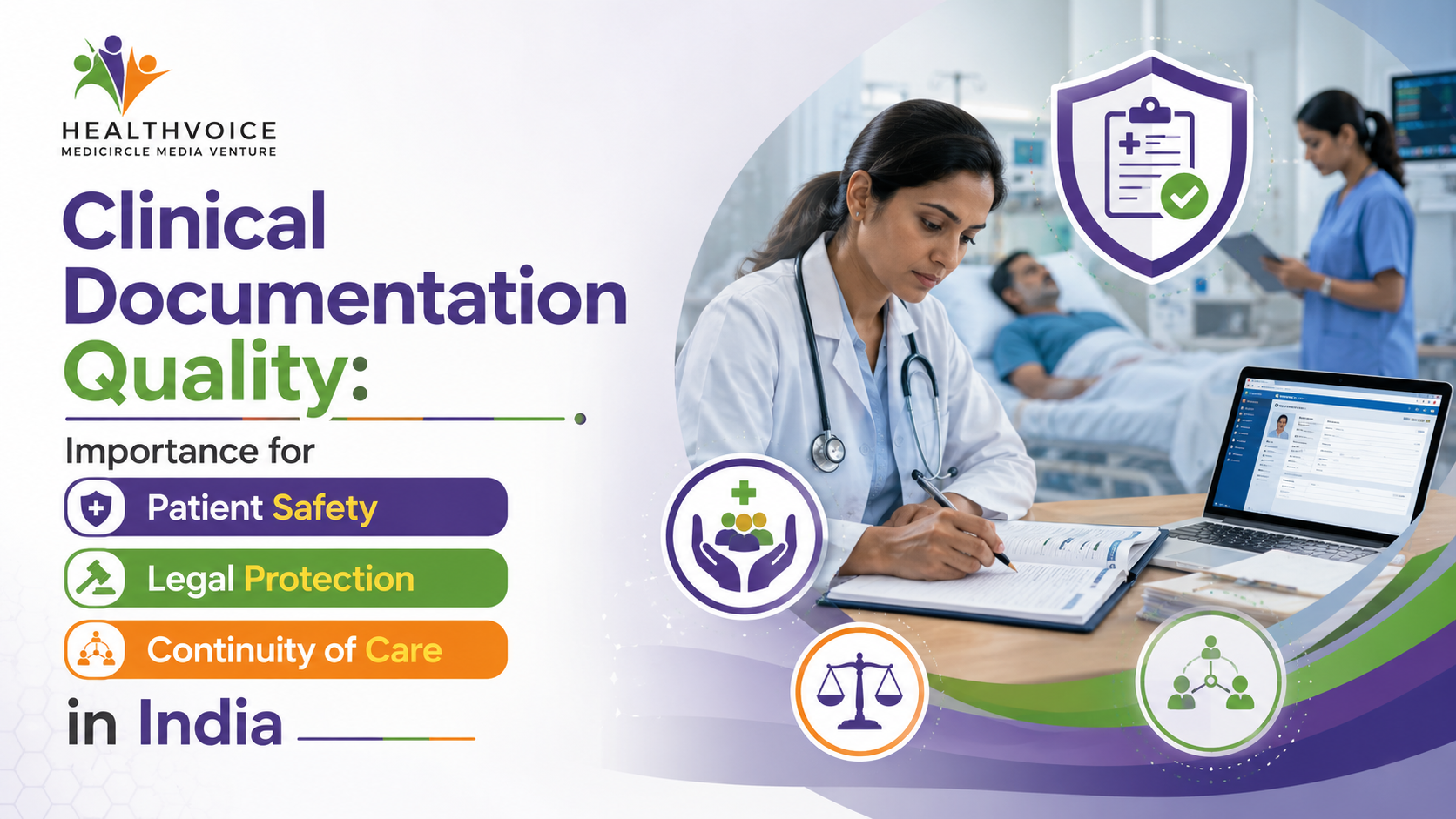
Clinical Documentation Quality: Why It Matters for Patient Safety, Legal Protection, and Continuity of Care
Every time a patient walks into a hospital or clinic in India, a story begins. It may start with a fever that refuses to subside, recurring chest pain, or a child who has stopped eating properly. What happens next depends not only on the healthcare professional's knowledge and clinical expertise but also on how accurately and completely that story is recorded. Clinical documentation is the written memory of healthcare. In a country as large and diverse as India, where patients often move between government hospitals, private clinics, specialists, and general practitioners, that memory frequently becomes the only connection between one episode of care and the next.
The quality of clinical documentation, including its accuracy, completeness, and timeliness, directly influences the quality of care a patient receives. This is not merely an administrative responsibility. It is a patient safety requirement, a legal safeguard, and a professional obligation. Yet across many healthcare settings, documentation is still treated as a task to be completed after clinical work rather than an essential component of patient care itself.
What Clinical Documentation Actually Means
Clinical documentation refers to the systematic recording of all patient-related information generated during the course of care. It includes clinical notes, admission records, discharge summaries, diagnostic reports, prescription records, referral letters, informed consent forms, and procedure notes. Every written or digital record concerning a patient's condition, treatment, and outcomes forms part of the documentation ecosystem.
In India, clinical documentation occurs across a wide range of healthcare settings. Some large corporate hospitals use advanced electronic medical record systems, while many district hospitals, nursing homes, and smaller clinics continue to rely on paper records. Although the methods may differ, the need for accurate, complete, and timely documentation remains the same.
Documentation is not simply a record of past events. It is also a communication tool. It allows healthcare professionals to understand what has already been assessed, diagnosed, and treated. A specialist can review a patient's history before recommending further investigations. A nurse can verify medication allergies before administering treatment. Effective documentation ensures that vital information remains accessible whenever and wherever it is needed.
The Direct Link Between Documentation and Patient Safety
The relationship between clinical documentation and patient safety has been well established. When medical records are incomplete, unclear, or delayed, the risk of medical error increases significantly. A missing allergy entry can result in the prescription of a harmful medication. An incomplete discharge summary may leave a follow-up physician unaware of an important diagnosis or treatment provided during hospitalisation. A referral letter that omits critical information can lead to repeated investigations, delayed treatment, and unnecessary healthcare costs.
These challenges become even more significant in India because patients frequently seek care from multiple providers. A patient may consult a local physician, visit a district hospital, and later seek treatment from a specialist in a metropolitan city. Without reliable documentation, each healthcare provider may be forced to begin the evaluation process with limited information.
Consider a patient living with diabetes and hypertension who seeks care in a different city. If previous medical records are unavailable or poorly documented, the new physician may have no way of knowing which medications have been prescribed, how effectively blood sugar levels have been controlled, or whether complications have already developed. Clinical decisions are then made without a complete understanding of the patient's history.
Good documentation helps prevent such situations. It creates a continuous record of care that follows the patient and supports informed decision-making at every stage of treatment. By reducing uncertainty and improving communication, high-quality documentation contributes directly to patient safety.
Legal Protection: Why Every Word in the Medical Record Matters
Medical records play a crucial role in medico-legal proceedings in India. Under the Consumer Protection Act and other healthcare regulations, patients may seek legal remedies if they believe care has been deficient. In such situations, medical records often become the most important source of evidence.
Courts and consumer forums rely heavily on documented information when assessing whether appropriate care was provided. What is recorded in the medical file generally carries far greater weight than what a healthcare professional remembers months or years later. If a complication occurs during treatment and questions arise regarding the care delivered, the documentation becomes the primary source for understanding what happened.
This principle is especially important when documenting informed consent. A signed consent form alone may not be sufficient to demonstrate that a patient fully understood the risks, benefits, and alternatives associated with a procedure. The medical record should also reflect the discussions that took place, the information provided, the questions asked by the patient, and the explanations given by the healthcare team.
Accurate documentation protects patients by ensuring transparency and accountability. At the same time, it protects healthcare professionals by providing clear evidence of the care delivered and the decisions made throughout the treatment process.
Continuity of Care in a Fragmented Healthcare System
India's healthcare system is highly fragmented. Public and private healthcare services often function independently, and referral pathways may vary considerably between regions and institutions. In the absence of a universal health record system that seamlessly follows patients across all facilities, documentation becomes the primary mechanism for maintaining continuity of care.
One of the most important documents in this process is the discharge summary. When a patient leaves the hospital, the discharge summary provides a detailed account of the diagnosis, investigations performed, treatment administered, medications prescribed, and follow-up recommendations. Future healthcare providers depend on this information to guide ongoing care.
Referral letters serve a similar purpose. When a patient is referred from one provider to another, the referral note carries essential clinical information that allows the receiving clinician to understand the context of the referral. A well-prepared referral letter saves time, reduces duplication of investigations, and improves the efficiency of patient care.
Good documentation also reduces the burden placed on patients. Many individuals with chronic illnesses become accustomed to repeatedly explaining their medical history during every consultation. Comprehensive documentation ensures that healthcare systems remember important information so that patients do not have to continually reconstruct their own medical journey.
What Good Clinical Documentation Looks Like
Across healthcare systems and professional guidelines, several characteristics consistently define high-quality clinical documentation.
Accuracy
Accuracy is the foundation of effective documentation. Medical records must reflect what was actually observed, assessed, discussed, and performed. Incorrect diagnoses, medication doses, treatment details, or dates can create significant risks for patient safety and clinical decision making.
Timeliness
Documentation should be completed as close to the patient encounter as possible. Information recorded immediately after assessment is generally more reliable than information documented hours or days later. Delayed documentation increases the likelihood of omissions and inaccuracies.
Completeness
Comprehensive documentation includes more than a diagnosis and treatment plan. It should also capture clinical reasoning, patient discussions, risks explained, consent obtained, and follow-up arrangements. A complete record provides context that can be invaluable during future consultations or legal reviews.
Clarity and Legibility
Medical records must be easy to read and understand. Illegible handwriting and unclear documentation can result in medication errors, communication failures, and misunderstandings among healthcare professionals. Clarity remains essential regardless of whether records are handwritten or electronic.
Objectivity
Documentation should focus on factual observations and clinical findings. Subjective opinions, assumptions, or emotionally charged language should be avoided. Objective documentation promotes professionalism and reduces the potential for misunderstanding.
Common Documentation Failures in Indian Healthcare
Several documentation challenges are frequently observed across healthcare settings in India.
One common issue is retrospective documentation, where notes are completed long after the patient encounter. Such records often lack important details and may not accurately reflect the events that occurred.
Another concern is the excessive use of copied information within electronic systems. While electronic medical records improve efficiency, copying previous notes without appropriate review can result in outdated or inaccurate information being carried forward through multiple encounters.
Poor discharge communication remains another significant challenge. Patients are sometimes discharged with prescriptions and investigation reports but without a clear summary of their diagnosis, treatment course, and future care plan. This creates barriers to effective follow-up care.
Inadequate documentation of informed consent also continues to be a concern. Consent discussions may occur in practice, but the details of those conversations are not always properly recorded. When disputes arise, the absence of documentation can create difficulties for both patients and healthcare providers.
The Role of Digital Health in Improving Documentation
India's Ayushman Bharat Digital Mission represents an important effort to strengthen healthcare documentation and improve continuity of care through digital technology. The initiative aims to support the creation of connected digital health records that can be accessed across healthcare settings.
Digital systems offer several advantages. They can improve record accessibility, reduce problems related to illegible handwriting, facilitate information sharing, and support clinical decision making. Electronic systems also make it easier to retrieve patient information when needed.
However, technology alone cannot guarantee documentation quality. A poorly documented electronic record remains a poor record. The effectiveness of digital health systems depends on the quality of information entered by healthcare professionals. Accurate, complete, and timely documentation remains essential regardless of the technology being used.
A Shared Responsibility
Clinical documentation quality should not be viewed solely as the responsibility of individual healthcare professionals. Documentation practices are influenced by workload, staffing levels, institutional culture, training, and available resources.
Healthcare organisations play an important role in creating an environment that supports good documentation. This includes providing adequate time for record keeping, offering training on documentation standards, implementing user-friendly digital systems, and recognising documentation quality as an important measure of healthcare performance.
When healthcare institutions prioritise documentation, they create conditions that support safer and more effective patient care.
Conclusion
Clinical documentation is one of the most important foundations of modern healthcare. Every incomplete note, missing discharge summary, unclear referral letter, or poorly documented consent discussion creates a potential gap in patient care. Over time, these gaps can contribute to medical errors, legal disputes, delays in treatment, and avoidable harm.
For patients navigating India's complex healthcare system, high-quality documentation improves safety, supports continuity of care, and ensures that critical information remains available throughout the treatment journey. For healthcare professionals, documentation serves as both a professional responsibility and an important legal safeguard.
As India's healthcare system continues to evolve, improving clinical documentation quality remains one of the most practical and effective ways to strengthen patient outcomes, enhance accountability, and build trust in healthcare delivery.
Frequently Asked Questions
What is clinical documentation in healthcare?
Clinical documentation is the systematic recording of patient information during the course of care. It includes medical histories, clinical notes, diagnostic reports, prescriptions, consent forms, referral letters, and discharge summaries. These records help healthcare professionals provide safe and coordinated treatment.
Why is clinical documentation important for patient safety?
Accurate clinical documentation ensures that healthcare providers have access to essential patient information, including diagnoses, medications, allergies, and treatment history. This reduces the risk of medical errors, unnecessary investigations, and delays in care.
How does clinical documentation provide legal protection?
Medical records serve as important evidence in medico-legal cases. Proper documentation can demonstrate the care provided, the decisions made, and the information communicated to patients, helping protect both healthcare professionals and healthcare institutions.
Abstract
Clinical documentation is essential for patient safety, legal protection, and continuity of care. Accurate, timely, and complete records improve communication, reduce errors, support accountability, and strengthen healthcare outcomes.
 Team Healthvoice
#ClinicalDocumentation #PatientSafetyIndia