Multidrug-Resistant Infections: Practical Challenges in ICU and Ward Management
Multidrug-resistant infections pose major challenges in Indian hospitals. Effective control depends on antibiotic stewardship, infection prevention, accurate diagnosis, multidisciplinary teamwork, and sustained healthcare system improvements.
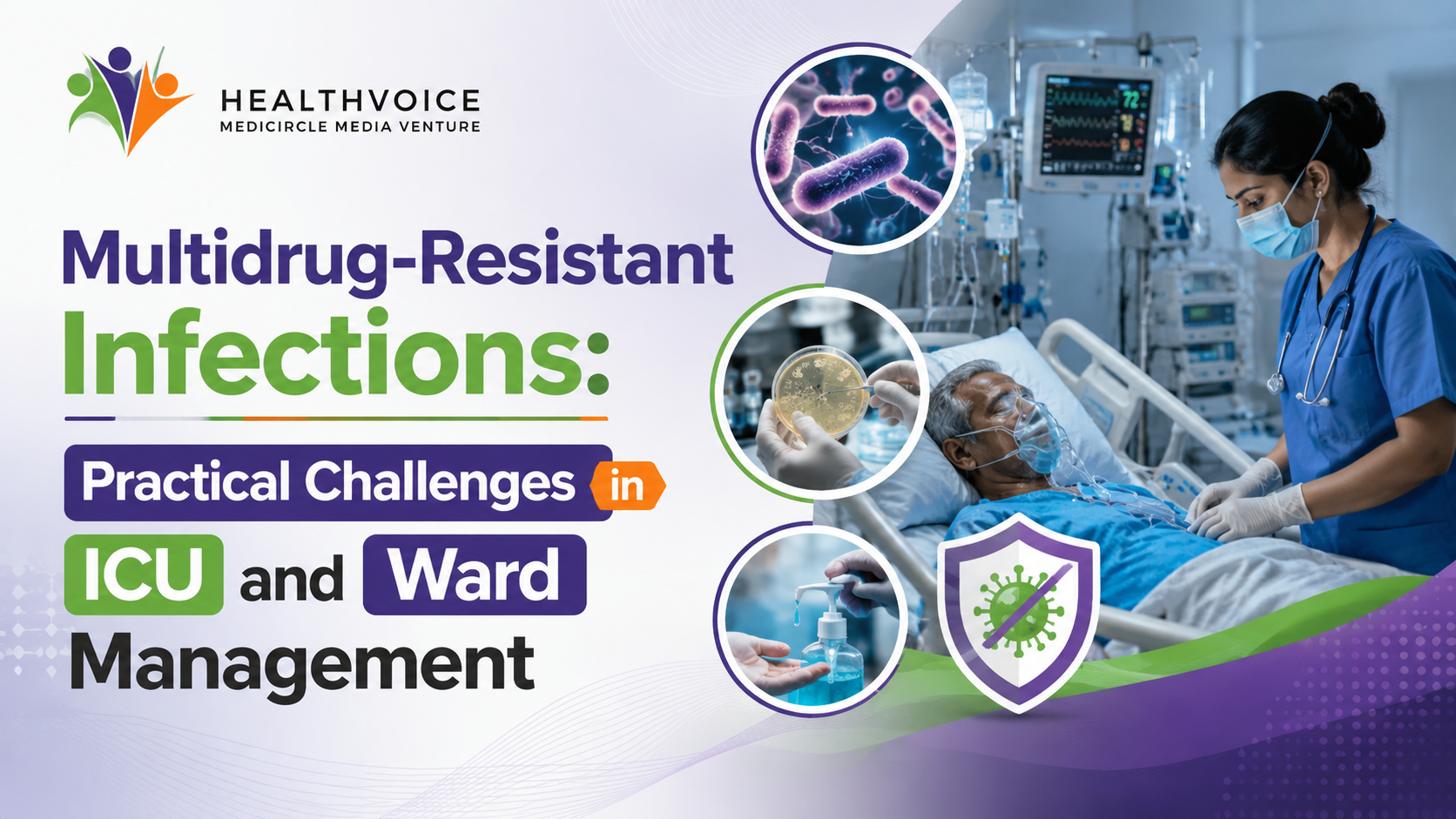
Multidrug-Resistant Infections: Practical Challenges in ICU and Ward Management
Multidrug-resistant infections have emerged as one of the most serious threats facing modern healthcare systems. What was once considered a future concern discussed primarily in academic circles has now become a daily reality in hospitals across India. Intensive care units, surgical wards, and general inpatient departments increasingly encounter infections caused by organisms that no longer respond to commonly used antibiotics.
For healthcare professionals, managing these infections requires constant vigilance, careful clinical decision-making, and coordinated teamwork. For patients and their families, a multidrug-resistant infection can lead to prolonged hospital stays, increased treatment costs, and greater uncertainty about recovery. Understanding why these infections occur and how hospitals can respond effectively is essential for improving patient outcomes and safeguarding public health.
Understanding Multidrug-Resistant Infections
A multidrug-resistant organism is a bacterium that has developed resistance to multiple classes of antibiotics. These organisms are not necessarily new pathogens. Many have existed in healthcare settings for decades. The difference today is that they have acquired genetic mechanisms that allow them to survive treatments that were once highly effective.
Some of the most commonly encountered multidrug-resistant organisms include Klebsiella pneumoniae, Acinetobacter baumannii, Pseudomonas aeruginosa, and Staphylococcus aureus. These bacteria have gradually adapted through repeated exposure to antibiotics, making them increasingly difficult to eliminate.
The problem is particularly relevant in India, where antibiotic use remains widespread in both healthcare and community settings. Easy access to antibiotics, inappropriate prescribing practices, incomplete treatment courses, and self-medication have all contributed to rising resistance levels. As resistant organisms become more common in the community, hospitals inevitably face a growing burden of difficult-to-treat infections.
Why Intensive Care Units Are Highly Vulnerable
Intensive Care Units represent the most challenging environment for infection prevention and control. Patients admitted to these units are often critically ill and require complex medical interventions. Many have weakened immune systems, severe underlying illnesses, or recent major surgeries that increase their susceptibility to infection.
The use of invasive devices further increases risk. Mechanical ventilators, urinary catheters, and central venous lines provide essential support for critically ill patients, but they can also serve as pathways for bacteria to enter the body. When resistant organisms gain access through these routes, infections can develop rapidly and become difficult to manage.
Research from critical care settings has shown that respiratory infections remain among the most common sources of multidrug-resistant infections. Ventilator-associated pneumonia continues to be a significant concern because resistant gram-negative bacteria frequently colonise respiratory equipment and hospital environments. Organisms such as carbapenem-resistant Klebsiella pneumoniae and carbapenem-resistant Pseudomonas aeruginosa have become increasingly prevalent in many ICUs.
The rise of carbapenem resistance presents a particular challenge. Carbapenems were once considered among the most reliable antibiotics for severe gram-negative infections. As resistance to these agents grows, clinicians are increasingly forced to rely on older drugs that may carry greater risks of toxicity and adverse effects.
Beyond Medicine: A System-Wide Challenge
Although multidrug-resistant infections are often viewed as a microbiological or pharmacological problem, they are equally a systems issue. Successful prevention and management depend on multiple components functioning effectively at the same time.
Hospital infrastructure, staffing levels, environmental cleaning, infection control policies, communication between departments, and antibiotic prescribing practices all influence the spread of resistant organisms. Failure in any one area can compromise the effectiveness of the entire infection prevention programme.
Hand hygiene remains one of the most effective measures available. Resistant bacteria frequently spread through direct contact, often involving healthcare workers, contaminated equipment, or environmental surfaces. Despite widespread awareness of its importance, maintaining consistently high compliance rates remains difficult in busy clinical environments where patient care demands are constant.
Environmental contamination also plays a major role. Resistant organisms can survive on bed rails, bedside tables, monitors, ventilator components, and other frequently touched surfaces for extended periods. Inadequate cleaning practices allow these organisms to persist and contribute to ongoing transmission within healthcare facilities.
Isolation precautions provide another important layer of protection. However, implementing isolation measures can be challenging in hospitals facing bed shortages and infrastructure limitations. While single-room isolation remains ideal, many facilities must rely on cohorting strategies and strict adherence to contact precautions to reduce transmission.
The Critical Importance of Antibiotic Stewardship
Antibiotic stewardship has become one of the most important strategies for addressing antimicrobial resistance. The concept is straightforward: antibiotics should be used only when necessary, selected appropriately, and prescribed for the correct duration.
In practice, however, stewardship can be difficult to implement consistently. Critically ill patients often require immediate treatment before laboratory results become available. Delaying therapy in severe infections can be dangerous and may increase mortality risk. Consequently, physicians frequently initiate broad-spectrum antibiotics empirically while awaiting culture results.
The challenge arises when these initial treatment decisions are not reassessed. Once microbiological data become available, antibiotics should be reviewed and adjusted according to the identified organism and its resistance profile. Failure to de-escalate therapy unnecessarily exposes bacteria to broad-spectrum agents and accelerates resistance development.
Hospitals that implement structured stewardship programmes generally report improvements in antibiotic prescribing practices. These programmes encourage regular review of antibiotic use, collaboration between clinicians and microbiologists, and adherence to evidence-based treatment guidelines.
In India, many large tertiary care centres have established stewardship committees and monitoring systems. However, smaller hospitals and nursing homes often face resource limitations that hinder implementation. Expanding stewardship efforts beyond major institutions remains essential for meaningful progress against antimicrobial resistance.
The Value of Multidisciplinary Collaboration
Managing multidrug-resistant infections effectively requires expertise from multiple disciplines. No single healthcare professional can address every aspect of diagnosis, treatment, prevention, and surveillance independently.
An effective multidisciplinary team typically includes treating physicians, intensivists, microbiologists, pharmacists, infection control nurses, and hospital administrators. Each professional contributes unique knowledge that helps optimise patient care and infection control efforts.
Close collaboration between microbiologists and clinicians improves the interpretation of culture results and resistance patterns. Pharmacists support appropriate antibiotic selection and help identify opportunities for de-escalation. Infection control nurses play a critical role in monitoring compliance with isolation precautions and hand hygiene practices.
Hospitals that foster strong multidisciplinary collaboration often achieve better infection control outcomes. Communication becomes more efficient, treatment decisions are made more rapidly, and infection prevention measures are implemented more consistently.
Developing this collaborative culture requires institutional support and commitment. Although resource constraints can create obstacles, successful examples from Indian healthcare institutions demonstrate that meaningful improvements are achievable through coordinated teamwork.
Accurate Diagnosis Drives Better Outcomes
Timely and accurate diagnosis forms the foundation of effective multidrug-resistant infection management. Without reliable microbiological information, clinicians may struggle to select appropriate therapy and may inadvertently contribute to resistance through unnecessary antibiotic use.
Whenever clinically feasible, diagnostic specimens should be collected before antibiotics are initiated. Blood cultures, urine cultures, sputum samples, and wound specimens provide valuable information about the causative organism and its susceptibility profile.
The quality of diagnostic testing depends heavily on proper specimen collection techniques. Contaminated or poorly collected samples can produce misleading results that complicate clinical decision-making. Continuous training of nursing and laboratory personnel is therefore an essential component of infection management programmes.
Advances in diagnostic technology have improved the speed and accuracy of pathogen identification. Automated microbiology systems and molecular diagnostic platforms can provide actionable information much earlier than traditional methods. Faster diagnosis enables earlier optimisation of treatment and may improve outcomes for patients with severe infections such as sepsis.
Despite these advances, significant disparities remain between large urban hospitals and smaller healthcare facilities. Expanding access to high-quality diagnostic services remains an important priority for healthcare systems across India.
What Patients and Families Need to Know
For patients and their families, the diagnosis of a multidrug-resistant infection can be alarming. The infection may require specialised treatment, extended hospitalisation, and closer monitoring than standard bacterial infections.
However, multidrug resistance does not mean untreatable. Many patients recover successfully when treatment is guided by experienced healthcare teams and supported by accurate diagnostic information.
Families can contribute positively to infection prevention efforts by following hospital infection control policies and practising proper hand hygiene during visits. Although healthcare professionals carry primary responsibility for infection prevention, patient and family participation can provide valuable additional support.
Responsible antibiotic use outside hospital settings is equally important. Self-medication, inappropriate antibiotic use for viral illnesses, and failure to complete prescribed treatment courses all contribute to the broader problem of antimicrobial resistance. Community awareness and responsible healthcare practices are essential for reducing future resistance levels.
Looking Ahead
The future of multidrug-resistant infection management will likely involve a combination of technological innovation and stronger healthcare systems. Emerging tools such as real-time infection surveillance platforms, artificial intelligence-assisted decision support systems, and rapid genomic sequencing technologies have the potential to transform how hospitals detect and respond to resistant organisms.
These advances may enable earlier identification of outbreaks, more precise antibiotic selection, and improved monitoring of resistance trends. Several leading healthcare institutions in India have already begun exploring such technologies.
Nevertheless, technology alone cannot solve the problem. Sustainable progress depends on strong infection control programmes, adequately trained healthcare workers, effective stewardship initiatives, and institutional cultures that prioritise patient safety. Investments in these foundational elements remain just as important as investments in advanced diagnostic and monitoring tools.
Conclusion
Multidrug-resistant infections represent one of the most complex challenges facing modern healthcare. Their emergence reflects a combination of biological adaptation, antibiotic misuse, healthcare system pressures, and infection control gaps. The burden is particularly significant in hospital settings, where vulnerable patients face increased risks of severe illness and complications.
Addressing this challenge requires coordinated action across multiple levels of the healthcare system. Effective antibiotic stewardship, rigorous infection prevention measures, timely diagnosis, multidisciplinary collaboration, and ongoing education all play essential roles. While the scale of the problem is considerable, meaningful progress is possible when hospitals, healthcare professionals, policymakers, and communities work together toward a common goal of preserving the effectiveness of antimicrobial therapies for future generations.
Frequently Asked Questions
What is a multidrug-resistant infection?
A multidrug-resistant infection is caused by bacteria that have become resistant to multiple classes of antibiotics, making treatment more difficult and often requiring specialised antimicrobial therapy.
Why are multidrug-resistant infections common in ICUs?
ICU patients are often critically ill and require invasive devices, prolonged hospital stays, and broad-spectrum antibiotics. These factors increase both infection risk and the likelihood of exposure to resistant organisms.
How can hospitals reduce multidrug-resistant infections?
Hospitals can reduce multidrug-resistant infections through effective hand hygiene practices, antibiotic stewardship programmes, environmental cleaning, timely diagnosis, patient isolation measures, and strong multidisciplinary collaboration.
Abstract
Multidrug-resistant infections pose major challenges in Indian hospitals. Effective control depends on antibiotic stewardship, infection prevention, accurate diagnosis, multidisciplinary teamwork, and sustained healthcare system improvements.
 Team Healthvoice
#AntimicrobialResistance #CriticalCareMedicine