How to communicate complex conditions simply to the public
This article explains how clear, relatable language in healthcare can bridge the gap between medical knowledge and everyday understanding, helping people feel informed, empowered and genuinely supported.
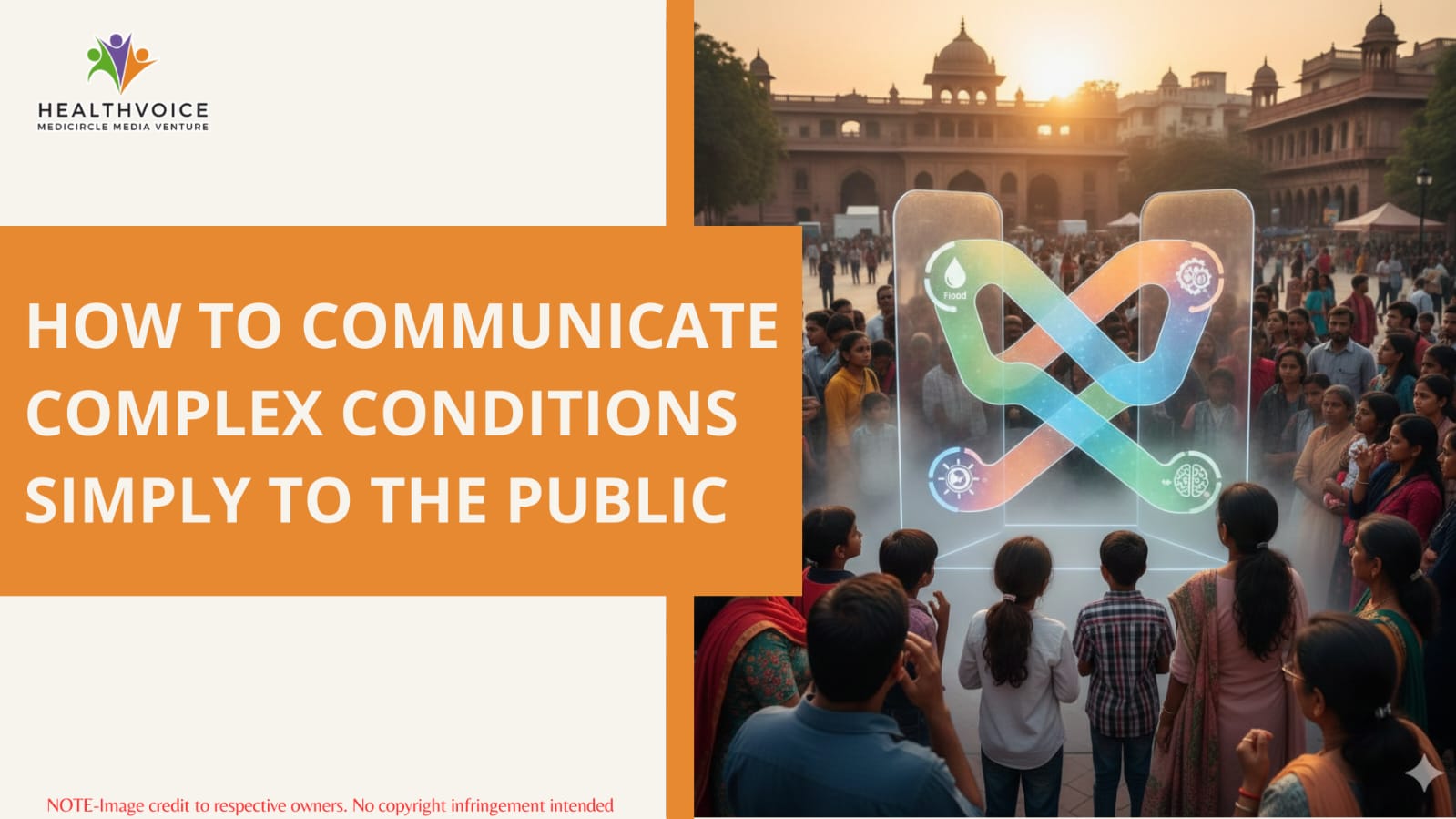
We have all been there. In a clinic room, trying to listen as a doctor explains a diagnosis. Words like autoimmune disorder or chronic inflammation hang in the air. You might nod politely, but deep down, there is a flicker of worry. What does this truly mean for your daily routine, your family, your future? That quiet space between expert knowledge and everyday understanding is not just a small gap. It can feel like a vast canyon. Crossing it is one of healthcare’s most important and often overlooked tasks.
So, how do we take the complex machinery of human health and describe it in words that bring clarity, not confusion? It is not about reducing the science. It is about translation. It is a fundamentally human act of connection, making sure life-saving knowledge reaches the people it is meant for.
Connect to the feeling:
Our instinct is to define first. But a definition can feel cold and distant. Try a different path: begin with the real-world effect. How does this condition feel? How does it change a person’s day? Take diabetes, for instance. Instead of a lecture on pancreas function, you could describe it as the body having trouble using the energy from food. Imagine insulin as a friendly helper whose job is to open the doors to your body’s cells. With diabetes, those keys do not work well, so sugar, the body’s fuel, gets stuck outside, building up in the blood where it should not be.
This simple shift changes everything. Suddenly, arthritis is not just a medical term. It is the experience of a joint that has lost its smooth glide, feeling stiff and painful like a rusted gate hinge. You are not just learning a name. You are understanding a lived experience.
Paint a picture:
The mind loves a good image. A strong, familiar comparison can explain more than a page of medical text. Think of your blood vessels as a city’s network of roads. Cholesterol is not just a chemical. It is the traffic on those roads. The good kind HDL, acts like diligent cleanup crews, clearing away blockages. The less helpful kind, LDL is like too many delivery trucks double-parked, slowly bringing traffic to a standstill.
For readers in India, using scenes from daily life makes the picture stick. A blocked artery? Picture a popular, narrow market lane during Diwali shopping, utterly crammed, where nothing can move through. Probiotics for gut health? They are like the beneficial bacteria in a pot of homemade dahi, the friendly forces that keep your digestive system strong and balanced. These are not just explanations. They are stories that memory holds onto.
Embrace the dialogue:
Specialist language is a useful tool for doctors talking to each other. For everyone else, it can be a wall. The golden rule is to use the vocabulary of the home and the heart. Hypertension is simply high blood pressure. Your heart is working too hard to push blood around. Antibiotic resistance means germs have grown clever. They have learned to shield themselves from medicines that used to defeat them.
Structure your words for ease, not for impressiveness. Keep sentences and paragraphs short and direct. Use clear, bold headings as signposts. Pose the very questions ticking in the reader’s mind: So, what should I do now?
Or what are the signs I must notice? The voice should be warm, like a trusted family friend sharing what they know, their tone patient and clear.
Remember the human:
Information informs, but a story truly touches. While protecting identities, weaving in genuine human experiences, the journey from fear to knowledge, from confusion to control, transforms a health article into a companion. It reminds the reader that they are not a set of symptoms, but a person navigating a challenge, just like someone else has.
When people see their own worries or hopes reflected back at them, facts become tools. They become comfort. They answer the silent, powerful question we all ask in difficult times: Does anyone else get what I am going through?
Clarity is kindness:
In the end, explaining health simply is a profound sign of respect. In a nation as wonderfully diverse as India, where access to information varies widely, this clarity is not a luxury. It is a necessity. It can turn anxiety into awareness and hesitation into positive action.
It is the work of replacing a fog of frightening terms with the sunlight of understanding. By focusing on real-life impact, sketching vivid, familiar pictures, choosing common words and honoring personal stories, we do more than communicate. We connect. We build a bridge of trust and across that bridge walks something powerful: empowerment, hope and the genuine possibility of better health for all.
 Team Healthvoice
#HealthTalks #HealthMadeSimple #HealthcareForAll #EverydayHealth #HealthTalks #HealthSimplified #patientfirst #health #healthvoice