Maternity Leave for Doctors: Why Medical Rules Must Bend to Biology
Policies must evolve to recognise the lived realities of doctors. Leave rules should protect training integrity while accommodating life’s certainties.
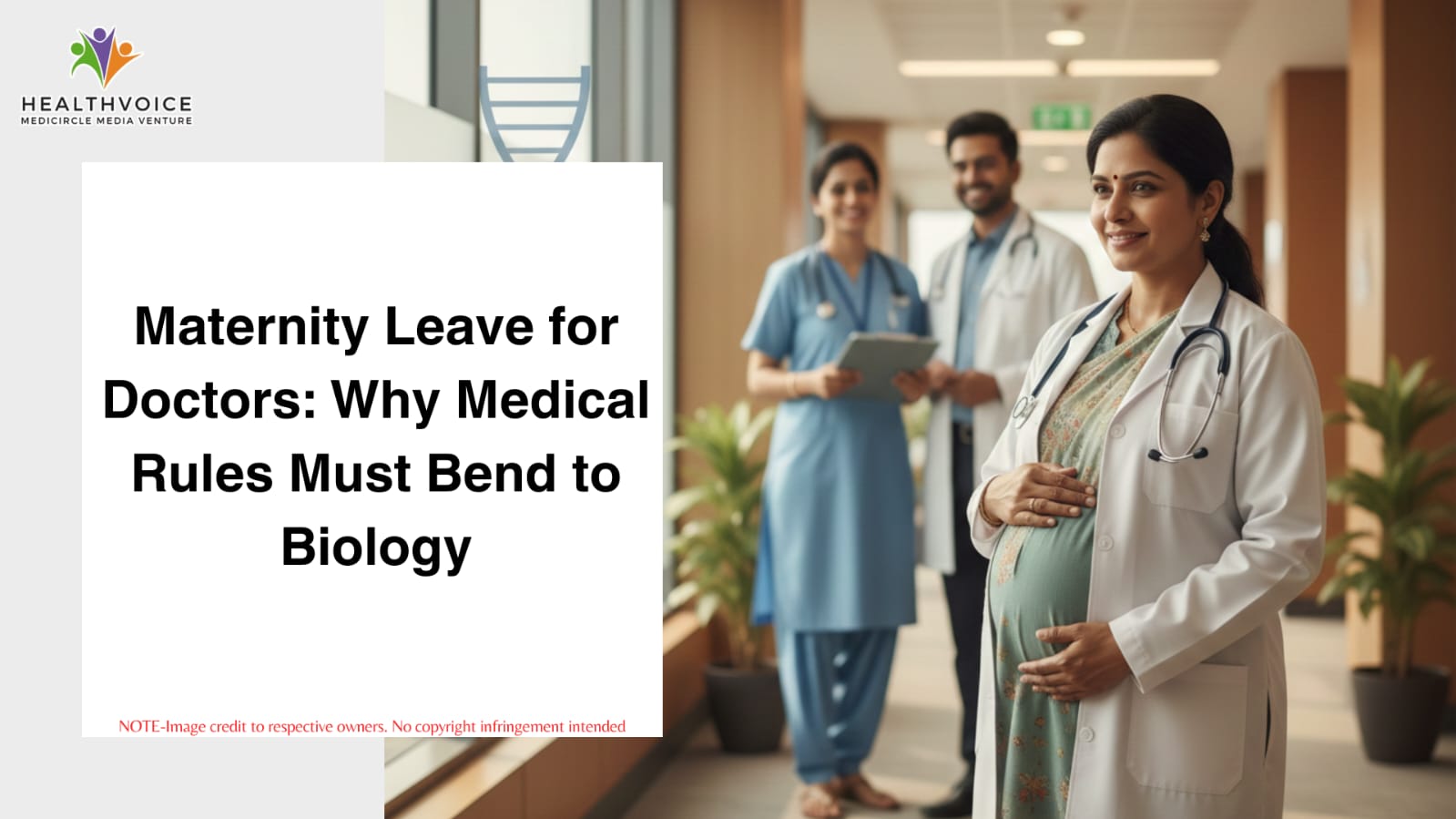
Medicine has always demanded sacrifice. Long hours, delayed personal milestones, and emotional endurance are quietly woven into the identity of every doctor. But there are moments when the system’s expectations collide sharply with human biology, forcing a reckoning that medicine itself cannot ignore. A recent decision by the Kerala High Court does precisely that, drawing a firm line between administrative rigidity and fundamental human rights, and in doing so, delivering a message that resonates deeply with doctors across the country.
At the heart of the case lies a question many clinicians, especially women doctors, have silently carried for years: can medical training ever justify asking a doctor to choose between motherhood, health, and a career painstakingly built over decades? The court’s answer is clear. Reproductive rights are not concessions granted by institutions. They are part of the constitutional fabric, and maternity leave cannot be diluted, merged, or treated as an inconvenience that threatens a doctor’s professional future.
The case concerns a super speciality trainee pursuing a DrNB course under the National Board of Examinations in Medical Sciences. Her academic journey mirrors that of countless doctors. MBBS, MD in General Medicine, followed by success in the fiercely competitive NEET Super Speciality examination. Admission to a nephrology programme marked the culmination of years of disciplined effort. Yet, during training, life intervened in ways no rulebook could fully anticipate.
She took maternity leave following childbirth, a period that medicine itself recognises as essential for recovery and bonding. Later, she faced an even harsher reality: a diagnosis of advanced-stage high-grade B-cell lymphoma, a condition that demands aggressive treatment and prolonged recovery. Between pregnancy, childbirth, cancer therapy, and convalescence, her absence from training exceeded the numerical limits set by institutional leave rules. What followed was a chilling administrative response. Her request for extended leave was denied, and the spectre of cancellation of her candidature loomed large.
Training rules, often drafted with uniformity in mind, rarely account for illness, disability, pregnancy, or caregiving responsibilities. They operate on the assumption that every trainee body is endlessly resilient, immune to biology, and untouched by chance. When reality breaks that illusion, the burden is pushed back onto the individual doctor, framed as a failure to comply rather than a need for accommodation.
The Kerala High Court refused to accept that framing. It recognised that maternity leave occupies a fundamentally different moral and legal space from casual or discretionary leave. Pregnancy is not an interruption to professional life; it is a biological certainty for many women. Recovery after childbirth is not optional. By holding that maternity leave cannot be clubbed with regular leave to trigger punitive consequences, the court reaffirmed that medical education does not exist outside constitutional values.
The judgment goes further. It acknowledges that even beyond statutory protections like the Maternity Benefit Act, the right to reasonable leave during pregnancy and postpartum recovery flows from basic principles of dignity, equality, and bodily autonomy. This reasoning matters deeply for doctors because it situates maternity leave within the broader framework of reproductive rights, rather than treating it as a policy favour subject to institutional discretion.
Equally significant is the court’s willingness to intervene in what is often labelled an academic matter. Traditionally, courts tread cautiously around medical education, respecting the autonomy of regulatory bodies. Yet the bench recognised that rigid adherence to rules, without room for exceptional circumstances, can cross the line into unreasonableness. When a system designed to train healers shows no capacity to accommodate illness or childbirth, judicial correction becomes necessary.
The facts of the case highlights a recurring problem in medical training. Leave limits are often enforced mechanically, with little consideration for context. A woman trainee who becomes pregnant, or a doctor diagnosed with a life-threatening illness, is treated the same as someone seeking prolonged leave for non-medical reasons. This flattening of human experience into numbers on a spreadsheet reflects a deeper disconnect between policy and practice.
For female doctors, the message has historically been stark. Plan your family around your career, or risk losing years of training. Delay pregnancy until training ends, or accept professional penalties. This implicit expectation has contributed to burnout, delayed motherhood, fertility struggles, and emotional distress among women in medicine. The Kerala High Court’s ruling challenges this culture by asserting that medical institutions must adapt to doctors, not the other way around.
The judgment also addresses another uncomfortable truth. Many trainees enter courses under one set of rules, only to find new regulations applied midway through training. In this case, the trainee argued that the leave rules invoked against her were not in force when she joined the programme. The court’s acknowledgment of this argument reinforces the principle of fairness in regulatory governance. Doctors cannot be subjected to moving goalposts, especially when careers and livelihoods are at stake.
Importantly, the court did not advocate for unregulated leave or erosion of academic standards. It recognised the legitimacy of maintaining discipline and structure in medical education. What it rejected was absolutism. The idea that no circumstances, however grave, could justify deviation from a numerical limit was found incompatible with reason and equality. The court emphasised that regulatory bodies must retain discretion to consider extraordinary cases on their merits.
For practising doctors, this reasoning carries implications beyond postgraduate training. It speaks to a larger philosophy of healthcare administration. Systems function best when they combine standards with compassion. Clinical medicine thrives on individualised assessment, yet training regulations often ignore that very principle. This judgment nudges the system toward alignment with the values doctors practice every day at the bedside.
The court’s directive to allow the trainee to submit a fresh leave application, and its insistence that her candidature not be terminated in the interim, provides immediate relief. But the broader impact lies in the precedent it sets. It signals to regulatory authorities that maternity leave and serious illness cannot be treated as procedural inconveniences. They demand accommodation, flexibility, and humane decision-making.
For male doctors, this ruling matters too. It reshapes the culture of training environments, making them more sustainable for teams, families, and future generations of physicians. A system that supports women doctors during pregnancy and illness is a system that ultimately supports better patient care. When doctors are forced to train through physical vulnerability or personal crisis, the cost is borne by everyone.
The judgment also invites regulatory introspection. If institutions fear misuse of leave provisions, the solution lies in structured discretion, clear guidelines, and transparent review processes. Blanket limits that fail to distinguish between childbirth, cancer treatment, and elective absence undermine trust in governance. Medicine, after all, is a profession built on nuanced judgment, not rigid formulas.
At a deeper level, the ruling asks an uncomfortable question of the profession itself. Why has it taken judicial intervention to assert what should be self-evident to healers? Why do institutions that teach empathy, patient-centred care, and holistic healing struggle to extend the same principles to their trainees? The answer lies partly in legacy systems, partly in fear of administrative complexity, and partly in an entrenched culture of endurance that mistakes suffering for merit.
This decision offers an opportunity to rethink that culture. It reminds us that resilience does not mean denying biology or ignoring illness. True resilience is the ability of systems to adapt, to hold standards without losing humanity. Medical education must reflect the values it seeks to instil.
As India continues to reform medical education and training pathways, this ruling should serve as a compass. Policies must evolve to recognise the lived realities of doctors. Leave rules should protect training integrity while accommodating life’s certainties. Regulatory bodies must remember that they govern people, not just programmes.
In the end, the Kerala High Court’s message is medicine cannot demand compassion from its practitioners while denying it to them in return. If the system truly seeks to nurture skilled, ethical, and human doctors, it must begin by respecting their most fundamental rights.
 Team Healthvoice
#MedicalEducation #DoctorsLife #WomenInMedicine #ReproductiveRights #HealthcarePolicy #KeralaHighCourt #DrNB #MedicalLaw #GenderEquity #WorkplaceEquality #HealthcareReform #MedicalTraining #ConstitutionalRights #HumanRights #MaternityLeave #WomenDoctors #MedicalEthics #ResidencyLife #MedicalCommunity #healthvoice