Medical Data Breaches: What Happens Beyond the IT Department?
Medical data breaches in India extend far beyond IT failures, disrupting clinical care, eroding patient trust, creating legal liability for doctors, and damaging institutional reputation across the healthcare ecosystem.
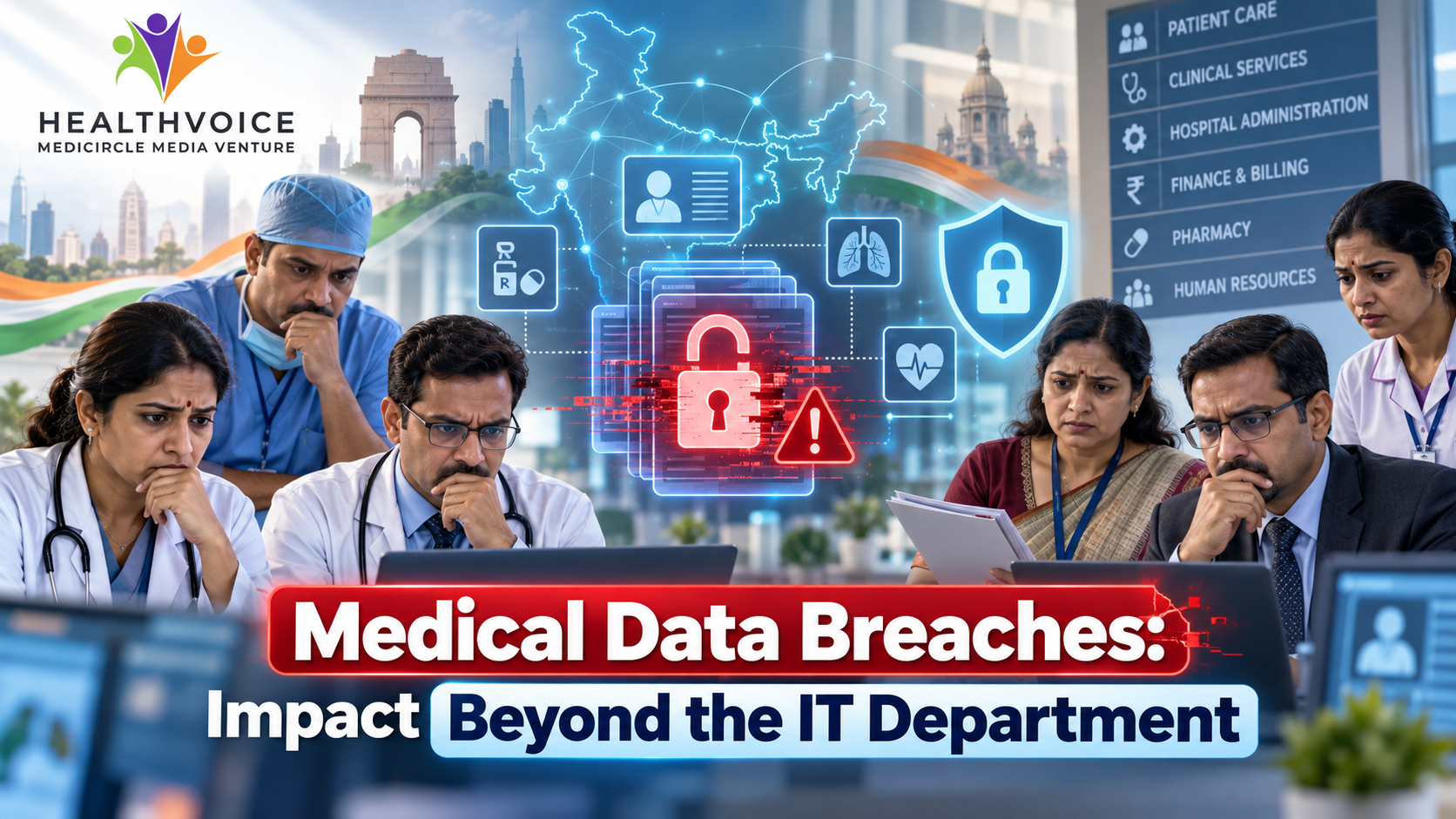
Introduction
When a hospital's data systems are compromised, the first response is almost always a technology problem. Security teams are alerted, servers are isolated, forensic audits begin, and the breach gets classified as an IT incident. This framing, while necessary, is dangerously incomplete.
When patient records are exposed, the consequences extend beyond regulatory fines to the people whose data was compromised. A medical data breach is not merely a failure of firewalls or encryption protocols. It is a systemic rupture that travels through every layer of a healthcare institution: the ward, the consultation room, the administrative office, the pharmacy, and most importantly, the minds of patients who trusted their most sensitive information to the care of doctors and hospitals.
As India accelerates its digital health transformation through the Ayushman Bharat Digital Mission (ABDM) and builds momentum around electronic health records under the National Health Stack framework, the volume of digitised patient data being generated, stored, and transmitted is expanding at an unprecedented pace. This makes understanding the full scope of a data breach, well beyond the IT department, one of the most urgent conversations in Indian healthcare today.
Understanding What Medical Data Actually Contains
To appreciate why a healthcare data breach is different from a breach at a retail company or a bank, one must first understand the nature of medical data itself.
A patient's health record is not just a collection of clinical notes. It typically contains full name, date of birth, Aadhaar-linked identifiers, mobile number, address, insurance details, medical record numbers, diagnosis codes, prescription history, laboratory results, imaging reports, surgical notes, mental health documentation, and in many cases, genetic or reproductive health information. Health data, encompassing medical histories, diagnoses, prescriptions, lab results, imaging, genetic information, mental health records, biometric identifiers, teleconsultation recordings, and wearable device data, is unequivocally high-risk.
This combination of clinical, financial, and personally identifiable information makes medical data far more valuable to malicious actors than most other data types. On dark web markets, healthcare records consistently fetch higher prices than financial records precisely because they offer attackers multiple vectors for exploitation simultaneously.
The Clinical Cascade: When Care Delivery Breaks Down
The most immediate and life-threatening consequence of a major data breach is the disruption to clinical operations. This is the dimension that most IT-centric breach discussions fail to adequately address.
Ascension diverted ambulances, reverted to paper charting, and lost access to electronic health records, e-prescribing, and phone systems across 19 states for several weeks following a ransomware attack. This is not an isolated international example. The 2022 AIIMS Delhi ransomware attack compromised over 40 million patient records and paralyzed hospital operations for weeks, exemplifying the operational and reputational catastrophe that inadequate data protection can trigger.
When an Indian hospital's networked systems go offline following a breach or ransomware attack, the consequences for clinical care are immediate and severe:
- Doctors cannot access previous medication history, allergy records, or diagnostic reports at the point of care
- Pharmacy systems cannot verify prescriptions electronically, creating dangerous delays
- Laboratory and radiology order systems revert to paper slips, slowing turnaround times for critical results
- Surgical scheduling software becomes inaccessible, leading to postponements and bed management chaos
- Emergency departments face the worst impact as time-sensitive decisions are made without digital support
For patients in critical care, these disruptions are not inconveniences. They carry genuine clinical risk. A doctor treating an unconscious patient without access to their medical history, current medications, or known allergies is operating at a significant informational deficit. The consequences of that deficit can be irreversible.
The Erosion of Patient Trust
Beyond the immediate clinical disruption, a data breach inflicts a slower but equally damaging form of harm: the erosion of patient trust in both their individual doctors and in healthcare institutions at large.
Confidentiality breaches had the most significant negative impact on interpersonal trust among patients, and while confidentiality breaches may not cause direct physical harm, they can erode trust, result in patient humiliation, and lead to broad disadvantages including legal sanctions.
This matters profoundly in the Indian healthcare context, where the doctor-patient relationship carries deep cultural significance. Patients from Tier 2 and Tier 3 cities, many of whom are now being onboarded to digital health platforms under ABDM for the first time, extend considerable personal trust when they consent to share their health records digitally. A breach that exposes their data, especially sensitive information around mental health, reproductive health, or chronic disease, can cause lasting psychological distress and social stigma.
A data breach involving patient records can lead to discrimination, social stigma, insurance denial, and profound psychological distress. For patients in communities where health conditions such as HIV, mental illness, or certain hereditary disorders still carry significant social consequences, unauthorised exposure of their medical data can have life-altering repercussions that no credit monitoring service can remediate.
The downstream effect on healthcare behaviour is equally serious. Patients who have experienced a breach, or who fear one, often begin to self-censor during consultations. They withhold symptoms, conceal relevant history, or avoid digital health platforms altogether. This compromises diagnostic accuracy and continuity of care in ways that physicians may not even be aware of.
The Legal and Regulatory Dimension for Doctors
Medical professionals in India operate within a legal framework that is evolving rapidly in response to digital health expansion, and data breaches sit squarely within that evolving framework.
Patient privacy in India is currently governed by the Information Technology Act 2000, the Telemedicine Practice Guidelines 2020, and the Clinical Establishments Act 2010, though these laws are either outdated or poorly enforced. The Digital Personal Data Protection Act 2023 now adds a significantly more robust layer of legal accountability.
The DPDP Act strengthens trust between patients and hospitals by mandating patient consent and reinforcing transparency, and the Act's emphasis on reasonable security safeguards reduces data breach risk. However, what this also means is that the obligations for compliance rest not only with hospital IT administrators but with every stakeholder who processes patient data, including treating doctors, department heads, hospital management, and third-party vendors such as diagnostic labs and health insurance TPAs.
Penalties under the DPDP Act can reach up to Rs 150 crore for breach of general data fiduciary obligations, and professional consequences including NMC disciplinary action and accreditation risks such as NABH suspension compound those financial penalties.
This is a dimension that many clinicians in India are not yet fully aware of. A doctor who uses an unsecured third-party teleconsultation platform, shares patient reports over unencrypted channels, or works in a hospital that has not implemented adequate access controls is no longer simply making an administrative oversight. Under the current and emerging legal framework, such gaps create genuine legal exposure.
The Reputation Damage No Algorithm Can Undo
Institutional reputation in Indian healthcare is built over decades and is deeply tied to the trust communities place in specific hospitals and medical professionals. A significant data breach can damage that reputation in ways that financial penalties cannot fully capture.
When a vendor with access to multiple health systems gets breached, the impact cascades across their entire client base, and many healthcare organisations still lack visibility into their vendor ecosystem's security practices. In India, this vendor risk extends to diagnostic chains, health insurance third-party administrators, telemedicine aggregators, and health tech platforms that integrate with hospital systems. A breach at any one of these third parties can expose patient data from dozens of hospitals simultaneously, with each institution suffering reputational consequences for a failure they may not have directly caused.
Medical associations in India, including state and national bodies, are increasingly being called upon to define standards of conduct around data handling. How member institutions and individual doctors respond to a breach, whether they notify patients promptly, cooperate transparently with regulators, and demonstrate genuine accountability, has become a marker of professional integrity that extends well beyond technical security compliance.
What Responsible Breach Response Looks Like
Data security in healthcare cannot be treated as a project that begins and ends in the server room. A genuinely responsible approach involves every department, every team, and every individual who touches patient data.
The following are the non-negotiable elements of a healthcare institution's breach preparedness and response posture:
- Clinical leadership involvement: Chief Medical Officers and department heads must be active participants in data governance, not observers who are informed after incidents occur
- Staff training across disciplines: Nurses, administrative staff, billing teams, and housekeeping personnel who access networked systems all represent potential breach entry points through phishing or social engineering
- Vendor accountability: Contracts with diagnostic labs, pharmacy platforms, and health tech vendors must include enforceable data protection standards and breach notification obligations
- Patient communication protocols: Institutions need pre-designed, empathetic patient notification processes that are activated within defined timeframes following a confirmed breach
- Regulatory compliance alignment: All systems and workflows must be mapped against ABDM security requirements and DPDP Act obligations, with documented evidence of compliance
Organisations that embrace a model of privacy, accountability, and patient-centric governance will be better positioned to build patient trust, demonstrate accountability to regulators, and participate confidently in India's digital health transformation. Those that treat DPDP compliance as a checklist risk fragmentation, regulatory exposure, and erosion of confidence.
The Role of Medical Associations and Professional Communities
Medical associations occupy a uniquely important position in shaping how Indian healthcare responds to the growing threat of data breaches. These bodies have the reach, credibility, and authority to drive adoption of data protection standards across thousands of member institutions and individual practitioners simultaneously.
Through structured guidance documents, continuing medical education modules on digital ethics, and formal position statements on patient data rights, associations can translate complex regulatory requirements into practical language that clinicians can understand and act upon. They can also serve as a collective voice in engaging with government bodies such as the Ministry of Health and Family Welfare, the National Medical Commission, and MeitY when healthcare-specific data protection frameworks are being designed or updated.
Platforms that connect doctors, medical associations, and healthcare institutions in a structured professional environment, such as HealthVoice, can play a meaningful role in this space by facilitating knowledge sharing, elevating expert voices on data governance, and ensuring that important conversations about digital responsibility reach the doctors and healthcare leaders who most need them.
Conclusion
A medical data breach begins in a server room but never ends there. Its consequences travel through the clinical corridors of a hospital, into the consulting rooms where doctors and patients build relationships of trust, through the legal offices where regulatory liability is assessed, and into the communities where patients carry the lasting stigma of having their most intimate health information exposed without consent.
For Indian healthcare, which stands at the intersection of unprecedented digital expansion and still-maturing data protection infrastructure, the conversation about data breaches must move beyond IT audits and firewall configurations. It must become a conversation about clinical responsibility, professional ethics, institutional accountability, and the fundamental obligation that every doctor, hospital, and healthcare community has to protect the trust that patients extend when they share their health information.
The technology will improve. The regulations will mature. What will define Indian healthcare's response to the data security challenge, more than any software tool or compliance checklist, is the seriousness with which medical professionals and healthcare leaders choose to treat patient data not as an administrative record but as an extension of the patient themselves.
Frequently Asked Questions
Q1: What happens to patients after a medical data breach?
Patients face identity theft, insurance fraud, social stigma, and psychological distress. They may also withhold sensitive health information in future consultations out of fear, directly harming their own care outcomes and complicating clinical decision-making.
Q2: Are doctors legally responsible when hospital data is breached?
Under India's Digital Personal Data Protection Act 2023 and the IT Act 2000, healthcare fiduciaries, including institutions and doctors who function as data processors, may face significant penalties. The National Medical Commission may also initiate professional disciplinary proceedings in serious cases.
Q3: How does a data breach affect clinical operations in a hospital?
Breaches can take down electronic health records, lab information systems, and pharmacy networks simultaneously. Hospitals are then forced to revert to paper-based workflows, causing dangerous delays in diagnostics, medication administration, and surgical scheduling.
Q4: What is India's law on healthcare data breaches?
India currently relies on the IT Act 2000, the DPDP Act 2023, the Telemedicine Practice Guidelines 2020, and the Clinical Establishments Act 2010. The DPDP Act mandates breach notification, patient consent, and reasonable security safeguards, with penalties reaching up to Rs 150 crore for violations.
Q5: How can Indian hospitals prevent medical data breaches?
Hospitals should implement role-based access controls, multi-factor authentication, regular security audits, comprehensive staff training, vendor risk assessments, and align operations fully with ABDM security frameworks and DPDP compliance requirements.
Resources
- Ministry of Electronics and Information Technology (MeitY): Official source for the Digital Personal Data Protection Act 2023 and India's data protection legislative framework
- Ayushman Bharat Digital Mission (ABDM): National digital health infrastructure guidelines, interoperability standards, and health data security frameworks
- National Medical Commission (NMC): Professional regulatory standards and ethical guidelines relevant to doctors handling patient data
- Indian Computer Emergency Response Team (CERT-In): Government body responsible for cybersecurity incident reporting and response guidelines for critical sectors including healthcare
- World Health Organization (WHO) India Country Office: Global and regional guidance on digital health governance, health data ethics, and patient privacy standards
Interlinking Keywords
patient data privacy India, ABDM health records, DPDP Act healthcare compliance, doctor professional ethics, hospital cybersecurity, digital health governance, NMC guidelines doctors, telemedicine data security
Last reviewed by:
Dr. Manthan Tripathi, HealthVoice Editorial and Medical Advisory Team, September 8, 2026
Disclaimer:
This article is intended for informational and professional awareness purposes only. It does not constitute legal advice. Healthcare institutions and medical professionals should consult qualified legal counsel and cybersecurity professionals to assess their specific compliance obligations under applicable Indian laws, including the Digital Personal Data Protection Act 2023 and the Information Technology Act 2000. Regulatory frameworks are subject to amendment, and the information in this article reflects the position as of September 2026.
 Dr. Manthan Tripathi
#DigitalHealthSecurity #MedicalDataProtection
