National Digital Health Mission Explained: What Every Doctor and Patient in India Must Know
India's National Digital Health Mission aims to build an interoperable, consent-driven digital health ecosystem connecting patients, doctors, and healthcare facilities through Health IDs, professional registries, and personal health records.
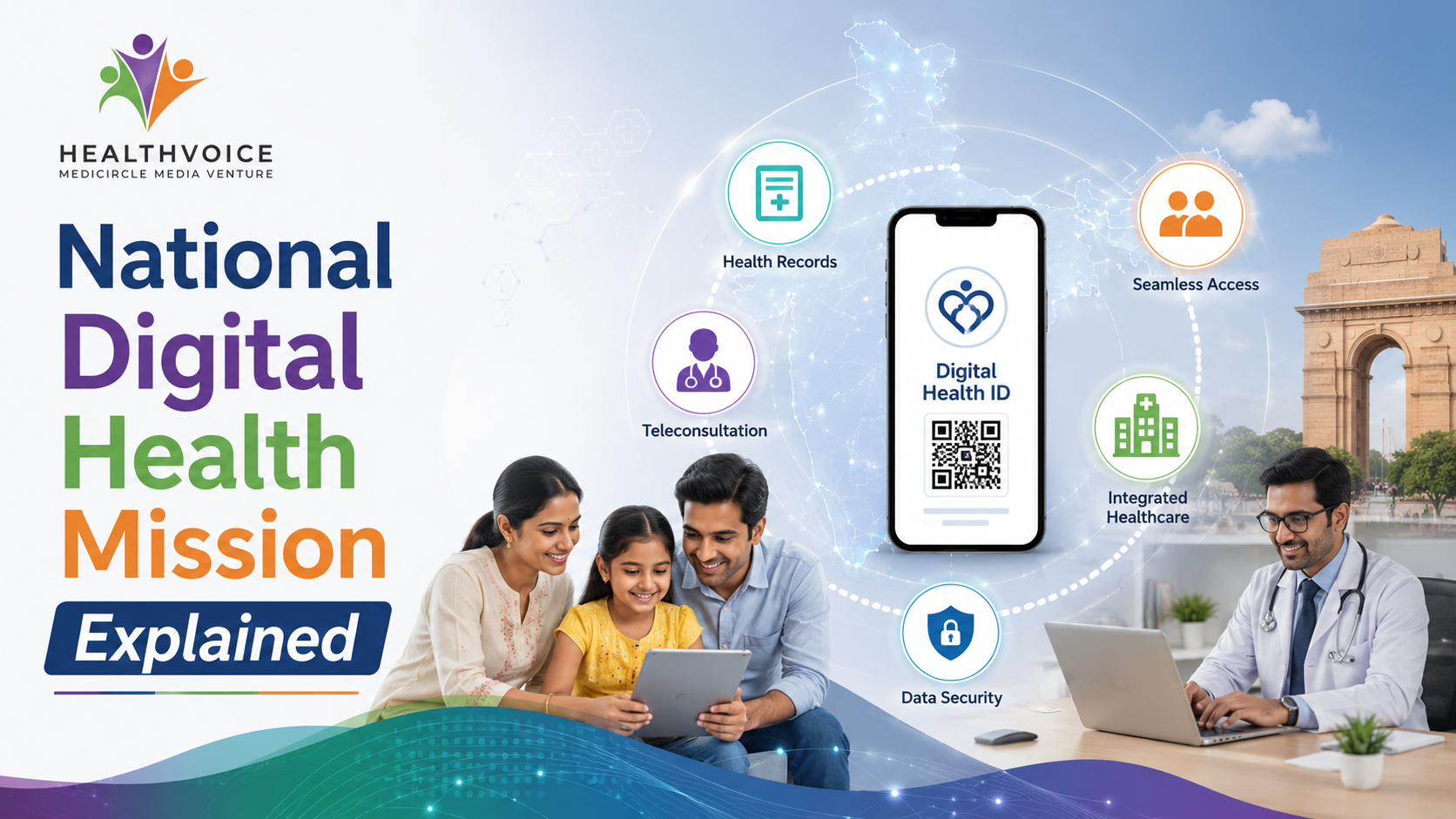
Introduction
India's healthcare system is among the most complex in the world, serving over 1.4 billion people across diverse geographies, languages, income groups, and healthcare infrastructure levels. For decades, the most fundamental challenge has not been the absence of good doctors or capable hospitals. It has been the absence of connected, accessible, and verifiable health information. A patient visiting a tertiary care hospital in Mumbai carries no reliable record of the treatment received at a primary health centre in rural Maharashtra. A doctor in Bangalore has no way of accessing a patient's previous test reports from Hyderabad unless those reports are physically brought along. This fragmentation has led to repeated diagnostic tests, delayed care, clinical errors, and an enormous financial burden on patients.
The National Digital Health Mission was launched to resolve exactly this problem, to create a nationwide, interoperable, and consent-driven digital health ecosystem that puts both the patient and the doctor at the centre of the healthcare experience. Announced on 15 August 2020 by the Hon'ble Prime Minister on India's 74th Independence Day, the Mission represents one of the most ambitious healthcare policy initiatives the country has undertaken. It was later rechristened the Ayushman Bharat Digital Mission (ABDM) in September 2021, reflecting its integration with the broader Ayushman Bharat programme.
For doctors, medical associations, and healthcare institutions across India, understanding this Mission is no longer optional. It is foundational to how healthcare will be delivered, documented, and governed in the years ahead. Platforms like HealthVoice, which are built around meaningful communication and professional engagement within the medical community, have a vital role to play in ensuring that doctors are not just aware of the NDHM but are active participants in shaping its implementation.
Understanding the National Digital Health Mission
What is the NDHM and Why Was It Necessary?
The National Digital Health Mission draws its foundational mandate from the National Health Policy 2017, which emphasised the need for digital technology adoption across all levels of care (primary, secondary, and tertiary). Recognising that technology alone is not a solution without a coherent architecture to support it, the Ministry of Health and Family Welfare constituted a committee under Shri J. Satyanarayana, which produced the National Digital Health Blueprint. This Blueprint laid out the conceptual and technical building blocks for a unified digital health ecosystem. The NDHM was established to translate those building blocks into a functioning national mission.
The Mission is implemented by the National Health Authority (NHA) under the Ministry of Health and Family Welfare, with active involvement from the Ministry of Electronics and Information Technology. It builds upon India's existing strong digital infrastructure, particularly the JAM trinity of Jan Dhan, Aadhaar, and Mobile connectivity, along with the Unified Payments Interface and the success of the Ayushman Bharat Pradhan Mantri Jan Arogya Yojana scheme, which already demonstrated that large-scale, IT-enabled health service delivery is achievable in India.
The Vision of the Mission
The stated vision of the NDHM is to create a national digital health ecosystem that supports universal health coverage in a manner that is efficient, accessible, inclusive, affordable, timely, and safe. This ecosystem is designed to provide a wide range of data, information, and infrastructure services by leveraging open, interoperable, and standards-based digital systems, while ensuring the security, confidentiality, and privacy of all personal health information.
This vision is not aspirational rhetoric. It is backed by specific objectives:
- Establishing state-of-the-art digital health systems to manage core health data and enable seamless exchange of information
- Creating authoritative registries for clinical establishments, healthcare professionals, drugs, and pharmacies
- Enforcing open standards across all national digital health stakeholders
- Building a personal health records framework based on international standards and individual consent
- Enabling national portability of health services so that a patient's records are accessible anywhere in the country
- Promoting clinical decision support systems among healthcare professionals
- Strengthening data analytics for evidence-based health policy and medical research
Core Components of the National Digital Health Mission
The NDHM is built on several interconnected digital building blocks. Each of these components is designed to function independently while remaining interoperable with the others.
Health ID and the Ayushman Bharat Health Account (ABHA) Number
At the heart of the Mission is the concept of a unique Health ID for every Indian citizen. When the Mission was relaunched as ABDM in 2021, this Health ID was formalised as the Ayushman Bharat Health Account (ABHA) number, a 14-digit unique identifier that serves as the patient's digital identity across the entire healthcare ecosystem.
The ABHA number allows a patient to link their health records from multiple providers (public hospitals, private clinics, diagnostic laboratories, pharmacies) into a single, longitudinal health record. As of April 2023, nearly 380 million ABHA numbers had already been generated across the country, reflecting a substantial uptake even in the Mission's early years.
Creation of an ABHA number is voluntary. It can be done through Aadhaar-based authentication, a mobile number, or other government-issued identity documents. Once created, the number enables the patient to give or revoke consent for any healthcare provider to access their records. No doctor, hospital, or third party can access these records without the patient's explicit, time-bound, purpose-specific consent.
Healthcare Professionals Registry
The Healthcare Professionals Registry (HPR) is a comprehensive, verified repository of all healthcare professionals registered under the NDHM. It covers doctors from all recognised systems of medicine including modern medicine, Ayurveda, Yoga, Unani, Siddha, and Homoeopathy (AYUSH), as well as dentists, nursing professionals, paramedical staff, laboratory technicians, physiotherapists, dieticians, community health workers, and midwives.
Each registered professional receives a unique Healthcare Professional ID (HPID), which is linked with their affiliated facility and verified by the concerned medical councils or educational institutions. As of April 2023, more than 160,000 healthcare professionals had been registered in the HPR.
For doctors, registration in the HPR is not merely a bureaucratic exercise. It establishes verified digital identity, enables digital signature-based e-prescriptions and e-discharge summaries, and positions the professional as a formally recognised participant in the national digital health ecosystem. The DigiDoctor platform, a key component of NDHM, is built on this registry and allows patients to find and verify healthcare professionals with confidence.
Health Facility Registry
The Health Facility Registry (HFR) is a dynamic, comprehensive repository of all healthcare facilities in the country, including hospitals, clinics, diagnostic centres, pharmacies, health and wellness centres, and even mobile health units and ambulances. Each registered facility receives a unique Facility ID and can update its profile with real-time information about services, infrastructure, specialities, and staffing.
As of April 2023, more than 200,000 health facilities had been registered in the HFR. Once enrolled, facilities benefit from paperless empanelment in government schemes and private insurance networks, and gain access to streamlined licensing processes for multiple regulatory clearances.
Personal Health Records and the Federated Architecture
The NDHM promotes a federated Personal Health Record (PHR) architecture. Rather than storing all patient data in a single centralised government repository, health records are stored as close as possible to where they were created (at the facility or provider level) while remaining digitally accessible to the patient through a consent-managed gateway.
Under this architecture, healthcare providers become Health Information Providers (HIPs) when they share digital records with patients, and Health Information Users (HIUs) when they access a patient's records with consent. The patient remains the owner of their data at all times and can choose to store a copy of their records in a Health Locker, a cloud-based personal storage facility, with DigiLocker being one of the preferred options supported by the government.
Three levels of digital health records are recognised under the system:
- Electronic Medical Records (EMR), maintained within a single facility
- Electronic Health Records (EHR), maintained across multiple providers or facilities
- Personal Health Records (PHR), maintained at the individual patient level with the patient controlling access
The ABHA-based Scan and Share service, which had been used by more than 1 million patients as of March 2023, offers a practical example of how this architecture simplifies real-world interactions, allowing patients to share their health identity at outpatient registration counters without paperwork.
Health Claims Platform
As India moves toward universal health coverage, the volume and complexity of health insurance claims is expected to grow substantially. The NDHM includes a Health Claims Platform (HCP) designed to standardise and digitise the claims process for all government and private health insurance schemes. The platform enables hospitals and healthcare providers to submit electronic claims and allows insurers and third-party administrators to receive and process them through standard APIs. This is expected to reduce processing time, improve transparency, and reduce fraud.
Open Telemedicine and e-Pharmacy Network
The Mission also envisages an open, interoperable telemedicine and e-pharmacy framework, one where the backend infrastructure is owned and governed by the government, while the consumer-facing applications are open to public and private sector innovation. This model is expected to increase access to care in remote and underserved areas, reduce dependence on physical infrastructure for routine consultations, and expand the reach of generic medicines through integration with Jan Aushadhi Kendras.
Implementation Phases and Progress
The NDHM follows a phased implementation strategy anchored in the principle of "Think Big, Start Small, Scale Fast." The Mission was first piloted across six Union Territories (Andaman and Nicobar Islands, Chandigarh, Dadra and Nagar Haveli and Daman and Diu, Lakshadweep, Ladakh, and Puducherry) before being expanded to all states in subsequent phases. Phase 3 aims at a nationwide rollout with full integration across all government health schemes.
The Digital Health Incentive Scheme, announced by the National Health Authority, provided financial incentives to hospitals and healthcare providers who adopted the ABDM system, significantly accelerating the pace of registration in both the HFR and HPR.
Opportunities and Challenges for the Indian Healthcare Ecosystem
What the Mission Means for Doctors
For the medical community, the NDHM represents a fundamental shift in how clinical practice is documented and shared. Doctors who register in the Healthcare Professionals Registry gain a verified digital identity, the ability to issue legally valid e-prescriptions, and access to a patient's longitudinal health record with consent. This can dramatically reduce time spent gathering medical history, minimise the risk of adverse drug interactions from incomplete information, and improve the quality of clinical decision-making.
Continuing medical education, professional visibility, and engagement with medical associations can also be enhanced through digital platforms that are aligned with the NDHM framework. Medical communities that are part of connected, organised, and credible digital networks, of the kind that HealthVoice is building, will be better positioned to contribute to and benefit from the evolving digital health landscape.
Data Privacy and Security
The NDHM's legal framework is aligned with India's data protection regulations and is built on the principle of Zero Trust Architecture. A Security Operations Centre and a Privacy Operations Centre work in tandem to ensure that every access to personal health data is monitored, audited, and governed. The consent management framework ensures that patients can grant, limit, and revoke access to their health records at any time.
However, challenges remain. Digital literacy among patients, particularly in rural India and in older age groups, is still limited. Healthcare providers, especially smaller clinics and single-physician practices, may face barriers in adopting the required technical standards. Organisational inertia, infrastructure gaps in low-connectivity regions, and the need for sustained change management are all acknowledged risks that the Mission is working to address.
India's Position in the Global Digital Health Landscape
According to data from the World Economic Forum, digital health adoption is growing rapidly across the world, with most advanced implementations found in Europe and the Americas. India's NDHM, with its scale, federated architecture, and open standards approach, has the potential to become a reference model for other countries with similar economic and demographic profiles. The experience of successful technology-enabled public health programmes, from the Aarogya Setu app during the COVID-19 pandemic to the Co-WIN vaccination platform, demonstrates that India has the institutional capacity to execute large-scale digital health initiatives.
What This Means for Healthcare Policy in India
The National Digital Health Mission sits at the intersection of healthcare policy, technology governance, and public administration. It operationalises the goals of the National Health Policy 2017, advances India's commitments to the United Nations' Sustainable Development Goals related to health, and provides the infrastructure backbone for universal health coverage.
For policy analysts, researchers, and healthcare leaders, the NDHM offers a rare example of a nationally coordinated, standards-based, and privacy-respecting digital health architecture in a low-to-middle-income country context. Its success or failure will have significant implications not only for India's health outcomes but for how the country manages its growing burden of non-communicable diseases, its ageing population, and its aspiration to be a global leader in health technology.
Frequently Asked Questions
Q1: What is the difference between NDHM and ABDM?
The National Digital Health Mission (NDHM) was announced in August 2020 as the overarching policy framework for India's digital health ecosystem. In September 2021, it was relaunched and rechristened as the Ayushman Bharat Digital Mission (ABDM) to align it with the Ayushman Bharat programme. The two terms refer to the same initiative, with ABDM being the current official name. The 14-digit unique identifier introduced under ABDM is known as the Ayushman Bharat Health Account (ABHA) number.
Q2: Is registration under ABDM mandatory for doctors and hospitals?
Registration in the Healthcare Professionals Registry and Health Facility Registry is currently voluntary. However, participation in government health schemes, insurance empanelment, and access to digital health services increasingly requires registration. The government has also introduced financial incentives under the Digital Health Incentive Scheme to encourage adoption among hospitals and healthcare providers.
Q3: How does the ABHA number protect patient data privacy?
The ABHA number operates on a consent-based framework. No healthcare provider, insurer, or third party can access a patient's health records without the patient granting explicit, time-bound, and purpose-specific consent. The patient can review all consent requests, revoke access at any time, and choose to share only part of their records with a particular provider. The underlying infrastructure is governed by a Zero Trust security architecture, with Security and Privacy Operations Centres monitoring all access events.
Q4: Can patients in rural or semi-urban areas benefit from the ABDM?
Yes. The Mission has been specifically designed to be inclusive of patients in remote, tribal, and digitally underserved areas. Health IDs can be created through Aadhaar-based authentication, mobile number, or at government health facilities including Community Health Centres and Health and Wellness Centres. The government also supports the creation of Health IDs through Common Service Centres and ASHA workers. As 5G connectivity expands across India, the reach of digital health services is expected to increase significantly in Tier 2 and Tier 3 cities and rural geographies.
Q5: What are the key challenges still facing the National Digital Health Mission?
Several challenges remain in fully realising the Mission's potential. These include limited digital literacy among patients and providers in rural areas, inadequate IT infrastructure in low-connectivity regions, organisational resistance to change among smaller healthcare providers, and the need to ensure robust data security against breaches and misuse. Additionally, the legal and regulatory framework around personal health data continues to evolve, and alignment with state-specific health regulations remains an ongoing task. The Mission acknowledges these risks and is working to address them through capacity building, stakeholder engagement, and phased implementation.
Resources
- National Health Authority (NHA): Official implementing body of the Ayushman Bharat Digital Mission; publishes strategy documents, policy updates, and registration portals for ABHA, HFR, and HPR.
- Ministry of Health and Family Welfare (MoHFW): The apex ministry governing the NDHM; source of the National Health Policy 2017 and the National Digital Health Blueprint.
- Ayushman Bharat Digital Mission Official Portal (abdm.gov.in): The primary government portal for ABDM, providing access to consultation papers, the Health Data Management Policy, registration services, and Mission updates.
- World Health Organization: Global Strategy on Digital Health 2020-2027, providing the international policy context within which India's NDHM is positioned.
- PubMed / National Library of Medicine: Peer-reviewed research on the NDHM, EHR adoption in India, and the challenges of implementing national digital health systems in low-to-middle-income country contexts.
Interlinking Keywords
Ayushman Bharat Digital Mission, ABHA number, Health Facility Registry, Healthcare Professionals Registry, digital health India, National Health Policy 2017, telemedicine India, electronic health records, health data privacy India, universal health coverage India
Last Medically Reviewed by:
Editorial Medical Board, HealthVoice on 27 July 2026
Medical Disclaimer:
This article is intended for informational and educational purposes only. It does not constitute medical advice, clinical guidance, or a substitute for professional consultation. Readers are advised to refer to official government sources and consult qualified healthcare professionals for decisions related to health policy implementation, clinical practice, or patient care.
 Team Healthvoice
#DigitalHealthIndia #AyushmanBharat #HealthcareInnovation