Non-Communicable Diseases (NCDs): The Silent Epidemic Hitting Low-Income Families
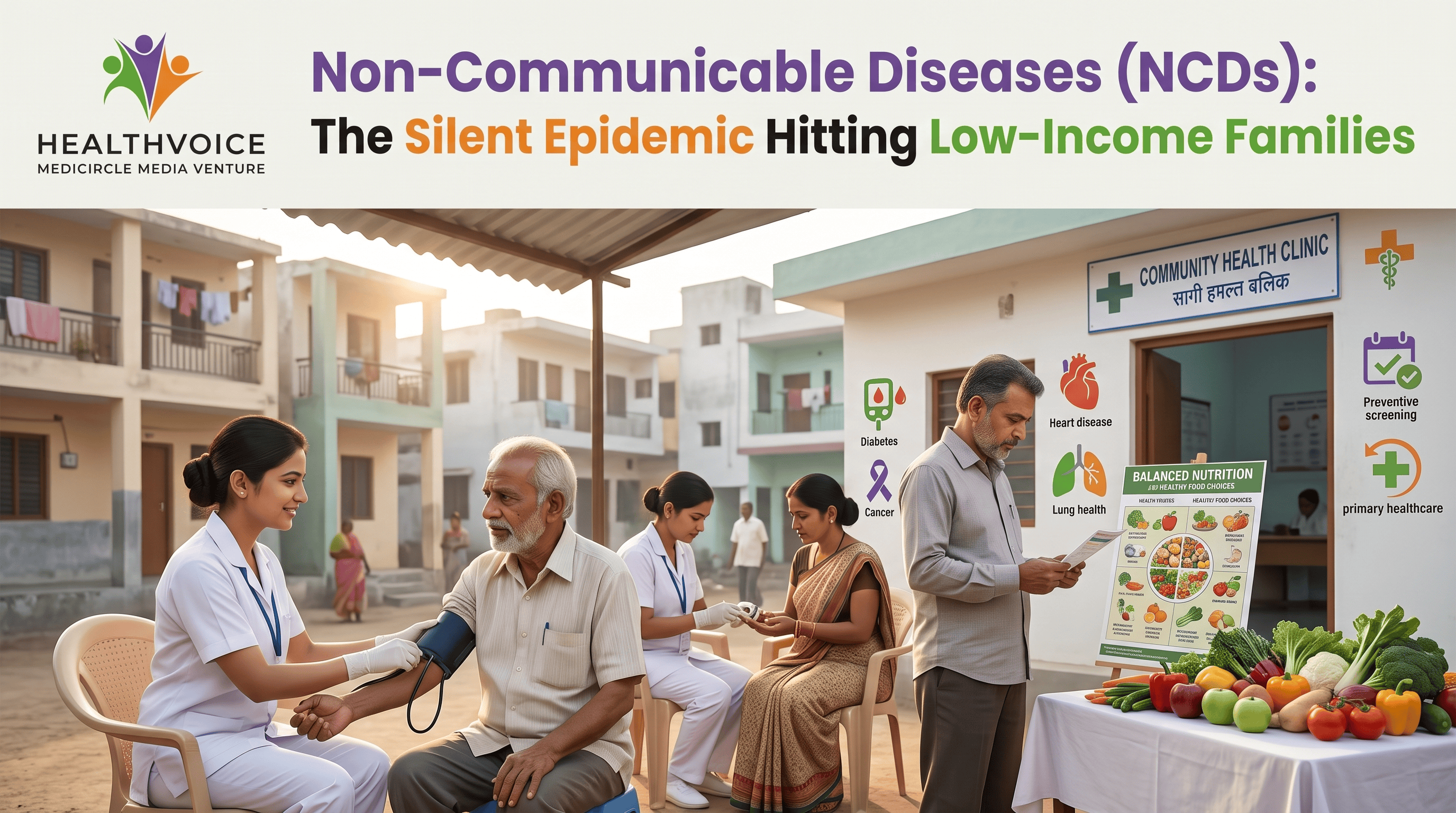
The global health landscape has shifted from infectious diseases to chronic Non-Communicable Diseases (NCDs), making conditions like heart disease, diabetes, cancer, and respiratory illnesses the leading causes of death. In India, NCDs now account for over 60% of all mortality, demanding stronger prevention, early detection, and long-term care strategies.
Non-Communicable Diseases (NCDs): The Silent Epidemic Hitting Low-Income Families
A profound epidemiological shift is reshaping the public health landscape in developing economies. While historical healthcare policies were strictly optimized to battle acute, transmissible threats—such as malaria, tuberculosis, and maternal nutritional deficiencies—the contemporary global burden has decisively pivoted. Today, Non-Communicable Diseases (NCDs)—including cardiovascular diseases, type-2 diabetes, chronic respiratory illnesses, and cancers—have emerged as the leading cause of mortality, accounting for over 60% of all deaths in India alone.
This chronic disease transition has exposed a devastating socioeconomic vulnerability. Far from being restricted to affluent populations with sedentary lifestyles, NCDs are hitting low-income households and vulnerable urban slum communities at an accelerated rate.
[ THE CRITICAL CHRONIC DISEASE TRAP ] │ ┌────────────────────────┴────────────────────────┐ ▼ ▼ [ THE INFECTIOUS MODEL ] [ THE CHRONIC ECOSYSTEM ] • Short-term diagnostic tests • Decades of daily multi-drug lines • Single, acute curative window • Continuous out-of-pocket spending • Reimbursable, standard state limits • Financial depletion of family assets
When a chronic condition strikes a low-income wage earner, the medical emergency rapidly transforms into a structural financial crisis. Because the management of conditions like hypertension or ischemic heart disease demands decades of continuous, daily medication and laboratory tracking, it creates an relentless drain on limited household cash savings.
Dismantling this silent crisis requires moving past reactive, hospital-centric care models to analyze the specific engines of medical debt, fortify primary public safety nets, and build sustainable, proactive health pathways for underserved communities.
1. The Core Engines of Catastrophic Medical Debt
The severe economic strain that chronic diseases impose on low-income families is driven by distinct structural disconnects within the local healthcare delivery system:
The Outpatient Department (OPD) Insurance Blind Spot
The primary driver of health-induced poverty is not high-tech inpatient surgery. While flagship state welfare programs like Ayushman Bharat (AB-PMJAY) deliver an excellent, vital safety net by fully covering inpatient hospitalization up to ₹5 Lakhs per family per year, they are fundamentally structurally restricted from insulating routine outpatient care.
Because routine chronic management—including specialist consulting fees, monthly blood glucose monitoring, and follow-up diagnostic panels—takes place entirely in the outpatient department (OPD), 60% to 66% of a family's total Out-of-Pocket Expenditure (OOPE) escapes insurance insulation entirely, forcing homes to clear these bills using direct cash savings.
The Lifetime Pharmacy Sourcing Drain
Pharmaceutical procurement constitutes the single largest component of medical cash leakage, devouring over 42% to 52% of the cumulative medical expenditure slice. In underserved sub-urban and rural areas, patients frequently encounter a lack of baseline medicines at local centers, driving them to source high-cost, brand-name formulations from private retailers.
A standard multi-drug regimen for a patient dealing with concurrent type-2 diabetes and hypertension can easily cost a family ₹1,200 to ₹1,500 monthly in private retail markets. For a household earning a vulnerable daily wage, this recurring expense forces painful trade-offs between essential chronic medications, children’s schooling fees, and basic daily nutritional needs.
[ THE MEDICAL EXPENDITURE FRACTION ] Outpatient (OPD) Care ──► 60-66% of total household out-of-pocket healthcare costs. Retail Pharmacies ──► 42-52% of direct medical spending (Private brand-name lines). Indirect Wage Loss ──► 12-15% of the economic toll (Caretaker and patient downtime).
Comparative Matrix: Fragmented Private Reliance vs. Insulated Primary Public Networks
The table below contrasts the financial risks associated with uncoordinated private medical treatment against the economic protection delivered by integrated public primary healthcare networks.
Socioeconomic Performance Domain
Fragmented Private Clinic Reliance
Integrated Insulated Public Network Grid
Household Economic Advantage
Outpatient Care (OPD)
High out-of-pocket cash fees paid directly per clinic visit.
Free consultation via Ayushman Arogya Mandirs.
Eliminates recurring micro-cash drains on household earnings.
Long-Term Medication
High retail prices for commercial brand-name drug lines.
Free delivery via Jan Aushadhi Kendras & AMRIT portals.
Lowers monthly chronic pharmaceutical spending by 50% to 90%.
Diagnostic Processing
Disconnected private laboratories running manual billings.
Free standard blood and imaging panels at district blocks.
Prevents redundant testing and removes diagnostic cost walls.
Advanced Complications
Immediate family asset sales or high-interest informal loans.
Cashless secondary/tertiary tracking via AB-PMJAY links.
Protects families from catastrophic debt during major medical events.
Earning Accountability
Severe wage loss for both patients and family caretakers.
Home-based diagnostic checks and tele-consultation models.
Minimizes travel friction, preserving daily household wage logs.
2. Structural Strategies for Mitigating NCD-Induced Poverty
To successfully insulate vulnerable lower-income populations from chronic disease-induced economic shocks, healthcare administrators and state directors must deploy a multi-phase operational protocol:
- Aggressively Operationalize Primary Care Screening NetworksPhase 1Dismantle stage-delayed diagnostic patterns by implementing localized check-ups. Utilize the national health framework to optimize functional Ayushman Arogya Mandirs across all low-income districts, mandating 100% baseline screenings for diabetes, hypertension, and oral, breast, or cervical malignancies for all individuals aged 30 and older.
- Establish Localized Generic Drug Distribution ChannelsPhase 2Break the financial burden of retail pharmaceutical sourcing. Expand the regional footprint of Pradhan Mantri Bhartiya Janaushadhi Kendras and AMRIT pharmacy networks directly inside low-income neighborhoods, ensuring continuous access to verified, high-quality generic chronic medicines at rates 50% to 90% below standard market pricing.
- Deploy Centralized Public Dialysis and Special Care BlocksPhase 3Protect families from the devastating costs of advanced NCD complications. Fully integrate specialized regional infrastructure—such as the National Free Dialysis Programme—across all sub-district health setups, delivering free, high-quality lifelines to patients to save households from financial exhaustion.
Actionable Strategy: Your Institutional Optimization Roadmap
- Incorporate Interoperable Digital Health Account (ABHA) IDs Natively: Ensure your local clinical desk utilizes integrated scanning to link patients with the Ayushman Bharat Digital Mission (ABDM). Digitizing records preserves a patient's historical medical timeline, prevents diagnostic data fragmentation across clinics, and eliminates redundant, costly re-testing.
- Activate AI-Powered Clinical Decision Support Systems (CDSS): Equip your front-line community health workers and auxiliary nurse midwives (ANMs) with automated CDSS toolkits during tele-consultation field rounds. Using structured data capture platforms ensures early, standardized tracking of hypertension and diabetes risk profiles right at the patient's doorstep.
- Conduct Monthly Localized Public Health Education Camps: Bring preventative care directly into underserved communities. Organize regular, neighborhood-level health camps focused on lifestyle modifications, tobacco cessation counseling, and nutrition awareness, empowering families with the knowledge to manage chronic risks before they escalate into medical crises.
Frequently Asked Questions (FAQs)
Q1. What exactly are Non-Communicable Diseases (NCDs)?
NCDs are chronic, long-lasting medical conditions that are non-transmissible between individuals. They progress slowly over time and are primarily driven by a combination of genetic, metabolic, environmental, and behavioral factors—encompassing cardiovascular diseases, type-2 diabetes, cancers, and chronic respiratory illnesses.
Q2. Why do NCDs disproportionately impact the financial stability of low-income families?
Chronic diseases demand continuous, decades-long expenditures on prescription medications, diagnostic laboratory panels, and regular clinical check-ups. Because low-income families typically lack comprehensive health insurance for outpatient care, these recurring expenses must be cleared using cash savings, which can exhaust household assets.
Q3. How do Ayushman Arogya Mandirs help lower a family's out-of-pocket health costs?
Ayushman Arogya Mandirs function as localized public health and wellness centers designed to shift care from reactive hospitals to proactive primary nodes. They deliver free routine doctor consultations, basic diagnostics panels, and essential chronic medications, cutting down the need for expensive private care.
Q4. What percentage of healthcare costs in India are borne out-of-pocket by households?
While increased government health expenditure and social security expansions have helped drive a positive, long-term decline in out-of-pocket healthcare costs, National Health Accounts data indicates that families still bear approximately 39.4% to 47.1% of overall health spending directly out of their own pockets.
Q5. Why does the flagship AB-PMJAY insurance program exclude routine outpatient (OPD) care?
AB-PMJAY is explicitly architected to act as a financial shield against catastrophic inpatient hospitalizations (IPD) for secondary and tertiary surgeries. Managing routine, daily outpatient care (OPD) requires a different primary care infrastructure focused on decentralized, localized clinics and public generic pharmacies.
Q6. How do Jan Aushadhi Kendras deliver high-quality medicines at significantly reduced rates?
Pradhan Mantri Bhartiya Janaushadhi Kendras distribute certified generic medicines manufactured under strict quality standards. By procurement directly from manufacturers in bulk and bypassing middle-tier commercial marketing chains, they deliver chronic therapeutics at rates 50% to 90% below standard market pricing.
Q7. What financial protection does the National Free Dialysis Programme deliver to kidney patients?
The National Free Dialysis Programme eliminates the immense cost of end-stage renal care for economically disadvantaged populations. By operating dedicated hemodialysis sessions free of charge across hundreds of empanelled district hospitals, the program has saved patients thousands of crores in out-of-pocket costs.
Q8. What parameters are evaluated during the government's Intensified NCD Screening Campaign?
The nationwide screening campaign targets all adults aged 30 and older to achieve early detection across five critical primary medical vulnerabilities: diabetes, hypertension, oral cancer, breast cancer, and cervical cancer.
Q9. Can using a digital ABHA health ID help lower a patient's diagnostic treatment costs?
Yes, exceptionally well. Linking clinical charts with the Ayushman Bharat Digital Mission via a verified ABHA ID creates an interoperable electronic medical record. This allows any consulting specialist to view past lab summaries and imaging documents instantly, preventing expensive, redundant re-testing.
Q10. How fast can a community observe a drop in healthcare-induced poverty after launching these systems?
When a district public health framework rolls out integrated systems—such as expanding local public generic pharmacies, activating free diagnostic panels, and establishing automated insurance validation screens—the economic return is rapid. You can observe a significant contraction in average household medical bills and a clear rise in community care access within 4 to 6 weeks of active execution.
 Team Healthvoice
#NCDAwareness #PublicHealthIndia