Tumour Boards in India: Why Multidisciplinary Cancer Care Matters
Multidisciplinary tumour boards bring specialists together to jointly plan cancer treatment. This article examines their function, evidence base, and current gaps in Indian hospital practice.
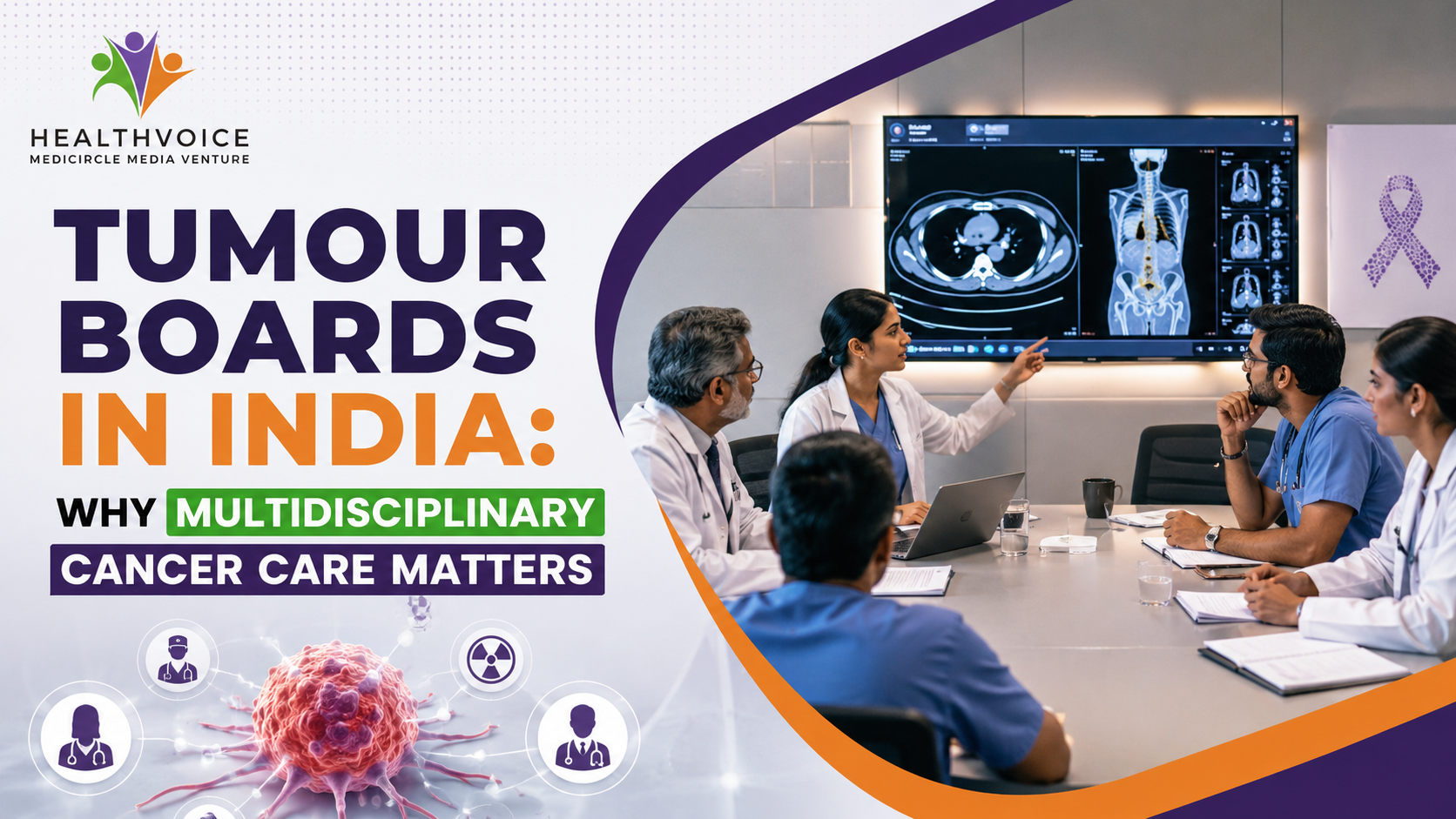
tumour Boards in Indian Hospitals: Why Multidisciplinary Cancer Care Matters
Introduction
Cancer treatment decisions are rarely simple. A single tumour can behave differently depending on its genetic makeup, the patient's overall health, and how it has responded to earlier treatment. This is precisely why multidisciplinary tumour boards, often shortened to MTBs, have become a defining feature of quality cancer care across the world, including in India.
A tumour board is not an informal chat between doctors. It is a structured, recurring meeting where oncology specialists from different fields come together to review a patient's complete clinical picture and agree on the most appropriate treatment path. For doctors, hospitals, and medical associations working to strengthen cancer care delivery in India, understanding how tumour boards function and why they matter is central to improving outcomes for patients across the country.
Understanding the Multidisciplinary Tumour Board Model
At its core, a multidisciplinary tumour board brings together specialists such as surgical oncologists, medical oncologists, radiation oncologists, radiologists, pathologists, and often palliative care or rehabilitation experts, to jointly evaluate a cancer case. Instead of one doctor making an isolated decision, the case is examined from multiple angles before a treatment recommendation is finalised.
This model gained traction internationally through the 1970s and has since become widely recognised as a benchmark for quality cancer care. In India, tumour boards have grown steadily in tertiary hospitals, medical colleges, and comprehensive cancer centres, though their structure and consistency still vary considerably between institutions.
A recent national survey conducted under the Hospital Based Cancer Registries of the National Cancer Registry Programme found that nearly four out of five responding hospitals had a functioning tumour board. Most of these were concentrated in tertiary care centres and medical colleges, with private hospitals somewhat more likely to run regular tumour board meetings than public institutions.
Why Multidisciplinary Discussion Matters in Cancer Care
Cancer treatment planning depends on several moving parts: the tumour's stage and grade, its molecular characteristics, the patient's overall fitness, coexisting health conditions, and personal preferences. When these factors are reviewed by only one specialist, there is a real risk of an incomplete or narrow treatment recommendation.
Research on tumour boards has shown meaningful effects on how cancer is actually managed. Studies conducted internationally have reported that a substantial proportion of cases discussed at tumour boards see a change in the originally proposed treatment plan, often because additional specialists identify factors that were not considered earlier. In rectal cancer, for instance, patients discussed at a tumour board were far more likely to receive complete preoperative staging compared to patients whose cases were not reviewed collectively.
Some Indian data reflects similar patterns. A study from Eastern India found that involving a tumour board improved treatment compliance among patients by around fifty percent. Multidisciplinary review also tends to reduce duplicate testing, avoid conflicting treatment advice from different doctors, and create a single, agreed care plan that the patient can follow with confidence.
That said, the picture is not entirely one-sided. Some international studies have found no significant difference in overall survival for tumour board patients compared to those managed without one, particularly once other clinical factors are accounted for. What is more consistently supported across the evidence is improved guideline adherence, better staging accuracy, and more coordinated care, rather than a guaranteed survival benefit in every cancer type.
How Tumour Boards Typically Function
Most tumour boards follow a broadly similar working pattern, even though the exact format differs from hospital to hospital.
A case is usually presented with the patient's clinical history, imaging findings, biopsy or pathology reports, and relevant laboratory results. The radiologist and pathologist then walk the group through their findings in detail, since these often carry the most weight in staging and treatment selection. Specific questions are raised, such as whether surgery is feasible, whether radiation would help or cause more harm than benefit, or whether the case would respond better to a combination approach involving chemotherapy or targeted therapy.
Once each specialist has shared an opinion, the group works toward a single, agreed treatment recommendation. This is then discussed with the patient by the treating doctor, along with what to expect and possible side effects.
A few practical elements tend to define well-functioning tumour boards:
- A designated coordinator or secretariat to organise cases and maintain records
- A regular, predictable meeting schedule, often weekly
- Clear criteria for which cases must be discussed, such as late-stage disease, rare cancers, or cases showing poor response to treatment
- A system for tracking whether recommendations were actually implemented
The Indian national survey referenced earlier found that while most hospitals had some form of documentation process, nearly half lacked a proper follow-up mechanism to check whether tumour board recommendations were carried through. This points to an area where hospitals and associations still have meaningful work to do.
Common Gaps in Tumour Board Practice Across India
While the concept of the tumour board is well established, its implementation across India is uneven. Several patterns are worth highlighting for doctors, hospital administrators, and healthcare associations working to improve cancer care systems.
Cross-hospital case discussions remain rare, with only a small fraction of tumour boards in the national survey engaging in this practice regularly. This matters because rural and smaller city hospitals often lack the full range of oncology specialists on site, and virtual or hybrid tumour boards can help bridge this gap meaningfully.
Participation from certain specialities also tends to be lower than ideal. Radiation, surgical, and medical oncologists are almost always represented, but palliative care specialists, geriatric medicine experts, and rehabilitation professionals participate far less often, even though these disciplines matter greatly for patients with advanced disease or multiple coexisting conditions.
Documentation is another area needing attention. Many tumour boards in India still rely primarily on physical records rather than electronic systems, which makes it harder to track outcomes over time or conduct meaningful audits of tumour board performance. As India's digital health infrastructure develops further under initiatives like the Ayushman Bharat Digital Mission, there is an opportunity for tumour boards to move toward more structured, trackable documentation.
The Growing Role of Virtual Tumour Boards
The pandemic years accelerated a shift toward virtual and hybrid tumour board formats, and this shift has largely persisted. Virtual tumour boards allow specialists from different cities, or even different countries, to review a case together without the logistical burden of travel.
This has particular relevance for India, where oncology expertise remains concentrated in metro and Tier 1 cities, leaving many Tier 2 and Tier 3 city hospitals without immediate access to a full multidisciplinary team. Virtual tumour boards can allow a smaller hospital to present a complex case to a wider network of specialists, effectively extending the reach of subspecialised cancer expertise beyond a single institution.
National initiatives connecting cancer centres for virtual case discussions have started to demonstrate how this model can work at scale in India, particularly for cancers requiring highly specialised input such as head and neck malignancies or rare sarcomas. Encouraging wider participation in such networks, especially among hospitals that currently lack an in-house tumour board, remains an important area for growth.
What This Means for Doctors and Healthcare Associations
For individual oncologists, participation in a tumour board is not simply an administrative obligation. It offers a genuine opportunity for peer learning, exposure to complex or unusual cases, and a chance to stay aligned with evolving treatment guidelines. Many oncologists who participate regularly describe tumour boards as one of the few structured moments each week where colleagues from different departments genuinely engage on shared patient care.
Medical associations and cancer care networks also have a meaningful role to play here. Encouraging standardised tumour board protocols, supporting smaller hospitals in establishing functional boards, and promoting participation in virtual, cross-hospital case discussions can all help close some of the gaps identified in national data. Platforms that help doctors and associations share such practices, discuss challenges openly, and highlight successful models of tumour board implementation can meaningfully support this broader effort toward more consistent, high-quality cancer care across India.
Conclusion
tumour boards represent one of the more practical, evidence-supported tools available for improving cancer care coordination. They bring together the collective expertise of multiple specialists, reduce fragmented decision-making, and give patients a treatment plan built on comprehensive review rather than a single opinion. In the Indian context, where tumour board practices are growing but still uneven across institutions and geographies, there remains considerable scope to strengthen documentation, widen specialist participation, and expand virtual collaboration between hospitals. For the medical community, continued attention to how tumour boards are structured and run is not a peripheral administrative matter. It is central to delivering the kind of coordinated, patient-focused cancer care that guidelines around the world consistently recommend.
Frequently Asked Questions
Q1: What is a tumour board in cancer care?
A tumour board is a structured meeting where specialists from different medical disciplines review a cancer case together and arrive at a consensus treatment plan for the patient.
Q2: Which specialists are typically part of a multidisciplinary tumour board?
A tumour board usually includes surgical oncologists, medical oncologists, radiation oncologists, radiologists, and pathologists, with palliative care, nutrition, or rehabilitation specialists joining depending on the cancer type and case complexity.
Q3: Are tumour boards common in Indian hospitals?
Tumour boards are increasingly common in Indian tertiary care hospitals and medical colleges, though consistency and structure vary between private and public institutions and across different regions of the country.
Q4: Do tumour boards improve cancer treatment outcomes?
Evidence suggests tumour board discussion is associated with improved treatment planning, better staging accuracy, and stronger guideline adherence, though the effect on overall survival varies depending on the cancer type and available research.
Q5: Can patients request a tumour board review of their case?
Yes, patients or their treating doctors can usually request that a case be presented at a tumour board, particularly for complex, rare, or treatment-resistant cancers, or when a second medical opinion is needed.
 Team Healthvoice
#TumourBoards #CancerCareIndia
