Public Health Strategies for Japanese Encephalitis: Vector Control and Vaccination in Rural Hotspots
Japanese Encephalitis (JE)—a mosquito-borne viral infection caused by the Japanese Encephalitis Virus (JEV)—remains the leading cause of viral encephalitis across South, East, and Southeast Asia.
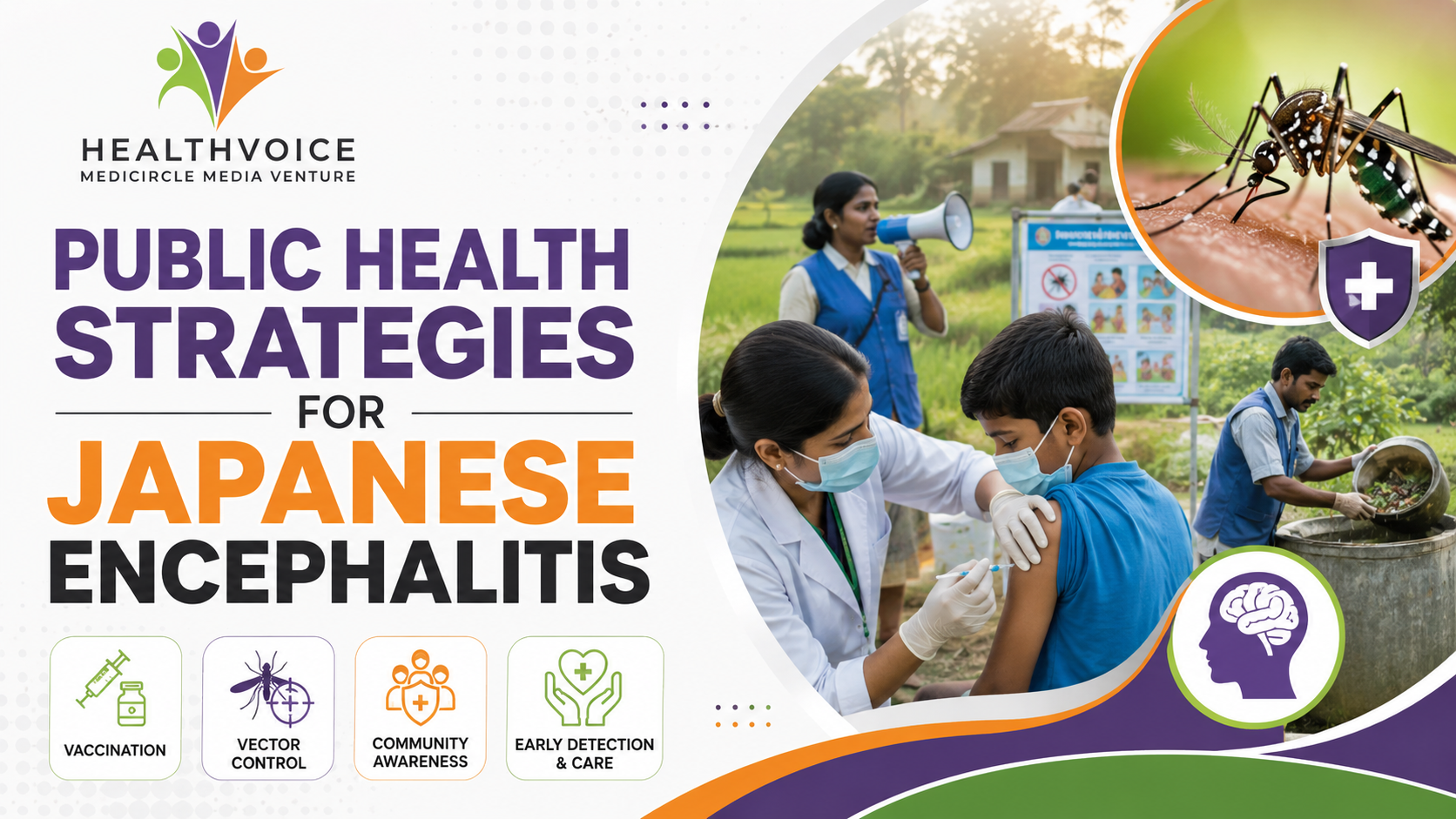
Japanese Encephalitis (JE)—a mosquito-borne viral infection caused by the Japanese Encephalitis Virus (JEV)—remains the leading cause of viral encephalitis across South, East, and Southeast Asia. As a zoonotic flavivirus, JEV circulates in an enzootic cycle involving aquatic wading birds (such as herons and egrets) as natural reservoir hosts and domestic pigs as amplifying hosts. Humans serve as dead-end hosts, acquiring the virus through the bite of infected mosquitoes, primarily Culex tritaeniorhynchus.
In rural agricultural regions—particularly where irrigated rice paddies overlap with low-income farming communities and pig husbandry—JEV poses a constant severe public health risk. While most human infections remain asymptomatic or mild, clinical cases can manifest as acute encephalitis syndrome (AES), characterized by high fever, severe headache, neck stiffness, disorientation, seizures, and spastic paralysis. Among symptomatic clinical cases, the case fatality rate can reach 30%, and up to 50% of survivors suffer permanent neurological, cognitive, or psychiatric sequelae. Controlling JEV in rural hotspots requires integrated public health strategies that combine vector control, animal host management, and immunization programs.
1. Ecological and Zoonotic Dynamics in Rural Hotspots
Understanding the transmission environment is critical for designing targeted public health interventions in high-risk rural areas:
- The Vector Pathway: Culex tritaeniorhynchus and related species prefer breeding in flooded, sunlit, vegetation-rich waters—making flooded rice fields, irrigation ditches, and agricultural wetlands ideal breeding grounds. These mosquitoes are predominantly exophilic (resting outdoors) and zoophilic (preferring animal blood), biting primarily around dusk and dawn.
- The Amplifying Host (Pigs): Domestic pigs play a key role in urban and rural JEV transmission cycles. Pigs develop high-level, prolonged viremia after infection without showing overt clinical illness. Because of high birth rates and rapid population turnover in rural pig farming, a steady pool of susceptible young pigs continuously amplifies the virus, increasing local mosquito infection rates.
- Climatic and Seasonal Drivers: Transmission shifts seasonally based on rainfall patterns, monsoon cycles, and agricultural irrigation schedules. Temperature increases shorten the extrinsic incubation period of JEV within the vector, accelerating transmission during warm, humid months.
2. Integrated Vector Control and Environmental Management
Because eradicating natural bird reservoirs and agricultural mosquito habitats is ecologically impossible, vector management focuses on suppressing vector densities during peak transmission periods.
A. Chemical Vector Control
- Indoor Residual Spraying (IRS) and Thermal Fogging: In response to localized AES outbreaks, health authorities deploy targeted IRS or space spraying (fogging) with organophosphates or synthetic pyrethroids around affected villages and pig shelters to suppress adult vector populations rapidly.
- Larvicidal Interventions: Applying bio-larvicides (such as Bacillus thuringiensis israelensis [BTI]) or chemical insect growth regulators directly into stagnant irrigation channels and stagnant drainage ditches disrupts mosquito development at the larval stage.
B. Agricultural and Environmental Adaptation
- Alternate Wetting and Drying (AWD): Periodic draining of irrigated rice fields disrupts the 10-to-14-day aquatic breeding cycle of Culex mosquito larvae without reducing crop yields. This water management practice significantly reduces vector populations in agricultural zones.
- Zooprophylaxis and Physical Barriers: Positioning cattle or non-amplifying livestock barriers between rice paddies and human dwellings diverts zoophilic Culex mosquitoes away from human populations. Additionally, applying screening to domestic pig shelters helps limit mosquito feeding on amplifying hosts.
3. Targeted Vaccination Frameworks: The Primary Defense
Vaccination represents the single most effective, cost-effective, and sustainable public health strategy for preventing Japanese Encephalitis in endemic rural populations.
Pediatric Routine Immunization
National health programs incorporate JEV vaccines into routine pediatric immunization schedules in endemic districts. Administering the primary dose between 9 and 12 months of age (often alongside measles-containing vaccines), followed by a booster dose between 12 and 24 months, provides durable, long-term immunity against clinical encephalitis.
Catch-Up Mass Campaigns
When introducing JEV vaccines into newly mapped endemic zones or outbreak hotspots, public health agencies conduct mass catch-up vaccination campaigns targeting children aged 1 to 15 years. Covering this high-risk demographic builds population-level immunity and prevents large-scale pediatric AES outbreaks.
Targeted Adult and High-Risk Worker Vaccination
While JEV historically presented primarily as a pediatric disease in endemic zones due to natural childhood exposure, changing agricultural practices and shifting demographics have led to adult outbreaks in several regions. Health authorities increasingly recommend targeted vaccination for adult agricultural workers, pig farmers, and unexposed individuals moving into active rural transmission belts.
4. Surveillance, Early Warning, and One Health Integration
Controlling Japanese Encephalitis requires a collaborative One Health framework linking human health agencies, veterinary departments, and environmental research institutes:
- Integrated Sentinel Surveillance: Combining clinical Acute Encephalitis Syndrome (AES) surveillance in regional hospitals with vector density monitoring and animal serosurveillance (tracking JEV IgM antibodies in young sentinel pigs) provides early warning indicators of impending human outbreaks.
- Rapid Diagnostic Testing (RDT): Confirming JEV cases relies on detecting JEV-specific IgM antibodies in cerebrospinal fluid (CSF) or serum using enzyme-linked immunosorbent assays (ELISA). Expanding diagnostic capacity to regional laboratories prevents misdiagnosing JEV as cerebral malaria, bacterial meningitis, or herpes simplex encephalitis.
- Community Engagement and Personal Protection: Public health education encourages the use of insecticide-treated bed nets (ITNs), long-sleeved clothing, and topical insect repellents during outdoor farming activities at dusk, while raising awareness about keeping domestic pig pens at a distance from family living quarters.
10 Frequently Asked Questions (FAQs)
Q1. How is Japanese Encephalitis transmitted to humans?
Japanese Encephalitis is transmitted through the bite of infected mosquitoes, primarily Culex tritaeniorhynchus. Mosquitoes acquire the virus by feeding on infected amplifying hosts (pigs) or reservoir hosts (wading birds) and subsequently transmit it to humans.
Q2. Can Japanese Encephalitis spread directly from person to person?
No. Japanese Encephalitis cannot be transmitted directly from human to human through casual contact, respiratory droplets, or bodily fluids. Humans are dead-end hosts because they do not develop sufficient blood viral loads (viremia) to infect feeding mosquitoes.
Q3. Why are domestic pigs considered crucial in the transmission cycle of JEV?
Pigs develop high levels of the virus in their blood (high-level viremia) for several days after infection without exhibiting severe symptoms. This allows feeding mosquitoes to pick up the virus easily and transmit it to other animals and humans.
Q4. What are the primary symptoms of clinical Japanese Encephalitis?
While most JEV infections are mild or asymptomatic, severe clinical cases present as Acute Encephalitis Syndrome (AES), characterized by high fever, severe headache, stiff neck, confusion, seizures, tremors, and progressive coma.
Q5. What percentage of symptomatic JE cases result in fatal outcomes or long-term disability?
Approximately 20% to 30% of clinical JE cases are fatal. Among those who survive, 30% to 50% experience permanent neurological, physical, or cognitive impairments, such as paralysis, recurrent seizures, or severe speech difficulties.
Q6. How does the "Alternate Wetting and Drying" (AWD) farming technique help control mosquitoes?
Alternate Wetting and Drying involves periodically draining irrigated rice paddies during the crop cycle. Draining the water disrupts the aquatic larval development cycle of Culex mosquitoes, significantly lowering adult vector populations in agricultural zones.
Q7. What types of vaccines are used to protect against Japanese Encephalitis?
Common JEV vaccines include the live-attenuated SA 14-14-2 vaccine, inactivated cell culture-derived vaccines (such as IC51/IXIARO), and recombinant chimeric vaccines. These vaccines stimulate strong neutralizing antibody responses to protect against infection.
Q8. Why is Acute Encephalitis Syndrome (AES) surveillance important in rural hospitals?
AES is a broad clinical category that includes viral, bacterial, and parasitic brain infections. Focused AES surveillance combined with laboratory testing helps health teams differentiate JEV from other pathogens, guiding public health responses and vaccination drives.
Q9. Are adults living in rural areas at risk of contracting Japanese Encephalitis?
Yes. In areas where JEV has been recently introduced or where vaccination rates are low, adults—particularly agricultural workers and pig handlers who lack natural immunity—are at risk of severe clinical infection.
Q10. What personal protective measures can individuals take in rural endemic areas?
Individuals can reduce their risk by applying insect repellents containing DEET or Icaridin, wearing long-sleeved clothing during dusk and dawn when Culex mosquitoes are most active, sleeping under insecticide-treated bed nets, and screening window openings.
5. Conclusion: Building Resilient Rural Healthcare Infrastructures
Controlling Japanese Encephalitis in endemic rural hotspots requires a comprehensive approach. Relying solely on reactive medical care after clinical symptoms appear fails to prevent high mortality rates and lifelong neurological disabilities.
By combining routine pediatric vaccination and targeted adult catch-up campaigns with environmental mosquito management, vector surveillance, and One Health animal tracking, public health authorities can suppress viral transmission effectively. Sustained investments in rural healthcare infrastructure, rapid diagnostic networks, and community education remain vital for eliminating Japanese Encephalitis as a public health threat across endemic regions.
 Team Healthvoice
#JapaneseEncephalitis #PublicHealth
