Top Mistakes Freshers Make During Healthcare Job Interviews
The healthcare sector is rapidly evolving through AI adoption, automation, and value-based care models, making recruitment processes more competitive than ever. For freshers and healthcare graduates, success in interviews depends not only on academic knowledge but also on demonstrating communication skills, professionalism, problem-solving ability, and awareness of healthcare operations.
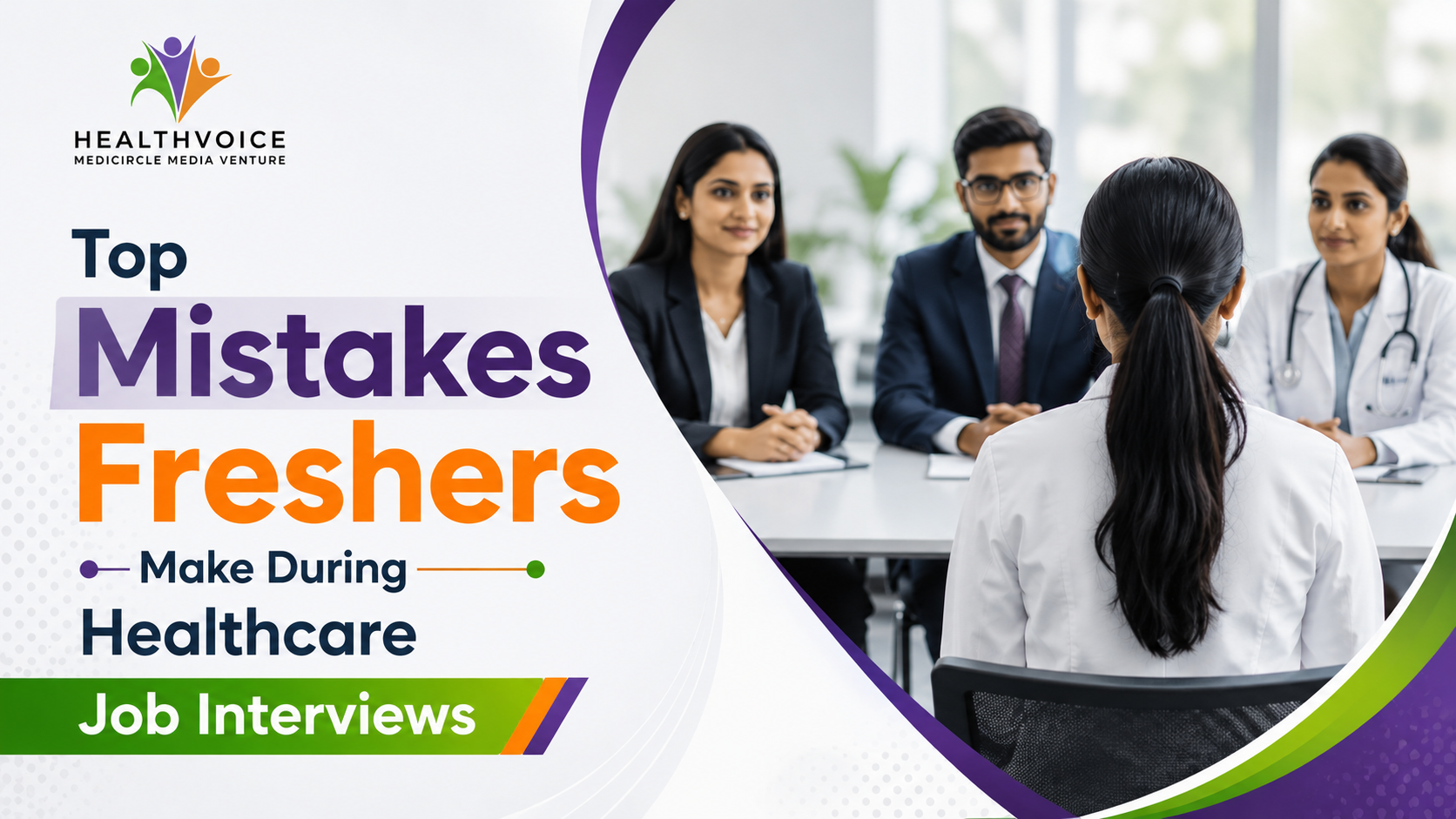
Top Mistakes Freshers Make During Healthcare Job Interviews: A Roadmap to Placement Success
The healthcare industry is experiencing a profound operational transformation. Driven by artificial intelligence, automated revenue cycles, and strict value-based care framework rules, modern hospital networks and clinical research hubs are actively raising their hiring standards. For entry-level candidates, dentists, allied health professionals, and life sciences graduates, this competitive market offers unprecedented opportunities—provided you can pass the final barrier: the panel interview.
Entering a high-stakes clinical environment can feel incredibly intimidating for entry-level candidates. While freshers often focus intensely on memorizing medical textbooks, they frequently overlook the practical, interpersonal, and operational nuances that hospital hiring boards evaluate. By identifying and correcting the top mistakes freshers make during healthcare job interviews, you can elevate your performance and protect your long-term career trajectory.
- Deconstructing the Interview Failure Matrix
Failing a medical sector interview rarely happens because of a lack of academic credentials. Instead, candidate rejection is usually triggered by preventable, recurring errors in preparation, behavioral communication, and non-verbal professional presentation.
Plaintext
[ THE HEALTHCARE INTERVIEW FAILURE MATRIX ]
│
┌─────────────────┼─────────────────┐
▼ ▼ ▼
[ HYGIENE BLUNDERS ] [ DATA BLINDNESS ] [ TALK TRAAPS ]
- Winging the research • Ignoring EHR software • Vague buzzwords
- Neglecting data privacy• Missing compliance • Deflecting errors
- Rigid body language • Weak tech fluency • No follow-up steps
- The Dominant Pitfalls and How to Avoid Them
Pitfall A: Relying on Vague Soft Buzzwords Instead of Actionable Proof
Many entry-level freshers populate their responses with empty phrases like "I am an empathetic hard worker" or "I excel at teamwork." Senior clinical directors find these answers robotic and uninformative.
- How to Fix It: Medical institutions demand concrete, structured evidence. When asked about your interpersonal strengths, deploy the STAR method (Situation, Task, Action, Result). Describe a specific instance during your clinical rotations or final-year projects where your proactive communication directly resolved an inter-departmental shift bottleneck or comforted an anxious family.
Pitfall B: Complete Blindness Toward EHR Systems and Data Security
A massive complaint among modern hospital hiring managers is that freshers possess zero understanding of the technical infrastructure running the clinic. They assume data entry is a minor administrative task handled by someone else.
- How to Fix It: Modern clinical care runs entirely on data platforms. Actively showcase your familiarity with platform-specific digital health workflows, such as Epic or Cerner electronic health record (EHR) interfaces. Demonstrate absolute commitment to strict data privacy discipline, including multi-factor authentication (MFA) protocols and HIPAA/regulatory compliance rules, proving you are a low-risk, tech-literate asset.
Pitfall C: Playing the Blame Game When Asked About Personal Mistakes
A favorite behavioral question among senior medical boards is: "Can you tell me about a specific time you made a clinical or professional mistake?" Many freshers reflexively panic, either denying they have ever made an error or explaining a mistake while shifting the final blame onto an unhelpful colleague or a disorganized professor.
- How to Fix It: Medicine relies heavily on absolute integrity and self-awareness. Own your past mistakes completely. Briefly state the technical or communication error you committed, explain the immediate corrective actions you implemented to protect patient safety, and detail how you upskilled yourself afterward to ensure the issue never occurred again.
Comparative Blueprint: Candidate Pitfalls vs. Executive Solutions
The table below contrasts the typical reactive habits of unprepared candidates with the proactive, high-performance execution strategies required to clear senior healthcare boards.
Evolving Interview Component
Typical Fresher Mistake
High-Performance Executive Execution
Target Competency Evaluated
Organizational Research
Only reviewing the main home page
Auditing recent public health papers, regional care goals, and tech upgrades
Strategic initiative and institutional alignment
Handling Weakness Queries
Denying weaknesses or using cliché fakes
Sharing a real operational gap paired with an active upskilling solution
Self-awareness, integrity, and coachability
Technical Data Literacy
Assuming data entry is purely administrative
Discussing EHR data entry accuracy and strict data privacy discipline
Patient health record safety and risk mitigation
Closing the Interview
Saying "No, I'm good" when asked for questions
Inquiring about value-based care metrics and professional development tracks
Long-term engagement and active curiosity
Actionable Strategy: Your Interview Readiness Protocol
- Conduct a Meticulous Facility Audit: Do not walk into an interview blind. Research the hospital network's core mission, their recent community health achievements, and their primary digital health infrastructure.
- Eliminate Non-Verbal Interference: If your interview is virtual, join the digital gateway 10 to 15 minutes early to test your camera, microphone, and internet stability. Maintain natural eye contact, practice open posture body language, and avoid distracting fidgeting.
- Execute a Structured Post-Interview Follow-Up: Within 24 hours of your discussion, send a brief, professional thank-you email. Reiterate your enthusiastic interest in the role, mention a specific high-value talking point from your conversation, and express gratitude for the panel's time.
Frequently Asked Questions (FAQs)
Q1. What are the top mistakes freshers make during healthcare job interviews when describing past internship challenges?
The top mistakes freshers make during healthcare job interviews include badmouthing their past professors, supervisors, or clinical colleagues. Throwing a previous team under the bus signals poor professionalism, a lack of emotional intelligence, and an inability to operate cohesively within interdisciplinary medical teams.
Q2. How should a fresher handle a highly complex clinical question when they do not know the exact answer?
Never guess or fabricate a response in a medical interview. Integrity is paramount when dealing with human life. Calmly admit that you do not know the exact protocol or diagnostic marker off the top of your head, but immediately explain the logical clinical resources (such as senior consultants, drug registries, or institutional guidelines) you would reference to find the safe answer.
Q3. Is dressing in business casual acceptable for a healthcare interview?
No. First impressions are incredibly rigid in the medical sector. Even if the daily hospital uniform consists of casual scrubs, candidates must dress in formal, pristine corporate business attire for the interview. Ensure your appearance is clean, professional, and free of distracting accessories or heavy perfumes.
Q4. What are some insightful questions a fresher can ask the interviewers at the end of the meeting?
Prepare 2 to 3 thoughtful questions that showcase long-term ambition. Excellent options include: "What do the metrics of success look like for a fresher stepping into this specific unit?", "What continuous learning and professional upskilling tracks are available here?", or "How is this facility integrating ambient AI tools to optimize nursing and clinical data workflows?"
Q5. How can I effectively demonstrate empathy and soft skills during a panel interview?
Avoid simply listing soft skills as abstract traits. Instead, weave them into real-world examples. Describe an instance where your patient active listening allowed you to spot a subtle symptom that others missed, or explain how your patience helped de-escalate a stressful conflict with an anxious family member in a waiting room.
Q6. Why do hospital interviewers place so much emphasis on behavioral questions?
Behavioral questions (such as "Tell me about a time you handled an uncooperative patient") are explicitly designed to uncover your past performance trends. Because healthcare environments are fast-paced and high-stakes, how you managed stress, deadlines, and communication friction during your academic rotations predicts how safely you will perform under pressure as an employee.
Q7. Do I need to discuss salary expectations during the initial round of a healthcare interview?
No, bringing up compensation, benefits, or vacation policies too early is a major interview error that signals your primary motivation is purely financial. Wait patiently until the human resources representative or hiring manager explicitly initiates the salary negotiation phase later in the loop.
Q8. What is the STAR method, and how does it help structure my interview answers?
The STAR method is a structured communication framework: Situation (set the context), Task (explain your specific responsibility), Action (detail the precise steps you implemented), and Result (highlight the successful, quantifiable outcome). Using this model prevents rambling, keeps your answers concise (30 to 60 seconds), and showcases your logical problem-solving abilities.
Q9. How can a candidate coming from a non-clinical or tech background show readiness for a hospital job?
Focus heavily on your specialized technical competencies, data hygiene discipline, and workflow efficiency tracking. Explain how your software engineering, analytics, or administrative skills can help the hospital streamline its revenue cycle management, protect patient data registries, and minimize system bottlenecks to support the clinical frontline.
Q10. What is the most effective way to overcome extreme nervousness before entering a medical board interview?
Confidence is a direct byproduct of meticulous preparation. Conduct multiple recorded mock interviews with mentors, practice your responses aloud, and use deep diaphragmatic breathing techniques right before your call. Remember that the interview panel is not looking for a robotic, flawless actor—they are searching for an authentic, trustworthy, and coachable peer who is eager to learn and serve.
 Team Healthvoice
#HealthcareCareers #HealthcareJobs