The role of doctors in building trust during pandemics
During pandemics, doctors extend beyond clinical care to become trusted communicators, cultural mediators and defenders of truth, guiding communities through fear, misinformation and uncertainty with empathy and credibility.
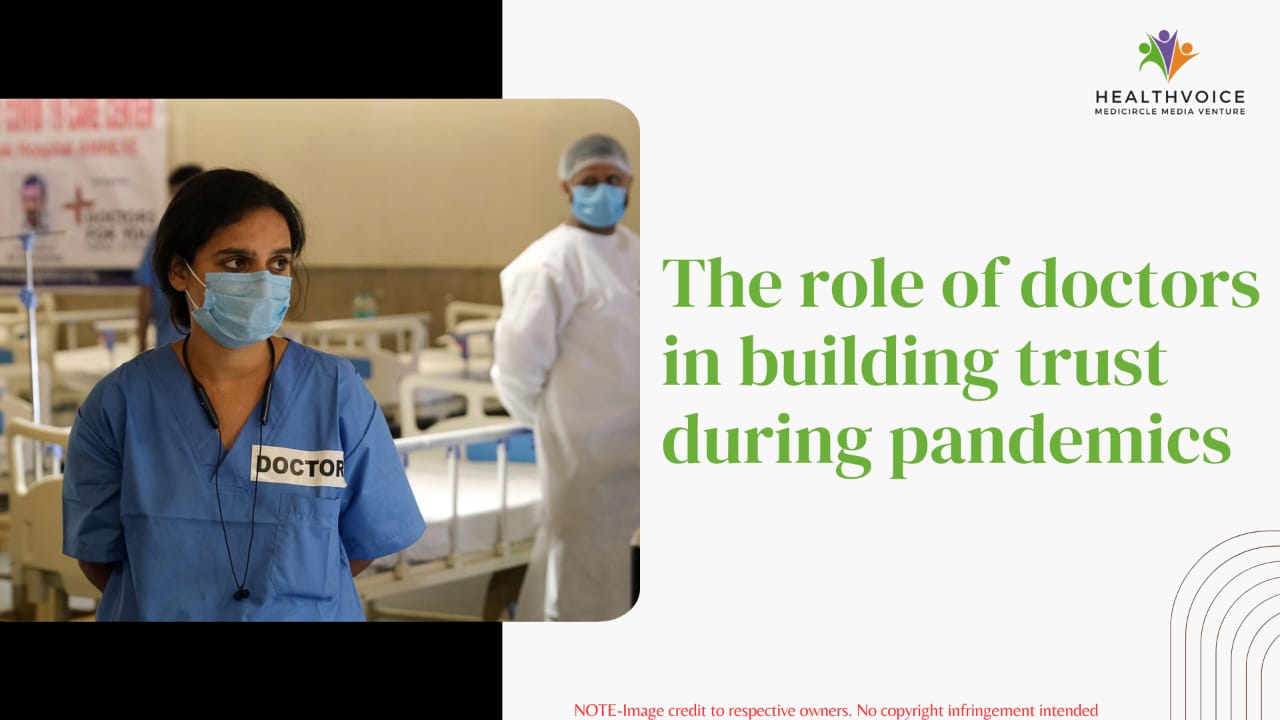
When a pandemic sweeps across the country, a unique kind of fear takes hold. It is a fear fueled by the unknown, amplified by swirling rumors and made personal by potential threat to loved ones. In this atmosphere, people instinctively search for figures of stability and authority. Across India, countless individuals found that figure in their doctors. The physician's role transforms during such a crisis; it stretches far beyond diagnosis and prescription. It becomes about guiding an anxious public through a landscape of uncertainty, rebuilding the very trust that effective healthcare relies upon.
Clear communication:
In a health emergency, clear information is a vital resource. Doctors emerged from their clinics to become communicators on a grand scale. They appeared on news broadcasts, hosted live sessions on social media platforms and spoke on local radio. Their task was translation, not between languages, but between complex medical science and public understanding. Terms like herd immunity or asymptomatic spread were broken down into simple, actionable guidance for households. This consistent, reliable voice became a beacon, cutting through a fog of misinformation. The public did not just receive data; they received context and reassurance from a source they were trained to believe.
Respecting culture:
Gaining trust in India requires an understanding of its social fabric. Effective doctors during recent health crises demonstrated this clearly. They navigated family hierarchies with respect, understanding that health decisions are often communal. When faced with vaccine hesitancy, the most successful approaches came from doctors who listened to concerns without dismissal, providing facts with patience. They adapted national health advisories to fit local realities, whether in a dense urban neighborhood or a remote village. This respect for context signaled to communities that they were partners, not just subjects but in the fight for health.
Fighting misinformation:
One of the most critical and exhausting battles during a pandemic is against misinformation. As unproven remedies and dangerous conspiracy theories proliferated on messaging apps, the trusted voice of a local doctor became a crucial counterweight. Proactively, many physicians took to their own networks to debunk myths, explain the dangers of unverified treatments and reinforce the importance of scientific protocols. This role of the truth teller was taxing but essential. By confronting falsehoods with evidence and calm reasoning, doctors safeguarded not just individual patients, but public health at large, solidifying their credibility.
The unspoken language:
Trust is built as much by action as by words. The collective image of healthcare workers, faces marked by protective gear, isolating from their own families for weeks on end and working exhausting hours, spoke volumes. This visible, shared sacrifice forged a powerful, empathetic connection with the public. It communicated a profound message: We are not separate from this; we are enduring it with you. This demonstrated vulnerability and commitment fostered a spirit of communal cooperation, encouraging public adherence to health measures more effectively than any strict mandate could.
Enduring trust:
The trust painstakingly built during a crisis is a legacy with enduring value. It creates a reservoir of goodwill that public health systems can draw upon for future initiatives, be it routine childhood immunization or campaigns for managing diabetes. For the medical profession, these experiences underscore a vital lesson: a doctor's function extends beyond the clinic. Doctors are also educators, community leaders and pillars of societal resilience. The so called soft skills of empathy, transparency and cultural competence are revealed to be indispensable tools of modern medicine.
Pandemics, in their immense difficulty, strip medicine down to its human essence. The doctors who guided society did so not merely with knowledge from textbooks, but with a profound connection to the human experience of fear and hope. They stood firm, communicated with clarity and led with compassion. They reminded everyone that even amidst great uncertainty, there remain steadfast professionals dedicated to the common good. That hard earned trust is a foundation that must be actively preserved.
 Team Healthvoice
#DoctorsOfIndia #MedicalEthics #HealthCommunication #PatientTrust #CommunityHealth #PublicHealthAwareness #HealthEducation #HealthPolicy #FutureOfHealthcare #CrisisLeadership #healthvoice
