AI in Healthcare: Can AI Agents Support Indian Doctors?
This article examines how digital tools for AI in healthcare assist overextended Indian doctors with patient triage, automated follow-up care, and hospital workflow optimization.
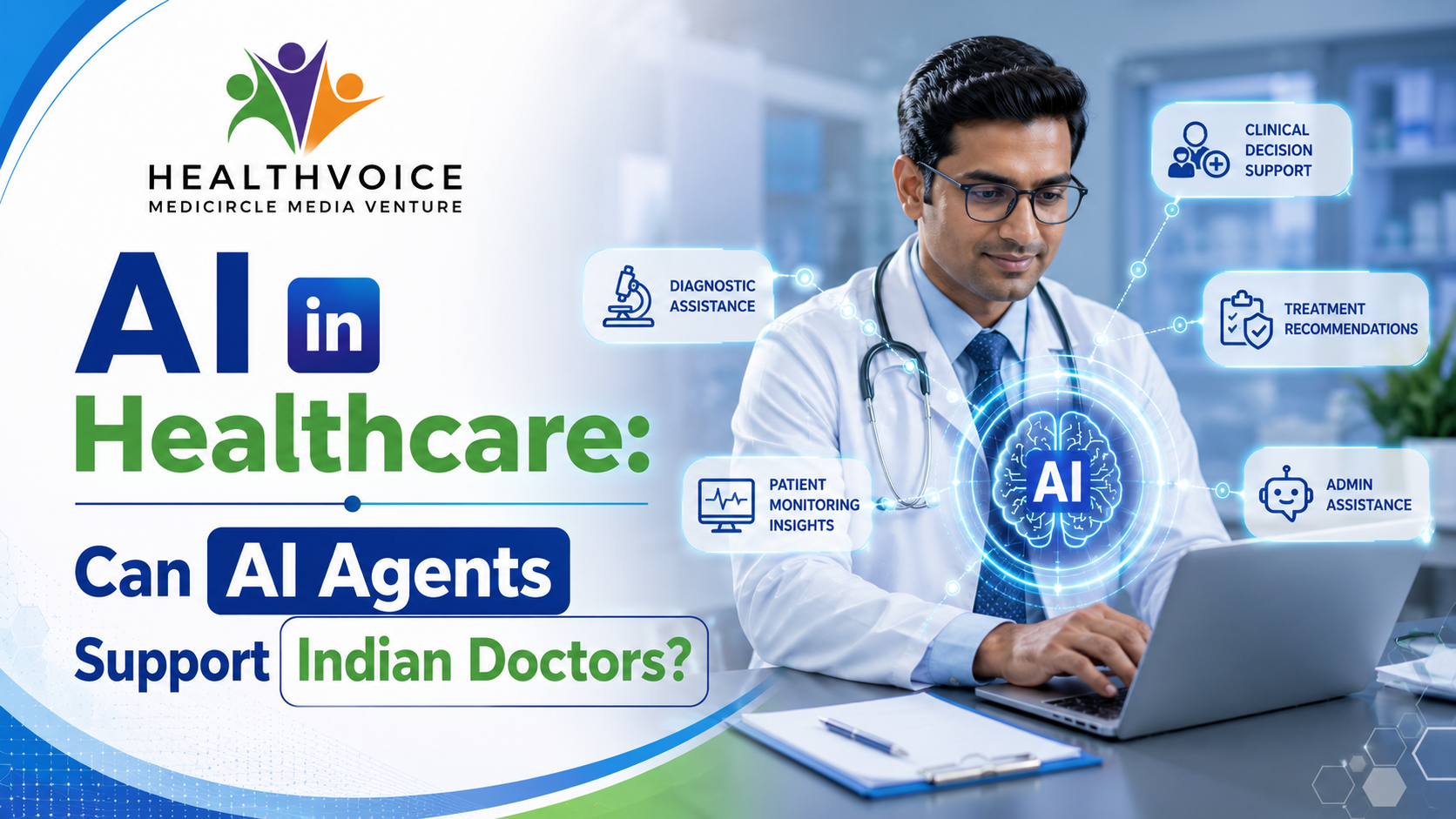
AI in Healthcare: Can AI Agents Support Doctors in Triage, Follow-Up, and Care Coordination?
The medical infrastructure in India operates under a level of pressure that few other fields experience. Because the country has a massive population paired with a severe shortage of trained workforce, a single clinician can easily evaluate dozens of individuals during a morning outpatient department session. This rapid pace leaves very little room for clinical documentation, detailed conversations, or organized patient relationship management. When healthcare professionals are constantly stretched to their maximum limits, it naturally causes severe professional fatigue and creates administrative bottlenecks that delay critical medical interventions.
Fortunately, modern digital health solutions have evolved past theoretical concepts into highly practical tools for everyday medical practices. While early applications focused on basic laboratory testing and imaging, the latest advancements emphasize the integration of artificial intelligence into daily hospital workflow optimization. These interactive computer programs, known as AI agents, go beyond basic data entry. They handle complex workflows, converse naturally with individuals, and streamline healthcare digital marketing. To understand how these tools assist Indian medical practices, it is necessary to analyze three operational areas: initial patient triage, post-discharge follow-up care, and long-term care management.
Improving Patient Triage
Triage is the vital process of sorting patients based on how urgently they need medical attention. In a lot of Indian hospitals, this sorting is often informal or delayed because the emergency rooms and primary care clinics are constantly flooded with people. This situation means a person with a simple seasonal cold often stands in the same long line as someone showing early signs of an acute cardiac emergency. Without an organized way to separate these cases early on, frontline medical staff face an immense mental burden trying to spot high-risk patients quickly.
This is exactly where digital health technology steps in to create a smoother, more organized point of entry. Working through interactive hospital kiosks, smartphone applications, or automated voice desks, these systems can check primary symptoms, log medical history, and compare them against regional health trends. For instance, if a specific city is dealing with a major seasonal outbreak, the digital assistant can quickly differentiate between someone with a mild fever and a patient showing dangerous warning signs like severe pain or unusual bleeding.
By grouping people according to how fast they need to see a doctor, these smart tools help ensure that physicians review high-priority cases first. This setup does not take away the role of the doctor in making the final diagnosis. Rather, it organizes the chaotic influx of patients so that medical expertise is focused right where it matters most, reducing waiting room hazards and making the best possible use of the limited hours of a clinician.
Streamlining Follow-Up Care
The first few weeks after leaving a hospital bed are often a highly vulnerable time for patients in India. Once an individual transitions out of a fully monitored ward, the job of managing complex medication schedules, tracking vital signs, and watching out for warning signs falls entirely on the patient and the immediate family members. When discharge instructions are filled with complex medical jargon, it is easy for families to misunderstand crucial dosage changes, which unfortunately leads to high rates of preventable hospital readmissions.
Most medical centers simply do not have enough nursing staff to call every single discharged patient for a daily welfare check. Hospitals can bridge this massive gap by using automated conversational software. These tools reach out to patients through their preferred everyday messaging applications or via simple automated phone calls to systematically confirm that recovery is moving along exactly as prescribed.
Stage
Process / Action
System Logic & Next Steps
1. Initial Trigger
Hospital Discharge
The patient transitions out of the hospital ward, initiating the automated follow-up protocol.
2. Active Monitoring
Automated AI Check-In
The digital assistant contacts the patient to verify vital signs and ensure medication compliance.
3. Outcome A (Normal)
On-Track Recovery
If the patient reports normal metrics, the system confirms and logs their next routine OPD visit.
4. Outcome B (Risk)
Warning Sign Caught
If an anomaly or danger sign is detected, the system immediately alerts the hospital clinical team.
The software follows a straightforward, safe decision tree. If a patient reports that the recovery markers are completely normal, the system logs the data and schedules the next routine check-in. However, if the patient mentions a worrying symptom, the application instantly flags the file and alerts the clinical team at the hospital. This early-warning mechanism allows doctors and nurses to step in and fix a minor healing issue before it turns into a full-blown medical emergency.
Coordinating Chronic Care
Helping patients stay on top of lifelong chronic conditions like type 2 diabetes, high blood pressure, and heart disease requires steady, long-term care management. Unfortunately, chronic care in India is frequently broken up into isolated pieces. It is incredibly common for patients to switch back and forth between different specialists, misplace their physical medical records, or entirely miss the regular blood tests needed to adjust their daily prescriptions.
Smart digital tools can act as a reliable bridge connecting these scattered pieces of the healthcare puzzle. These systems can easily connect with diagnostic laboratory networks to monitor exactly when a chronic patient is due for an updated blood test or a cholesterol panel. Once the laboratory uploads the final reports, the software can evaluate those new numbers against the specific baseline goals previously set by the treating physician.
If the laboratory results show that the health of the patient is perfectly stable, the assistant can message them to offer reassurance and remind them to stick with their current diet and exercise routine. On the flip side, if the laboratory numbers show a dangerous spike, the system can automatically prompt the patient to book an appointment, while simultaneously updating their digital health profile so the doctor has a clean, organized summary ready the moment the patient walks through the door. This constant, quiet oversight turns chaotic chronic care into a predictable, well-managed health routine.
Leading System Integration
For automation to be truly safe and useful inside Indian medical institutions, practicing physicians must be the ones steering the ship. When complex software is built purely by technology engineers without real-world medical input, it almost always runs into major issues in a fast-paced clinical setting. A poorly calibrated algorithm can easily trigger hundreds of unnecessary notifications, leading to severe alert fatigue for busy nursing staff, or it can completely miss a subtle but dangerous change in the physical appearance of a patient.
To keep these errors from happening, healthcare organizations need to use integration models where medical professionals have the absolute final say. Local doctors understand the unique lifestyle factors, regional illness trends, and cultural talking habits of their community. A digital tool trained solely on medical data from Western countries will struggle to properly interpret local descriptions of pain or understand how specific regional diets affect blood sugar levels.
With doctors leading the integration process, they can build essential clinical safeguards and multi-step verification checks directly into the software. The technology must always function as a helpful assistant that makes the job of a doctor easier, never as a standalone machine making independent medical choices. Keeping the physician at the center of the loop ensures that patient safety remains the ultimate priority of any digital upgrade.
Eliminating Dialect Barriers
One of the biggest hurdles when launching any new technology in India is the incredible mix of languages and varying levels of literacy. Text-heavy computer programs often fail to help people living in semi-urban and rural areas. For an automated tool to offer genuine value to a broad audience, it cannot just rely on written English. It has to understand spoken words and communicate comfortably in regional Indian languages.
Modern developments in natural language processing now allow software to comprehend spoken Hindi, Tamil, Telugu, Bengali, Marathi, and many other regional dialects, adapting smoothly to local accents and everyday expressions. A patient who struggles to read a long, typed document can simply speak directly into a phone application, explaining how they feel in their native language. The digital assistant instantly translates those spoken symptoms into standard medical terminology for the clinical team to review, while replying to the patient with clear, reassuring spoken guidance. This practical bridge brings modern medical infrastructure straight to families who were previously cut off by language barriers.
Frequently Asked Questions
Can artificial intelligence replace the clinical decision-making of a doctor?
The answer is absolute. Digital health tools cannot replace a physician. Making an accurate diagnosis requires deep clinical reasoning, physical examinations, and holistic human empathy. These digital tools are built to handle administrative chores, collect initial medical histories, and keep communication lines open, leaving all actual medical decisions to the doctor.
How do automated systems protect patient data privacy in India?
To strictly align with the Digital Personal Data Protection Act of India, these platforms use advanced end-to-end encryption, highly secure cloud storage, and strict access controls. This security setup means the personal health history of a patient is kept confidential and can only be seen by authorized healthcare professionals directly involved in their care.
What happens if the software fails to recognize a serious medical emergency?
These systems are built with strict safety overrides. If a patient inputs symptoms that hint at a critical situation, like sudden, heavy chest pain or severe breathing difficulties, the software immediately stops its regular questions, provides local emergency phone numbers, and sends an urgent notification to the on-call clinical team of the hospital.
Future Medical Automation
Bringing intelligent digital software into the medical system marks a major step forward for healthcare delivery across India. By taking over repetitive, time-consuming tasks like basic symptom sorting, routine recovery check-ins, and continuous health tracking, these tools lift a massive weight off the shoulders of clinical teams. Shifting this heavy administrative workload to smart software allows doctors to give their undivided attention to direct patient care, difficult clinical puzzles, and specialized operations.
As the healthcare infrastructure continues to grow alongside modern digital tools, the partnership between human medical expertise and automated assistance will shape how smoothly hospitals run. When these tools are set up under direct medical guidance and customized to fit the rich regional diversity of the country, modern applications can become a reliable backbone for busy clinics. The goal for the future of medicine in India is not to take away the personal, human touch, but to use smart technology to protect it, ensuring every patient gets timely, well-coordinated, and safe care.
Abstract
This article examines how digital tools for AI in healthcare assist overextended Indian doctors with patient triage, automated follow-up care, and hospital workflow optimization.
 Team Healthvoice
#AIHealthcare #HealthcareAI
