Clinical data interpretation challenges
Interpreting clinical data is challenging due to poor quality, fragmented systems, and legacy technology. Standardization, modern tools, and strong governance are essential to transform data into meaningful healthcare insights.
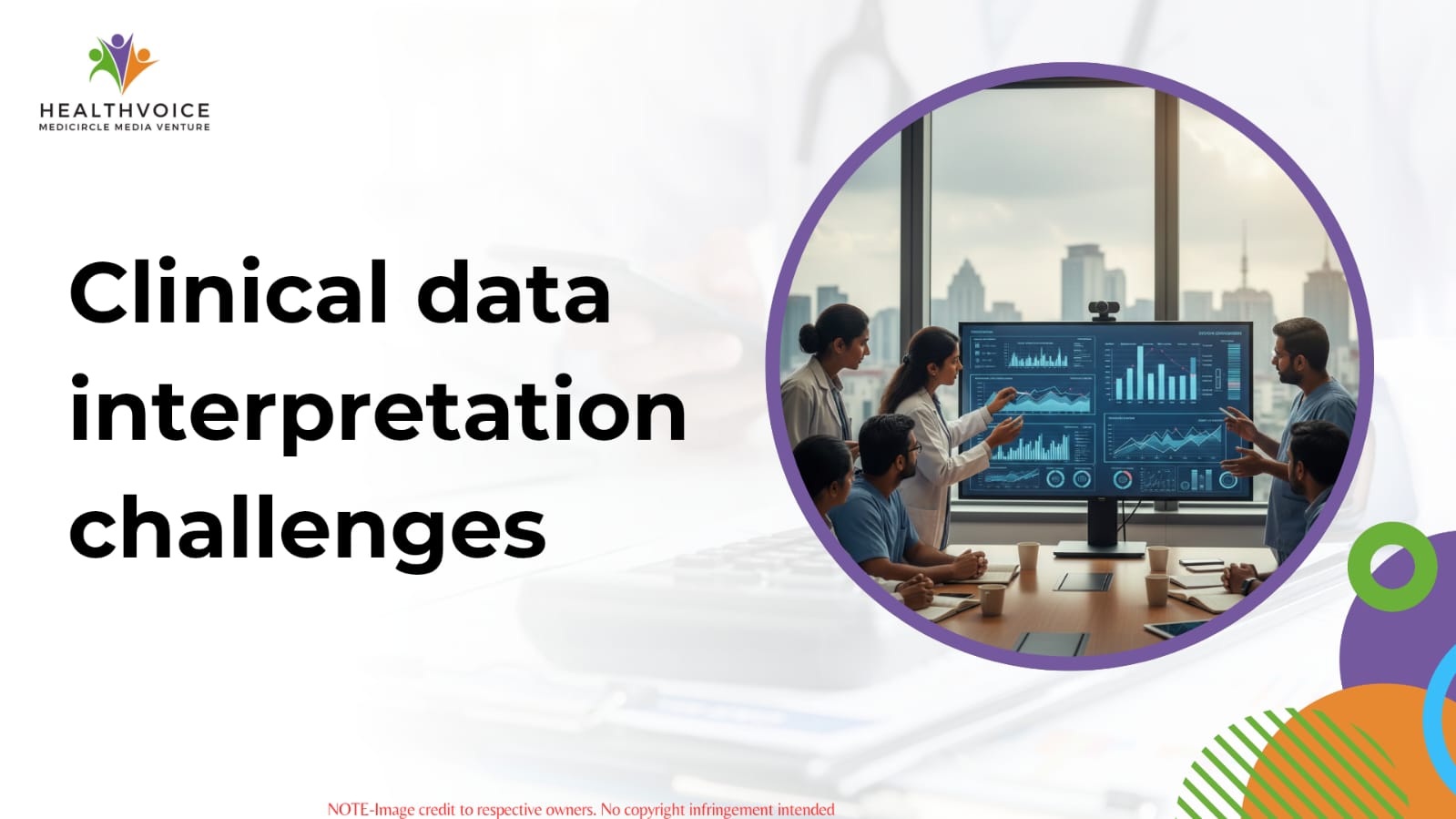
Consider the paper your doctor reviews with its columns of numbers and results. That document represents clinical data. This information functions as the core of modern medicine, a continuous stream of details originating from millions of patients. Across India, in large urban hospitals and smaller local clinics, this data possesses significant potential. It can direct the development of new treatments, assist in managing public health trends, and customize care for individual needs.
However, a major difficulty often remains unnoticed. Gathering information represents only the initial step. The true struggle involves interpretation. Healthcare professionals working to improve medical systems face considerable hurdles in analyzing this data. These are not minor technical issues but fundamental problems that can delay medical progress. Understanding these challenges clarifies their impact on patient care.
Data Quality Issues:
Every medical insight depends fundamentally on the quality of the original data. Flawed or inconsistent information undermines any conclusion derived from it. The situation resembles constructing a building upon an unstable foundation, which risks the entire structure.
Several common factors lead to poor data quality. Human error during manual data entry is a frequent cause. Staff members transferring numbers from paper charts can misread a digit or place a decimal point incorrectly, which may alter a medication dosage substantially. Another widespread issue involves the absence of common standards. A health study occurring in two different cities might encounter a clinic that describes a fever as high grade while another records only the exact temperature. Without uniform procedures for collection, combining this data becomes confusing and unreliable. Comparing dissimilar information makes finding trustworthy insights very difficult.
Data Integration Challenges:
A patient health story now extends beyond a doctor's written notes. Information exists within electronic hospital records, personal fitness tracker data, laboratory system reports, and genetic sequencing results. Each source operates like a separate book chapter composed in a distinct language. Hospital software organizes information one way, while a wearable device transmits a continuous flow of numbers in another format.
This reality creates isolated repositories known as data silos. Each fragment of health information becomes trapped within a separate system that cannot connect to others. For researchers attempting to view a complete patient history, this presents a significant obstacle. Manually combining these different datasets consumes considerable time and resources while frequently introducing additional errors. This integration challenge remains one of the most persistent technical issues in healthcare data management.
The Gap Created:
Many respected hospitals continue to operate using software systems designed decades ago. These legacy platforms were created for a different era, focusing primarily on administrative functions such as patient billing, appointment scheduling, and basic digital record keeping. Their original purpose did not include facilitating complex data analysis for large scale research.
This difference creates a technological gap. Older systems often cannot communicate effectively with modern applications. They may lack the capacity to manage the enormous volume of data currently produced or cannot export information in a useful analytical format. The consequence is that a valuable archive of historical patient data remains inactive on outdated servers. Decades of potential medical learning stay locked away and cannot inform the healthcare discoveries of the future.
Practical Solutions for Clarity:
Addressing these complex issues requires a comprehensive strategy rather than a single solution. A practical path forward combines improved technology, standardized practices, and skilled human oversight.
A vital first step involves replacing error prone manual entry methods. Modern Electronic Data Capture systems, or EDC systems, serve as intelligent digital forms. These systems can flag a suspicious value during entry, prompting verification from the user. This immediate validation helps prevent basic mistakes from becoming part of the permanent record. Additionally, migrating data management to secure cloud platforms provides the flexible storage and computational power necessary to handle large national datasets efficiently.
Solving the data integration problem necessitates industry wide cooperation on standardized data models. Adopting common formats for lab results or diagnosis codes allows different software systems to communicate effectively. When all systems use the same fundamental language, information can flow freely and a unified health picture can emerge.
Technology alone cannot solve these problems. Effective tools require the support of strong data governance policies. Governance means establishing clear strict rules for data collection, access permissions, and security protection. It involves continuous training for healthcare staff and regular audits of the data itself to ensure ongoing accuracy and reliability. This human framework transforms useful software into a source of trustworthy medical insights.
The Healthvoice Perspective:
At Healthvoice, we encounter these data challenges directly. We recognize that every data point corresponds to a person and every fragmented dataset can mean a delayed health solution. Our mission relies on the principle that clear, accurate, and accessible information forms the foundation of better health for individuals, families, and entire communities.
We examine these obstacles not merely to highlight difficulties but to illuminate pathways toward effective solutions. By promoting smarter, more unified data practices, we strive to help build a future where healthcare decisions derive from complete, clear, and meaningful insights. We envision a future where technology effectively serves human health needs, leading to more precise medical care and healthier lives for everyone.
 Team Healthvoice
#HealthcareData #DigitalHealth #HealthTech #HealthInformatics #FutureOfHealthcare #PublicHealth #AIinHealthcare #HealthResearch #SmartHealthcare #HealthSystems #ClinicalData #HealthAnalytics #ConnectedCare #HealthcareTransformation #TechForHealth #HealthEquity #InnovationInHealthcare #Healthvoice