Medical Interns, Missing Data, and a System Under Scrutiny
Treating their stipends as optional or negotiable sends a damaging signal about how the system values medical labour.
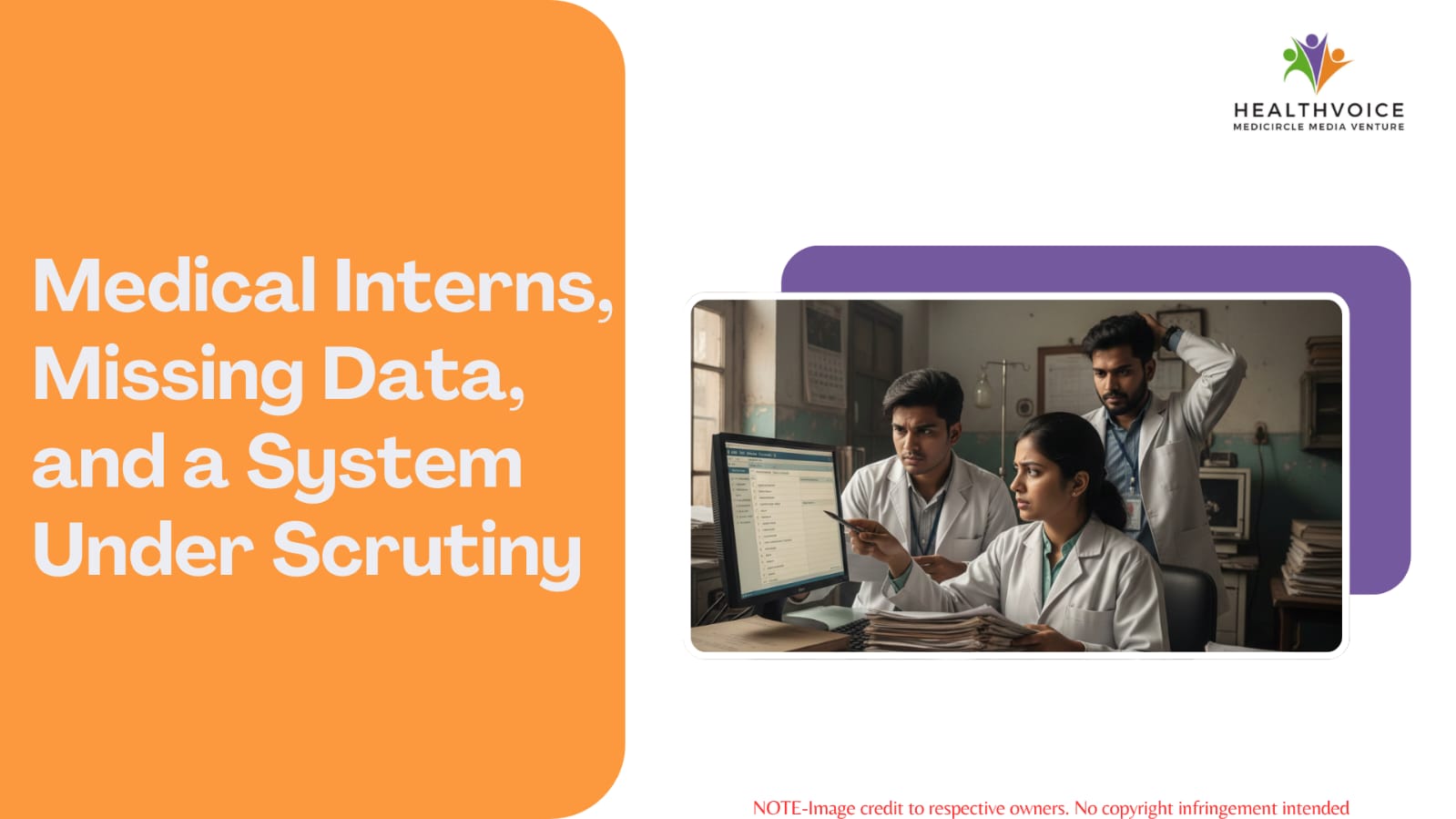
In the long journey of becoming a doctor in India, the compulsory MBBS internship is often described as a bridge between theory and responsibility. It is the year when young graduates step into wards as real caregivers, shoulder night duties, manage emergencies, and learn the rhythm of hospital life that textbooks never teach. But for thousands of interns across the country, this crucial phase is shadowed by an uncomfortable question that refuses to go away: will they be paid what they are legally and ethically owed?
A recent revelation through the Right to Information Act has brought this issue back into sharp focus. Around 65 medical colleges across India have failed to submit details of stipends paid to MBBS interns to the National Medical Commission, despite repeated directives and clear timelines. What makes this disclosure troubling is not merely the number of defaulting institutions, but the prolonged inaction that has followed. Six months after the deadline, and years after the Supreme Court first intervened on the matter, the system appears stuck in a loop of circulars, reminders, and silence.
The issue raises fundamental concerns about accountability, governance, and the value placed on young medical professionals who form the backbone of India’s public healthcare system.
The problem of unpaid or underpaid stipends for medical interns is not new. For over a decade, interns have spoken about delayed payments, arbitrary cuts, and wide disparities between states and institutions. What is new is the growing judicial scrutiny and the expectation that the National Medical Commission, as the apex regulator, would finally bring transparency and uniformity into the system. The Supreme Court has been unambiguous in its position. Interns, whether Indian Medical Graduates or Foreign Medical Graduates undergoing compulsory training in India, are entitled to stipends. These stipends are not charity, nor incentives, but remuneration for essential medical work.
Against this backdrop, the RTI reply dated January 19 has landed like a cold reminder of how fragile enforcement remains. According to the Union Health Ministry, the responsibility for compiling undergraduate internship stipend data lies with the Undergraduate Medical Education Board under the NMC. Yet, despite this clear mandate, about 65 colleges have simply not furnished their details in the last six months. More concerning is the absence of visible regulatory action against these institutions.
The RTI was filed by Kerala-based activist Dr K V Babu, who has consistently pursued transparency in medical education governance. His questions were straightforward: had reminders been sent, and what follow-up action had been taken against erring colleges? The response, however, reflected a familiar pattern of procedural distancing. The Ministry clarified that it could not formulate a reply on stipend disbursement, as the task lay with the NMC’s undergraduate board. What remained unsaid was whether any concrete penalties, inspections, or warnings had followed.
For interns currently working in overstretched hospitals, this bureaucratic buck-passing feels disconnected from reality. Internship is not an observational role. Interns draw blood, monitor patients, assist surgeries, handle paperwork, and often function as the first point of contact in government hospitals. In rural postings and district hospitals, they sometimes form the bulk of the workforce. The stipend, modest as it may be, supports living expenses, accommodation, food, and often family obligations. Delays or non-payment push interns into debt, dependence, or burnout at the very start of their professional lives.
The NMC itself appeared to recognise the seriousness of the issue when it issued a notice on July 11, 2025, citing Supreme Court orders related to fee regulation and non-payment of stipends. The notice carried a warning that regulatory action would follow if colleges failed to disclose stipend details. That warning raised hopes within the medical community that compliance would finally be enforced. Yet, months later, the RTI reply suggests that the threat of action has not translated into meaningful consequences.
This gap between policy and practice has not gone unnoticed by the judiciary. On October 28, 2025, the Supreme Court expressed sharp displeasure with the NMC for failing to comply with its own directives. During hearings on a batch of pleas concerning non-payment of stipends to interns, the court noted that similar directions had been issued as far back as 2023. Two years later, the situation remained unresolved. The bench’s observations reflected a growing impatience with regulatory inertia.
The NMC was envisioned as a reformist body, replacing the Medical Council of India with the promise of transparency, efficiency, and accountability. Issues like internship stipends were expected to be among the first to see reform, given their direct impact on training quality and workforce morale. Instead, the persistence of non-compliance suggests that structural weaknesses continue to undermine regulatory authority.
The issue also exposes uncomfortable disparities within medical education. While some states and colleges pay stipends that align with government norms, others reportedly pay far less or delay payments indefinitely. Private medical colleges, in particular, have often been accused of treating internships as a continuation of fee-paying education rather than paid service. Without transparent disclosure and strict penalties, these practices thrive in the shadows.
Voices from within the profession have grown sharper. Reacting to the RTI disclosure, Dr Dhruv Chauhan, National Spokesperson of the Indian Medical Association Junior Doctors Network, took to social media to express his frustration. His words resonated widely because they captured a sentiment many young doctors quietly share: when a system neglects its own healthcare workers, it ultimately weakens patient care and public trust.
The handling of stipends reflects how seriously institutions take ethical obligations towards trainees. It shapes the culture young doctors absorb in their formative years. A system that normalises delayed payments and ignored directives risks normalising larger compromises later in practice.
There is also a policy dimension that deserves attention. The Supreme Court’s repeated involvement underscores that stipend regulation is not merely an administrative matter but one tied to constitutional principles of fairness and labour rights. Interns, despite being learners, perform work that is essential to healthcare delivery. Ignoring their remuneration undermines both legal standards and moral responsibility.
For the NMC, this moment is a test of credibility. The commission has the authority to inspect, penalise, and even withdraw permissions. Using these powers judiciously in cases of stipend non-compliance would send a strong message that interns are not expendable. It would also reassure senior doctors and educators that the regulator is willing to protect the integrity of medical training.
The silence of 65 colleges is telling, but the louder concern is the silence of enforcement. As long as institutions can ignore directives without consequence, the burden will continue to fall on interns who lack the power to challenge their employers while still in training.
In the larger picture, India’s healthcare system depends heavily on young doctors. They are the ones staffing emergency rooms at odd hours, managing patient loads that far exceed global norms, and stepping into service roles immediately after graduation. Treating their stipends as optional or negotiable sends a damaging signal about how the system values medical labour.
As this issue returns to the courts and public discourse, it deserves sustained attention from the medical community. Senior doctors, academic leaders, and professional bodies have a role to play in pushing for reform. Silence, in this context, risks becoming complicity.
The story of unpaid or undisclosed stipends is not just about numbers on a balance sheet. It is about trust between institutions and trainees, about the credibility of regulatory bodies, and about the future culture of Indian medicine. Until the gap between directives and action is closed, the promise of reform will remain incomplete, and the interns who keep hospitals running will continue to wait for recognition that should never have been in doubt.
 Team Healthvoice
#MBBSInternship #StipendRight #NMC #MedicalJustice #JuniorDoctors #HealthcareWorkers #MedicalEthics #HealthcareGovernance #MedicalReform #DoctorsOfIndia #PublicHealthcare #MedicalStudents #healthvoice