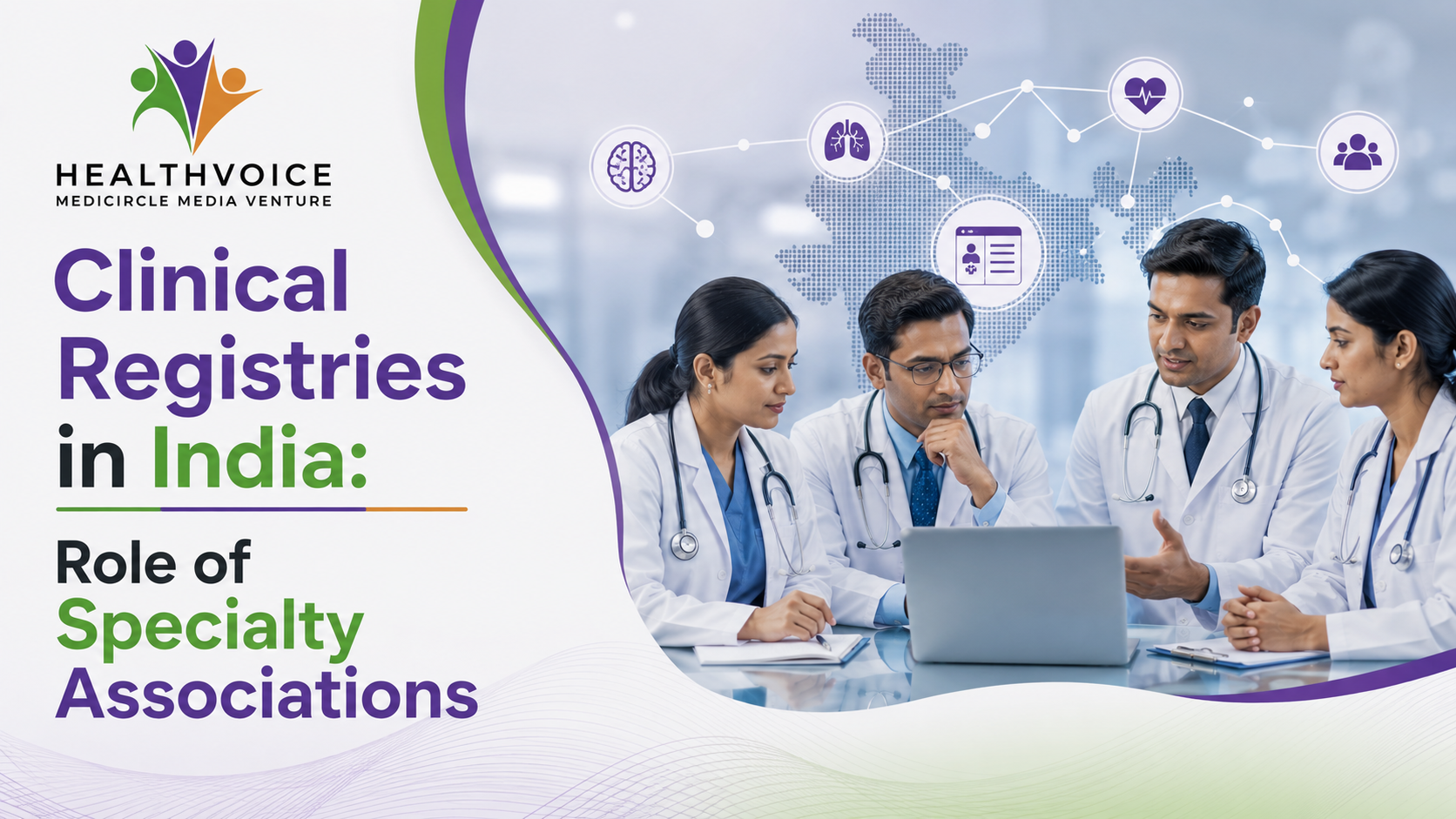
Clinical Registries in India: Role of Specialty Associations
By investing in structured clinical registries, medical specialty associations become guardians of population-specific data, improving indigenous clinical research, national health policies, and everyday patient care throughout India.
Best Clinical Registries in India Guide for Specialty Associations
The Indian healthcare ecosystem is currently witnessing a massive digital health revolution. Government-led digital public infrastructure and modern electronic health record systems are pushing medical centers to adopt healthcare data standards faster than ever before. However, even though corporate hospital networks and standalone medical facilities are successfully tracking individual electronic health record profiles, the wider digital health ecosystem still faces a major structural challenge. There is a noticeable shortage of aggregate, unified clinical registry databases within specific medical fields. This missing link provides a unique chance for national medical societies and specialty associations to establish comprehensive clinical registries in India.
A clinical registry acts as a secure, centralized electronic repository that systematically gathers structured healthcare data on specific illnesses, clinical research interventions, and patient outcomes. Relying entirely on Western clinical trials and international treatment protocols often leaves a critical gap in India, where unique genetic backgrounds, distinct lifestyles, and varied regional health patterns change the actual clinical presentation. Designing localized digital health technologies allows Indian medical associations to develop true evidence-based guidelines that fit the exact needs of our diverse population. Through dedicated health communication networks like HealthVoice, sharing organized clinical data can fundamentally reshape how healthcare delivery is planned and evaluated across the country.
Understanding Clinical Registries
To appreciate what a nationwide clinical registry can accomplish, it helps to look at how modern healthcare data management functions. Right now, most patient histories remain locked away inside independent hospital information systems or physical paper records. When a major medical association launches a unified clinical registry system, it bridges these gaps by securely pooling anonymized healthcare data from a network of public and private medical colleges across various states.
This unified repository offers healthcare professionals a comprehensive look at regional health trends, recovery timelines, and procedural success rates. Because these registries follow a patient's clinical progress over months or years after a major intervention, they show how treatments perform within the everyday digital health ecosystem. This approach moves beyond the limitations of small, isolated clinical trials by offering thousands of active real-world data points, giving doctors a clear and reliable view of disease behavior and treatment effectiveness in day-to-day practice.
Importance of Localized Data
For decades, the Indian medical community has relied heavily on clinical guidelines established by Western institutions, such as European society frameworks or American cardiac guidelines. While those protocols offer a helpful foundation for medical practitioners, they do not always match the practical realities seen in Indian clinics.
Distinct dietary habits, specific genetic factors, environmental influences, and the fact that many patients only seek care during advanced stages of an illness can completely alter treatment outcomes here. For example, cardiovascular issues frequently appear in Indian patients nearly a decade earlier than in Western demographics. Similarly, certain diabetic complications and oncological cases present distinct clinical patterns in South Asian populations. Building dedicated clinical registries in India allows specialty associations to capture these crucial differences, leading to the creation of native healthcare guidelines that make everyday clinical practice safer, more targeted, and highly practical.
Benefits for Associations
Taking charge of healthcare data infrastructure allows medical societies to significantly boost their academic influence, policy weight, and clinical research capabilities. This shift elevates an association from a standard professional networking group into a true driver of modern scientific progress.
Elevating Research Standards
Access to large, well-organized datasets allows Indian medical societies to elevate the quality of their scientific publications. Instead of presenting minor studies with limited sample sizes, local researchers can share powerful, multi-center clinical research findings on global platforms, ensuring that international health policies accurately reflect Indian demographics.
Standardizing Quality Care
A functional clinical registry provides an honest look at daily medical practices across the country. It gives hospitals and independent practitioners a clear way to measure their personal patient outcomes against national performance baselines. If data reveals that a specific region is facing higher complication rates for a routine surgery, the association can step in with targeted skill workshops, specialized training, and updated safety guidelines to improve performance.
Policy and Public Health
The impact of structured electronic health record data extends far beyond the walls of a clinic, serving as a vital tool for designing national public health initiatives. Government agencies, policy creators, and insurance administrators need solid local statistics to distribute public funds and launch effective health programs.
When a specialty association manages a comprehensive database detailing specific disease impacts, survival statistics, and management costs, it can offer practical guidance to state and national health ministries. For instance, clear insights from a national cardiology or oncology registry can pinpoint exactly which medical devices or therapeutic drugs deserve priority under public insurance initiatives like Ayushman Bharat, ensuring that public healthcare budgets target the most impactful areas.
Key Structural Challenges
Despite the clear advantages, launching a sustainable clinical registry across a country as vast as India involves several operational and logistical hurdles. Identifying these challenges early helps associations design more resilient digital health networks.
The widespread existence of isolated data silos remains a major hurdle. Because different hospitals utilize entirely separate hospital information software, transferring data smoothly is difficult without adopting universal interoperability standards like Fast Healthcare Interoperability Resources. Additionally, busy clinical teams are often too stretched to handle extra data entry tasks alongside their daily patient rounds. Finally, ensuring total alignment with India's Digital Personal Data Protection Act is absolutely essential to safeguard patient confidentiality and protect sensitive health information.
Implementing Data Systems
Setting up a sustainable registry requires an organized, step-by-step strategy that blends reliable digital health technologies with consistent support from working doctors, keeping the system practical and user-friendly.
First, associations must pinpoint their core data points, focusing strictly on essential clinical facts so that participating physicians are not bogged down by paperwork during consultations. Second, clear governance rules and legal agreements must be set up to guarantee complete patient anonymity and protect institutional data-sharing partnerships. Third, the association needs to deploy a secure, cloud-hosted platform that interfaces smoothly with existing hospital databases via secure healthcare data protocols. Finally, getting clinics on board requires meaningful incentives, such as providing hospitals with customized regional data analysis dashboards and offering academic recognition in joint clinical research projects.
Conclusion
The next phase of healthcare development in India depends on how effectively the medical community organizes its collective healthcare data. Relying on fragmented hospital records or copying international clinical models limits our ability to solve local health issues. By investing in structured clinical registries, medical specialty associations can become trusted guardians of authentic, population-specific data.
This shift not only drives high-level clinical research but also guarantees that everyday treatment strategies match the exact needs of Indian patients. As digital tools continue to expand across the nation, platforms like HealthVoice remain committed to supporting advanced medical communication and organized data practices that assist doctors and elevate the standard of patient care throughout India.
Frequently Asked Questions
Do clinical registries violate patient privacy laws in India?
No, as long as they are designed with proper security standards. Reliable clinical registries use advanced de-identification techniques, meaning all personal data, like names, residential addresses, and contact numbers are completely removed. The registry looks only at clinical facts, ensuring full compliance with India's Digital Personal Data Protection Act.
How do clinical registries differ from standard hospital electronic health records?
An electronic health record is an individual patient's digital folder used within a single hospital for direct treatment, tracking, and billing. A clinical registry combines specific medical details from thousands of separate health records across multiple hospitals, focusing on a particular condition or surgery to study broad health patterns and long-term recovery trends.
Who funds the creation and upkeep of these registries?
Most registries are maintained through a combination of professional association funds, national research grants, philanthropic healthcare organizations, and transparent public-private collaborations. The long-term savings achieved through better healthcare planning and high-quality research assets typically make up for the initial setup costs.
Abstract:
By investing in structured clinical registries, medical specialty associations become guardians of population-specific data, improving indigenous clinical research, national health policies, and everyday patient care throughout India.
 Team Healthvoice
#ClinicalResearch #HealthcareData