Clinician-led innovation stories
Clinician-led innovation in Indian hospitals addresses everyday obstacles, creating tools that streamline workflows, enhance patient monitoring, and extend personalized care beyond hospital walls for better outcomes.
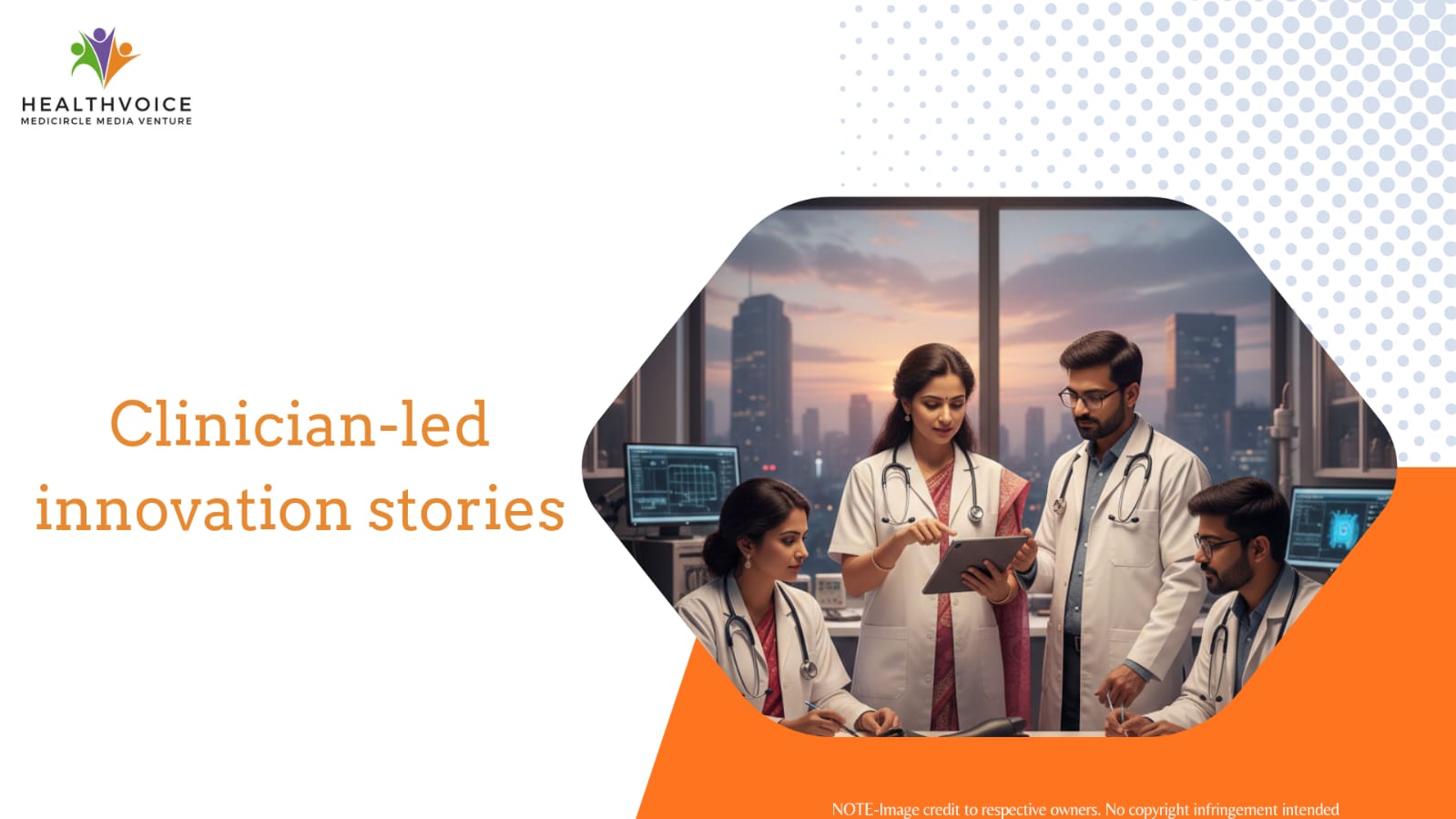
A person walking into any hospital across India will notice something interesting about the doctors. They are always moving from one place to another. They shift between beds in the ward, they move from the outpatient department to the intensive care unit, and they transition from paper files to computer screens. In the middle of all this movement, they also find time to speak with worried family members. They calm down patients who are anxious about their condition. They make quick decisions that have the power to change a life. It is a role that demands a great deal from a person. Those who perform this duty every single day develop a clear understanding of where the system functions well and where it begins to break down.
If someone takes the time to ask any physician about their daily frustrations, the answer might be surprising. They will not immediately speak about long working hours or low salaries. Those are accepted parts of the profession. Instead, they will talk about the small obstacles that pile up over the course of a day. They will mention the time lost while searching for an old report that has been misplaced. They will describe the difficulty of checking whether a patient continued their medication after returning home. They will discuss the struggle of trying to reach a specialist colleague when something in a patient's condition does not look right. These issues rarely make it into the news. But these are the very problems that determine how well a patient recovers in the long run.
Small Obstacles, Big Effects:
Here is something that many people do not fully understand. When a doctor treats a patient, they rely on more than just their medical training. They also depend on a collection of tools surrounding them. Some of these tools are simple instruments like the stethoscope. Others are far more complex, such as the software that runs the hospital administration. But there is a catch that becomes obvious after spending time in a hospital. Most of these tools were designed by people who have never treated a patient in their entire career. They were built by engineers sitting in offices far from the hospital floor, creating solutions based on what they imagine a doctor might need.
This is precisely where the gap between expectation and reality appears. Consider a surgeon working in Lucknow. This surgeon might want a straightforward method to track whether his patients develop a fever after they leave the hospital. But the software provided to him was designed primarily for handling bills and payments, not for managing patient follow-ups. Think about a physician in Pune who treats patients with high blood pressure. She wants her patients to send their daily readings so she can adjust their treatment. But the only option available is a confusing mobile application that her patients, many of whom are elderly, cannot figure out how to use.
Clinicians notice these gaps because they stumble over them repeatedly throughout their working day. They are not asking for flashy technology or expensive gadgets. They are asking for tools that remove the friction from their daily routine. They want something that allows them to focus their attention on the person sitting in front of them. They do not want to spend their energy on the paperwork waiting on the desk or the software that refuses to cooperate.
Doctor-Platform Connect:
Think about a cardiologist practicing in Nagpur. He faced a problem that many doctors in India encounter regularly. His patients would come to the hospital for a procedure. They would stay for a few days under observation. Then they would return to their homes, many of which were located in smaller towns nearby. Before they left, he would give them clear instructions. Walk regularly every day. Eat food that supports heart health. Take the medicines exactly as prescribed. But after they walked out of the hospital, he had no window into their daily lives. He did not know if they were following his advice. He had no idea whether their blood pressure remained under control. He would only find out months later when they returned for a scheduled checkup. Often, they came back with problems that could have been prevented with timely intervention.
He needed a method to remain connected with his patients after discharge. Phone calls were not a practical solution for a doctor with a packed schedule. He required something simple, something that would fit into his existing routine without creating extra work. This is exactly where a platform like HealthVoice enters the picture. It takes the knowledge and experience of the doctor and converts it into a system that continues working outside the hospital walls. The doctor establishes the parameters that matter for his patients. He tells the system that he needs to see blood pressure readings every week. The platform handles the rest. The patient sends the data from their home. The doctor reviews the information when he has a free moment. If something appears unusual or concerning, he steps in to provide guidance.
For the patient, this approach transforms the entire experience of recovery. It means their doctor continues watching over them even from a distance. For the family members caring for the patient, it means one less trip to a crowded hospital. It gives them peace of mind, knowing that a medical professional is quietly keeping an eye on things.
Breaking Down Walls:
Another area where this way of thinking proves valuable is inside the hospital itself. Hospitals are naturally noisy and chaotic environments. Information moves slowly through these spaces. A nurse working in a ward in Chennai might notice that a patient's oxygen levels are beginning to drop. She understands this is an important sign. But the doctor responsible for that patient is in another wing of the hospital, attending to a different case. The nurse now faces a decision. Should she call the doctor and interrupt important work? Or should she wait and watch to see if the situation improves on its own?
In a hospital where clinicians have guided the design of communication tools, this confusion simply does not occur. The system is built with an understanding of urgency. It automatically sends an alert to the correct doctor. It prioritizes information based on what the doctors and nurses have identified as important through their experience. The nurse does not need to hesitate. The doctor does not need to rely on someone else's judgment about whether to interrupt. The system supports both of them in doing their jobs effectively.
This outcome is what happens when the people performing the work also have a voice in how the tools are created. The tools begin to feel more human in their operation. They start to reflect an understanding of the pressures present in a real hospital ward. A pediatrician in Kerala can send a short voice message to a mother whose child has developed a fever. The message explains what steps to take next in simple terms. A gynecologist in Ahmedabad can share a quick checklist with an expecting mother. The checklist is personalized to her specific stage of pregnancy. The goal is not to replace the human connection between doctor and patient. The goal is to make that connection reach further than it ever could before.
Moving Forward with Purpose:
There are challenges along this path, and no one pretends otherwise. Doctors across India are already carrying heavy workloads. The last thing they need is another complicated system demanding their time and attention. Any tool that hopes to succeed in this environment must be simple to use. It must feel like it is lightening the load rather than adding to it. It has to fit naturally into the doctor's existing routine. It cannot force the doctor to change the way they work just to accommodate the technology.
When clinicians take the lead in shaping these solutions, the results speak clearly for themselves. The solutions remain grounded in the reality of daily medical practice. They solve real problems that real patients encounter every single day. For the person sitting in the waiting room, this development means something simple but profound. It means their doctor is not relying only on methods from the past. It means their doctor has access to better tools. These are tools that make the care feel more personal. They make the treatment more continuous. They make the overall experience more effective. And that is a change truly worth making.
 Team Healthvoice
#IndianHealthcare #DigitalHealth #HealthcareTransformation #PatientCare #ContinuityOfCare #MedicalTechnology #HealthcareInnovation #PhysicianLeadership #SmartHealthcare #RemoteMonitoring #ChronicCareManagement #HealthcareCommunication #FutureOfHealthcare #healthvoice