Healthcare Cybersecurity Best Practices: A Complete Guide for Indian Healthcare Organizations
This article outlines essential healthcare cybersecurity best practices for Indian hospitals, clinics, and healthcare organizations, covering data protection, regulatory compliance, ransomware prevention, and proactive digital health security strategies.
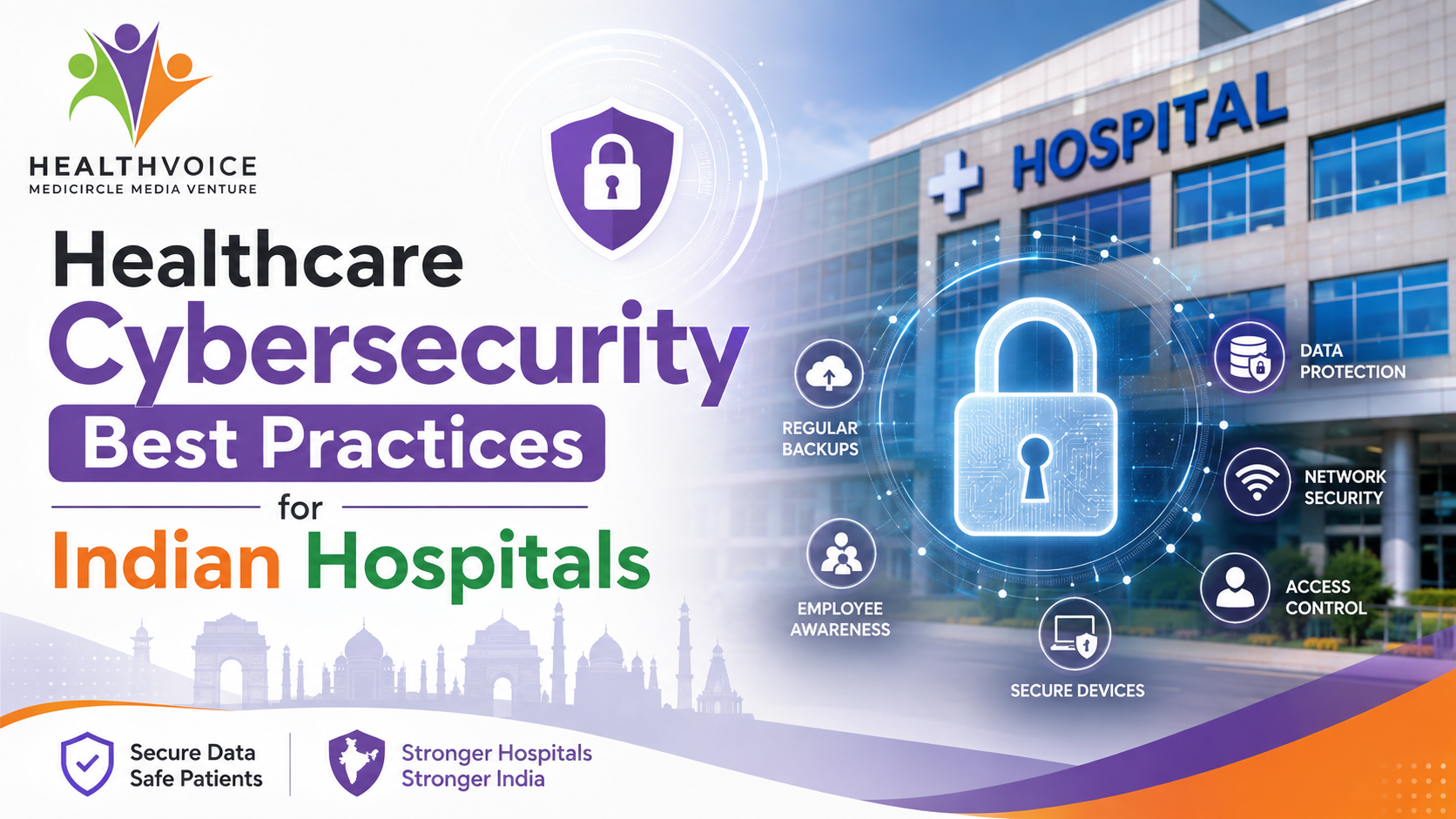
Introduction
The Indian healthcare sector is in the middle of a sweeping digital transformation. From electronic health records and telemedicine platforms to AI-assisted diagnostics and connected medical devices, technology has become deeply embedded in how clinical care is delivered and managed. This shift carries enormous benefits. It has made healthcare more accessible, especially for patients in Tier 2 and Tier 3 cities, and it has improved the speed and accuracy of diagnosis and treatment. However, it has also introduced a growing and serious threat: cybersecurity vulnerabilities that can jeopardize patient safety, compromise sensitive health data, and disrupt essential medical services.
India reported a significant surge in healthcare sector cyberattacks in recent years. Hospitals, diagnostic chains, insurance platforms, and health technology companies have all faced intrusions ranging from ransomware to mass data theft. The consequences of these breaches are not merely financial. Delayed surgeries, inaccessible patient records, compromised medical devices, and disrupted emergency services are all real possibilities when cybersecurity fails in a healthcare setting.
For Indian doctors, hospital administrators, healthcare associations, and health technology companies, understanding and implementing robust cybersecurity practices is no longer optional. It is a professional and ethical responsibility.
Understanding the Digital Threat Landscape in Indian Healthcare
Why Healthcare Is a Prime Target
Healthcare organizations hold some of the most sensitive personal data in existence: medical histories, diagnoses, prescriptions, financial details, and identity information. On the global dark web, health records are valued significantly higher than financial records because they cannot be changed the way a stolen credit card number can be. This makes them extremely attractive to cybercriminals.
Indian hospitals, particularly large multi-specialty chains and government health platforms operating under the Ayushman Bharat Digital Mission (ABDM), manage vast volumes of patient data across interconnected systems. The Ayushman Bharat Health Account (ABHA) framework, while designed to enable seamless digital health access, also creates new points of vulnerability if proper security protocols are not in place.
Additionally, many Indian healthcare facilities, particularly nursing homes, smaller clinics, and district hospitals, operate with limited IT infrastructure and minimal cybersecurity budgets. Legacy systems running outdated software, absence of dedicated IT security personnel, and inadequate staff training create conditions where even basic cyber threats can cause substantial damage.
The Most Common Cyber Threats Facing Indian Healthcare Organizations
Healthcare organizations in India face a wide spectrum of cyber threats, several of which have already led to documented incidents:
- Ransomware attacks: Cybercriminals encrypt hospital data or operational systems and demand payment for restoration. Several prominent Indian hospitals have experienced ransomware incidents that disrupted patient care.
- Phishing and spear-phishing: Fraudulent emails targeting hospital staff or doctors are used to steal credentials, gain unauthorized access to clinical systems, or introduce malware.
- Insider threats: Disgruntled employees or carelessly trained staff can either deliberately or accidentally expose sensitive patient data.
- Unpatched medical devices: Connected devices such as infusion pumps, imaging equipment, and patient monitoring systems often run on older software that manufacturers may no longer actively update.
- Third-party vendor vulnerabilities: Hospitals frequently work with vendors for billing, pharmacy management, lab integrations, and telemedicine. A weak link in any vendor's security posture can become an entry point for attackers.
Primary Risk Factors and Compliance Obligations in the Indian Context
Regulatory Obligations That Cannot Be Ignored
The regulatory environment around health data in India is evolving rapidly, and healthcare organizations must pay close attention.
The Digital Personal Data Protection Act 2023 (DPDP Act) is India's landmark data protection legislation. It requires organizations that collect and process personal data, including health information, to implement appropriate technical and organizational safeguards, obtain meaningful consent, and report breaches to the Data Protection Board of India. Non-compliance carries significant penalties.
The Information Technology Act 2000 and its amendments, particularly the IT (Amendment) Act 2008, already establish legal liability for negligent handling of sensitive personal data, including health information, by organizations operating in India.
Under the ABDM framework, participating healthcare providers and health technology companies are expected to follow the Health Data Management Policy and associated data security standards. As digital health adoption accelerates, these requirements will become increasingly stringent.
Additionally, hospitals seeking NABH (National Accreditation Board for Hospitals and Healthcare Providers) accreditation must demonstrate appropriate information management practices, which increasingly include cybersecurity considerations.
Specific Risk Factors in the Indian Healthcare Setting
Several factors make Indian healthcare organizations particularly vulnerable:
Rapid digitization without parallel investment in security infrastructure means many organizations are running modern applications on inadequately secured foundations. In Tier 2 and Tier 3 cities, where telemedicine and mobile health apps have expanded access to care, cybersecurity awareness among healthcare staff remains low. The widespread use of personal mobile devices for clinical communication, WhatsApp-based patient management, and cloud document sharing without enterprise-grade security controls further increases exposure.
Recognizing Warning Signs of a Cyber Incident
Healthcare administrators and clinical staff should be trained to recognize early warning signs of a cybersecurity incident, because timely detection can significantly reduce damage.
Warning signs that warrant immediate attention include:
- Unexpected system slowdowns or inaccessibility of electronic health record platforms
- Unusual login activity or access from unfamiliar locations or devices
- Emails from known colleagues or institutions containing unusual requests or unexpected attachments
- Medical devices behaving inconsistently or displaying unfamiliar error messages
- Inability to access patient files, billing systems, or diagnostic records without explanation
Early detection and prompt reporting within the organization is critical. Every healthcare institution, regardless of its size, should have a defined internal protocol for reporting suspected cyber incidents to the IT team or designated security officer.
Evaluation and Security Audit Frameworks
Conducting a Healthcare Cybersecurity Risk Assessment
Before implementing protective measures, every healthcare organization must first understand its current security posture. A formal cybersecurity risk assessment identifies:
- What sensitive data is being collected, stored, and shared
- Which systems and devices are connected to the network
- Where the vulnerabilities and gaps in current security practices exist
- What the likely impact and probability of various threat scenarios are
In India, organizations can align their risk assessment process with frameworks such as the National Institute of Standards and Technology (NIST) Cybersecurity Framework, which has been referenced in several government-level cybersecurity advisories applicable to critical infrastructure sectors, including health.
Healthcare associations and medical councils in India can play an important role by helping member institutions access cybersecurity audit resources, facilitating peer learning, and advocating for sector-specific security standards. Platforms like HealthVoice, which connect doctors, associations, and healthcare stakeholders, serve as important channels through which such awareness and knowledge sharing can be systematically organized.
Best Practices and Management Strategies for Healthcare Cybersecurity
Foundational Security Measures Every Organization Must Implement
- Access Control and Identity Management
Every clinical system must operate on the principle of least privilege, meaning staff members should only have access to the data and systems necessary for their specific role. Multi-factor authentication (MFA) must be mandatory for all systems that handle patient data or connect to administrative networks. Strong, unique passwords and a formal policy for regular password rotation are non-negotiable.
- Data Encryption
All patient health records, whether stored on servers or transmitted across networks, must be encrypted using current industry standards. This applies equally to data stored in on-premise hospital servers and data processed through cloud-based health platforms. With the expansion of ABDM-connected health applications, end-to-end encryption of health data flows is increasingly important.
- Regular Software Updates and Patch Management
One of the most common causes of successful cyberattacks is the exploitation of known vulnerabilities in unpatched software. Hospitals must implement a structured patch management process that ensures all operating systems, clinical applications, and connected medical device firmware are updated regularly. Devices that cannot be updated and remain on the network must be isolated through network segmentation.
- Staff Awareness and Training
Human error remains the leading cause of healthcare data breaches globally. Regular cybersecurity training for all hospital staff, from ward attendants and billing clerks to senior doctors and administrators, is essential. Training should include identifying phishing emails, safe use of mobile devices for clinical communication, and the correct procedure for reporting suspected incidents.
- Data Backup and Disaster Recovery
Healthcare organizations must maintain regular, encrypted backups of all critical data, stored in at least two separate locations, including one offsite or cloud-based backup. A tested disaster recovery plan ensures that clinical operations can resume with minimal disruption following a ransomware attack or system failure.
Advanced Cybersecurity Practices for Larger Healthcare Organizations
Larger hospitals and healthcare chains in India should consider implementing:
- Security Operations Centers (SOC) or engaging managed security service providers for 24/7 monitoring
- Network segmentation to isolate medical devices from administrative and clinical IT networks
- Vendor risk management programs that include cybersecurity assessments of all third-party technology partners
- Incident response plans that define roles, responsibilities, and communication protocols to be activated during a breach
- Penetration testing conducted periodically by certified ethical hackers to identify and remediate vulnerabilities before attackers can exploit them
Prevention and a Proactive Security Culture in Indian Healthcare
Building a Security-First Culture
The most effective long-term defense against cyber threats is a culture where cybersecurity is understood as a shared professional responsibility, not just an IT department concern. Senior doctors and hospital leadership must champion this culture, because behavior at the top sets the standard for the entire organization.
Medical associations across India can contribute meaningfully by incorporating cybersecurity awareness into their continuing medical education (CME) programs, publishing guidelines for member institutions, and creating platforms for sharing threat intelligence across the healthcare community. When individual institutions share information about attempted attacks and successful mitigations, the entire sector becomes more resilient.
From a policy standpoint, the Ministry of Health and Family Welfare (MoHFW) and the Ministry of Electronics and Information Technology (MeitY) have both acknowledged the importance of health data security in the context of India's digital health ambitions. Advocacy by medical bodies and healthcare associations for clearer, enforceable cybersecurity standards in Indian healthcare will be essential as the sector continues to digitize.
What Individual Doctors Can Do
For individual doctors working in hospitals, clinics, or telemedicine settings, there are specific steps that significantly reduce personal and institutional cybersecurity risk:
- Never share login credentials for electronic medical record systems with colleagues or support staff
- Use only hospital-approved or personally owned secured devices for accessing patient data
- Be vigilant about unsolicited messages, links, or emails requesting login credentials or sensitive information
- Ensure that any patient communication through digital channels complies with applicable data privacy norms
- Report unusual system behavior or suspected phishing attempts immediately to hospital IT
Conclusion
Healthcare cybersecurity is not a technology problem alone. It is a patient safety issue, a professional ethics issue, and an organizational leadership issue. As India accelerates its journey toward a fully connected digital health ecosystem through ABDM, telemedicine expansion, and AI-enabled clinical tools, the importance of robust cybersecurity practices has never been greater.
For Indian healthcare organizations of every size, from single-doctor clinics to multi-specialty hospital chains, the time to invest in cybersecurity is now, not after a breach has occurred. Protecting patient data means protecting patient trust, and protecting patient trust is at the heart of what medicine stands for.
Healthcare communities, medical associations, and doctor networks have a vital role to play in making cybersecurity a standard part of how Indian healthcare professionals think, act, and lead. Platforms dedicated to professional knowledge sharing and community engagement within the healthcare sector are uniquely positioned to accelerate this important conversation.
Frequently Asked Questions
Q1: Why is cybersecurity important in Indian healthcare?
Indian healthcare organizations are rapidly digitizing patient records and clinical operations. This makes them attractive targets for cybercriminals. A breach can compromise patient safety, expose sensitive health data, and disrupt critical medical services.
Q2: What is the DPDP Act and how does it affect hospitals in India?
The Digital Personal Data Protection Act 2023 mandates that organizations collecting and processing personal data, including health information, must implement appropriate safeguards, obtain informed consent, and report data breaches to the Data Protection Board of India.
Q3: What are the most common cyber threats to Indian hospitals?
Ransomware attacks, phishing emails targeting medical staff, insider threats, unpatched medical devices, and insecure third-party vendor integrations are among the most common cybersecurity threats facing Indian healthcare organizations.
Q4: How can small clinics and nursing homes in India improve their cybersecurity?
Smaller healthcare facilities can start with basic measures such as using strong passwords, enabling multi-factor authentication, keeping software updated, training staff on phishing awareness, and backing up data regularly to secure offsite locations.
Q5: Is the Ayushman Bharat Digital Mission connected to cybersecurity requirements?
Yes. The Ayushman Bharat Digital Mission (ABDM) and the Ayushman Bharat Health Account (ABHA) framework require participating healthcare providers to follow defined data security standards to protect patient health records across the digital health ecosystem.
Resources
- Ministry of Health and Family Welfare (MoHFW), Government of India: Official health policy guidelines and digital health framework notifications
- Ayushman Bharat Digital Mission (ABDM): Health Data Management Policy and security standards for participating healthcare providers
- Ministry of Electronics and Information Technology (MeitY): Digital Personal Data Protection Act 2023 and associated cybersecurity guidelines
- National Accreditation Board for Hospitals and Healthcare Providers (NABH): Information management and patient data security standards for hospital accreditation
- Indian Computer Emergency Response Team (CERT-In): National cybersecurity advisories, incident reporting guidelines, and sector-specific alerts relevant to healthcare organizations
Interlinking Keywords
healthcare cybersecurity India, patient data protection, DPDP Act hospitals, ABDM data security, ransomware in healthcare, digital health India, hospital information security, medical data breach, cybersecurity training for doctors, NABH accreditation standards
Medical Disclaimer:
This article is intended for informational and awareness purposes only. It does not constitute legal, regulatory, or technical cybersecurity advice. Healthcare organizations and professionals are advised to consult qualified cybersecurity experts and legal advisors for specific guidance applicable to their institution and jurisdiction.
Last Reviewed by:
HealthVoice Editorial and Healthcare Technology Desk on August 21, 2026
 Team Healthvoice
#HealthcareCybersecurity #PatientDataSecurity