Healthcare Leadership Trends in India 2026: How Doctors and Institutions Are Redefining the Future
This article examines healthcare leadership trends in India for 2026, covering doctor-led hospital governance, digital transformation, workforce development, and the expanding role of medical associations in shaping the profession.
Introduction
India's healthcare sector is undergoing one of its most significant leadership transitions in decades. As hospitals expand into Tier 2 and Tier 3 cities, as digital health infrastructure matures under the Ayushman Bharat Digital Mission, and as patient expectations rise alongside rising costs, the people steering healthcare institutions are being asked to do far more than manage operations. They are expected to combine clinical credibility with financial acumen, ethical judgment with digital fluency, and institutional vision with genuine community trust.
This shift matters to every stakeholder in the ecosystem. Doctors are moving into administrative and executive roles in far greater numbers than before. Medical associations are becoming more active participants in policy conversations. Hospital boards are prioritising leaders who can navigate technology adoption without compromising patient safety. Understanding these leadership trends is no longer optional for anyone connected to Indian healthcare, whether that is a practising clinician, a hospital administrator, an association leader, or a healthcare brand trying to engage meaningfully with the medical community.
This article examines the major forces reshaping healthcare leadership in India in 2026, the skills and qualities that are becoming essential, and what this transition means for doctors, associations, and institutions across the country.
Understanding the Shift in Healthcare Leadership
For much of the last two decades, hospital leadership in India followed a fairly conventional structure. Non-clinical administrators handled operations, finance, and compliance, while doctors focused almost entirely on patient care. That separation is narrowing rapidly.
Corporate and mid-sized hospital chains increasingly prefer leaders who understand both the clinical and commercial sides of healthcare delivery. A doctor who has spent years managing patient outcomes brings a level of judgment to decisions around staffing, quality protocols, and resource allocation that purely administrative training cannot always replicate. At the same time, healthcare institutions are dealing with more complex regulatory requirements, from NABH accreditation standards to National Medical Commission guidelines, which demand leaders who can interpret clinical implications alongside compliance obligations.
This is not a uniquely Indian phenomenon, but it is playing out with particular intensity here because of the scale and pace of hospital expansion. India has an estimated one doctor per 800 to 900 people according to National Medical Commission data, yet this workforce remains heavily concentrated in urban centres, leaving significant gaps in rural and semi-urban leadership pipelines. Bridging that gap requires deliberate investment in developing clinical leaders who are equipped to run institutions, not just departments.
Key Drivers Shaping Healthcare Leadership in 2026
Several converging factors are pushing this transformation forward, and understanding them helps explain why leadership expectations are changing so quickly.
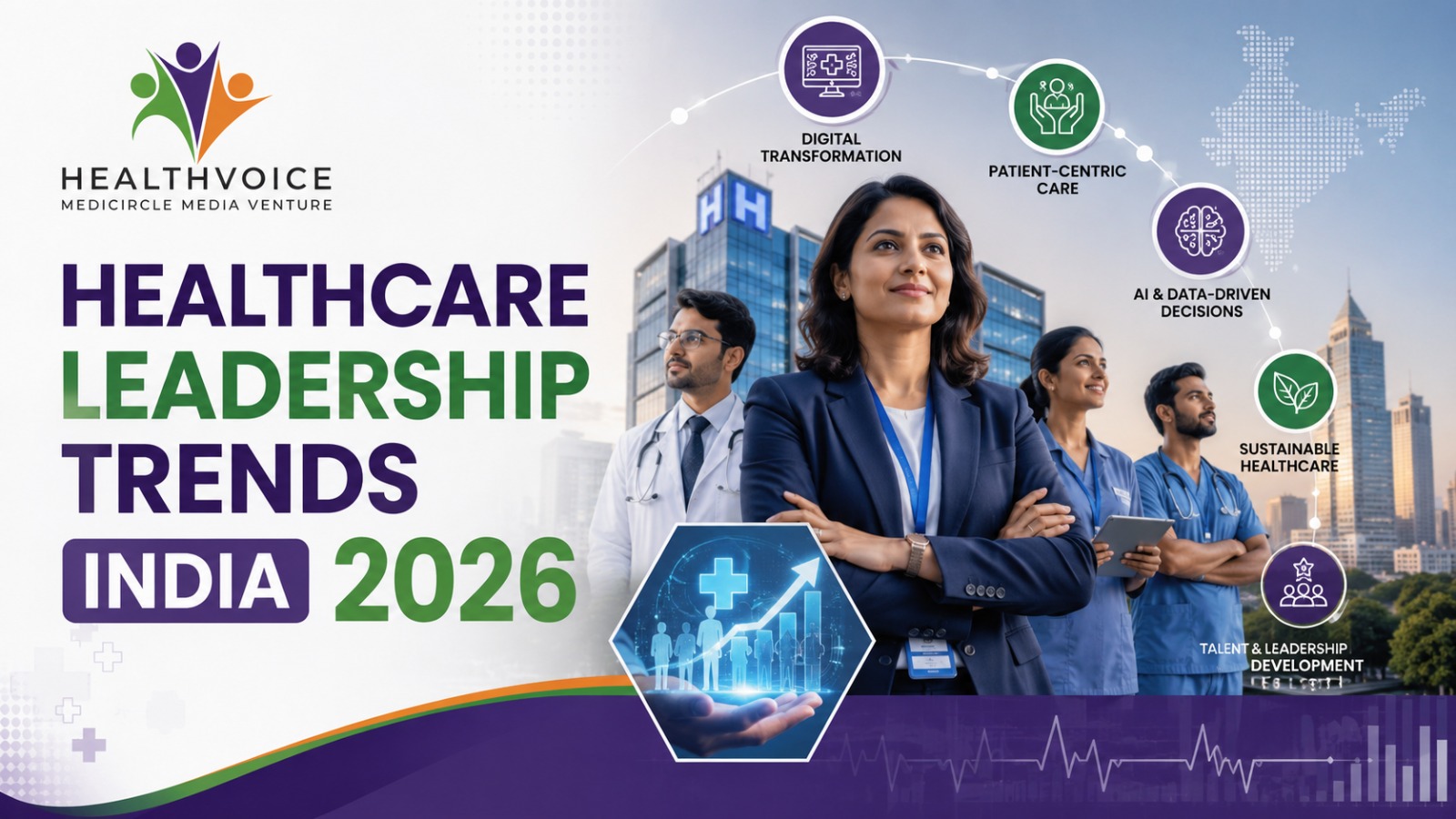
Digital transformation is no longer optional. Hospitals across India are integrating electronic medical records, AI-assisted diagnostics, and telemedicine platforms into daily practice. Leaders who once relied solely on clinical experience must now also understand how data systems affect patient safety, workflow efficiency, and decision-making. The National Health Authority's continued push on the Ayushman Bharat Digital Mission means that even mid-sized hospitals in Tier 2 cities are expected to align with interoperable digital health records, and someone in leadership needs to own that transition.
Financial pressure and consolidation are reshaping decision-making. Private equity interest in Indian healthcare has grown substantially, and hospital chains are consolidating at a faster pace than before. Leaders now need to understand investment cycles, patient retention economics, and revenue sustainability in addition to clinical governance. This does not mean healthcare should become purely commercial. Rather, it means leaders increasingly need fluency in both worlds to protect institutional integrity while remaining financially viable.
Workforce development has become a leadership priority rather than an HR function. With frontline health workers needing digital certification and AI-assisted tools becoming part of daily diagnostics, leadership now includes actively investing in upskilling. This is particularly visible in diagnostics and pathology, where AI-assisted radiology and predictive testing are becoming mainstream rather than experimental.
Patient expectations have risen alongside awareness. Indian patients, particularly in urban and semi-urban areas, are increasingly informed about treatment options, accreditation standards, and second opinions. Leaders who can communicate transparently and build institutional trust are better positioned to retain patient confidence than those relying purely on reputation or scale.
The Growing Role of Doctor-Led Leadership
One of the clearest trends emerging in Indian healthcare is the rise of doctor-led governance. Hospitals are increasingly appointing clinicians to chief executive, medical director, and chief information officer roles rather than relying exclusively on management professionals. This reflects a broader recognition that patient safety, ethical decision-making, and operational efficiency are deeply interconnected, and leaders with clinical grounding are often better equipped to balance these priorities.
This trend also benefits doctors themselves. It offers a genuine career pathway beyond direct clinical practice, allowing experienced physicians to influence healthcare delivery at a systemic level. For many doctors, especially those with fifteen or more years of clinical experience, moving into leadership does not mean abandoning patient care values. It means extending those values to shape policy, quality protocols, and institutional culture.
Medical associations have a meaningful role to play here as well. Associations that actively support leadership development, whether through structured mentorship, continuing education on healthcare management, or platforms that allow senior doctors to share their institutional experience, are helping build the next generation of healthcare leaders. This is precisely the kind of professional visibility and knowledge sharing that strengthens the broader medical community, giving doctors a stronger, more organised voice as they take on these expanded responsibilities.
Data, AI, and the New Leadership Skill Set
Artificial intelligence is moving from a peripheral tool to an operational necessity across Indian healthcare, and this has direct implications for leadership. Diagnostic reports are increasingly expected to provide predictive insight rather than simply list results. Genomic testing is shifting from a niche offering to a more standard part of preventive care. AI-assisted radiology and pathology are reducing diagnostic turnaround times meaningfully in institutions that have invested in the right infrastructure.
None of this technology delivers value on its own. It requires leaders who understand both its clinical potential and its limitations, who can oversee responsible implementation, and who can ensure that AI supports rather than replaces sound clinical judgment. This is an area where healthcare leadership in India is still maturing. Many institutions have adopted digital tools without fully developing the leadership capacity to govern them effectively, which creates a meaningful opportunity for doctors and administrators who build this expertise early.
Equally important is data governance. As hospitals digitise records and integrate with national health platforms, leaders are increasingly responsible for patient data privacy, security protocols, and compliance with evolving digital health regulations. This is a skill set that barely existed in Indian hospital leadership a decade ago and is now considered essential.
Association Engagement and the Collective Voice of Doctors
Individual leadership matters, but Indian healthcare is also seeing a shift toward stronger collective leadership through medical associations. These organisations are increasingly expected to do more than represent professional interests. They are becoming active participants in shaping continuing medical education, clinical standards, and public health awareness campaigns.
Associations that invest in digital engagement, communication with members, and visibility for their leadership are able to represent doctors more effectively in conversations with policymakers, healthcare institutions, and the public. This collective voice becomes particularly important during moments of policy change, whether that involves updates to medical education regulations, insurance frameworks, or public health guidelines.
For associations, building this stronger digital and community presence is not simply about visibility for its own sake. It is about ensuring that when decisions affecting the medical profession are made, doctors have a credible, organised, and well represented voice in the room.
Preparing the Next Generation of Healthcare Leaders
India's ambition to expand its healthcare workforce substantially by 2047, including a significant increase in qualified doctors and nurses, means leadership development cannot remain an afterthought. Medical colleges, hospital systems, and associations all have a role in identifying and nurturing leadership potential earlier in a clinician's career rather than waiting until senior years of practice.
This includes practical exposure to healthcare management principles during postgraduate training, mentorship programs that pair experienced healthcare leaders with early career doctors, and platforms where doctors can observe and learn from how senior leaders navigate complex institutional decisions. It also includes normalising leadership as a legitimate extension of clinical practice rather than a departure from it.
Tier 2 and Tier 3 cities present a particular opportunity and challenge here. As healthcare infrastructure expands into these regions, there is a genuine need for leaders who understand both the clinical demands of underserved areas and the operational realities of building sustainable institutions outside major metros. Doctors who take on leadership roles in these regions are often doing some of the most consequential work in the entire sector, even though they receive comparatively less visibility than their counterparts in large urban hospital chains.
What This Means for the Wider Healthcare Ecosystem
The shift toward more integrated, digitally literate, and doctor informed leadership has implications beyond individual hospitals. Healthcare brands, medical device companies, and healthtech firms engaging with the Indian market benefit from understanding this landscape, because decision making authority within hospitals is increasingly shared between clinical and administrative leaders rather than concentrated in one function.
For doctors themselves, this is a moment of genuine professional opportunity. Leadership roles are opening up in ways that were less common a decade ago, and the skills required, while demanding, build naturally on the judgment, discipline, and patient-centred thinking that clinical training already instils. Platforms that help doctors build visibility, share their professional achievements, and connect with peers and associations play a meaningful supporting role in this transition, giving doctors a stronger foundation as they step into these expanded responsibilities.
Conclusion
Healthcare leadership in India is being reshaped by digital transformation, financial complexity, workforce demands, and a growing recognition that clinical grounding strengthens institutional decision-making. Doctors are moving into leadership roles in greater numbers, medical associations are becoming more active voices in shaping the profession's future, and institutions are investing in leaders who can balance patient safety with operational and technological change.
This transition will not happen uniformly or without friction. Tier 2 and Tier 3 regions still need more leadership investment, digital literacy remains uneven across institutions, and the pathway from clinical practice to formal leadership training is still being built in many parts of the country. Even so, the direction is clear. India's healthcare future will be shaped by leaders who combine medical credibility with the judgment to navigate technology, finance, and community trust together.
Frequently Asked Questions
Q1: What are the top healthcare leadership trends in India in 2026?
The leading trends include digitally literate clinical leadership, doctor-led hospital governance, data-informed decision-making, structured workforce upskilling, and stronger engagement between medical associations and their members.
Q2: Why are doctors increasingly taking up leadership and administrative roles in Indian hospitals?
Hospitals increasingly recognise that leaders with clinical grounding are better placed to balance patient safety, operational efficiency, and financial sustainability, which has increased demand for doctors in administrative and executive positions.
Q3: How is technology influencing healthcare leadership in India?
Technology is pushing healthcare leaders to build digital literacy, oversee AI-assisted diagnostics and data systems responsibly, and integrate national platforms such as the Ayushman Bharat Digital Mission into everyday hospital operations.
Q4: What role do medical associations play in shaping healthcare leadership in India?
Medical associations help set clinical standards, support continuing education, represent doctors in policy discussions, and increasingly provide platforms for members to build professional visibility and collaborate on healthcare priorities.
Q5: What skills do healthcare leaders need to succeed in India by 2026?
Healthcare leaders need a combination of clinical credibility, data and digital literacy, financial understanding, ethical decision-making, and the ability to communicate transparently with patients, staff, and stakeholders.
Resources
- National Medical Commission (NMC): Regulatory body overseeing medical education and doctor registration standards in India
- Ayushman Bharat Digital Mission (ABDM): Government initiative building an interoperable digital health infrastructure across India
- National Accreditation Board for Hospitals and Healthcare Providers (NABH): Sets quality and safety accreditation standards for Indian healthcare institutions
- World Health Organization (WHO) India Country Office: Publishes reports and guidance on healthcare systems, workforce, and policy in India
- EY-FICCI Report on India's Healthcare Landscape: Provides data-driven analysis of India's healthcare progress and vision toward 2047
Interlinking Keywords
healthcare leadership India, doctor-led hospital governance, medical association engagement, healthcare digital transformation India, hospital administration trends, doctor professional visibility, healthcare workforce development, AI in Indian healthcare, medical leadership pathways, Ayushman Bharat Digital Mission
Medical Disclaimer:
This article is intended for general informational and educational purposes only and does not constitute medical, legal, financial, or professional advice. It does not diagnose, treat, or provide clinical guidance and should not be used as a substitute for professional judgment from qualified healthcare administrators, doctors, or policy experts. Readers should independently verify current regulations, accreditation standards, and institutional policies before making decisions based on this content.
Last medically reviewed by:
Editorial and Medical Advisory Team, HealthVoice on 18 July 2026
 Team Healthvoice
#HealthcareLeadership #IndianHealthcare