NCD Clinics in Hospitals: Designing a Continuum-of-Care Model for India
NCD clinics in Indian hospitals, designed around a continuum-of-care model, offer an integrated solution to fragmented chronic disease management by connecting screening, treatment, and long-term follow-up systematically.
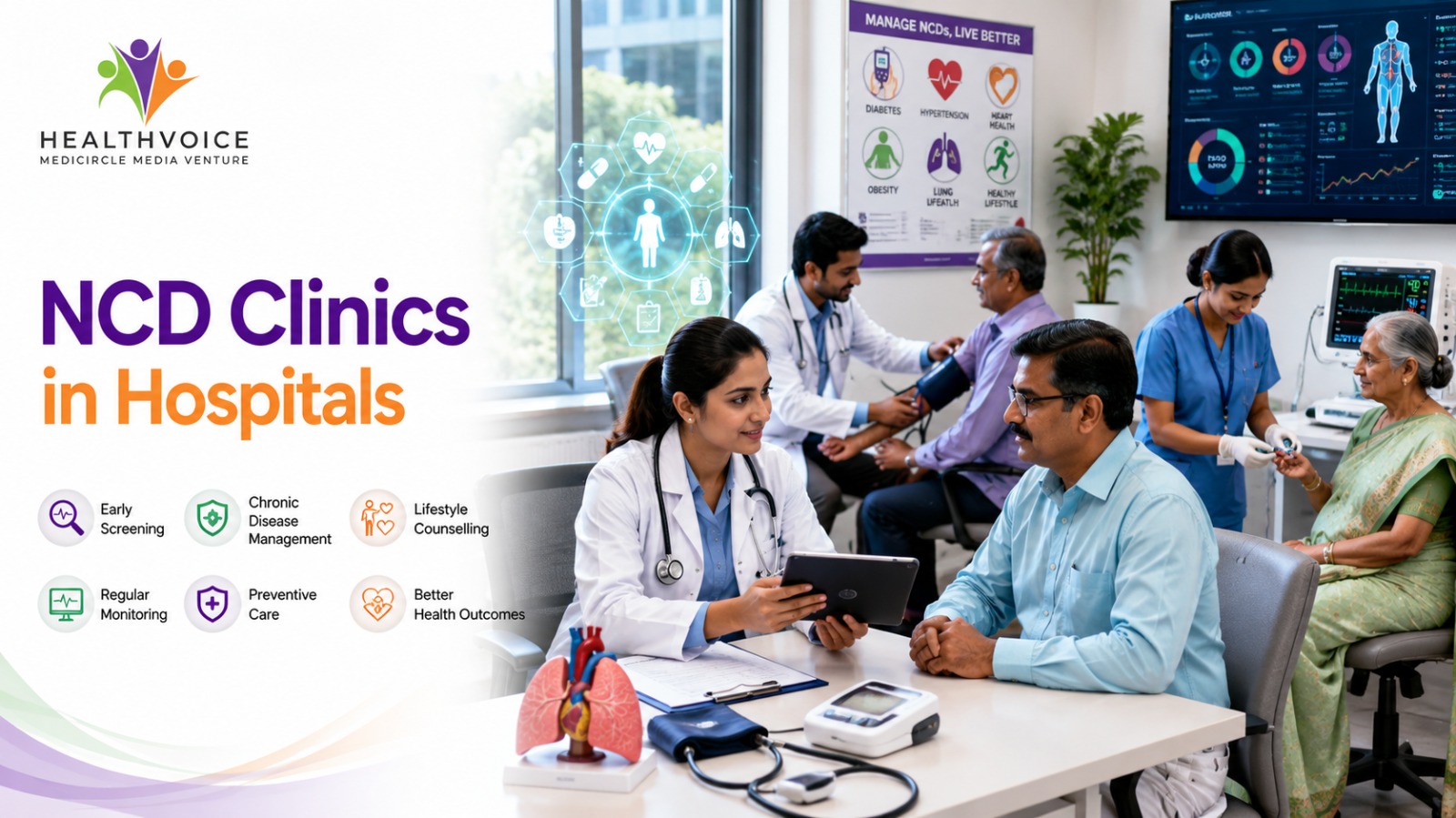
Introduction
India is navigating one of the most consequential public health transitions in its history. Non-communicable diseases, which include cardiovascular diseases, diabetes, hypertension, chronic respiratory disorders, and certain cancers, now account for nearly 65 percent of all deaths in the country. This figure has climbed steadily from 35.8 percent in 1990, and the trajectory shows no sign of reversing without deliberate systemic intervention.
What makes this burden particularly challenging is not merely its scale but its fragmentation. A patient with Type 2 diabetes in a tier-two Indian city may visit a general physician for a prescription, a private laboratory for blood tests, a cardiologist for chest discomfort, and a government health centre for a subsidized refill, all without any of these providers communicating meaningfully with the others. This is the fundamental problem that a well-designed NCD clinic, anchored in a continuum-of-care model, is built to solve.
Hospitals across India are increasingly recognizing that managing non-communicable diseases demands a structural response, not simply a clinical one. A dedicated NCD clinic is not just a room or an outpatient department. It is an organized system of care that accompanies a patient from early risk identification through long-term disease management, with coordinated support at every stage. This article examines what such a model looks like in practice, why it matters for Indian hospitals, and how healthcare professionals and administrators can approach its design.
Understanding the Continuum-of-Care Framework for NCDs
The continuum-of-care concept, while widely applied in managing conditions like HIV, has been relatively underutilized in NCD management, particularly in low- and middle-income countries like India. At its core, the framework represents a sequential yet interconnected pathway that covers:
- Population-level awareness and primordial prevention
- Screening and early detection
- Accurate diagnosis and risk stratification
- Treatment initiation and optimization
- Long-term follow-up, monitoring, and complication prevention
- Rehabilitation and palliative care where needed
The strength of this model lies in its insistence on continuity. Evidence from global research consistently shows that gaps anywhere along this chain, whether in diagnosis, treatment adherence, or follow-up, translate directly into poor clinical outcomes and preventable deaths. Studies conducted in urban Karnataka found that even among patients who reported regular clinic visits and daily medication use, fewer than 30 percent of hypertensives and about 54 percent of diabetic patients demonstrated actual disease control on clinical assessment. The problem was not access alone; it was system design.
An NCD clinic in a hospital setting is ideally positioned to close these gaps because it sits at the intersection of primary, secondary, and tertiary care. When designed well, it becomes the anchor point of the entire continuum.
The Scale of the Problem: Why India Needs Dedicated NCD Clinics
India contributes more than two-thirds of NCD-related mortality across the entire South-East Asian region recognized by the World Health Organization. The numbers that follow are not abstract. Approximately 77 million Indians are currently living with diabetes. Hypertension affects nearly 188 million adults. Cardiovascular disease already causes close to 27 percent of all deaths nationally, and this proportion is expected to rise.
What compounds this burden is the profile of the affected population. NCDs in India are no longer conditions that primarily affect the urban affluent. The ICMR-INDIAB national study has demonstrated that metabolic NCD burden is rising sharply across rural populations, tribal communities, and lower socioeconomic groups. Factors such as rapid urbanization following liberalization in the 1990s, the increased availability of processed foods, sedentary occupations, and tobacco and alcohol exposure have accelerated this transition even in regions that were previously insulated.
The healthcare system, meanwhile, has not restructured itself to meet this shift. Most government facilities remain organized around acute and infectious disease models. Private hospitals offer specialist care that is often expensive, episodic, and disconnected from community-level prevention. The space between these two poles is where most NCD patients are lost.
Designing a dedicated NCD clinic within a hospital is one of the most effective structural responses available to healthcare institutions today.
Core Components of an Effective NCD Clinic Design
Patient Registration and Risk Stratification
Every effective NCD clinic begins with a structured intake system that goes beyond recording a name and chief complaint. On first contact, patients should be assessed for their overall NCD risk profile, including body mass index, blood pressure, fasting glucose, lipid profile, tobacco and alcohol use, family history, and physical activity levels. This baseline assessment enables meaningful risk stratification, which in turn determines the intensity and frequency of follow-up.
India's National Programme for Prevention and Control of Non-Communicable Diseases mandates population-based screening for all adults above thirty years of age. Hospitals with NCD clinics can build on this framework by integrating it into their outpatient registration process, ensuring that no patient above the threshold age leaves without at least a basic NCD screening.
Dedicated Multidisciplinary Team Structure
One of the most significant departures from conventional outpatient care that an NCD clinic must make is its team composition. A functional NCD clinic requires:
- A trained physician or internist as the clinical lead for diagnosis and treatment decisions
- A diabetes educator or NCD counsellor who manages patient education, lifestyle counselling, and adherence support
- A dietitian capable of translating clinical recommendations into culturally relevant, practically feasible dietary plans
- A trained nurse or health assistant for monitoring, injections, foot examinations, and routine follow-up procedures
- A data entry operator or health information officer who maintains patient records and tracks outcomes
The NCD counsellor role deserves particular attention. Research from urban Karnataka found that this position was absent in both public and private facilities despite being recognized in national guidelines as essential to primary care-level NCD management. Hiring and training dedicated NCD counsellors is not a luxury; it is a functional requirement of the continuum model.
Integrated Diagnostic Access
The readiness of facilities to provide appropriate diagnostics is a well-documented weakness in the Indian NCD landscape. Basic equipment such as blood pressure apparatus and glucometers is generally available. However, essential tests like HbA1c, lipid profiles, kidney function tests, electrocardiograms, and retinal examinations, which are necessary for monitoring long-term NCD control and detecting complications early, remain largely confined to higher-level or private facilities.
An NCD clinic, even at a secondary hospital level, should establish access to this diagnostic panel either in-house or through a clearly defined referral and feedback mechanism. A patient being managed for diabetes should not have to navigate three separate appointments to receive an HbA1c result, an ophthalmology consultation for retinopathy screening, and a nephrology assessment. The NCD clinic's design should make this coordination the default, not the exception.
Patient-Centred Follow-Up and Monitoring Systems
Long-term disease control requires follow-up systems that are proactive, not passive. The standard model of telling a patient to return in three months places the entire burden of continuity on the patient. Most NCD patients, particularly those managing multiple conditions, dealing with financial constraints, or living in rural areas, will not consistently fulfill this expectation without structured support.
Effective follow-up systems in an NCD clinic context include physical or digital follow-up booklets that patients carry to every appointment, line lists maintained at the facility level to track defaulters, phone-based reminder systems, and the integration of patient records into national platforms such as the NCD portal under Ayushman Bharat. Hospitals with digital infrastructure can leverage the Ayushman Bharat Digital Mission framework to create longitudinal health IDs that travel with the patient across facilities and providers.
Aligning the NCD Clinic with India's Health Architecture
Integration with Ayushman Bharat and NP-NCD
The National Programme for Prevention and Control of Non-Communicable Diseases, revised with operational guidelines running through 2030, provides a policy scaffold that hospital NCD clinics can align with directly. This includes standardized protocols for screening, diagnosis, and management of hypertension, diabetes, cardiovascular disease, and common cancers.
Ayushman Arogya Mandirs, the government's expanded primary health platforms, are expected to handle community-level screening and initial management. Hospitals with NCD clinics should position themselves as the natural referral destination when these primary platforms identify patients requiring secondary evaluation, specialist input, or complication management. Designing a formal two-way referral pathway between the hospital NCD clinic and local Ayushman Arogya Mandirs is not just clinically sensible; it is structurally aligned with national policy.
Addressing Social Determinants and Behavioural Risk Factors
Clinical excellence inside the NCD clinic walls is necessary but insufficient. India's NCD burden is deeply shaped by behaviours that are themselves driven by social, cultural, and environmental factors. Tobacco use, harmful alcohol consumption, physical inactivity, and inappropriate dietary patterns are not simply personal choices in the Indian context. They are embedded in occupational norms, social rituals, economic pressures, and cultural beliefs that clinicians must understand rather than dismiss.
NCD counsellors and dietitians within the clinic should be trained in culturally sensitive behaviour change communication. Recognising that a daily-wage labourer in Karnataka believes his physically demanding carpentry work substitutes for structured exercise, or that a woman in a rural community feels unable to refuse sweetened hospitality during social visits, is the kind of contextual intelligence that separates effective NCD programmes from those that document low adherence as patient failure.
Technology and Data in the NCD Clinic
The next generation of NCD clinic design in India is increasingly defined by how well it uses data and technology to serve patients. Several elements deserve integration:
- Electronic health records that are updated at every patient visit and accessible across departments within the hospital
- Interoperability with government health platforms, including the ABDM health ID and the national NCD portal
- Automated alerts for patients who have missed follow-up appointments
- Telemedicine capabilities for patients in peri-urban or rural catchment areas who cannot travel frequently
- Digital dashboards for clinic administrators to track key performance indicators such as screening numbers, treatment initiation rates, disease control rates, and defaulter proportions
Research from China's community-integrated NCD model, while operating in a different context, has demonstrated that digital health integration significantly improves patient follow-up rates and clinical outcomes. Indian hospitals, particularly those in tier-one cities with strong IT infrastructure, have an opportunity to develop these capabilities and share learnings with the broader healthcare community.
Measuring Success: Outcomes That Matter
A well-designed NCD clinic should track outcomes at multiple levels. Clinical outcomes include the proportion of hypertensive patients achieving blood pressure below 140/90 mmHg, the proportion of diabetic patients with HbA1c below 7 percent, and the rate of complication occurrence over time. Process indicators include the percentage of registered patients receiving follow-up within recommended intervals, the proportion completing baseline diagnostic panels, and the rate of defaulter re-engagement following outreach.
Patient-centred outcomes, including self-management confidence, quality of life assessments, and satisfaction with care, are equally important and often undervalued in hospital reporting systems. An NCD clinic that achieves strong clinical numbers but fails to build patient trust and self-efficacy will struggle to sustain outcomes over the long term.
Frequently Asked Questions
Q1: What is a continuum-of-care model in the context of NCD management?
A continuum-of-care model for NCDs is an organized system that connects every stage of disease management, from early risk identification and screening through diagnosis, treatment, long-term follow-up, and complication prevention. It ensures that a patient does not fall through gaps between different providers or care levels, and that clinical decisions at each stage are informed by what has happened before.
Q2: How is an NCD clinic different from a general outpatient department in a hospital?
A general outpatient department typically handles episodic patient visits without structured long-term tracking. An NCD clinic, by contrast, is designed for continuous, proactive management. It has a dedicated multidisciplinary team, systematic follow-up protocols, integrated diagnostic access, and patient education built into every visit. The focus is on sustained disease control rather than individual consultation events.
Q3: Can smaller district hospitals in India implement a continuum-of-care NCD model?
Yes. The model is adaptable to different resource levels. A district hospital NCD clinic does not need to replicate the infrastructure of a tertiary centre. It needs a structured patient registry, a dedicated team that includes at minimum a physician, nurse, and counsellor, basic diagnostic access, and a clear referral pathway to higher facilities for complex cases. Integration with local Ayushman Arogya Mandirs enables it to extend its reach into the community.
Q4: What role does patient education play in NCD clinic design?
Patient education is foundational. Research consistently shows that even patients who access treatment regularly may not achieve disease control because of misconceptions about medication, cultural beliefs about diet and physical activity, fear of side effects, or social pressures that undermine lifestyle modification. NCD counsellors within the clinic are responsible for building health literacy and self-management skills that complement clinical treatment.
Q5: How does the Ayushman Bharat framework support NCD clinic development in hospitals?
Ayushman Bharat provides both a policy mandate and a structural platform for NCD clinic development. The NP-NCD operational guidelines under the programme define screening protocols, treatment algorithms, and referral pathways. The Ayushman Bharat Digital Mission enables health ID creation and longitudinal records. The network of Ayushman Arogya Mandirs at the primary level creates a community-facing entry point that can feed patients into hospital NCD clinics while receiving stable patients back for routine follow-up.
Resources
- Indian Council of Medical Research (ICMR): Guidelines, national burden data, and research on NCDs, including the ICMR-INDIAB national cross-sectional study on metabolic NCDs in India
- World Health Organization India Country Office: Reports on NCD burden, WHO PEN framework for essential NCD interventions at primary care level, and global NCD monitoring reports
- Ministry of Health and Family Welfare, Government of India: Operational guidelines for the National Programme for Prevention and Control of Non-Communicable Diseases (2023 to 2030)
- Ayushman Bharat Digital Mission (ABDM): Framework documentation for health ID, longitudinal health records, and digital health integration for chronic disease management
- National Health Systems Resource Centre (NHSRC): Operational guidelines for Ayushman Arogya Mandirs and Comprehensive Primary Health Care delivery under the Ayushman Bharat initiative
Interlinking Keywords:
NCD continuum of care, hospital NCD clinic India, diabetes hypertension management, Ayushman Bharat NCD programme, non-communicable disease prevention India, NCD counsellor role, integrated chronic disease care, NCD risk stratification, ABDM health records, NP-NCD operational guidelines
Last medically reviewed by:
Editorial and Medical Advisory Team, HealthVoice on 15 July 2026
Medical Disclaimer:
The information provided in this article is intended for educational and informational purposes for healthcare professionals, hospital administrators, and healthcare decision-makers. It does not constitute direct clinical advice for individual patient management. All clinical decisions should be made by qualified medical professionals in consultation with established national and international guidelines. Readers are advised to refer to the latest NP-NCD operational guidelines from the Ministry of Health and Family Welfare, Government of India, for current protocols.
 Team Healthvoice
#NCDCare #PreventiveHealthcare
