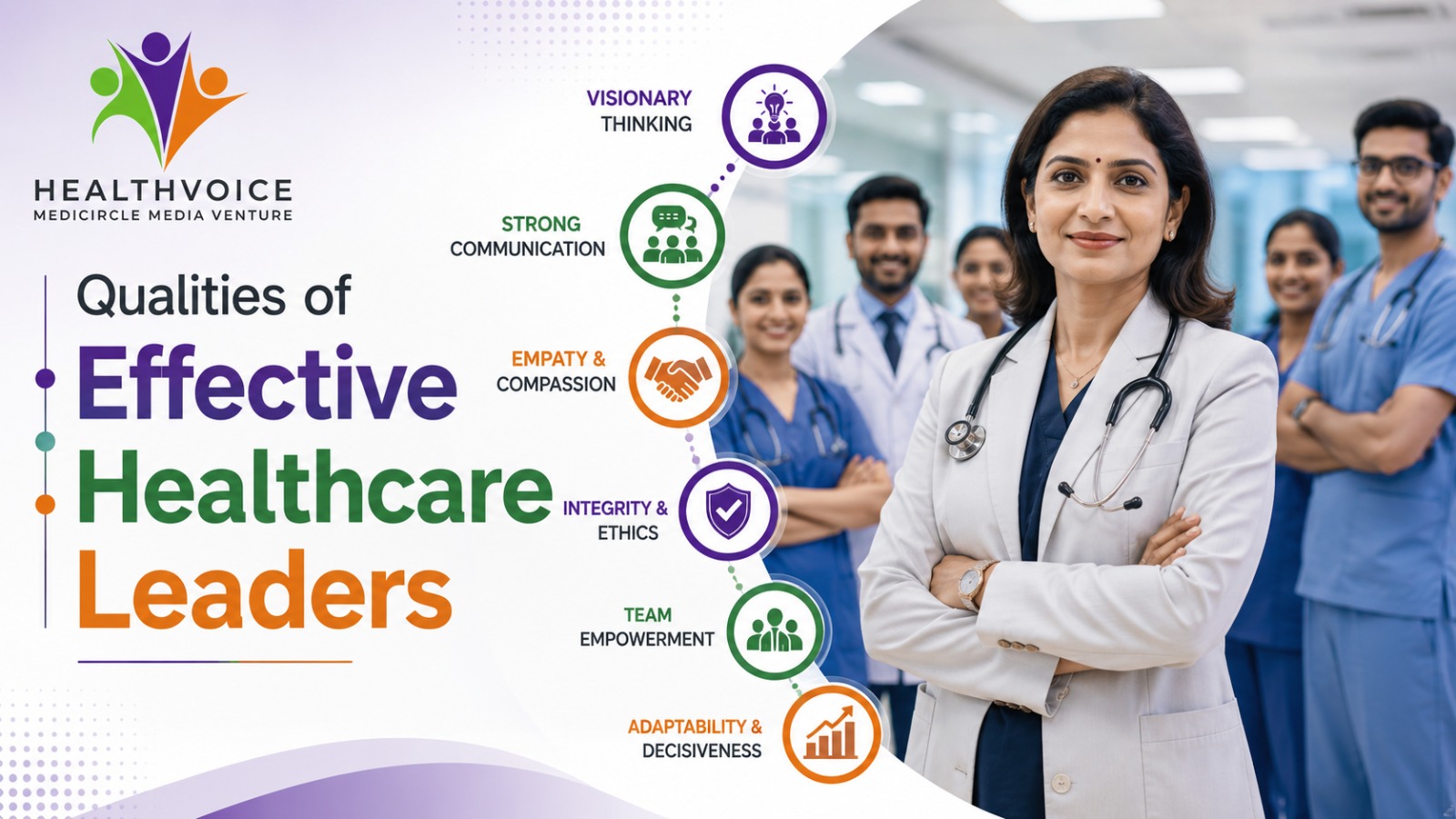
Qualities of Effective Healthcare Leaders: What Sets Them Apart in India's Healthcare System
This article examines the core qualities of effective healthcare leaders in India, including integrity, communication, and emotional intelligence, and how these translate into stronger patient outcomes and professional trust.
Introduction
Healthcare leadership shapes far more than hospital corridors and boardroom decisions. It shapes patient safety, staff morale, clinical outcomes, and the overall trust that a community places in its healthcare system. In India, where healthcare delivery spans everything from advanced tertiary hospitals in metro cities to primary health centres in tier two and tier three towns, the qualities that define an effective healthcare leader carry direct consequences for millions of patients every single day.
Doctors, hospital administrators, nursing heads, and association leaders are increasingly expected to do more than manage operations. They are expected to guide teams through regulatory change, technology adoption, workforce pressure, and rising patient expectations, all while protecting the ethical core of medicine. Understanding what genuinely effective healthcare leadership looks like, and how it can be developed, has therefore become essential reading for every serious healthcare professional in India.
This article examines the core qualities, leadership styles, and practical skills that distinguish effective healthcare leaders, with specific attention to the realities of the Indian healthcare ecosystem, including regulatory frameworks such as NABH, NMC, and Ayushman Bharat, and the growing importance of structured professional communities in building this leadership capacity.
Understanding Healthcare Leadership: What It Actually Means
Healthcare leadership is best understood as the ability to influence people, systems, and outcomes ethically and effectively for the benefit of patients and the wider healthcare community. This influence is not restricted to those holding formal titles such as medical superintendent, department head, or chief executive. A senior consultant guiding junior doctors through a difficult case, a nursing supervisor coordinating a ward during a crisis, or an association secretary organising a continuing medical education programme are all exercising healthcare leadership in meaningful ways.
Research from Duke University's concept mapping study on healthcare leadership found that professionals across roles consistently rank personal integrity, effective communication, professional ethics, pursuit of excellence, relationship building, and critical thinking as the highest priority competencies. Notably, technical knowledge alone did not rank as highly as these interpersonal and character-based qualities, reinforcing that leadership in healthcare is fundamentally a human-centred discipline, not merely an administrative one.
In the Indian context, this human-centred approach carries additional weight. India's healthcare workforce operates under considerable strain, with uneven doctor-to-patient ratios across states and significant demand on both public and private healthcare infrastructure. Effective leaders in this environment are the ones who can hold teams together, maintain quality standards, and keep patient welfare at the centre of every decision, even when resources are stretched.
Core Qualities That Define Effective Healthcare Leaders
Patient-Centeredness as the Foundation
Every meaningful healthcare leadership model places the patient at its core. Decisions about staffing, budgets, technology, and process improvement should ultimately be filtered through their impact on patient safety and care quality. Leaders who consistently prioritise patient experience tend to build stronger trust not only with patients but also with their clinical teams, because staff recognise when leadership decisions are guided by genuine care rather than convenience.
Integrity and Ethical Consistency
Acting with personal and professional integrity is repeatedly identified as the single most valued leadership competency in healthcare settings. This includes being transparent about limitations, honouring commitments to patients and colleagues, and applying medical ethics consistently, even under commercial or administrative pressure. In India, where the National Medical Commission and various state medical councils set the ethical framework for practice, leaders who model this integrity help reinforce trust in the profession as a whole.
Clear and Empathetic Communication
Strong communication is consistently ranked among the top two or three leadership competencies across multiple studies. Effective healthcare leaders communicate difficult diagnoses with empathy, provide constructive feedback to colleagues, and ensure that information flows clearly between departments, shifts, and specialities. Miscommunication during patient handoffs remains a documented contributor to medical errors, which makes this skill directly tied to patient safety outcomes.
Emotional Intelligence
Emotional intelligence, often referred to as EQ, allows leaders to recognise and manage their own emotions while responding constructively to the emotions of others. In high-pressure clinical environments, such as emergency departments or intensive care units, leaders with strong emotional intelligence de-escalate conflict, maintain composure, and model the kind of steadiness that keeps teams functioning well under stress. Several healthcare leadership frameworks describe emotional intelligence as the connective competency that holds every other leadership quality together.
Critical Thinking and Sound Decision Making
Healthcare leaders regularly face situations with incomplete information, time pressure, and significant consequences. The ability to think critically, weigh available evidence, and make timely decisions distinguishes leaders who can be trusted during a crisis from those who freeze or delay unnecessarily. This quality becomes especially important during public health emergencies, sudden staffing shortages, or unexpected surges in patient volume, situations that Indian hospitals have had considerable recent experience managing.
Humility and Willingness to Learn
Effective healthcare leaders understand that medical knowledge and best practices evolve constantly. Humility allows leaders to accept new evidence, invite differing perspectives, and admit when they do not have every answer. This quality also supports cultural humility, an increasingly important consideration in a country as linguistically and culturally diverse as India, where assumptions about patient background can otherwise lead to communication gaps or misdiagnosis.
Selfless Service and Mentorship
Many respected healthcare leaders describe mentorship as one of the most meaningful aspects of their role. Senior doctors who invest time in guiding residents, or association leaders who support younger members in building their professional profile, contribute directly to the next generation of healthcare leadership. This selfless orientation, prioritising the growth of others alongside personal achievement, is a recurring theme in healthcare leadership research across geographies.
Leadership Styles Relevant to Indian Healthcare Settings
Because Indian hospitals and healthcare organisations vary enormously in size, ownership structure, and specialisation, no single leadership style suits every setting. However, a few approaches consistently support better outcomes across diverse healthcare environments.
- Collaborative leadership, where administrators and clinicians jointly shape decisions, tends to work well in multidisciplinary hospital settings where nursing, medical, and administrative teams must coordinate closely.
- Transformational leadership, which communicates a clear vision and motivates teams toward shared goals, is particularly useful during periods of change, such as digital health adoption under the Ayushman Bharat Digital Mission.
- Ethical leadership, which prioritises fairness and consistency even in difficult resource allocation decisions, helps maintain staff trust in both public and private healthcare institutions.
- Conflict resolution focused leadership supports smoother functioning in high-stress departments, where miscommunication between shifts or specialties can otherwise escalate quickly.
- Rather than adopting a single fixed style, the most effective healthcare leaders tend to draw flexibly from each of these approaches depending on the situation, the team involved, and the urgency of the decision at hand.
Building These Qualities Within India's Healthcare Ecosystem
Developing genuine healthcare leadership capability requires more than natural aptitude. It requires structured exposure, mentorship, and opportunities to practise decision-making in real clinical and administrative settings. In India, this development increasingly happens through a combination of formal and informal channels.
Hospital accreditation frameworks such as NABH place explicit emphasis on the Responsibilities of Management chapter, which evaluates leadership, governance, strategic planning, and human resource management as core components of hospital quality. This reflects a broader recognition within Indian healthcare policy that strong leadership is not a soft skill on the margins but a measurable driver of patient safety and institutional performance.
Continuing medical education, association-led leadership workshops, and structured mentorship programmes within medical colleges and hospital networks all contribute to this development. Increasingly, doctors are also seeking visibility and professional community beyond their immediate institution, recognising that leadership growth benefits from exposure to peers, associations, and healthcare stakeholders across the wider system.
This is precisely where dedicated professional platforms are proving valuable. HealthVoice, for instance, has been built specifically to give doctors, medical associations, and healthcare institutions a credible, doctor-first space to share expertise, highlight achievements, and engage meaningfully with the broader healthcare community. For association leaders in particular, having a structured channel to communicate with members, promote continuing education events, and showcase collective achievements supports the same relationship-building and communication competencies that leadership research consistently identifies as essential.
For individual doctors developing their own leadership voice, whether within a hospital department or at a state or national association level, visibility and community engagement are not vanity metrics. They are practical extensions of the same trust-building and communication skills that define effective leadership at the bedside.
Common Challenges Facing Healthcare Leaders in India
Healthcare leadership in India comes with a distinct set of pressures. Public sector leaders often manage significant patient volumes with constrained budgets and staffing, requiring careful prioritisation and resilience. Private sector leaders face growing expectations around service quality, accreditation compliance, and financial sustainability, often simultaneously.
Workforce burnout remains a serious concern across both settings, with extended working hours and emotionally demanding clinical environments taking a toll on doctors and nursing staff alike. Effective leaders address this not by ignoring the pressure their teams face, but by actively supporting workload management, recognising staff contributions, and creating an environment where concerns can be raised without fear of dismissal.
Rapid technology adoption, including electronic health records, telemedicine, and integration with the Ayushman Bharat Digital Mission, also requires leaders who are comfortable guiding teams through change rather than resisting it. Leaders who approach these transitions with patience, clear communication, and adequate training support tend to see smoother adoption and less staff resistance.
Conclusion
Effective healthcare leadership in India is built on a combination of enduring human qualities and context-specific skills. Integrity, communication, emotional intelligence, critical thinking, humility, and a genuine commitment to patient welfare form the foundation, while an understanding of India's regulatory landscape, workforce realities, and technological shifts allows that foundation to translate into real-world impact. Whether exercised by a senior consultant, a hospital administrator, or an association leader, this kind of leadership strengthens not just individual institutions but the credibility and cohesion of the healthcare community as a whole. As India's healthcare system continues to grow in scale and complexity, the demand for leaders who combine clinical credibility with genuine emotional and ethical maturity will only continue to rise.
Frequently Asked Questions
Q1: What are the most important qualities of an effective healthcare leader?
The most important qualities include clinical and professional integrity, clear communication, emotional intelligence, patient-centeredness, critical thinking, and the ability to build trust across multidisciplinary teams.
Q2: How is healthcare leadership different from general business leadership?
Healthcare leadership is guided by patient safety, clinical ethics, and regulatory accountability, whereas general business leadership is primarily guided by commercial performance. Healthcare leaders must balance operational efficiency with medical ethics and patient welfare.
Q3: Can doctors in India develop leadership skills without a formal management degree?
Yes. Many Indian doctors develop leadership capability through mentorship, hospital committee participation, association involvement, and structured continuing medical education, although formal training in healthcare management can accelerate this growth.
Q4: Why is emotional intelligence considered essential for healthcare leaders?
Emotional intelligence allows healthcare leaders to manage high-pressure situations, communicate difficult news with empathy, and maintain team morale, all of which directly influence patient outcomes and staff retention.
Q5: How can medical associations support the development of healthcare leaders in India?
Medical associations can support leadership development through structured mentorship programs, continuing medical education, leadership workshops, and platforms that give doctors visibility and a stronger professional voice within their community.
Resources
- National Accreditation Board for Hospitals and Healthcare Providers (NABH): Standards and guidance on hospital leadership and governance under the Responsibilities of Management chapter.
- National Medical Commission (NMC): Regulatory body overseeing medical education and ethical standards for doctors in India.
- Ayushman Bharat Digital Mission (ABDM): Government initiative shaping digital health leadership and technology adoption across Indian healthcare institutions.
- Journal of Healthcare Leadership: Peer-reviewed research on healthcare leadership competencies, models, and training approaches.
- World Health Organization (WHO): Global guidance on health workforce leadership and health systems strengthening.
Interlinking Keywords
healthcare leadership, doctor community platform, medical associations India, healthcare professional networking, continuing medical education, hospital leadership skills, doctor visibility, healthcare collaboration
Last medically reviewed by:
Editorial and Medical Advisory Team, HealthVoice on 18 July 2026
Medical Disclaimer:
This article is intended for general informational and educational purposes only and is not a substitute for professional medical, legal, or management advice. Healthcare leadership practices should be adapted to the specific regulatory, institutional, and clinical context of each organisation. Readers are encouraged to consult relevant regulatory bodies, professional associations, or qualified experts before implementing leadership or governance changes within a healthcare setting.
 Team Healthvoice
#HealthcareLeadership #MedicalLeadership