Home-Based Palliative Care in Rural Villages: Models & Delivery
Hospital waste stream digital auditing uses barcode-based tracking and automated recordkeeping to improve biomedical waste segregation, collection, and disposal. By enabling real-time monitoring, traceability, and regulatory compliance, healthcare facilities can reduce waste management errors, strengthen accountability, and maintain safer, more efficient hospital environments.
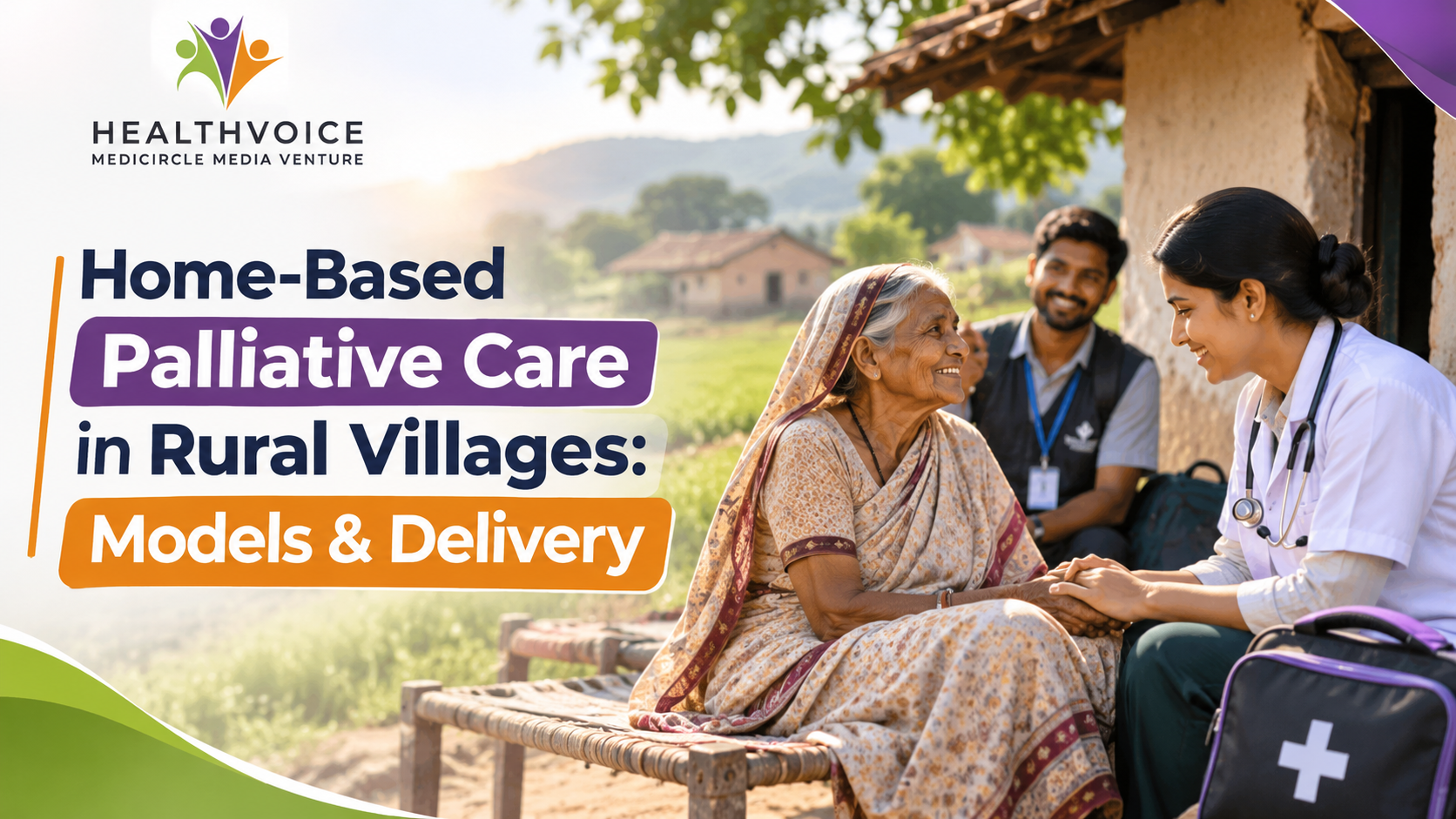
Expanding Primary Palliative Care Services: Home-Based Care Models for Terminal Illnesses in Village Networks
Palliative care is recognized internationally as an essential component of the human right to health. Yet, in rural and remote regions of low- and middle-income countries, access to formal end-of-life care is virtually non-existent. Over 80% of individuals who die from life-limiting non-communicable diseases—such as advanced metastatic malignancies, end-stage organ failures, neurological degenerations, and progressive multi-morbidity—reside in low-resource communities where tertiary hospice facilities are geographically and financially out of reach.
For rural families, late-stage terminal illness frequently results in medical impoverishment. Desperate households deplete life savings, sell livestock, or take high-interest private loans to fund repeated emergency hospital visits that deliver non-beneficial, invasive interventions without providing sustained relief from intractable pain, respiratory distress, or emotional turmoil.
Bridging this gap requires decentralizing palliative medicine from distant oncology institutes to the patient’s home. By deploying integrated primary home-based palliative care models within rural village networks, health systems can alleviate suffering, safeguard household economic stability, and ensure patients spend their final days with comfort, dignity, and family support.
Structural Deficits in Rural End-of-Life Care
In rural communities, individuals confronting terminal illness encounter distinct systemic barriers:
- Centralization of Services: Specialized palliative units are concentrated in metropolitan tertiary hospitals, forcing bedridden patients to travel hundreds of kilometers over poor roads to adjust pain medications or drain ascites.
- Severe Opioid Phobia and Regulatory Barriers: Excessive administrative oversight, complex licensing requirements, and disproportionate fears of drug diversion have historically led to the near-total absence of essential step-3 analgesics—principally oral morphine—in primary health centers and rural pharmacies.
- Caregiver Burden and Household Impoverishment: The day-to-day burden of changing soiled linens, dressing fungating neoplastic ulcers, managing bowel impactions, and positioning non-ambulatory relatives falls squarely on untrained family members, precipitating severe physical exhaustion, depression, and loss of domestic income.
- The "Curative vs. Abandonment" Dichotomy: When disease-directed therapies (chemotherapy, radiation, surgical intervention) are exhausted, hospital teams frequently discharge patients with the bleak verdict that "nothing more can be done," leaving families feeling completely abandoned by the formal health system.
Architectural Framework of a Village-Level Home-Based Model
A scalable primary palliative care network does not demand specialized oncologists in every village. Instead, it relies on a task-shared, hub-and-spoke community ecosystem modeled after successful public health initiatives like the Kerala Community-Based Palliative Care project.
District Hospital / Tertiary Center (Specialist Backup & Secondary Referrals) ↕Primary Health Centre (PHC) / Health & Wellness Centre (HWC)(Medical Officer: Opioid Prescription & Clinical Oversight | Community Health Officer / Staff Nurse) ↕Mobile Home-Care Nurse Team (Weekly Home Visits, Wound Care, Catheterization) ↕Frontline Community Workers (ASHAs / AWWs) & Trained Village Volunteers(Continuous Bedside Surveillance, Family Support, Emotional First Aid, Red Flag Alerts) ↕Terminal Patient & Family Caregivers in the Home
1. Frontline Layer: Community Workers and Village Volunteers
At the neighborhood level, female community health workers (such as Accredited Social Health Activists—ASHAs) and local village volunteers provide continuous monitoring:
- Identifying bedbound individuals and screening for uncontrolled physical distress or non-healing wounds.
- Teaching basic bed-care skills: regular two-hourly repositioning to prevent decubitus ulcers, oral hygiene with saline swabs to relieve dry mouth (xerostomia), and catheter hygiene.
- Delivering emotional first aid, empathetic listening, and counteracting local social isolation and stigma.
2. Intermediate Clinical Hub: Mobile Primary Care Nursing
A designated palliative-trained nursing team based at the Primary Health Centre (PHC) or Community Health Centre (CHC) conducts weekly or bi-weekly home-care circuits via dedicated transport or two-wheelers:
- Performing advanced symptom evaluations using simplified visual assessment scales.
- Managing complex malignant wounds: debridement, managing exudates, and applying charcoal-infused dressings or crushed metronidazole tablets to eliminate foul tumor odors.
- Changing indwelling urinary catheters, replacing nasogastric feeding tubes, and providing training on subcutaneous medication ports.
3. Physician Supervision and Prescription Authority
A trained primary care Medical Officer at the local health center provides clinical leadership, coordinates care via weekly telemetry or mobile phone check-ins, titrates pharmacological regimens, and provides certified prescribing of controlled essential medicines.
Clinical Protocols for Rural Home-Based Symptom Management
In home environments without complex medical equipment, symptom management protocols must be simple, reliable, and accessible.
1. Intractable Cancer Pain and the WHO Analgesic Ladder
Pain management follows the step-by-step principles of the WHO analgesic ladder, customized for low-resource homes:
- Mild to Moderate Pain: Fixed-dose paracetamol combined with non-steroidal anti-inflammatory drugs (NSAIDs) like ibuprofen or diclofenac, with gastroprotective agents (such as omeprazole) where indicated.
- Moderate to Severe Pain: Immediate-release oral morphine tablets (10\text{ mg} or 5\text{ mg} scored tablets) dosed strictly by the clock (every 4 hours), with clear rescue-dose protocols for breakthrough pain.
- Proactive Bowel Regimens: Because opioid-induced constipation does not resolve spontaneously, every morphine prescription must be automatically paired with a stimulating laxative (such as bisacodyl or senna) and stool softeners.
2. Dyspnea and Respiratory Agitation
- Non-pharmacological positioning: Elevating the patient's head and chest using everyday folded cotton quilts or pillows, and ensuring adequate cross-ventilation with a small electric or battery-operated hand fan aimed directly across the nasolabial triangle (stimulating trigeminal cutaneous thermoreceptors to reduce the sensation of air hunger).
- Pharmacological relief: Low-dose oral morphine (2.5\text{ to }5\text{ mg} every 4 hours) to reduce air hunger and respiratory panic, paired with oral lorazepam or clonazepam for terminal panic and severe dyspnea-associated anxiety.
3. Palliative Care of Malignant Wounds
Advanced head, neck, and breast tumors often fungate through skin barriers, producing distressing odor, pain, and bleeding:
- Odor Control: Topical application of crushed oral metronidazole tablets directly onto the ulcer bed suppresses anaerobic bacterial overgrowth, neutralizing unpleasant odors within 24 to 48 hours without causing systemic side effects.
- Bleeding Control: Using topical tranexamic acid flushes, gentle saline cleansing, and avoiding forceful mechanical debridement prevents frightening acute hemorrhage in the home.
4. Continuous Subcutaneous Butterfly Delivery
When patients lose the ability to swallow oral medications due to terminal delirium, severe dysphagia, or intestinal obstruction, insertion of an inexpensive 24-gauge butterfly needle into the subcutaneous fat of the anterior chest wall or upper arm provides a practical, needle-free route for family members to inject rescue medications (morphine, haloperidol, metoclopramide) without repeated painful venipunctures.
Overcoming Key Implementation Barriers
Transitioning from an acute medical model to community palliative care requires addressing deep-seated logistical and policy barriers:
- Decentralizing Opioid Licensing: States and health ministries must implement simplified regulatory amendments (such as the Essential Narcotic Drugs [END] provisions), empowering primary health center pharmacies to maintain emergency stocks of oral morphine without cumbersome multi-departmental excise permits.
- Establishing Sustainable Caregiver Respite: Primary breadwinners often face catastrophic job loss when relatives require full-time assistance. Community networks can establish rotating volunteer rosters to sit with the bedridden individual for several hours each week, allowing family members to work, run errands, and rest.
- Demystifying Death and Death Literacy: Training community members to recognize the natural signs of dying—such as reduced oral intake, altered breathing patterns (Cheyne-Stokes), mottled extremities, and terminal secretions—prevents panicked 3:00 AM calls to emergency transport services that result in traumatic, chaotic deaths in hospital transit.
- Digital Support and Tele-Triage: Providing village frontline teams with mobile communication links to regional palliative specialists allows real-time photo consultation for complex wounds and instant adjustments to analgesic doses, preventing unnecessary physical hospital transfers.
Frequently Asked Questions (FAQs)
1. What is primary home-based palliative care?
Primary home-based palliative care is an approach that integrates symptom relief, pain management, psychosocial support, and compassionate end-of-life care directly into the patient's home, coordinated by local primary health workers and supported by family members and community volunteers.
2. Which illnesses qualify for home-based palliative care in rural areas?
Palliative care supports individuals with any advanced, progressive, or life-limiting disease, including advanced cancers, end-stage heart failure, chronic obstructive pulmonary disease (COPD), end-stage renal failure, liver cirrhosis, severe stroke, and neurodegenerative conditions such as dementia and motor neuron disease.
3. How can severe cancer pain be treated safely at home?
Severe cancer pain is managed using immediate-release oral morphine administered on a regular schedule (by the clock), with additional rescue doses available for sudden breakthrough pain. When administered under primary medical supervision with proper titration and laxatives, oral morphine provides safe, effective relief without causing addiction.
4. What is the role of ASHA workers in community palliative care?
ASHA workers identify bedridden patients in their villages, visit families to assess basic comfort, teach family caregivers practical bed-care and skin hygiene techniques, provide emotional validation, and alert primary care nurses when new or severe symptoms appear.
5. How can foul odors from advanced cancerous wounds be controlled at home?
Foul odors caused by anaerobic bacteria in ulcerated tumors can be managed by gently washing the wound with warm saline and applying crushed oral metronidazole tablets or metronidazole powder directly over the wound bed before dressing with clean cotton gauze.
6. Can palliative care be provided alongside curative treatments?
Yes. Palliative care focuses on symptom relief and quality of life and can be provided alongside disease-directed therapies from the time of diagnosis. However, in late stages when curative options are no longer effective, it becomes the primary approach to ensure comfort and dignity.
7. How do families manage medications when a terminal patient can no longer swallow?
Healthcare workers can insert a simple subcutaneous butterfly needle into the fatty tissue of the chest or upper arm. Family members can be trained to administer prescribed liquid medications into this port without causing pain or needing to start an intravenous line.
8. What are the common physical signs that an individual is in the final days of life?
Signs of approaching end of life include profound weakness, sleeping most of the time, minimal or no intake of food and fluids, difficulty swallowing, cool and mottled skin on the hands and feet, irregular breathing pauses, and noisy breathing caused by secretions in the throat (terminal secretions).
9. Why is oral morphine often unavailable in rural clinics?
Access to oral morphine is frequently restricted by historical regulatory bottlenecks, strict licensing hurdles, fear of legal penalties, and misconceptions regarding addiction among clinicians. Modern public health policies aim to simplify licensing and make affordable oral morphine accessible in primary clinics.
10. How does home-based palliative care reduce household poverty in rural settings?
Home-based palliative care provides essential medications, dressings, and medical guidance at home, eliminating catastrophic out-of-pocket spending on emergency ambulance transport, ICU admissions, and unhelpful interventions during the final weeks of life.
 Team Healthvoice
#HomeBasedPalliativeCare #RuralHealthcare #PalliativeCare