Why Communication Skills Matter in Medical Careers Today
Communication skills are now a core medical career competency in India, shaping clinical outcomes, team effectiveness, digital practice, and long-term professional growth across all medical specialties.
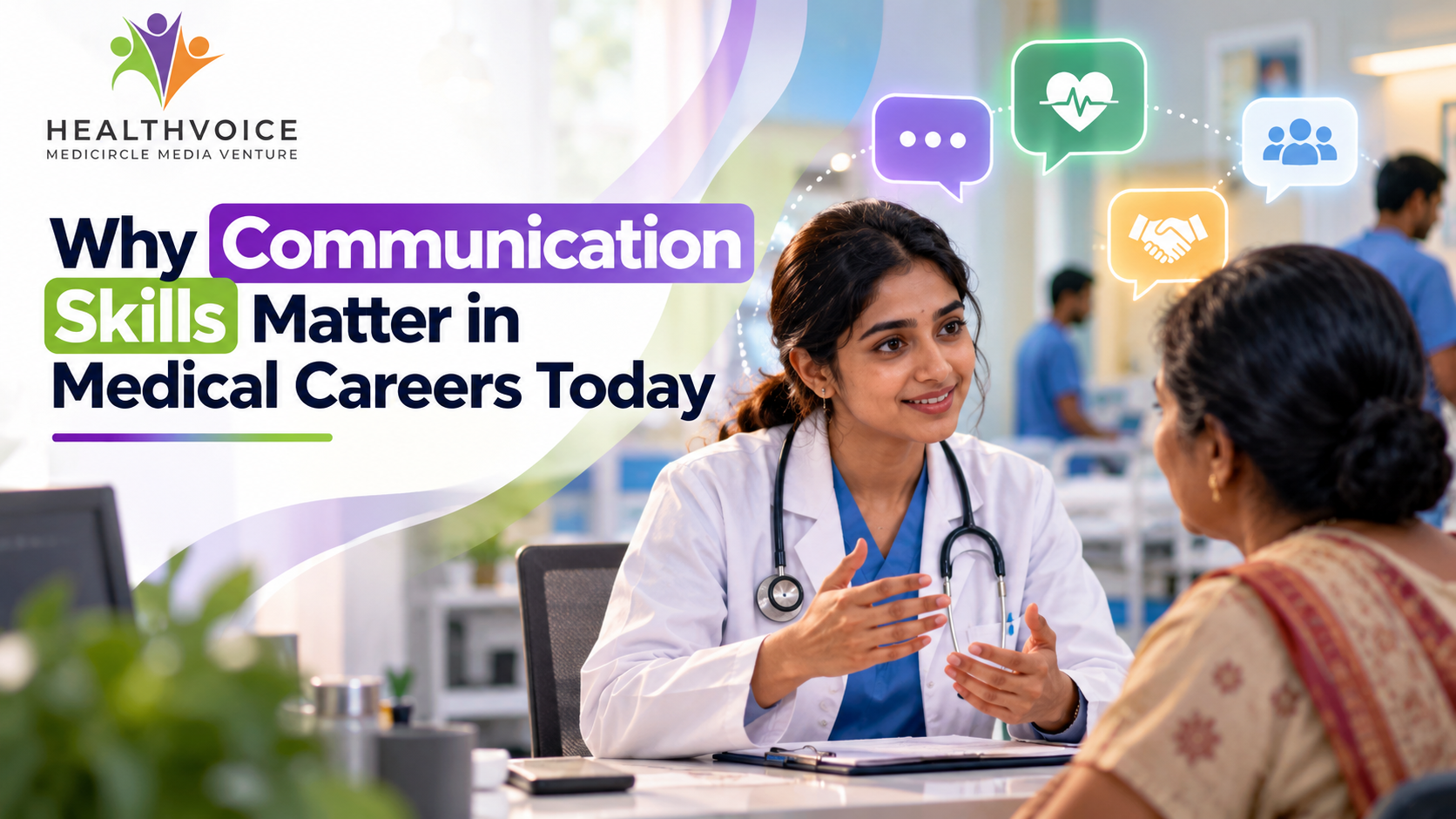
Why Communication Skills Are Becoming a Core Medical Career Skill
Introduction
Medical education in India has long been structured around the sciences. Anatomy, pharmacology, pathology, and clinical training have traditionally dominated how doctors are trained and evaluated. Yet across hospitals, clinics, and healthcare institutions in the country today, a different kind of gap is becoming visible. Patients are not always understanding their diagnoses. Interdisciplinary teams are not always functioning smoothly. And doctors with outstanding clinical knowledge are sometimes struggling to translate that knowledge into trust, clarity, or collaborative action.
Communication skills are no longer a soft supplement to a medical career. They are fast becoming a foundational requirement for professional effectiveness, patient safety, and long-term career growth. Medical councils, healthcare accreditation bodies, and hospital networks across India are beginning to formally recognize this shift. Understanding why this shift is happening, and what it means for practicing doctors and medical students alike, is now a genuinely important career conversation.
The Changing Expectations of Modern Medical Practice
The traditional image of the doctor who speaks and the patient who listens is giving way to something more collaborative. Patients in urban India, particularly in Tier 1 and Tier 2 cities, are arriving at consultations with prior research, specific questions, and expectations of being heard and understood. This shift in patient behavior is not incidental. It reflects broader changes in health literacy, smartphone access, and a growing awareness of patient rights.
The National Medical Commission has increasingly emphasized competency-based medical education, which formally includes communication as a measurable skill. The MBBS curriculum revision introduced under CBME (Competency-Based Medical Education) incorporates communication skills as part of the foundation course and throughout clinical training. This institutional recognition signals something important: communication is no longer being treated as a personality trait that some doctors happen to possess. It is being acknowledged as a teachable, assessable, and professionally essential competency.
For specialists, super-specialists, and consultants, the stakes are even higher. A cardiologist who cannot explain a procedure clearly to an anxious family may lose patient confidence regardless of technical brilliance. A surgeon who communicates poorly within a multidisciplinary team creates risks that extend beyond bedside manner into patient safety itself.
Doctor-Patient Communication and Clinical Outcomes
There is a well-established body of global research connecting the quality of doctor-patient communication to measurable health outcomes. When patients clearly understand their diagnosis, treatment plan, and follow-up requirements, medication adherence improves, complication rates decrease, and patient satisfaction scores rise. In the Indian context, where patients often consult multiple providers, where health literacy varies significantly across populations, and where a single consultation may serve an entire family's decision-making, the quality of that communication carries enormous weight.
Poor communication frequently leads to medical errors. Misunderstood dosage instructions, unclear post-operative guidance, and incomplete consent processes are not always failures of clinical knowledge. They are often failures of communication. Studies from the Indian healthcare context have highlighted that a significant proportion of patient complaints lodged with consumer forums and medical councils relate to perceived communication failures rather than clinical negligence alone.
Effective communication in clinical settings involves several distinct skills:
- Active listening, which means giving the patient genuine attention rather than preparing the next response while they are still speaking.
- Plain language explanation, which means translating complex clinical information into terms that a patient with no medical background can meaningfully understand.
- Empathic acknowledgment, which means recognizing and responding appropriately to the emotional state of the patient or their family.
- Structured information delivery, which means organizing information in a logical sequence so the patient can follow, retain, and act on it.
These are learnable skills. They can be practiced, refined, and improved throughout a career, just like any clinical technique.
Communication in Multidisciplinary and Institutional Settings
Modern hospital care in India is increasingly team-based. NABH-accredited hospitals, corporate hospital networks, and government medical institutions are all moving toward multidisciplinary care models where doctors, nurses, physiotherapists, dietitians, social workers, and administrative teams must function cohesively. In this environment, communication among professionals is as critical as communication with patients.
Handover communication, where patient information is transferred between care providers, is one of the highest-risk moments in hospital care. A poorly structured verbal or written handover can result in missed medications, overlooked investigations, or delayed interventions. Structured communication tools such as SBAR (Situation, Background, Assessment, Recommendation) are now being adopted in progressive Indian hospitals precisely because unstructured verbal communication in fast-paced clinical environments is inherently error-prone.
Beyond patient handovers, doctors in leadership roles need communication skills to conduct effective ward rounds, lead clinical discussions, present case studies in academic settings, communicate with hospital administration, and mentor junior colleagues. The ability to write clearly is equally important. Discharge summaries, referral letters, operative notes, and medical certificates all require precision, clarity, and professional language. A poorly written discharge summary can create downstream errors in care just as easily as a missed diagnosis.
Digital Communication and the New Professional Landscape
The rise of telemedicine in India, accelerated significantly after 2020 and now formally governed under the Telemedicine Practice Guidelines issued by the Ministry of Health and Family Welfare, has added another dimension to medical communication. Consulting via video call requires a different skill set than face-to-face consultation. The absence of physical examination cues means that verbal communication and questioning technique become even more important. Doctors must be able to build rapport quickly, elicit accurate histories efficiently, and communicate clearly without the ambient trust that a clinical setting naturally creates.
Social media and digital platforms have also become spaces where doctors communicate professionally with peers, patients, and the broader public. Medical associations and individual practitioners are increasingly using platforms to share health awareness content, respond to public queries, and build professional visibility. This kind of public-facing communication requires additional skills: the ability to write accessibly for general audiences, to handle sensitive health topics responsibly, and to maintain the credibility and dignity expected of a medical professional.
Platforms like HealthVoice are creating structured, credible spaces where doctors can exercise exactly this kind of professional communication, connecting with associations, sharing expertise, engaging with healthcare communities, and amplifying their voice in ways that strengthen both their personal profile and the broader medical ecosystem.
Communication Skills and Medical Career Advancement
The career implications of strong communication skills are concrete and significant. Doctors who communicate well are more likely to build sustained patient relationships, which matters in private practice where reputation is built primarily through word-of-mouth and patient trust. They are more likely to be appointed to leadership positions within hospitals and medical associations, where the ability to articulate vision, manage teams, and engage stakeholders is essential.
Academic medical careers also depend heavily on communication. Presenting research at national and international conferences, publishing in peer-reviewed journals, teaching undergraduate and postgraduate students, and participating in policy discussions all require high-level communication competencies. Doctors who invest in developing these skills open considerably more professional pathways than those who limit their focus to clinical expertise alone.
Medical associations in India are recognizing this reality. Continuing Medical Education (CME) programs increasingly include workshops on communication, presentation skills, conflict resolution, and patient engagement. Institutions affiliated with the NMC and various state medical councils are incorporating communication training into their professional development offerings. This reflects a sector-wide acknowledgment that technical excellence alone is no longer sufficient for the full spectrum of what medical practice demands today.
Building Communication Skills as a Medical Professional
Developing communication skills is an active and ongoing process rather than a one-time training event. Several practical approaches can help medical professionals strengthen this dimension of their practice.
Reflective practice is one of the most accessible starting points. After consultations, case discussions, or team meetings, taking a few minutes to consider what was communicated well and what could have been clearer helps build self-awareness over time. Seeking structured feedback from patients, peers, and supervisors is another valuable approach, particularly in institutional settings where formal feedback mechanisms exist.
Formal communication training programs, including CME workshops, medical humanities courses, and simulation-based communication exercises, are growing in availability across Indian medical institutions. Participation in these programs not only builds skills but also signals a commitment to professional development that is viewed favorably in academic and institutional career contexts.
Reading widely, both within and beyond medicine, contributes to vocabulary, clarity of thought, and the ability to explain complex ideas in accessible language. Engaging regularly with medical writing, whether through journal articles, health policy documents, or professional association publications, develops the written communication muscle that underpins so much of clinical and institutional practice.
Conclusion
Communication is not an accessory skill that decorates an otherwise complete medical career. It is woven into the clinical, institutional, professional, and public dimensions of what it means to practice medicine well in contemporary India. From the consulting room to the operating theatre, from CME presentations to digital health platforms, the ability to communicate with clarity, empathy, and professionalism shapes outcomes in ways that are real and measurable.
As medical education evolves under the NMC's competency-based framework and as healthcare delivery becomes more team-based, technology-integrated, and patient-centered, communication will only grow in professional importance. Doctors who develop this skill alongside their clinical expertise will find themselves better equipped not only to care for patients but to lead, teach, collaborate, and contribute meaningfully to the future of Indian healthcare.
Frequently Asked Questions
Q1: Why are communication skills important for doctors in India?
Communication skills directly affect patient understanding, treatment adherence, clinical safety, and professional relationships. In India's diverse healthcare environment, where patients vary widely in health literacy and language, the ability to communicate clearly and empathetically is fundamental to delivering safe and effective care.
Q2: Are communication skills part of the official MBBS curriculum in India?
Yes. The National Medical Commission's Competency-Based Medical Education framework, introduced in the revised MBBS curriculum, formally includes communication skills as a foundational competency that is taught and assessed throughout medical training.
Q3: How do poor communication skills affect medical outcomes?
Poor communication contributes to medication errors, patient non-compliance, incomplete informed consent, and increased patient complaints. Research consistently shows that communication failures are a significant factor in adverse clinical events and patient dissatisfaction across healthcare settings.
Q4: How can a practicing doctor improve their communication skills?
Doctors can improve communication through reflective practice after consultations, participation in CME workshops focused on communication, formal simulation-based training, regular feedback from peers and patients, and engagement with professional writing and public health communication.
Q5: What role does digital communication play in a modern medical career?
Digital communication, including telemedicine consultations, professional social media engagement, and participation in online healthcare communities, is now a significant part of medical practice. Doctors need specific skills to communicate effectively across digital platforms while maintaining clinical credibility and professional standards.
Resources
- National Medical Commission (NMC): Official body governing medical education standards and competency frameworks in India, including communication skill requirements under CBME.
- Ministry of Health and Family Welfare (MoHFW): Source for Telemedicine Practice Guidelines and policy documents governing digital healthcare communication in India.
- National Accreditation Board for Hospitals and Healthcare Providers (NABH): Accreditation standards that include team communication, handover protocols, and patient engagement as quality indicators.
- Indian Council of Medical Research (ICMR): Research publications on patient safety, clinical communication, and healthcare quality in the Indian context.
- World Health Organization (WHO) India Office: Reports and frameworks on patient-centered communication, patient safety, and health workforce competency development.
Interlinking Keywords
doctor communication skills India, medical career growth India, doctor-patient communication, CBME curriculum NMC, telemedicine communication skills, multidisciplinary team communication, medical professional development India, CME workshops India, NABH hospital standards, patient safety India
Last reviewed by:
Dr. Manthan Tripathi, HealthVoice Editorial and Medical Advisory Team, October 30, 2026.
Disclaimer
This article is intended for informational and professional development purposes only. It does not constitute clinical advice, medical guidance, or regulatory instruction. Readers are encouraged to refer to official guidelines issued by the National Medical Commission, Ministry of Health and Family Welfare, and other relevant regulatory bodies for formal policy and educational requirements. HealthVoice does not replace professional medical councils or regulatory frameworks.
 Dr. Manthan Tripathi
#MedicalCommunication #CommunicationSkills #HealthcareProfessionals