How Senior Doctors Can Mentor the Next Generation
Senior doctors in India can shape healthcare's future by actively mentoring junior colleagues through clinical wisdom, ethical guidance, career support, and the creation of lasting professional bonds across generations.

How Senior Doctors Can Mentor the Next Generation of Medical Professionals
Introduction
Medicine is one of the few professions where lived experience carries as much weight as academic knowledge. A young resident may emerge from medical college with a strong command of textbooks, but it is the ward, the OPD corridor, and the quiet moments after a difficult surgery where real medical wisdom is transferred. That transfer happens best through mentorship, and in India's vast and rapidly evolving healthcare landscape, senior doctors carry an immense responsibility to guide the generation that will inherit their patients, their institutions, and their legacy.
Across government medical colleges, private hospitals, and community health centres, there is a growing recognition that structured mentorship is not a luxury but a necessity. The National Medical Commission has increasingly emphasised the role of faculty development and professional conduct alongside clinical skill-building. Yet formal mentorship systems remain underdeveloped in many institutions. The gap between what experienced doctors know and what young doctors are being taught is wide, and bridging it requires intentional effort, professional generosity, and a genuine commitment to the future of Indian healthcare.
Why Mentorship Matters in Indian Medical Practice
India produces over eighty thousand MBBS graduates every year. These graduates enter a healthcare system that serves over 1.4 billion people, with significant differences in infrastructure between urban teaching hospitals and rural primary health centres. Young doctors often find themselves in environments where they must make clinical decisions independently before they feel fully prepared. Without a guiding figure to help them navigate the gap between classroom learning and real-world practice, many experience burnout, ethical confusion, and professional uncertainty early in their careers.
Mentorship addresses this directly. A senior doctor who actively mentors junior colleagues does not simply teach diagnosis and treatment. They model how to communicate with patients, how to handle uncertainty, how to respond to medical errors with accountability, and how to build a sustainable career over decades. These are lessons that cannot be found in any curriculum.
For the Indian context specifically, mentorship also carries cultural weight. The guru-shishya tradition, deeply embedded in Indian educational philosophy, finds a natural and powerful expression in the relationship between a senior clinician and a junior doctor. When this relationship is nurtured with professionalism and purpose, it produces medical professionals who are not only clinically capable but ethically grounded and community-aware.
The Core Pillars of Effective Medical Mentorship
Effective mentorship between senior and junior doctors rests on several interconnected foundations that go beyond simple knowledge transfer.
Clinical wisdom and bedside teaching remain at the heart of what a senior doctor can offer. Sharing the reasoning behind a clinical decision, explaining why a particular investigation was chosen, or walking a junior colleague through the nuances of a difficult differential diagnosis builds a kind of contextual intelligence that no textbook can replicate. Senior doctors who narrate their thought processes aloud during rounds or case discussions are performing one of the most powerful educational acts in medicine.
Ethical and professional guidance is equally important. Young doctors in India frequently encounter complex situations involving patient consent, resource constraints, family pressure, and institutional politics. A mentor who demonstrates how to handle these situations with integrity gives junior doctors a reference point for their own decision-making. This includes guiding them on professional communication, maintaining dignity in doctor-patient relationships, and understanding their obligations under the NMC Code of Medical Ethics.
Career pathway support is another pillar that is often neglected. Many junior doctors are uncertain about whether to pursue a superspeciality, enter academic medicine, join public health, or build a private practice. Senior doctors who share their own career journeys, including the choices they reconsidered and the paths they did not take, provide invaluable context for these decisions. Mentors can also facilitate introductions to professional networks, recommend relevant conferences, and support applications to fellowship programmes or research opportunities.
Emotional and psychological support rounds out the mentorship relationship. Medicine is demanding, and junior doctors in India often carry the weight of long duty hours, patient mortality, family expectations, and financial pressures simultaneously. A senior doctor who creates a safe space for honest conversation about these challenges helps junior colleagues build the resilience they need for a long and meaningful career.
Practical Approaches Senior Doctors Can Adopt
Moving from intention to action requires senior doctors to adopt specific practices within their existing professional environments.
One of the most effective approaches is structured one-on-one check-ins. Even a thirty-minute monthly meeting between a senior doctor and a designated junior mentee can make a significant difference. These sessions should be protected time, not squeezed between consultations, and they should allow the junior doctor to raise questions, share concerns, and receive feedback in a non-judgmental setting.
Case-based learning discussions remain a powerful tool in any clinical setting. When senior doctors invite junior colleagues to present and discuss complex cases, and when they respond to those presentations with engaged curiosity rather than correction-first authority, the learning environment shifts. Junior doctors begin to think more critically and feel more confident bringing their uncertainties to the surface.
Observational opportunities matter as well. Allowing a junior doctor to observe a senior consultant's approach to a difficult family conversation, a complex procedure, or an ethical dilemma in real time provides learning that no simulation can fully replicate. These observations, when followed by a brief debrief, become deeply memorable teaching moments.
Senior doctors can also take an active interest in their mentees' research and academic ambitions. Co-authoring a paper, guiding a small clinical study, or reviewing a conference abstract submission are practical ways to support professional growth and contribute to India's medical knowledge base.
Building a Mentorship Culture Within Institutions
Individual acts of mentorship are powerful, but lasting change requires institutional support. Senior doctors who hold positions of leadership in medical colleges, hospital departments, or professional associations are particularly well-placed to advocate for structured mentorship programmes.
Medical colleges affiliated with universities under the NMC framework can introduce formal mentorship matching systems where junior faculty and postgraduate students are paired with senior consultants. Regular mentor training workshops can help experienced doctors reflect on their communication styles, recognise unconscious biases, and develop more inclusive mentoring approaches.
Professional associations and medical societies in India play an important role here as well. When these bodies prioritise mentorship as a theme in their annual conferences, create awards for outstanding mentors, or build dedicated mentorship tracks in their continuing medical education programmes, they signal to the entire medical community that this work is valued and visible.
Platforms like HealthVoice are increasingly serving as connective tissue in this ecosystem, offering senior doctors a space to share their perspectives, document their professional journeys, and engage with younger colleagues who are looking for guidance and inspiration in the digital space where much of professional learning now happens.
Overcoming Common Barriers to Mentorship
Despite its obvious value, medical mentorship in India faces real barriers that senior doctors must acknowledge and work around.
Time is the most frequently cited obstacle. Senior doctors in both public and private settings often carry overwhelming clinical loads, and structured mentorship can seem like one more demand in an already stretched schedule. The solution is not to wait for ideal conditions but to integrate mentorship into existing workflows. A teaching moment during ward rounds, a brief conversation after a case conference, or a thoughtful email responding to a junior colleague's question all count as mentorship.
Hierarchical distance is another barrier. In many Indian medical institutions, a culture of deference means that junior doctors are reluctant to approach senior consultants with questions or concerns. Senior doctors who actively work to reduce this distance, by being approachable, by acknowledging their own past mistakes, and by explicitly inviting questions, create the conditions in which genuine mentorship can take place.
Gender dynamics also deserve attention. Female medical graduates in India continue to face specific challenges related to workplace culture, speciality access, and work-life balance expectations. Senior doctors, regardless of gender, can be intentional about mentoring women in medicine, ensuring that career conversations acknowledge these realities honestly and constructively.
The Legacy That Mentorship Creates
The most enduring professional contribution a senior doctor can make is not any single diagnosis, publication, or award. It is the generation of doctors who carry forward the values, the skills, and the commitment to excellence that were modelled for them by a trusted mentor.
India's healthcare challenges are significant and evolving. Non-communicable diseases are rising sharply. Mental health is emerging as a major public health priority. Digital health and telemedicine are transforming how care is delivered. The doctors who will navigate these shifts effectively will be those who entered their careers with strong mentorship behind them, giving them not just clinical knowledge but the confidence, the ethics, and the professional identity to grow throughout their lives.
Senior doctors who mentor are not stepping back from medicine. They are extending their impact far beyond what any individual clinical career could achieve. Through the doctors they guide, their knowledge continues to heal, their values continue to shape practice, and their legacy continues to serve patients long after they have stepped back from active clinical work.
Frequently Asked Questions
Q1: What is the most effective way for a senior doctor to start mentoring junior colleagues?
The simplest starting point is to make oneself available. Informing junior colleagues that questions are welcome, attending case discussions actively, and offering feedback on presentations are accessible ways to begin without requiring a formal programme. Consistency and genuine interest matter more than elaborate structure at the outset.
Q2: How is medical mentorship different from clinical supervision or teaching?
Clinical supervision focuses on ensuring patient safety and procedural correctness in the short term. Teaching delivers specific knowledge. Mentorship goes further by addressing career development, professional identity, emotional resilience, and long-term growth. A mentor is invested in the whole professional journey of the mentee, not just their immediate performance.
Q3: Are there formal mentorship frameworks available for medical institutions in India?
The National Medical Commission has issued guidelines on faculty development and professional conduct that touch on mentorship. Some premier institutions such as AIIMS and PGI have their own internal mentorship structures. However, a nationally standardised mentorship framework for all medical colleges is still being developed, and many institutions are creating their own models drawing from international best practices.
Q4: How can senior doctors mentor effectively in resource-limited settings such as government hospitals or rural health centres?
Effective mentorship in resource-limited settings does not require expensive infrastructure. It requires consistent presence, a willingness to discuss challenges openly, and the practical wisdom to work creatively within constraints. In fact, these environments often produce some of the richest mentorship conversations because the clinical challenges are complex and the decisions carry enormous weight.
Q5: Can digital platforms support medical mentorship in India?
Yes. Digital platforms dedicated to the medical community allow senior doctors to share insights, participate in professional discussions, and connect with junior colleagues across geographic boundaries. For doctors in smaller cities or rural postings, digital access to the guidance of experienced senior colleagues can be genuinely transformative for their professional development.
Resources
- National Medical Commission (NMC): Official guidelines on medical education standards, faculty development, and professional conduct for Indian medical institutions.
- Indian Council of Medical Research (ICMR): Research publications and policy documents relevant to medical education, workforce development, and clinical training in India.
- World Health Organization (WHO) India: Reports and frameworks on health workforce development, mentorship in healthcare, and strengthening medical education systems.
- Postgraduate Institute of Medical Education and Research (PGIMER) Chandigarh: Institutional model for postgraduate medical training and mentorship practices in India.
- HealthVoice (healthvoice.in): A doctor-focused platform for professional visibility, knowledge sharing, and community engagement among Indian medical professionals and associations.
Interlinking Keywords
Medical mentorship India, senior doctor guidance, junior doctor career development, clinical training programs, doctor professional growth, NMC medical education guidelines, healthcare leadership India, medical associations India, doctor community platform, postgraduate medical training
Last reviewed by:
Dr. Manthan Tripathi, HealthVoice Editorial and Medical Advisory Team, October 31, 2026.
Disclaimer
The content published in this article is intended for informational and professional development purposes only. It is directed at medical professionals, healthcare educators, and institutional leaders. It does not constitute formal academic, legal, or regulatory advice. Readers are encouraged to consult relevant institutional policies, National Medical Commission guidelines, and professional bodies when designing or implementing mentorship programmes. HealthVoice does not represent or endorse any specific institution, individual, or programme mentioned in this article.
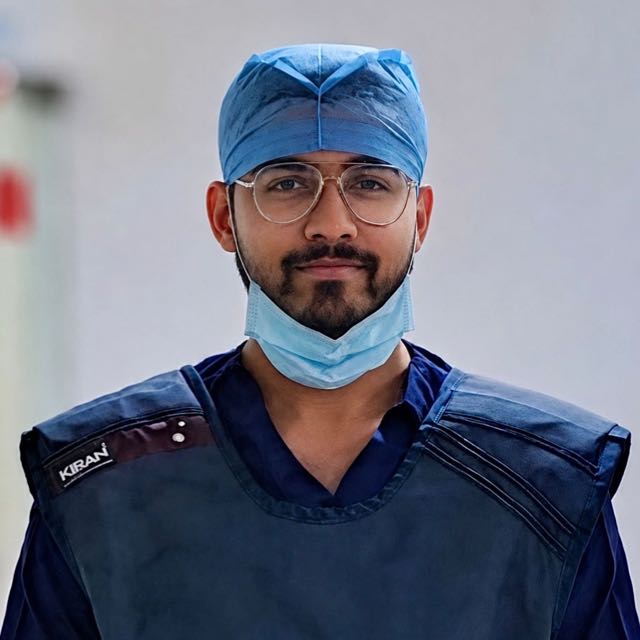 Dr. Manthan Tripathi
#DoctorMentorship #MedicalEducation #HealthcareLeadership