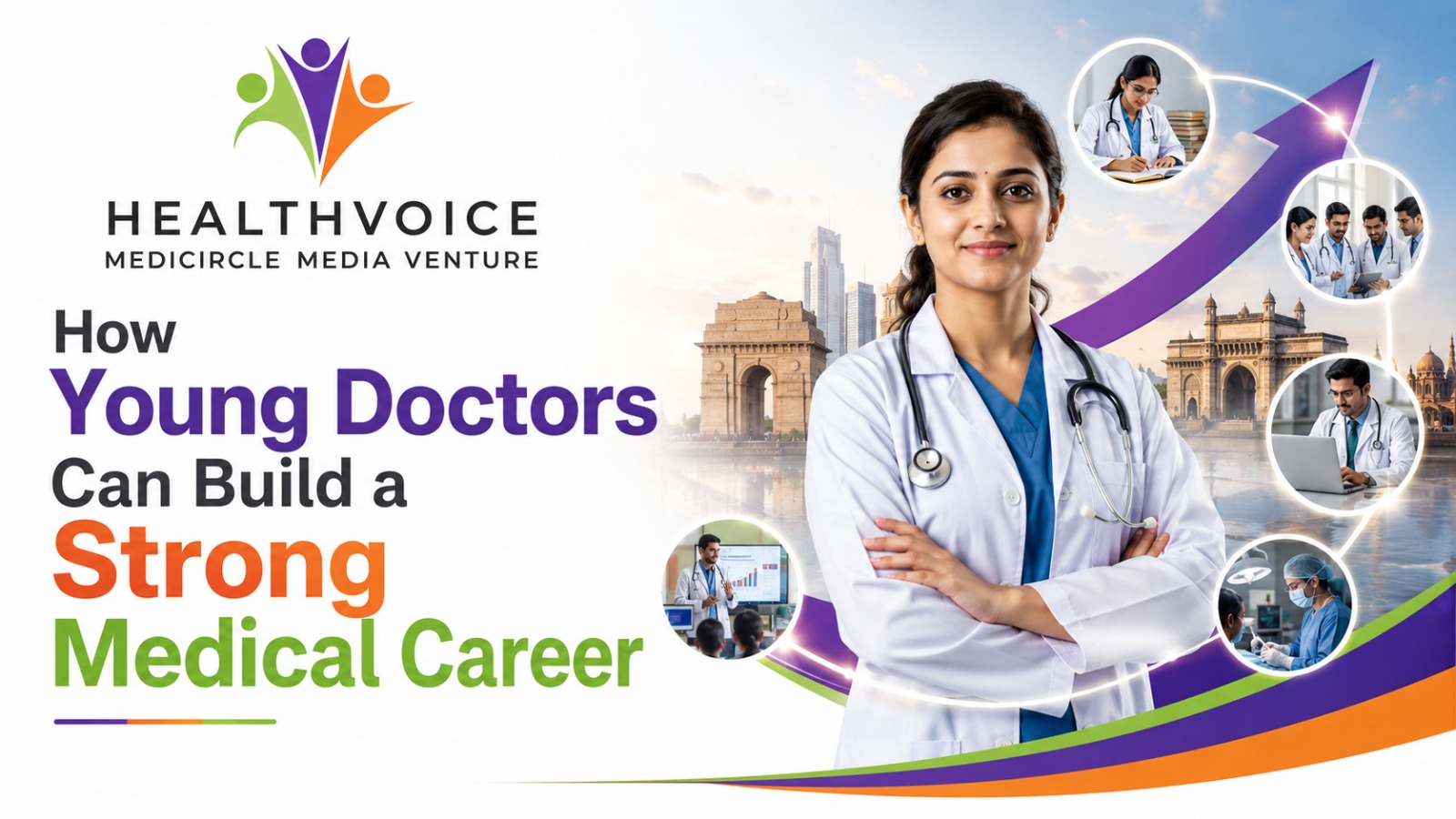
How Young Doctors Can Build a Meaningful and Successful Medical Career in India
A practical guide for young doctors in India on building a successful medical career through specialization, research, mentorship, association engagement, and credible professional visibility.
Introduction
The journey from a medical graduate to a well-established doctor is one of the most demanding, rewarding, and deeply consequential paths a person can choose in India. The country currently faces a significant physician shortage, with the World Health Organization recommending a doctor-to-patient ratio of 1:1000, while India still struggles to meet this benchmark uniformly across states. In a healthcare landscape that is rapidly evolving through digital health initiatives like Ayushman Bharat and the Ayushman Bharat Digital Mission (ABDM), the opportunities available to young doctors today are genuinely extraordinary.
Yet, the challenges are equally real. After years of relentless study, internship, and postgraduate preparation, many young doctors find themselves at a crossroads when they enter professional practice. There are clinical skills to sharpen, networks to build, academic credibility to establish, and a professional identity to develop. Navigating all of this without a clear framework can feel overwhelming.
This article is designed to offer young doctors in India a structured, honest, and actionable guide to building a medical career that is not only professionally successful but also personally fulfilling and socially impactful.
Understanding What Career Building Really Means for a Doctor
Career development for a doctor is not a single decision made at one point in time. It is a continuous, deliberate process that unfolds across the arc of an entire professional life. Many young doctors make the mistake of focusing exclusively on clinical performance during their early years, believing that patient outcomes alone will create career advancement. Clinical competence is absolutely foundational, but it is only one pillar of a strong medical career.
Doctors who build lasting, influential careers in India tend to share certain characteristics. They pursue structured postgraduate education and subspecialty training. They engage actively in research, publication, and academic contribution. They cultivate strong mentoring relationships. They participate in medical associations and professional communities. And increasingly, they build a credible digital presence that extends their professional voice beyond the hospital or clinic.
The National Medical Commission (NMC) of India, which governs medical education and professional standards, has consistently emphasized the need for continuous professional development among registered medical practitioners. Young doctors who take this expectation seriously and build genuine expertise over time position themselves for recognition, leadership, and long-term influence within their field.
Choosing the Right Specialization and Postgraduate Pathway
One of the most consequential decisions a young doctor will make is choosing the right specialization. This decision shapes clinical practice, career opportunities, lifestyle, earning potential, and professional identity for decades. It deserves serious thought, not hasty decisions driven by peer pressure or social expectations.
India offers a wide range of postgraduate medical pathways through MD, MS, DNB, and DM or MCh programs, regulated by the NMC and various university bodies. Popular specializations such as General Medicine, Surgery, Pediatrics, Obstetrics and Gynecology, Radiology, and Orthopedics carry strong demand across Tier 1 and Tier 2 cities alike. Emerging specializations like Interventional Cardiology, Oncology, Neurology, Critical Care Medicine, and Geriatrics are seeing rapid growth in demand, particularly as India faces a rising burden of non-communicable diseases.
Young doctors should base their specialization choice on a combination of:
- Genuine clinical interest and aptitude observed during internship rotations
- Long-term demand in the Indian and global healthcare markets
- Alignment with their personal values around patient care and professional lifestyle
- Access to quality postgraduate training institutions in their region
The NEET-PG examination remains the primary gateway to postgraduate medical training in India. Early, systematic, and consistent preparation is non-negotiable. Aspirants who begin structured NEET-PG preparation alongside their final MBBS year and internship tend to perform significantly better than those who begin last minute.
Building Clinical Excellence Through Deliberate Practice
Passing examinations and securing a postgraduate seat is the beginning, not the end, of clinical growth. The concept of deliberate practice, which involves focused, goal-driven skill development with regular feedback, is central to how the most skilled clinicians in the world develop their capabilities.
Young doctors should seek out environments that expose them to high case volumes and clinical diversity. Teaching hospitals affiliated with medical colleges, tertiary care centers, and government hospitals in India often provide this breadth of experience. Doctors in these settings see rare conditions, complex cases, and multi-system diseases that sharpen diagnostic thinking and clinical decision-making.
Building clinical excellence also requires a conscious commitment to staying current with medical evidence. Clinical practice guidelines from bodies such as the Indian Council of Medical Research (ICMR), AIIMS, and international counterparts like the World Health Organization and leading specialty societies provide the evidentiary foundation for good clinical decisions. Reading peer-reviewed journals, attending grand rounds and clinical case discussions, and regularly reviewing updated protocols are habits that distinguish excellent clinicians from average ones.
Documentation and reflective practice are equally important. Doctors who maintain thoughtful records of challenging cases, unusual presentations, and clinical outcomes that surprised them develop a habit of self-directed learning that compounds significantly over time.
The Role of Research, Publications, and Academic Contribution
A medical career that is limited only to clinical practice, without any contribution to the body of medical knowledge, tends to plateau. Research and academic publication are not optional extras for those pursuing excellence. They are genuine differentiators that build credibility, open doors to senior positions, and contribute to the larger scientific community.
India's contribution to global biomedical research has grown considerably over the past decade. Institutions such as AIIMS New Delhi, PGI Chandigarh, CMC Vellore, and the Tata Memorial Centre have built strong research cultures. However, research participation is not limited to faculty at premier institutions. Young doctors in residency programs, district hospitals, and private hospital settings can and do contribute meaningfully to research.
Starting with case reports is a practical and accessible entry point. Case reports submitted to indexed medical journals provide early experience in scientific writing, ethical clearance processes, and peer review. From there, young doctors can progress to original research, systematic reviews, and collaborative multi-center studies.
Writing skills matter enormously in academic medicine. Doctors who can communicate research findings clearly, concisely, and with appropriate scientific rigor will always find it easier to publish, collaborate, and build an academic reputation. Platforms like HealthVoice provide young doctors with a channel to share expert perspectives, clinical insights, and professional opinions with a wider medical community, which is an important complement to formal academic publishing.
Mentorship, Professional Networks, and Medical Associations
No doctor builds a successful career entirely in isolation. Mentorship is one of the most powerful accelerators of professional growth, and yet it remains significantly underutilized among young doctors in India.
A good mentor is not simply a senior colleague who provides occasional advice. A true mentor actively invests in a younger doctor's development, opens professional networks, challenges assumptions, provides honest feedback, and advocates for their mentee's growth within the broader medical community. Finding such a mentor requires initiative. Young doctors should seek out senior clinicians or academics whose work they admire, engage with them professionally, and express a genuine interest in learning from their experience.
Medical associations play a critical complementary role. Associations such as the Indian Medical Association (IMA), specialty bodies like the Cardiological Society of India (CSI), the Association of Physicians of India (API), the Indian Academy of Pediatrics (IAP), and many others provide young doctors with access to continuing medical education, annual conferences, fellowship networks, and leadership opportunities. Active participation in these associations, rather than passive membership, is what creates value.
Conferences are more than a space to attend lectures. They are environments for professional visibility. Young doctors who present research, participate in panel discussions, volunteer in organizing committees, or engage in networking with senior physicians gain a disproportionate professional advantage over those who attend as passive spectators.
Digital Presence, Professional Visibility, and the New Medical Landscape
The practice of medicine is changing, and so is the professional landscape in which doctors operate. Digital health, telemedicine, and AI-assisted diagnostics are no longer distant possibilities. They are present realities shaping how healthcare is delivered across India, from metropolitan hospitals to remote rural health centers under the ABDM framework.
For young doctors, building a professional digital presence is no longer optional. It is a strategic career asset. Doctors who share their clinical knowledge, professional insights, and expert opinions on credible platforms build trust with peers, patients, and healthcare institutions simultaneously.
This does not mean engaging with social media in a superficial or casual way. Professional digital visibility must be approached with the same standards of accuracy, ethics, and credibility that govern clinical practice. Medical misinformation is a serious concern in India, and doctors who communicate publicly carry a responsibility to ensure their content is evidence-based, balanced, and respectful of patient dignity.
Platforms dedicated specifically to doctor communities, such as HealthVoice, offer a far more appropriate and professionally credible environment for medical communication than general social media. A doctor who regularly contributes expert perspectives on a doctor-focused platform builds a recognized professional voice within the medical community, which translates directly into peer recognition, leadership opportunities, and enhanced professional visibility.
Continuing Medical Education and Lifelong Learning
The NMC mandates that registered medical practitioners in India complete a specified number of continuing medical education (CME) credits periodically as part of maintaining their registration and professional standing. But for truly excellent doctors, CME is not a regulatory checkbox. It is a professional philosophy.
Medicine advances continuously. Treatment protocols evolve. New evidence challenges established practices. Drugs that were once standard of care may be superseded by more effective alternatives. Surgical techniques improve. Diagnostic technologies offer new capabilities. A doctor who stops learning after completing postgraduate training will find their practice and their credibility becoming progressively outdated.
Young doctors should build structured learning habits early. These include regularly reading indexed medical journals in their specialty, attending specialty conferences annually, completing online CME modules, and seeking out advanced training in clinical skills or subspecialty areas when opportunities arise. Fellowship programs, both within India and abroad, are valuable pathways for doctors who wish to develop subspecialty expertise at the highest level.
Leadership, Communication, and the Doctor Beyond the Clinic
The doctors who have the greatest professional influence in India are rarely those who simply practiced medicine well. They are individuals who also developed leadership capabilities, communication skills, and the ability to shape healthcare policy, educate communities, and mentor the next generation.
Leadership in medicine does not necessarily mean administrative roles. It can mean leading a department, heading a research team, founding a professional study group, taking on a role within a medical association, participating in healthcare policy discussions, or mentoring junior doctors and medical students. All of these are meaningful expressions of medical leadership.
Communication skills are equally critical. A doctor who cannot explain a diagnosis clearly to a patient, present research findings persuasively at a conference, or articulate a professional opinion in writing will always be limited in their professional reach. Young doctors should invest in developing their communication capabilities as deliberately as they invest in clinical skills.
Understanding Indian healthcare policy is also important. Schemes like Ayushman Bharat, national programs under the National Health Mission (NHM), the National Digital Health Mission, and regulatory frameworks from the NMC and NABH shape the environment in which doctors practice. Young doctors who understand these frameworks are better equipped to engage with institutional and policy challenges, and better positioned for leadership roles within the healthcare system.
Conclusion
Building a meaningful medical career in India requires far more than clinical skill alone. It requires deliberate choices about specialization, a commitment to continuous learning and research, the cultivation of strong mentoring relationships, active participation in professional communities, and the development of a credible professional voice in both physical and digital spaces.
The path is demanding, but the rewards go far beyond professional recognition. A doctor who invests deliberately in career development becomes not just a better clinician, but a more impactful contributor to Indian healthcare. The country needs exactly this kind of doctor leadership, especially at a time when healthcare access, quality, and equity remain pressing national priorities.
For young doctors committed to making their mark, the message is clear: start early, invest continuously, build community, and never stop growing.
Frequently Asked Questions
Q1: What is the most important step a young doctor can take to build a strong medical career in India?
Choosing the right postgraduate specialization based on genuine clinical interest and market demand is one of the most critical early decisions. Beyond that, building strong habits around continuous learning, research participation, mentorship engagement, and professional networking significantly accelerates career development.
Q2: How important is research and publication for a young doctor's career growth?
Research and publication are significant differentiators in a medical career. They build academic credibility, support eligibility for senior clinical and faculty roles, and contribute meaningfully to the medical community. Starting with case reports and progressing to original research is a practical approach for young doctors in any setting.
Q3: How can young doctors in India benefit from joining medical associations?
Medical associations such as the IMA, API, CSI, and IAP offer access to CME programs, specialty conferences, peer networks, leadership opportunities, and national platforms for advocacy. Active participation rather than passive membership is what generates genuine professional value from association involvement.
Q4: What role does digital presence play in a young doctor's professional growth?
A credible professional digital presence helps doctors build peer recognition, extend their clinical expertise to a wider audience, and establish thought leadership within their specialty. Doctor-focused platforms like HealthVoice offer the right environment for sharing medical knowledge and professional insights responsibly and credibly.
Q5: How should a young doctor approach finding a mentor in India?
Young doctors should actively seek senior clinicians or academics whose professional work they genuinely admire and whose values align with their own. Engaging through professional associations, academic institutions, conferences, and dedicated medical community platforms is the most effective way to initiate and build meaningful mentoring relationships.
Resources
- National Medical Commission (NMC): Regulatory guidelines, registration requirements, and continuing medical education frameworks for medical practitioners in India.
- Indian Council of Medical Research (ICMR): Evidence-based clinical guidelines, research publications, and public health data relevant to medical practice in India.
- World Health Organization India Country Office: Global and regional health data, clinical practice standards, and healthcare workforce development resources.
- Ayushman Bharat Digital Mission (ABDM): Framework for digital health integration in India, including physician registration under the Healthcare Professionals Registry (HPR).
- Indian Medical Association (IMA): Professional membership, advocacy resources, continuing education programs, and networking for registered medical practitioners in India.
Interlinking Keywords
doctor career development India, postgraduate medical education, NEET-PG preparation, continuing medical education, medical associations India, NMC guidelines, Ayushman Bharat Digital Mission, doctor mentorship, medical research publications, healthcare professional networking, HealthVoice doctor community, doctor leadership skills
Last reviewed by:
HealthVoice Editorial and Medical Advisory Team on August 06, 2026
Disclaimer:
This article is intended for informational and professional development purposes only. It does not constitute medical, legal, or career advice. Doctors and medical professionals should refer to the National Medical Commission (NMC), their respective postgraduate institutions, and recognized medical associations for official guidance on registration, training pathways, and continuing education requirements. Individual career decisions should be made in consultation with qualified mentors, academic advisors, and professional bodies.
 Team Healthvoice
#YoungDoctors #MedicalCareer