Building Collaborative Healthcare Communities: A Framework for India's Medical Ecosystem
Collaborative healthcare communities strengthen India's medical ecosystem by connecting doctors, associations, and healthcare brands through trust, structured knowledge exchange, and consistent professional engagement.
Introduction
India's healthcare landscape is at a pivotal moment. With over 13 lakh registered allopathic doctors, more than 800 medical colleges, and an Ayushman Bharat scheme that aims to cover over 50 crore beneficiaries, the scale of the country's medical infrastructure is extraordinary. Yet the persistent challenge has never been about numbers alone. It has been about connection, coordination, and collective action.
Across government hospitals in tier-2 cities, private clinics in metro areas, and specialty centres spread across different states, healthcare professionals often work in relative isolation. Knowledge that could transform practice in one district rarely travels efficiently to the next. Medical associations hold critical expertise but frequently struggle to reach their own members in a meaningful and sustained way. Healthcare brands with genuinely useful solutions find it difficult to identify and engage the right medical audience.
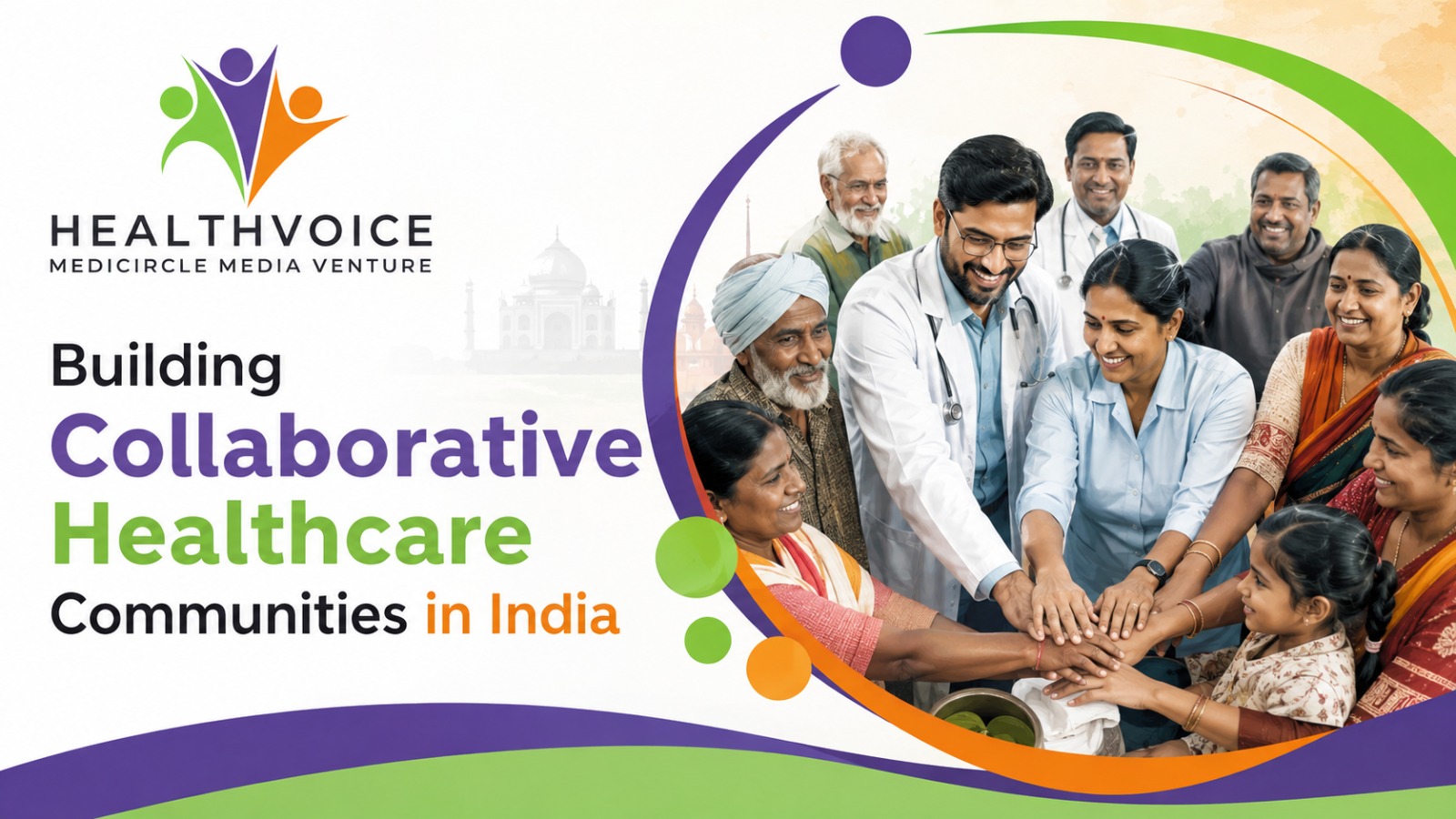
The answer to these structural gaps lies in building truly collaborative healthcare communities, spaces where doctors, medical associations, healthcare institutions, and allied stakeholders can connect, communicate, learn from one another, and collectively raise the standard of care. This article explores what collaborative healthcare communities mean in the Indian context, why they matter, and how doctors and associations can actively participate in and benefit from such ecosystems.
Understanding Collaborative Healthcare Communities
A collaborative healthcare community is not simply a network of professionals who share contact details or attend the same annual conference. It is a dynamic, ongoing ecosystem defined by purposeful engagement, shared goals, and continuous knowledge exchange.
In healthcare settings globally, research has consistently shown that when professionals from different disciplines and roles practice collaboratively, the delivery of person-centred care improves significantly, and both patient and health system outcomes show measurable gains. A 2022 study published in Healthcare Management Forum described six core competencies that drive effective interprofessional collaboration: communication, shared decision-making, role clarification, reflection, conflict resolution, and shared values and ethics. Each of these competencies is not individual in nature; they belong to teams and communities, not to any single practitioner.
In the Indian context, this understanding must be applied at a broader social and institutional level. Collaborative communities here encompass:
- Specialist doctors and general practitioners sharing clinical insights across regions
- Medical associations actively engaging their members beyond annual general meetings
- Healthtech companies, pharmaceutical brands, and medical device firms communicating with the right doctor audience with relevant, evidence-based information
- Healthcare institutions sharing policy updates, awareness content, and continuing medical education through trusted channels
The foundation of any such community is trust, and trust is built through credibility, consistency, and respect for professional dignity.
Why Collaborative Communities Matter for India's Healthcare Ecosystem
India carries one of the heaviest disease burdens in the world. Non-communicable diseases, including diabetes, cardiovascular disorders, and chronic respiratory conditions, account for over 60 percent of all deaths. At the same time, infectious diseases, maternal health concerns, and regional nutrition deficiencies continue to demand attention. No single doctor, hospital, or institution can address this complexity alone.
The National Health Policy and frameworks such as the Ayushman Bharat Digital Mission (ABDM) recognise that a connected healthcare ecosystem is not a luxury; it is a necessity. The ABDM's Health ID and Health Facility Registry are digital infrastructure built on the assumption that coordination between providers, institutions, and records will lead to better care.
But digital infrastructure alone does not create community. What creates community is professional engagement, open communication, and a shared sense of purpose. When doctors across disciplines engage with each other on clinical challenges, when associations communicate actively with their members, and when healthcare brands contribute knowledge rather than just advertisements, an ecosystem begins to form that genuinely serves patients and professionals alike.
Research published in the Journal of Medical Imaging and Radiation Sciences identified that collaborative teams in healthcare demonstrate improved sharing of evidence-based practices, better decision-making, increased innovation, and measurably improved patient safety outcomes. These findings are not limited to large hospital systems. They apply equally to primary care networks, rural health clusters, and specialist associations operating across India.
Recognising the Barriers to Healthcare Collaboration in India
Before solutions can be built, the barriers must be clearly understood. In India, the obstacles to meaningful healthcare collaboration are both structural and cultural.
Structural barriers include the geographical spread of the country, poor digital connectivity in many rural and semi-urban areas, the heavy workload that most doctors carry with insufficient administrative support, and the lack of dedicated platforms where professional engagement can happen without commercial noise or distraction.
Cultural and professional barriers are equally significant. Medical hierarchies, specialty silos, and the traditionally individual nature of clinical practice can create resistance to open knowledge sharing. Associations sometimes operate in ways that prioritise institutional formality over genuine member engagement. Doctors in busy practice often do not have protected time for professional development, peer consultation, or community participation.
There is also the challenge of information overload. A doctor who receives fifty irrelevant promotional messages for every one useful clinical update will quickly disengage from digital channels altogether. This is why the quality, credibility, and relevance of communication within a healthcare community matters as much as the community's existence itself.
Building the Framework: What Effective Healthcare Communities Look Like
Effective collaborative healthcare communities share a set of defining characteristics that distinguish them from general professional networks or broadcast communication channels.
Shared purpose and professional identity: Members of a meaningful healthcare community are connected not just by profession but by shared values. Whether the community is built around a medical specialty, a regional association, or a broader healthcare mission, the sense of shared purpose creates the foundation for genuine engagement.
Structured knowledge exchange: Community platforms must enable doctors and healthcare professionals to share clinical insights, discuss challenging cases, highlight research findings, and debate policy positions in a structured and moderated environment. Unstructured information sharing quickly becomes noise. Structured exchange builds topical authority and professional trust.
Recognition and professional visibility: One of the most overlooked elements of community building is recognition. Doctors who contribute knowledge, lead discussions, or take positions on important healthcare issues deserve visibility and acknowledgement. When a community platform actively recognises its most engaged and knowledgeable members, it motivates further participation and raises the overall quality of engagement.
Association engagement as a community anchor: Medical associations are the natural anchors of professional communities in India. Bodies such as the Indian Medical Association (IMA), specialty associations, and state-level medical councils have existing trust, membership bases, and institutional credibility. When associations move beyond newsletters and annual events to genuine digital engagement through member spotlights, policy discussions, event communication, and continuing education, they become powerful drivers of collaborative community growth.
Trusted brand communication: Healthcare brands including pharmaceutical companies, medical device manufacturers, and healthtech firms have an important role to play in a collaborative healthcare community. However, their communication must be relevant, evidence-based, and respectful of the professional context. Communities that allow commercial communication without standards quickly lose the trust of their medical members.
The Role of Digital Platforms in Strengthening Healthcare Communities
India's digital infrastructure has grown rapidly. Over 80 crore internet users, widespread smartphone penetration, and an accelerating push toward digital health records through the ABDM have created conditions where digital community building is not just feasible but essential.
The most effective digital platforms for healthcare communities are those that are designed specifically for medical professionals rather than adapted from general social media. They prioritise:
- Professional credibility over follower counts
- Verified doctor profiles that protect the dignity of medical practitioners
- Curated content that reflects real clinical and policy priorities
- Community tools that help associations engage their members consistently
- Communication channels that allow healthcare brands to reach doctors with relevant, contextual information
Platforms like HealthVoice are designed with exactly this philosophy. Rather than treating doctors as a passive audience for content consumption, they create space for professional voice, peer recognition, association engagement, and meaningful communication between all stakeholders in the healthcare ecosystem. This is a significant departure from general professional networks where medical professionals find themselves competing for attention alongside unrelated industries.
Interprofessional Collaboration Within Healthcare Communities
The most advanced healthcare communities extend beyond doctors alone. Nurses, pharmacists, physiotherapists, mental health professionals, medical educators, hospital administrators, and public health experts each bring perspectives that strengthen the overall community's ability to address complex healthcare challenges.
Research from Sunnybrook Health Sciences Centre in Canada developed a team-based interprofessional competency framework that identified communication, shared decision-making, role clarification, reflection, conflict resolution, and shared values as the core building blocks of collaborative practice. While this framework was designed for hospital settings, its principles translate directly to community-level collaboration.
In India, where the National Medical Commission (NMC) and the nursing and allied health councils operate within increasingly integrated policy environments, interprofessional community platforms that bring different professional groups into respectful dialogue represent the future of healthcare communication. When doctors understand the scope and perspective of allied health professionals, and when allied health professionals understand medical priorities and clinical reasoning, the entire care continuum improves.
Sustaining Engagement: How Communities Stay Alive
Building a healthcare community is one challenge. Sustaining meaningful engagement over months and years is another. Many professional communities experience strong initial enthusiasm followed by declining participation as members return to the pressures of daily practice.
Communities that sustain engagement share three essential qualities. First, they provide consistent value. Members who return to a community platform find new clinical insights, relevant policy updates, association news, event invitations, and peer recognition every time they engage. The value is not episodic; it is continuous. Second, they are responsive. Community platforms that actively listen to member needs, adapt their content and communication to match professional priorities, and make members feel heard and respected earn long-term loyalty. Third, they create opportunities for action. Engagement is strongest when community members can do something meaningful, whether that is sharing expertise, participating in a survey, nominating a colleague for recognition, attending a continuing education event, or contributing to a policy response.
Conclusion
Collaborative healthcare communities are not a contemporary trend. They are a fundamental professional necessity for India's healthcare ecosystem to fulfil its potential. At a time when the country is investing significantly in digital health infrastructure through the ABDM, expanding coverage through Ayushman Bharat, and raising quality standards through NABH accreditation and NMC reforms, the connective tissue that holds this ecosystem together must also be strengthened.
That connective tissue is community. It is the network of relationships between doctors, associations, institutions, and healthcare brands that allows knowledge to travel, recognition to be earned, collaboration to happen, and patient care to improve.
Platforms built with doctor-first values, professional credibility, and meaningful engagement as their guiding principles have a vital role to play in this ecosystem. When doctors find a space where their voice matters, their expertise is visible, and their community is active, they become more connected, more informed, and ultimately more impactful in their practice and in the broader healthcare conversation.
HealthVoice exists to be exactly that space: a trusted platform where doctors, associations, and healthcare communities can find their voice, build their presence, and contribute to a stronger, more collaborative future for Indian healthcare.
Frequently Asked Questions
Q1: What is a collaborative healthcare community and why does it matter in India?
A collaborative healthcare community is a structured ecosystem where doctors, medical associations, healthcare institutions, and allied stakeholders engage in consistent knowledge sharing, professional networking, and meaningful communication. In India, where healthcare delivery is fragmented across geographies and specialties, such communities help bridge information gaps, improve clinical decision-making, and strengthen the connections that ultimately improve patient outcomes.
Q2: How can medical associations use digital platforms to strengthen community engagement?
Medical associations can leverage digital platforms to communicate regularly with members, promote events and continuing medical education, highlight member achievements, share policy updates, and facilitate peer discussions. Moving beyond annual meetings and printed newsletters to consistent digital engagement helps associations remain relevant, accessible, and genuinely useful to their members throughout the year.
Q3: What role does interprofessional collaboration play within healthcare communities?
Interprofessional collaboration brings doctors, nurses, pharmacists, physiotherapists, and allied health professionals into shared dialogue around patient care, clinical standards, and healthcare policy. Research consistently shows that teams and communities that practice collaboratively achieve better patient safety outcomes, improved decision-making, and higher levels of professional satisfaction. In India, promoting interprofessional community platforms aligns with the country's evolving integrated care priorities.
Q4: How can healthcare brands communicate effectively within doctor communities without losing professional trust?
Healthcare brands, including pharmaceutical companies, medical device manufacturers, and healthtech firms, can earn and maintain trust within doctor communities by prioritising relevant, evidence-based communication over promotional messaging. Sharing clinical data, supporting continuing medical education, sponsoring professionally credible content, and engaging respectfully with the medical community's own priorities are all approaches that build long-term trust rather than eroding it.
Q5: What makes a healthcare community platform different from a general professional network?
A healthcare community platform designed for medical professionals prioritises verified doctor profiles, professional credibility, curated clinical and policy content, tools for association engagement, and communication standards that protect the dignity and trust of the medical community. General professional networks are not designed with these priorities and often create environments where medical professionals find it difficult to engage meaningfully or maintain appropriate professional boundaries.
Resources
- Indian Council of Medical Research (ICMR): Guidelines, publications, and research frameworks relevant to collaborative clinical practice and healthcare policy in India.
- World Health Organization (WHO): Framework for Action on Interprofessional Education and Collaborative Practice, a foundational document for understanding team-based healthcare delivery globally.
- Ayushman Bharat Digital Mission (ABDM): Official information on India's digital health infrastructure, Health ID, Health Facility Registry, and connected care ecosystem.
- National Medical Commission (NMC): Regulatory updates, medical education standards, and policy frameworks governing the medical profession in India.
- PubMed Central (PMC): Peer-reviewed research on interprofessional collaboration, healthcare community competency frameworks, and evidence-based approaches to collaborative practice.
Interlinking Keywords:
collaborative healthcare communities, medical associations India, doctor networking platform, interprofessional collaboration, healthcare community engagement, ABDM digital health, doctor community India, healthcare knowledge sharing, medical professional visibility, association member engagement
Last reviewed by:
HealthVoice Editorial and Medical Advisory Team on August 05, 2026
Disclaimer:
This article is intended for informational and professional development purposes only. It does not constitute medical advice, clinical guidance, or a substitute for professional medical judgment. Healthcare professionals should rely on current evidence-based guidelines, institutional protocols, and their own clinical expertise when making decisions related to patient care. References to government schemes, regulatory bodies, and research publications are accurate to the best of our knowledge at the time of publication and may be subject to change.
 Team Healthvoice
#HealthcareCommunities #DigitalHealthIndia