LinkedIn Tips for Doctors and Healthcare Professionals: Building Your Professional Voice in the Digital Age
This guide helps Indian doctors optimize their LinkedIn profiles, build ethical content strategies, grow professional networks, and establish lasting authority in the medical community.
Introduction
The professional landscape for doctors in India is changing rapidly. A decade ago, a doctor's reputation was built entirely within the walls of a hospital, at medical conferences, or through word-of-mouth referrals within local networks. Today, that reputation also lives online, and LinkedIn has emerged as the most credible professional platform where that reputation is shaped, searched, and validated.
India now has one of the largest and fastest-growing communities of healthcare professionals on LinkedIn. From senior consultants in Mumbai and Delhi to early-career specialists in Tier 2 cities such as Jaipur, Coimbatore, and Nagpur, doctors across the country are increasingly recognizing that a strong LinkedIn presence is not optional. It is a professional necessity.
Yet, despite the platform's enormous potential, most Indian doctors use LinkedIn sparingly, if at all. Many have incomplete profiles, post inconsistently, or treat the platform purely as an online resume rather than a powerful tool for professional visibility, peer networking, knowledge leadership, and career development. This article addresses that gap. It offers practical, India-focused guidance that goes beyond surface-level advice and helps doctors build a LinkedIn presence that truly reflects their expertise, earns professional trust, and opens meaningful doors.
Understanding LinkedIn's Professional Value for Indian Doctors
Before diving into strategy, it is important to understand why LinkedIn matters specifically for the Indian medical context. India produces over 80,000 MBBS graduates every year, and the country has more than 1.3 million registered allopathic doctors under the National Medical Commission (NMC). In such a competitive professional environment, standing out requires more than qualifications. It requires visibility.
LinkedIn, with over one billion users globally and a rapidly growing base in India, is the world's largest professional network. Unlike social media platforms designed for personal expression, LinkedIn is built for professional credibility. When a pharmaceutical company wants to identify key opinion leaders, when a hospital looks to recruit a senior specialist, when a medical device company seeks doctors for advisory boards, or when a fellow doctor wants to refer a patient to a specialist in another city, LinkedIn is often the first place they search.
For doctors associated with medical associations such as the Indian Medical Association (IMA), the Association of Physicians of India (API), or specialty bodies like the Cardiological Society of India (CSI) or the Indian Orthopaedic Association (IOA), LinkedIn also provides a platform to amplify association activities, share member achievements, and communicate important healthcare advocacy positions to a wider professional audience.
Platforms like HealthVoice are built on this very understanding. The goal is to give Indian doctors and healthcare communities a more organized, credible, and purposeful digital presence, and LinkedIn is a foundational element of that digital identity.
Building a LinkedIn Profile That Reflects Medical Expertise
The LinkedIn profile is the cornerstone of everything. It is the first impression that colleagues, patients, healthcare decision-makers, and media professionals form when they search for a doctor online. A poorly structured profile, one with a missing photo, a vague headline, or no summary, signals disengagement and reduces credibility significantly.
The Profile Photo and Banner
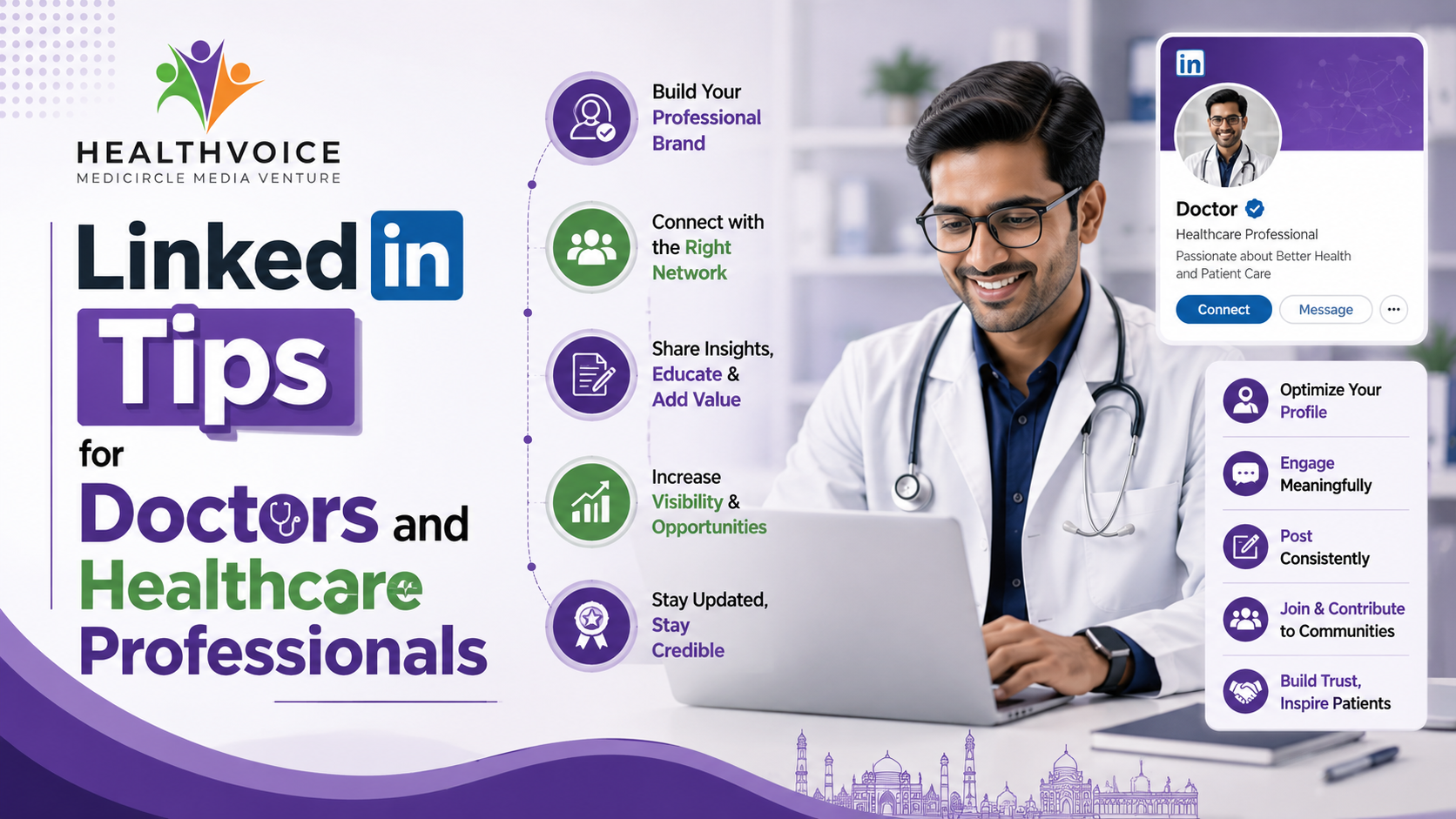
A professional headshot is non-negotiable. The photo should be recent, clear, and taken in a professional setting, ideally in clinical attire or formal dress with a neutral background. The face should be clearly visible. This is not the space for group photos, casual pictures, or cropped event photographs.
The banner section, the wide image that appears behind the profile photo, is often completely ignored by doctors. This is a significant missed opportunity. Doctors can use this space to display their specialty, institutional affiliation, or a professional tagline that communicates their area of focus. A cardiologist might use an image representing cardiac health. A public health professional might display data or awareness campaign visuals. This small visual detail adds to the overall professionalism of the profile.
Writing a Headline That Works as a Search Signal
The LinkedIn headline is arguably the most important text on the profile. It appears in search results, in connection suggestions, and alongside every comment or post a doctor makes. Many doctors default to simply listing their designation and institution, such as "Consultant Physician, Apollo Hospitals." While that is accurate, it is not optimized.
A stronger headline combines specialty, area of focus, and either a geographic indicator or a unique value signal. For example: "Interventional Cardiologist, Heart Failure Specialist, Mumbai, 15 Years of Clinical Practice" or "Pediatric Neurologist, Child Brain Health Advocate, Delhi NCR." These headlines tell the algorithm and the reader exactly who the doctor is and what they specialize in, making the profile far more discoverable.
Crafting an About Section That Builds Trust
The About section is where a doctor's professional story comes to life. Many doctors leave this blank or fill it with a dry listing of qualifications. The About section should instead communicate expertise with a human touch. It should explain who the doctor serves, what their clinical philosophy is, what they have achieved, and how peers or patients can connect with them.
This section should be written in clear, accessible language. It should mention years of experience, areas of specialization, key achievements such as research publications or fellowships, teaching roles, and any involvement with medical associations or public health initiatives. A doctor who has contributed to Ayushman Bharat implementation at the district level, or who has been involved in NMC advisory work, should mention this. These are credibility markers that are both authentic and impactful.
Creating Content That Establishes Thought Leadership
Profile optimization is only the beginning. What truly builds a doctor's professional authority on LinkedIn is consistent, high-quality content. In the Indian medical community, content creation is still an underutilized lever. Most doctors either do not post at all or share generic health awareness posts that do not reflect their individual expertise.
The most effective LinkedIn content for doctors falls into a few clear categories:
- Clinical insights and awareness: Sharing observations from practice without compromising patient confidentiality, such as common misconceptions about a disease, or the importance of early screening for a condition.
- Professional opinions on healthcare trends: Commenting on the expansion of telemedicine under the National Digital Health Mission, the impact of NMC reforms, or the growing role of artificial intelligence in diagnostics.
- Medical education and career guidance: Senior doctors sharing advice for junior colleagues navigating internship, postgraduation, or fellowship decisions.
- Association and community updates: Highlighting conferences, CME events, or significant achievements of peers and institutions.
- Research and publication promotion: Sharing recently published research, contributing to academic conversations, and citing evidence-based perspectives on clinical topics.
The goal of all this content is not self-promotion. It is contribution. When a doctor consistently contributes relevant, credible, and thoughtful content to their LinkedIn community, they become a recognized voice in their specialty. That recognition translates into invitations to speak at conferences, collaboration inquiries, media opportunities, and referrals from peers across the country.
It is important to emphasize that all content shared by doctors must adhere to the ethical guidelines laid out by the National Medical Commission and the Indian Medical Association. Doctors should never make diagnostic claims, promise clinical outcomes, share identifiable patient information, or use fear-based language to drive engagement. Responsible content is the foundation of trustworthy professional communication.
Building a Meaningful Professional Network
Many Indian doctors connect with LinkedIn contacts randomly or only during job searches. A more intentional approach to networking creates far greater long-term value. The professional network a doctor builds on LinkedIn should reflect the community they wish to engage with, learn from, and contribute to.
Connections should ideally include fellow specialists and general practitioners in the same or complementary fields, peers from medical college and residency, faculty from postgraduate institutions, medical association leaders, healthcare administrators and hospital management professionals, public health officials, and relevant contacts from the pharmaceutical and medical device industry. LinkedIn's search filters make it relatively easy to identify and reach out to professionals by specialty, location, institution, and industry.
When sending a connection request, a personalized note makes a significant difference. A message that briefly explains the context of the request, such as shared interest in a medical specialty, attendance at the same conference, or mutual association membership, dramatically increases the likelihood of a positive response.
Doctors should also consider joining relevant LinkedIn groups. There are active groups focused on Indian healthcare, specific medical specialties, public health in India, hospital management, and medical research. Participation in these groups, through thoughtful comments and shared resources, extends a doctor's professional reach beyond their direct network.
Leveraging LinkedIn for Career Growth and Collaboration
For doctors in India, LinkedIn offers tangible career benefits that go beyond visibility. The platform's job search functionality allows doctors to find positions at hospitals, research institutions, public health organizations, and healthcare companies across the country. Many leading hospital chains such as AIIMS, Tata Memorial, Medanta, and Fortis actively post positions on LinkedIn. Setting job alerts based on specialty and location ensures that relevant opportunities are not missed.
Beyond job search, LinkedIn is increasingly used for academic collaboration. Researchers looking for co-investigators, institutions seeking faculty, and healthtech companies looking for medical advisors frequently use LinkedIn to identify and approach doctors. A well-maintained profile with clearly listed research interests, publications, and professional accomplishments positions a doctor effectively for these inbound opportunities.
For doctors in Tier 2 and Tier 3 cities, LinkedIn levels the professional playing field in a meaningful way. A specialist in Bhopal or Visakhapatnam can share research, connect with AIIMS faculty, or be discovered by a medical journal editor just as easily as a doctor in a metropolitan center. This democratization of professional visibility is one of LinkedIn's most powerful contributions to the Indian healthcare ecosystem.
Consistency, Ethics, and the Long-Term Professional Investment
A common mistake among doctors who begin their LinkedIn journey is inconsistency. They optimize their profile, post a few times, gather some connections, and then go silent. This undermines the trust and momentum that had begun to build. LinkedIn rewards consistency. Regular engagement, even two to three thoughtful posts per month, keeps a doctor visible and relevant within their professional community.
At the same time, every doctor must approach LinkedIn with the ethics of the medical profession at the forefront. The Medical Council of India's advertising guidelines, now maintained under the National Medical Commission framework, restrict doctors from advertising clinical services in ways that could mislead the public. Content should always educate, inform, and engage rather than promote. Doctors should never use LinkedIn to solicit patients directly, make comparisons with other practitioners, or engage in any form of commercial endorsement that violates NMC conduct standards.
Building a credible and ethical LinkedIn presence is not a one-time project. It is a long-term investment in professional identity. The Indian doctors who approach it with patience, purpose, and professionalism will find that the platform returns far more than it asks.
Conclusion
LinkedIn is no longer a peripheral tool for Indian healthcare professionals. It has become a central space where professional credibility is built, expertise is communicated, and careers are shaped. For doctors in India, the opportunity is both significant and underutilized. With a thoughtfully optimized profile, a consistent content presence, and an intentional networking strategy, any doctor can establish a stronger professional voice, connect with the broader medical community, and contribute meaningfully to the future of healthcare in India.
Platforms like HealthVoice are committed to supporting exactly this kind of purposeful professional visibility for Indian doctors and medical associations. The combination of a strong LinkedIn presence and a dedicated doctor-focused community platform creates a compounding effect, one where every piece of expertise shared, every connection made, and every achievement highlighted contributes to a more respected, more connected, and more impactful medical professional identity.
Frequently Asked Questions
Q1: How should Indian doctors write a LinkedIn headline to improve search visibility?
Indian doctors should write LinkedIn headlines that combine their medical specialty, area of focus, and location or experience level. For example, "Diabetologist and Endocrinologist | Preventive Diabetes Care | Hyderabad | 12 Years of Practice." This structure helps LinkedIn's algorithm surface the profile in relevant searches by peers, patients, and healthcare decision-makers.
Q2: What kind of content should doctors post on LinkedIn without violating NMC guidelines?
Doctors can post clinical awareness content, healthcare trend opinions, research updates, medical education advice, and association news. They should avoid diagnostic promises, identifiable patient information, fear-based messaging, or any content that functions as direct advertising of clinical services. All content should align with the ethical conduct standards set by the National Medical Commission.
Q3: Is LinkedIn useful for doctors in Tier 2 and Tier 3 cities in India?
Yes, LinkedIn is particularly valuable for doctors outside metropolitan centers because it removes geographic barriers to professional visibility. A specialist in a smaller city can connect with national medical associations, contribute to specialty discussions, and be discovered by hospitals or research institutions across India simply by maintaining an active and well-optimized profile.
Q4: How often should a doctor post on LinkedIn to build professional authority?
Consistency matters more than frequency. Posting two to four times per month with genuinely useful, specialty-relevant content is far more effective than daily posting of generic health tips. Regular, meaningful engagement, including commenting on peers' posts and participating in professional discussions, strengthens a doctor's reputation over time.
Q5: Can LinkedIn help doctors find academic collaborations and research opportunities in India?
Yes. Many research institutions, medical journals, and health organizations in India use LinkedIn to identify potential collaborators and expert contributors. Doctors who clearly list their research interests, publications, and academic affiliations on their LinkedIn profiles are more likely to receive inbound inquiries for co-authorship, advisory roles, speaking engagements, and grant collaborations.
Resources
- National Medical Commission (NMC): Official regulatory body for medical education and professional conduct standards in India
- Indian Medical Association (IMA): National organization representing Indian doctors, providing professional guidance and advocacy resources
- LinkedIn Official Help Center: Platform-specific guidance on profile optimization, content strategy, and professional networking features
- Ministry of Health and Family Welfare, Government of India: Policy updates, national health programs, and digital health initiatives including Ayushman Bharat and ABDM
- HealthVoice (healthvoice.in): India's doctor-focused community platform for professional visibility, medical association engagement, and healthcare communication
Interlinking Keywords
doctor professional networking India, medical association engagement, healthcare professional visibility, LinkedIn profile for physicians, digital presence for doctors, NMC guidelines for doctors, HealthVoice doctor community, Indian medical associations, healthcare career development, medical thought leadership
Disclaimer:
This article is intended for informational and professional development purposes only. It does not constitute legal, regulatory, or clinical advice. Doctors are advised to consult the National Medical Commission guidelines and their respective state medical councils before implementing any public communication or digital marketing strategy. Content shared on LinkedIn or any professional platform must comply with applicable medical ethics and advertising standards in India.
Last Medically Reviewed by:
Editorial Medical Board, HealthVoice on 28 July 2026
 Team Healthvoice
#LinkedInForDoctors #HealthVoiceIndia