The Predictive Patch: How AI Wearables & Remote Patient Monitoring Are Transforming Healthcare in 2026
This article explores how AI-powered wearables and remote patient monitoring are transforming healthcare into a predictive system in 2026. It highlights the benefits of early disease detection while addressing challenges like alert fatigue, data overload, and clinical workflow strain. The focus is on building intelligent systems that improve outcomes without overwhelming healthcare providers.
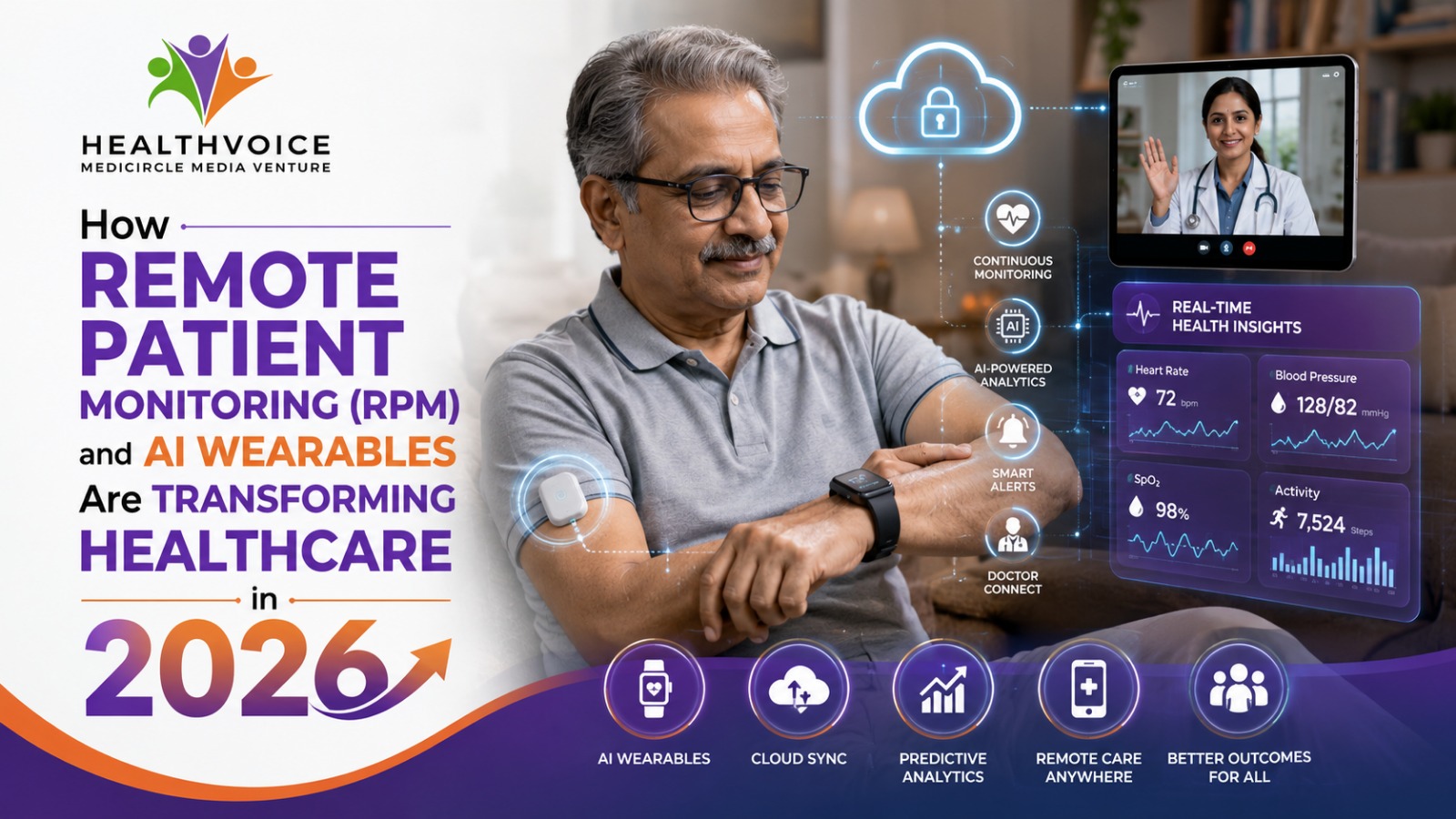
The Predictive Patch: Navigating the Tsunami of Remote Biometrics Without Burning Out the Clinic
How Remote Patient Monitoring (RPM) and AI Wearables Are Transforming Healthcare in 2026
Healthcare in 2026 is undergoing a structural transformation driven by remote patient monitoring (RPM), AI-powered wearables, and predictive clinical intelligence. What was once a system built on occasional checkups and static measurements is rapidly evolving into a continuous, real-time health ecosystem.
Instead of reacting to illness after it appears, modern medicine is shifting toward predictive healthcare, where biometric data from wearables can forecast deterioration days or even weeks in advance.
However, this transformation introduces a critical challenge: how can healthcare systems absorb millions of continuous data streams without overwhelming clinicians with alert fatigue and workflow burnout?
The Shift from Reactive Medicine to Predictive Healthcare
From Isolated Readings to Continuous Biometric Intelligence
Traditional healthcare relied on isolated snapshots of patient data—blood pressure readings, glucose tests, and weight measurements taken during clinic visits. These static inputs often failed to capture the early progression of disease.
In contrast, modern RPM systems continuously collect physiological data from:
* Smartwatches and biosensors* Chest-worn cardiac patches* Continuous glucose monitors (CGMs)* Interstitial fluid sensors* AI-enabled wearable diagnostic systems
This constant flow of data has fundamentally changed how clinicians interpret patient health.
Instead of asking “What is the patient’s condition today?” healthcare now asks “What will the patient’s condition be tomorrow?”
The Rise of Prognostic Wearables and Smart Biosensors
How Next-Generation Devices Detect Disease Before Symptoms Appear
Early Detection in Heart Failure Management
One of the most impactful applications of RPM technology is in congestive heart failure monitoring.
Traditionally, clinicians relied on weight gain as an early warning sign of fluid retention. However, by the time weight changes become visible, the patient is often already in late-stage decompensation.
Modern RPM patches now use thoracic bioimpedance sensors, which pass a low-level electrical current through the chest to measure fluid accumulation.
Key mechanism:
* Water conducts electricity better than tissue* Increasing fluid levels reduce bioimpedance* Continuous downward trends signal early heart failure progression
This enables clinicians to:
* Adjust diuretics proactively* Prevent hospital admissions* Intervene before symptoms escalate
This represents a shift from reactive emergency care to preventative intervention medicine.
Bloodless Glucose and Metabolic Monitoring
The Evolution of Non-Invasive Biochemical Sensing
Continuous glucose monitoring has evolved significantly from early invasive sensor-based systems.
The latest generation of wearables uses:
* Near-infrared spectroscopy* Raman scattering analysis* Machine learning signal interpretation
These systems detect glucose levels without breaking the skin by analyzing how light interacts with glucose molecules in interstitial fluid.
Benefits of non-invasive metabolic tracking:
* Pain-free continuous monitoring* Higher patient adherence* Real-time metabolic feedback* Reduced sensor-related infections and waste
Wearables now function as miniaturized biochemical laboratories, continuously translating optical signals into metabolic insights.
The Alert Fatigue Crisis in Modern Healthcare
When Too Much Data Becomes a Clinical Risk
While RPM systems improve early detection, they also generate a new problem: data overload.
In large healthcare networks, thousands of patients may transmit biometric data every few minutes. Without proper filtering, clinicians risk being overwhelmed by constant notifications.
Consequences of alert fatigue:
* Reduced sensitivity to critical alerts* Missed high-risk patient deterioration* Cognitive overload among healthcare staff* Increased operational inefficiency
When every minor fluctuation triggers an alert, clinicians begin to ignore alarms altogether—creating a dangerous blind spot in patient care.
Building Intelligent RPM Systems That Prevent Burnout
From Raw Data Streams to Clinical Intelligence Pipelines
Modern healthcare systems must evolve beyond simple alert-based monitoring. Instead, they require intelligent data architecture that filters, prioritizes, and contextualizes patient information.
1. AI-Based Trend Detection Instead of Threshold Alerts
Instead of triggering alerts based on single abnormal values, modern systems use multi-variable trend analysis.
For example:
* Elevated heart rate alone = low relevance* Heart rate + fluid retention + poor sleep = high-risk pattern
This approach transforms isolated data points into predictive risk scores, reducing unnecessary interruptions while improving diagnostic accuracy.
2. Dedicated RPM Triage Centers
The New Layer Between Patients and Physicians
Healthcare systems are increasingly adopting specialized RPM triage units to manage incoming data.
These centers function as digital command hubs where trained clinicians:
* Monitor aggregated patient dashboards* Verify abnormal readings with patients* Filter false positives* Escalate only clinically relevant cases
This ensures physicians remain focused on critical care rather than data noise.
3. Unified Clinical Dashboards and Smart EHR Integration
Reducing Digital Fragmentation in Clinical Workflows
One of the biggest barriers to RPM adoption is fragmented software systems.
Modern solutions integrate all wearable and sensor data directly into the Electronic Health Record (EHR) through unified APIs.
Key design principles:
* Single patient timeline view* Color-coded risk visualization* Automated clinical summaries* One-click intervention tools
This reduces cognitive burden and improves decision-making speed at the point of care.
-
The Role of AI in Predictive Healthcare Systems
Turning Raw Biometrics Into Clinical Intelligence
Artificial intelligence plays a central role in transforming continuous data streams into actionable insights.
AI systems:
* Learn individual patient baselines* Detect subtle physiological deviations* Predict deterioration before symptom onset* Reduce false alarms through pattern recognition
This enables healthcare providers to move from data monitoring to predictive intervention systems.
Ethical and Operational Challenges in RPM Adoption
Balancing Innovation with Healthcare System Stability
1. Data Privacy and Security
Continuous biometric monitoring raises critical concerns about:
* Patient data protection* Secure transmission of health records* Consent-driven data usage
2. Healthcare Equity and Accessibility
Advanced RPM systems risk widening the healthcare gap if:
* Limited to urban hospitals* Unaffordable for low-income populations* Restricted to high-resource healthcare systems
Scalable deployment strategies are essential for global equity.
3. Infrastructure Scalability
Large-scale RPM adoption requires:
* High-bandwidth data infrastructure* Cloud-based analytics systems* Robust device interoperability standards
Without these, predictive healthcare systems cannot function effectively at scale.
The Future of Remote Patient Monitoring
From Data Overload to Predictive Clinical Intelligence
The future of healthcare lies in transforming RPM systems from passive data collectors into **active clinical decision-support systems**.
When properly designed, these systems will:
* Prevent hospital admissions before they occur* Reduce chronic disease complications* Enhance physician decision-making* Improve long-term patient outcomes
The ultimate goal is not more data—but smarter, context-aware healthcare intelligence that integrates seamlessly into clinical workflows.
Conclusion
The rise of predictive remote patient monitoring (RPM) represents one of the most significant shifts in modern healthcare. By combining wearable biosensors, AI-driven analytics, and intelligent clinical workflows, medicine is moving toward a future where disease is predicted rather than treated.
However, success depends not only on technological advancement but also on system design that protects clinicians from burnout and ensures patients receive timely, meaningful care.
 Team Healthvoice
#RemotePatientMonitoring #AIWearables