Reducing OPD Waiting Time, Process Innovations That Improve Patient Experience
Resolving deep-seated bottlenecks requires moving away from outdated scheduling approaches and embracing smart, systemic workflow re-engineering. By replacing chaotic waiting environments with organized, predictable movement, hospitals can improve clinical efficiency.
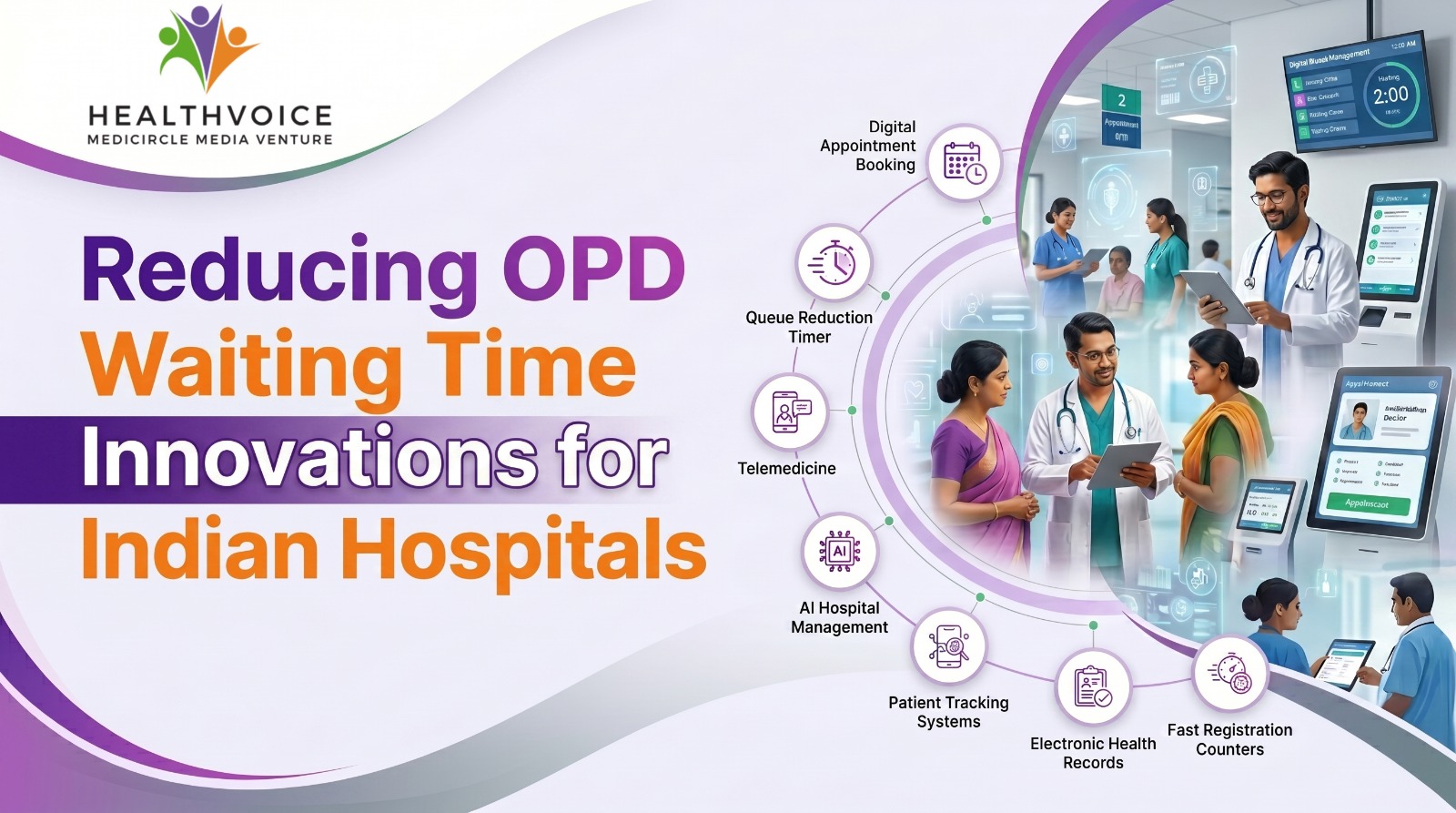
Process Innovations in Healthcare
For the average person in India, visiting a hospital outpatient department or searching for a doctor near me is frequently synonymous with an entire day lost to waiting. Long before an individual finally sits across from a doctor, they must navigate an exhausting gauntlet of endless queues, packed waiting areas, and general confusion. When families travel from distant villages to reach a private hospital or private clinic near me, or when they miss a full day of wages just to secure a brief medical consultation, spending hours stranded in crowded corridors becomes a significant emotional and physical strain.
The sheer volume of people seeking medical attention from a general physician near me or other specialist doctors undoubtedly places immense pressure on medical facilities, but prolonged delays do not represent an unalterable reality. Excessive wait times do more than just exhaust visitors. They overburden hospital administrative staff, drain organizational resources, and diminish the quality of clinical interactions during rushed consultations. Resolving these deep-seated bottlenecks requires moving away from outdated scheduling approaches and embracing smart, systemic workflow re-engineering.
Understanding Outpatient Gridlock
To establish smoother workflows across any modern medical center, it is essential to look closely at why Indian outpatient departments experience such intense operational pressure. Unlike healthcare systems in many Western countries that function primarily on rigid, pre-arranged appointment slots, the medical landscape in India naturally absorbs a vast number of walk-in cases. This open-door reality means a sudden surge of unscheduled patients can quickly derail a clinic daily timeline, creating a cascading delay that impacts every subsequent patient hospital visit.
Additionally, a typical doctor visit at a public hospital near me or a large multi-specialty hospital near me is rarely a direct path from the front door to the consultation room. The standard journey involves multiple independent touchpoints, including billing counters, triage areas for vital checks, diagnostic centers, pharmacy queues, and desk stops for scheduling follow-up appointments. When these individual departments operate as isolated silos without integrated data tracking, operational friction naturally builds up. A simple logjam at the payment counter immediately holds back the nursing assessment, which then delays the final consultation.
Streamlining Patient Intake
One of the most effective strategies for breaking up physical queues at the entrance of a medical center near me is moving administrative tasks out of the main lobby. Digital pre-registration systems linked to an electronic health records platform enable patients or their families to upload personal identification, fill out medical history forms, and complete basic paperwork right from their smartphones before they leave home. This proactive approach drastically reduces the heavy morning rush that frequently paralyzes reception desks.
For visitors who cannot pre-register online, self-service check-in stations placed near the main entrance provide an excellent alternative. These automated terminals allow individuals to scan a quick response code or input a phone number to confirm arrival and enter the active clinical queue without standing in a physical line. When tied directly to an automated queue tracking system, live updates can be displayed on digital screens throughout the facility, giving people the freedom to move away from congested waiting areas and monitor their turn in real time.
Implementing Centralized Tokens
In many traditional hospital environments, patients are forced to move from one queue to another, checking in for a consultation, waiting again to create a paper file, and joining yet another line if the doctor orders a basic blood test. This fragmented approach is highly stressful and physically draining, particularly for elderly individuals or those dealing with acute pain.
A proven operational fix for a busy government hospital near me or private hospital near me is transitioning to a single-counter service framework driven by a unified token. Upon entering the facility, the patient is assigned a single digital identification token. Every subsequent step, from paying for diagnostic services to picking up prescribed medications at the pharmacy, remains tied directly to this single number. Rather than forcing the patient to navigate a confusing maze of windows, administrative staff handle the backend coordination digitally, keeping the physical movement of the patient to an absolute minimum.
Optimizing Vital Assessment
A frequent bottleneck occurs right at the threshold of the office of the doctor. Recording essential health metrics like blood pressure, temperature, and weight is vital for establishing an accurate clinical baseline. However, if a single nurse is left to check these vitals sequentially right outside the examination door, a severe bottleneck forms, causing empty gaps inside the room of the doctor while patients back up in the hallway.
Hospitals can smooth out this process by introducing parallel processing zones known as dedicated triage bays. Instead of taking vital signs one by one at the office door, a centralized team of nurses can assess multiple patients simultaneously in an open, efficient space. These metrics are fed directly into the central patient management system of the hospital. By the time the specialist is ready to call the next individual forward, all foundational health data is already displayed on their monitor, saving critical minutes per patient.
Utilizing Staggered Intervals
The practice of advising all morning patients to show up at 9:00 AM sharp is a primary driver of crowded waiting spaces. When dozens of people are given an identical arrival time for a session that spans several hours, the individuals positioned at the end of the roster are guaranteed an incredibly long and frustrating wait.
Modern process design replaces this approach with a staggered booking model backed by data-driven insights. By studying past clinic trends, hospital management can calculate the typical time a specialist requires for different types of visits. A standard follow-up check might average eight minutes, whereas a complex new case might require twenty-five minutes. Factoring these data points into the scheduling software allows the system to issue precise, spaced-out arrival times, distributing the patient arrival volume evenly across the entire working shift.
Coordinating Departmental Paths
A comprehensive hospital visit often requires a patient to see more than one healthcare professional. For instance, an individual managing advanced diabetes may need to visit an endocrinologist, a skin specialist near me, and an eye doctor near me all within the same day. If these departments operate on completely separate schedules and are located on different floors, the patient spends their day running back and forth to re-register at every stop.
Grouping related specializations together within integrated care hubs offers an elegant solution to this problem. By placing interconnected clinics within the same physical wing, patients can transition from one specialist to the next without restarting the administrative check-in process. Managing these overlapping appointments through a shared digital dashboard ensures continuous movement, converting what could have been a series of disjointed delays into a unified care journey.
Frequently Asked Questions
Elderly Technology Concerns
Will modern digital systems alienate elderly patients who struggle with technology? Process improvements are meant to complement human support rather than replace it. While tech-savvy individuals can manage their intake from home, self-service terminals feature intuitive interfaces, and on-site patient assistance guides are always present in the lobby to walk anyone through the check-in process step by step.
Hospital Staff Benefits
In what ways do shorter waiting periods benefit clinical and administrative staff? When patient flow is structured and steady, physical waiting zones remain calm and uncrowded, which directly reduces the stress levels of front-line desk staff and nursing teams. Doctors also benefit because they receive complete, pre-recorded vital signs on their screens automatically, allowing them to dedicate their full attention to actual patient care.
Managing Walk-In Care
Does a spaced-out appointment system mean that walk-in patients will be turned away? Walk-in care remains an essential component of Indian healthcare. Modern scheduling frameworks deliberately build short, flexible buffer windows throughout the day to absorb unscheduled walk-ins and urgent cases without disrupting pre-booked appointments.
Small Clinic Adaptation
Can independent neighborhood clinics use these workflow ideas, or are they only for major medical centers? Most of these strategies, such as single-token tracking, parallel vital checks, and staggered scheduling, depend on smart workflow re-organization rather than massive financial investments. Smaller medical centers and private practices can easily adapt these principles to enhance their daily operations.
Enhancing the Patient Journey
At its core, upgrading the outpatient workflow is about demonstrating value for the time of a patient and easing the natural anxiety that accompanies a trip to the hospital. When a medical facility takes active steps to eliminate unnecessary lines, provide transparent waiting times, and sync care steps, it shows real respect for the community it serves.
These process innovations do not mean reducing the quality face-to-face time a physician spends with a patient. Instead, they aim to remove the administrative roadblocks that clutter the experience before and after that vital conversation. By replacing chaotic waiting environments with organized, predictable movement, hospitals can improve clinical efficiency, support their staff, and make the entire path to recovery vastly more comfortable.
 Team Healthvoice
#HealthcareInnovation #PatientCare