The Future of Medical Associations in India: Challenges, Transformation, and the Road Ahead
Medical associations in India must embrace digital transformation, stronger governance, and proactive policy advocacy to remain credible, inclusive, and impactful for the future of Indian healthcare.
Introduction
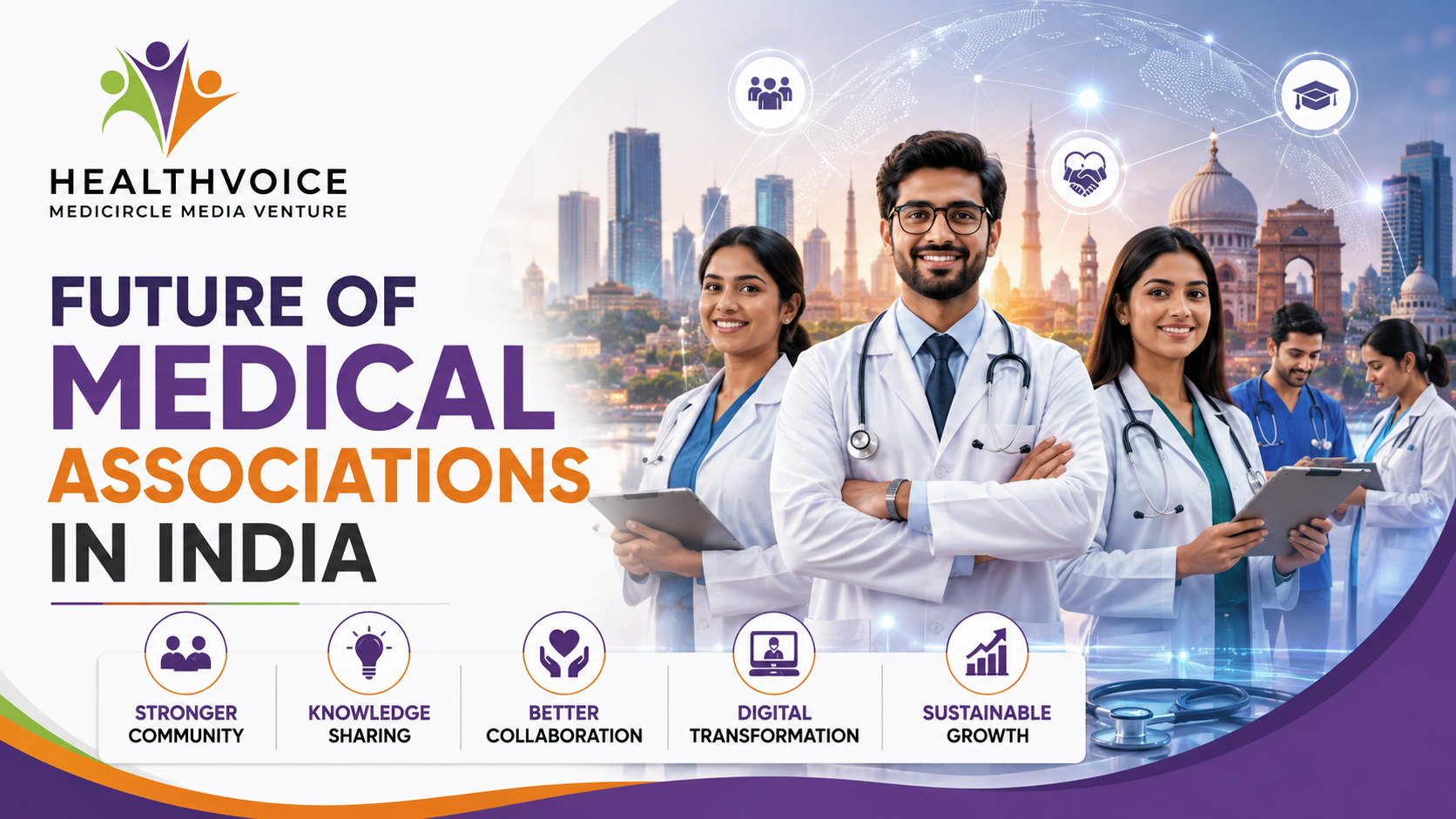
Medical associations in India occupy a position of considerable significance in the country's healthcare architecture. They serve not only as the representative voice of doctors and specialists but also as the bridge connecting the medical profession with policy makers, regulatory bodies, the pharmaceutical industry, and the wider public. Over the decades, associations such as the Indian Medical Association, the Association of Physicians of India, and hundreds of specialty-specific bodies have shaped medical education standards, clinical practice guidelines, public health campaigns, and legislative responses to health crises.
Yet, there is a growing recognition within the medical community that the traditional model of association functioning is in need of thoughtful reinvention. The healthcare landscape in India is changing at an unprecedented pace. The introduction of the National Medical Commission, the rollout of Ayushman Bharat and the Ayushman Bharat Digital Mission, the rise of digital health infrastructure under ABDM, and the increasing complexity of chronic disease management are collectively placing new demands on how medical associations must operate.
The question being asked by association leaders, doctors, and healthcare stakeholders today is a forward-looking one: What should the medical association of tomorrow look like, and how must it transform to remain relevant, credible, and effective?
Understanding the Current Structure of Medical Associations in India
India has one of the most layered ecosystems of medical associations in the world. The Indian Medical Association alone operates across more than 1,700 local branches, with state branches in every major region. Beyond the IMA, there are specialty associations representing cardiology, oncology, neurology, orthopedics, pediatrics, obstetrics, and nearly every recognized branch of medicine. There are also associations dedicated to research, medical education, and public health advocacy.
This structure has historically been the strength of the Indian medical community. It has allowed for grassroots representation while also enabling coordinated national positions on issues of policy and professional welfare. However, this same complexity creates challenges. Information does not always flow efficiently from the national body to the district level. Member participation in governance tends to be concentrated among a small group of senior doctors, particularly in urban centers. Doctors in smaller towns and semi-urban districts often feel disconnected from the decisions taken at the top.
The organizational hierarchy, while essential, can sometimes slow down the responsiveness that the current healthcare environment demands. When rapid policy changes occur, as they frequently have in recent years, associations need to mobilize quickly, communicate clearly, and present a unified position. This is where the gaps become visible.
Key Challenges Confronting Medical Associations Today
The Member Engagement Problem
One of the most consistently cited concerns among association leadership across India is the difficulty of keeping members genuinely engaged. The problem is not unique to Indian medical associations, but it is particularly acute here given the sheer number of practicing doctors and the geographic diversity of the country.
A significant proportion of registered members interact with their association only at election time or during major controversies. Continuing medical education programs, association publications, policy forums, and regional events often see limited participation from the broader membership. This low engagement creates a feedback loop where associations struggle to justify their value to members, and members in turn feel little motivation to invest time or energy in association activities.
The causes are multiple. Doctors in clinical practice, especially those in private practice or working in government facilities in Tier 2 and Tier 3 cities, face severe time constraints. Professional networking and updates increasingly happen through social media groups and online communities rather than through formal association channels. If associations do not meet doctors where they already are digitally, they risk losing the attention of an entire generation of younger medical professionals.
Governance and Internal Democracy
The quality of internal governance within medical associations has been a recurring point of concern. Election disputes, questions about transparency in financial management, and concerns about leadership continuity are issues that have affected multiple associations at various levels. A healthy association depends on trust, and trust depends on systems that are open, accountable, and consistently applied.
There is also the challenge of leadership renewal. Many associations have historically been dominated by the same networks of doctors over long periods. While experience is valuable, the absence of structured mechanisms to bring younger doctors, women doctors, and specialists from smaller cities into leadership roles limits the association's ability to represent its full membership.
Regulatory and Policy Complexity
The establishment of the National Medical Commission in 2020 significantly altered the regulatory landscape for medical education and practice in India. Associations that had built relationships and advocacy strategies around the Medical Council of India had to recalibrate their approach. Similarly, changes in clinical establishment regulations, telemedicine guidelines, drug pricing policies, and the evolving framework of Ayushman Bharat have each demanded that associations stay informed, respond quickly, and engage effectively with government.
This requires dedicated policy teams, access to legal and regulatory expertise, and established communication channels with ministries and parliamentary committees. Most associations, outside the very large national bodies, do not have the infrastructure or resources to sustain this level of engagement consistently.
The Digital Transformation Opportunity
From Notice Boards to Digital Communities
The single most important opportunity available to medical associations today is the shift to digital-first community building. This is not simply about creating a website or sending email newsletters. It is about building a living, active digital ecosystem where doctors can connect, learn, contribute, and feel genuinely represented.
Platforms designed specifically for healthcare professionals are beginning to fill this gap. HealthVoice, for instance, is positioned as a dedicated space for doctors and medical associations to build meaningful digital communities, share professional updates, engage with members consistently, and amplify the collective voice of their organizations. The platform enables associations to move beyond periodic events and newsletters toward continuous, relationship-driven engagement with members.
For associations that invest in this shift, the benefits are substantial. Member participation increases when communication is timely, relevant, and easy to access. Younger doctors who are already comfortable with digital tools find it easier to engage with an association that operates in a familiar online environment. Events and continuing medical education programs reach a far wider audience when they are conducted or supplemented digitally.
Digital Elections and Transparent Governance
The modernization of election processes within associations is another critical dimension of digital transformation. Electronic voting systems offer a practical solution to the perennial problems of low voter turnout, geographic barriers, and concerns about electoral transparency. When doctors can vote securely from their phones or computers without traveling to a physical booth, participation rates improve meaningfully.
Beyond convenience, digital election systems also support greater accountability. Transparent processes, verifiable audit trails, and immediate result declaration reduce the likelihood of disputes and build confidence in association governance. This is not a minor operational detail; it has a direct bearing on the legitimacy and credibility of association leadership.
Continuing Medical Education in the Digital Era
Continuing medical education has always been a core function of medical associations. The pandemic years demonstrated that high-quality CME can be delivered effectively through virtual formats, often reaching more doctors than in-person programs ever could. Webinars, online certification courses, and digital journal access are now expected features of a well-functioning association.
The associations that will lead in the coming decade are those that invest in building robust digital CME infrastructure, partner with academic institutions and specialty bodies, and make learning accessible to doctors in every part of India, not just those in major metropolitan centers.
The Role of Policy Advocacy in Shaping Healthcare
Medical associations have always played a role in shaping health policy, but this role must become more structured and proactive. India's healthcare system is at a critical inflection point. The ambitions embedded in schemes like Ayushman Bharat, the National Digital Health Mission, and the government's commitment to increasing public health spending require implementation strategies that work on the ground. Doctors and their associations are best positioned to provide that ground-level intelligence and to advocate for policies that are clinically sound and practically feasible.
Effective policy advocacy requires associations to move beyond reactive public statements. It involves sustained engagement with parliamentary standing committees, state health departments, regulatory bodies like the NMC and NABH, and international health organizations including the WHO India Country Office. It also requires associations to present evidence-based positions that are grounded in data, research, and the lived experience of their members.
Building these advocacy capabilities is an investment that the stronger associations must make deliberately. Partnerships with public health researchers, legal experts, and health economists can significantly strengthen the quality of policy inputs that associations are able to offer.
Building an Inclusive and Representative Medical Community
One of the most important conversations happening within Indian medical associations today concerns inclusion and representation. Women constitute a significant and growing proportion of medical graduates in India, yet their representation in association leadership remains disproportionately low. Doctors from smaller cities and rural areas, though they serve the majority of India's population, are underrepresented in the decision-making structures of most national associations.
Addressing this requires more than good intentions. It requires structural changes: reserved positions for women and young doctors in leadership committees, active outreach to members in Tier 2 and Tier 3 cities, and communication strategies that genuinely reach the full diversity of the membership.
Subspecialty communities within larger associations also need greater support and autonomy. As medical science becomes increasingly specialized, doctors identify more strongly with their specialty than with the broader medical profession. Associations that create meaningful spaces for these subspecialty communities, while maintaining the cohesion of the larger body, will be better positioned to serve their members well.
The Road Ahead: A Vision for Medical Associations
The medical associations that will matter most in India over the next decade are those that succeed in doing three things well. First, they must build genuinely connected communities, using digital platforms to create consistent value for members rather than relying on periodic events and correspondence. Second, they must strengthen internal governance so that leadership is trusted, elections are transparent, and financial management is open to scrutiny. Third, they must become effective advocates for evidence-based health policy, bringing the collective expertise of their members to bear on the decisions that shape healthcare delivery across the country.
None of this transformation happens without leadership that is willing to invest in change. It also requires platforms and partners that understand the unique needs of the medical community. Platforms like HealthVoice that are built specifically to serve doctors and associations, rather than general professional networks, offer the kind of focused, community-oriented infrastructure that this transformation demands.
The future of medical associations in India is not uncertain. It is actually rich with possibility. The question is whether the leaders within these associations will choose to build toward that future with the same commitment and rigor they bring to their clinical practice.
Frequently Asked Questions
Q1: What is the role of medical associations in India?
Medical associations in India represent doctors and healthcare professionals, advocate for policy reforms, maintain ethical standards, support continuing medical education, and serve as the collective voice of the medical community before government bodies and regulatory authorities.
Q2: How are medical associations in India adapting to digital transformation?
Medical associations are increasingly adopting digital platforms for member communication, virtual conferences, online elections, continuing medical education, and policy advocacy. Platforms such as HealthVoice are enabling associations to build stronger digital communities and maintain consistent engagement with members.
Q3: What are the biggest challenges facing medical associations in India today?
Key challenges include low member engagement, inadequate digital infrastructure, difficulties in reaching members in Tier 2 and Tier 3 cities, internal governance issues, funding limitations, and the need to align with rapidly changing healthcare policies under bodies such as the NMC and the Ministry of Health and Family Welfare.
Q4: How can medical associations in India improve member engagement?
Associations can improve engagement through regular digital communication, member recognition programs, online continuing medical education, virtual events, transparent governance, and collaboration with healthcare media platforms that offer visibility and community interaction.
Q5: What is the future of medical associations in India?
The future lies in digital-first association management, stronger policy advocacy roles, subspecialty community building, cross-association collaboration, and meaningful engagement through technology-driven platforms that connect doctors, leaders, and healthcare stakeholders across India.
Resources
- National Medical Commission (NMC): Official regulatory body for medical education and professional standards in India
- Ministry of Health and Family Welfare, Government of India: Primary source for national health policy updates, Ayushman Bharat, and ABDM framework
- Indian Council of Medical Research (ICMR): Apex body for biomedical research in India, source of evidence-based clinical and public health data
- World Health Organization India Country Office: Reports and guidance on health systems strengthening and professional capacity building in India
- PubMed, National Library of Medicine: Peer-reviewed research on medical association governance, health policy advocacy, and physician engagement
Interlinking Keywords:
medical associations in India, doctor community platform, continuing medical education, healthcare policy advocacy, digital health India, NMC regulations, Ayushman Bharat, medical association elections, physician engagement, healthcare leadership India
Last reviewed by:
HealthVoice Editorial Team on August 11, 2026
Disclaimer:
This article is intended for informational and professional awareness purposes only. It does not constitute legal, regulatory, or clinical advice. Readers are encouraged to consult official bodies such as the National Medical Commission, the Ministry of Health and Family Welfare, and their respective professional associations for guidance on regulatory and governance matters specific to their situation.
 Team Healthvoice
#MedicalAssociationsIndia #HealthcareLeadership
