Top Healthcare Careers for Science Graduates: Non-MBBS Paths
The healthcare industry is rapidly expanding beyond traditional medical careers, creating diverse opportunities for science graduates in diagnostics, digital health, biotechnology, and allied healthcare fields. Advances in artificial intelligence, precision medicine, and healthcare technology have increased demand for skilled professionals who can bridge science and clinical innovation. These emerging career paths offer strong job security, competitive salaries, and meaningful contributions to modern patient care without requiring a medical degree.
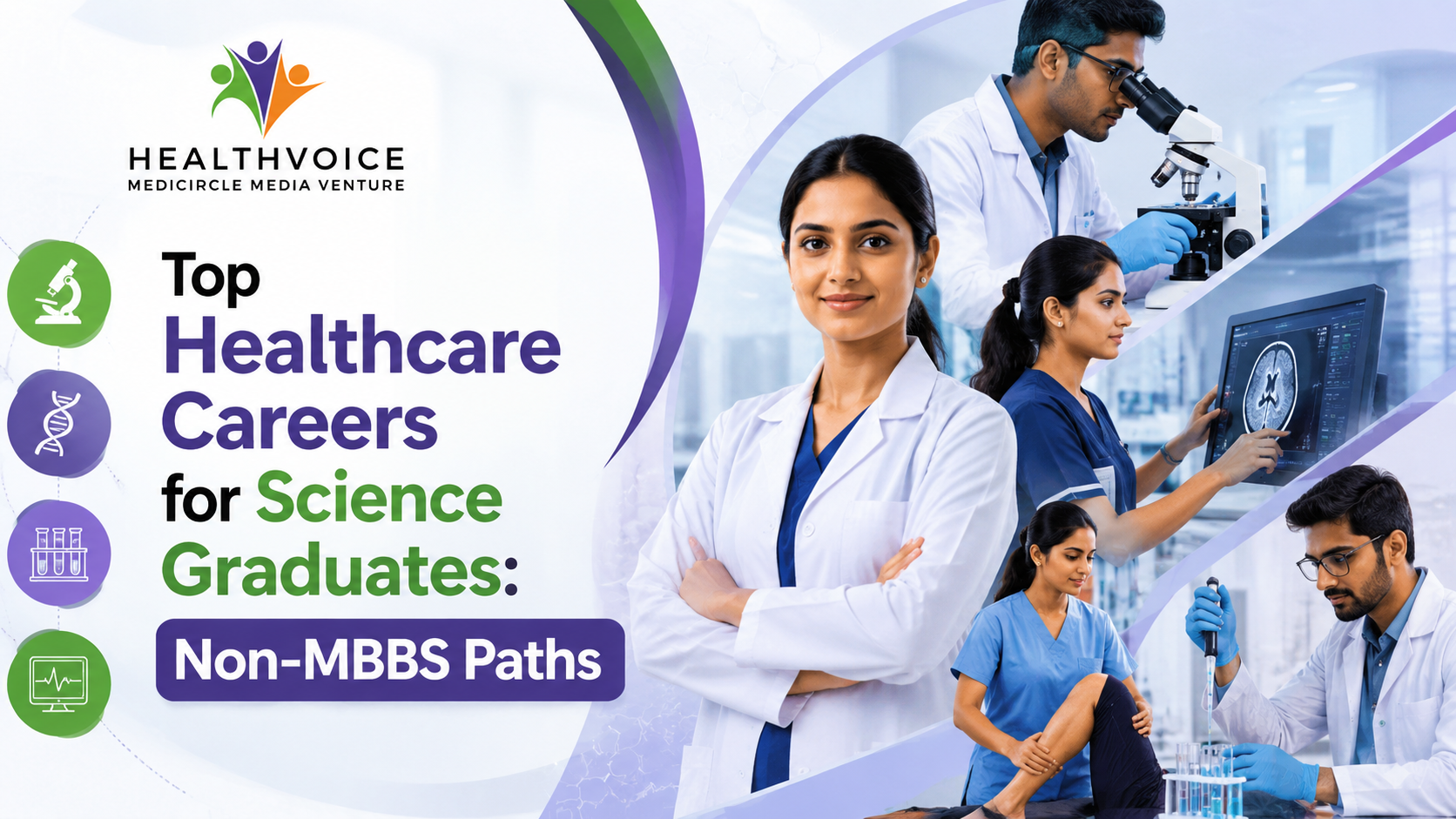
Top Healthcare Careers for Science Graduates
The healthcare workforce is undergoing a profound structural shift. For decades, pursuing a medical career after graduating with a science degree meant choosing between an intensive clinical path like an MBBS/BDS, or settling for static laboratory research.
The rapid integration of artificial intelligence diagnostic tools, digital health therapeutics, advanced physical rehabilitation, and precision genomics has completely rewritten the rulebook. Hospitals, multinational pharmaceutical giants, and Contract Research Organizations (CROs) are facing an acute shortage of specialized allied health and clinical tech professionals.
For science graduates—whether your background is in biology, biotechnology, chemistry, or physics—the healthcare sector provides an array of high-paying, future-ready career paths that offer excellent work-life balance and high job security without requiring medical school.
- High-Tech Diagnostics & Imaging Careers
Modern clinical medicine relies almost entirely on sophisticated visual data and biochemical markers to diagnose diseases early. Specialists who operate advanced scanning networks handle complex, high-stakes tasks across modern diagnostic suites.
- Radiology & Imaging Technologist: These professionals operate high-tech scanning systems, including Magnetic Resonance Imaging (MRI), Computed Tomography (CT), and high-resolution ultrasound machinery, to map internal human anatomy.
- Science Graduation Leverage: Translating a baseline understanding of anatomical cross-sections and physics wave mechanics into precise, clean diagnostics for interpreting radiologists.
- Career Growth: Highly lucrative avenues exist within multi-specialty trauma units, private scan chains, or moving into global sub-specialties like Teleradiology.
- Medical Laboratory Technologist (MLT): MLT professionals collect, prepare, and analyze biological specimens (such as tissue biopsies, blood samples, and bodily fluids) to detect cellular anomalies, infectious pathogens, and chemical imbalances.
- Science Graduation Leverage: Utilizing core knowledge of microbiology, biochemistry, and molecular assay techniques to manage automated biochemical analyzers.
- Advanced Rehabilitation & Clinical Therapy
With a rapidly aging demographic and an expanding global sports culture, the demand for non-pharmaceutical, mechanical recovery frameworks has triggered an unprecedented hiring boom.
- Physiotherapist (BPT): These autonomous clinicians design personalized, physical exercise regimens and mechanical therapies to restore gross motor function, joint flexibility, and muscle strength in patients recovering from orthopedic surgeries, severe strokes, or athletic trauma.
- Science Graduation Leverage: Deep fluency in musculoskeletal biomechanics, neuromuscular pathways, and exercise physiology.
- Career Growth: Tremendous entrepreneurial scope. Options range from establishing a private practice to joining corporate healthcare systems or elite athletic academies as a Sports Physiotherapist.
- Audiologist & Speech-Language Pathologist (BASLP): A highly specialized branch dedicated to evaluating, diagnosing, and treating diverse communication, hearing, balance, and swallowing disorders across pediatric and geriatric populations.
- Science Graduation Leverage: Merging acoustics physics, auditory neuroscience, and speech physiology to program advanced cochlear implants and digital hearing aids.
- Emerging Digital Health & Clinical Tech Frontiers
The intersection of medicine, big data, and software engineering has carved out a new tier of high-paying, desk-based healthcare careers designed for analytical science graduates.
- Clinical Data Associate (CDA) & Data Manager: CDAs organize, validate, and clean the massive influx of medical data generated during human clinical trials, ensuring it meets strict international data integrity standards before drug approval.
- Science Graduation Leverage: Using logic models to write Data Validation Plans (DVPs), issue system queries, and manage Electronic Data Capture (EDC) systems.
- Digital Therapeutics (DTx) Product Specialist: An innovative career path focused on managing, validating, and rolling out clinically proven, prescription-grade software applications built to prevent or treat chronic conditions (such as interactive apps for automated diabetes tracking or mental fitness conditioning).
- Science Graduation Leverage: Serving as a "healthcare translator" between technical software engineers and clinical advisory consultants to ensure product safety.
Comparative Matrix: High-Growth Careers for Science Graduates
The table below contrasts key operational metrics across these high-demand healthcare sectors to help you align your personal career roadmap.
Healthcare Career Track
Target Study Timeline
Core Work Environment
Primary Job Roles
Radiology Technologist
3 to 4 Years
Diagnostic Suites, Trauma Centers
MRI Technician, CT Scan Specialist, Imaging Consultant
Physiotherapist
4.5 to 5 Years
Recovery Wards, Sports Academies
Sports Rehab Specialist, Orthopedic Physical Therapist
Clinical Data Associate
3 to 6 Months (Upskilling)
Corporate Offices, Remote Tech Hubs
Clinical Data Manager, Database Quality Auditor
Medical Lab Technologist
3 to 4 Years
Pathology Labs, Research Wings
Molecular Diagnostics Scientist, Lab Supervisor
Speech-Language Therapist
4 Years
Rehabilitation Clinics, Special Schools
Audiologist, Speech Therapist, Cochlear Consultant
Physician Associate
4 Years
Multi-Specialty OPDs, OTs
Clinical Assistant, Surgical Ward Coordinator
Actionable Strategy: How to Secure a Premier Healthcare Job
- Identify Your Preferred Work Environment: Determine whether you thrive on continuous, hands-on patient interaction and physical empathy (Physiotherapy, Speech Therapy) or if you prefer analytical puzzle-solving inside structured tech or laboratory ecosystems (Clinical Data Management, Radiology).
- Prioritize Regulatory-Compliant Credentials: Ensure the certifications or undergraduate degrees you pursue align with national guidelines, such as the National Commission for Allied and Healthcare Professions, to guarantee long-term legal validity and global mobility.
- Master Modern Software Platforms: To beat automated resume screening software, actively seek training on real-world medical software arrays, such as specialized EHR systems, interactive data dashboards (Tableau/Power BI), or diagnostic imaging databases.
Frequently Asked Questions (FAQs)
Q1. Can a regular B.Sc. B.Z.C. (Botany, Zoology, Chemistry) graduate transition into healthcare without taking NEET?
Yes, absolutely. Standard B.Sc. graduates can enter high-demand non-clinical healthcare fields by completing short-term, industry-accredited post-graduate diplomas or upskilling certifications. Excellent options include Clinical Data Management (CDM), Pharmacovigilance, Medical Coding, or Health Informatics, none of which require a NEET score.
Q2. What is the role of a Physician Associate, and can they prescribe medications independently?
A Physician Associate (PA) is a highly trained healthcare professional who performs critical clinical tasks under the direct supervision of a licensed doctor. PAs take patient histories, conduct initial physical examinations, monitor recovery tracking, and assist during complex surgeries. However, they cannot prescribe medications independently; all treatment plans must be validated by the supervising physician.
Q3. Is there a distinction between an X-Ray Technician and a Radiology Technologist?
Yes. An X-Ray Technician typically holds a brief diploma or certificate and is trained to operate basic radiographic machinery for standard bone scans. A Radiology & Imaging Technologist holds a comprehensive Bachelor's degree (such as a B.Sc. in Imaging Technology) and is qualified to handle highly advanced, multi-planar diagnostic modalities like 3T MRIs, multi-slice CT scans, and nuclear medicine arrays.
Q4. What does a Molecular Diagnostics Scientist do in a modern pathology lab?
A Molecular Diagnostics Scientist operates at the high-tech intersection of genetics and medicine. Instead of performing routine blood counts, they utilize advanced techniques like Polymerase Chain Reaction (PCR), Next-Generation Sequencing (NGS), and fluorescence assays to isolate and analyze DNA/RNA markers, identifying specific cancer mutations or complex viral patterns.
Q5. Are allied health and clinical tech jobs vulnerable to being replaced by artificial intelligence?
No. While AI algorithms are exceptional at highlighting potential anomalies on an MRI scan or automating data cleaning scripts inside clinical databases, technology lacks human critical thinking and physical dexterity. AI serves as an efficient co-pilot, increasing the market demand for tech-fluent professionals who know how to manage, audit, and validate these automated outputs.
Q6. Can an Indian allied health science graduate find employment opportunities abroad?
Yes, the global demand for qualified allied health professionals—especially physiotherapists, speech therapists, and radiology technologists—is exceptionally high across the UK, Canada, Australia, and the Middle East. Graduates can unlock international mobility by clearing country-specific licensure board examinations and language proficiency checks.
Q7. What is a Perfusion Technologist, and what role do they play in surgeries?
A Perfusion Technologist (or Cardiovascular Perfusionist) is a vital member of an open-heart surgical team. They operate the complex heart-lung machine during intricate cardiac operations, artificially maintaining the patient's systemic blood circulation, oxygen levels, and body temperature control while the surgeon temporarily stops the heart to perform repairs.
Q8. What are the baseline starting salaries for certified clinical data managers in corporate healthcare?
Entry-level Clinical Data Associates or Trainee Data Executives typically command starting salary packages ranging between ₹3.5 to ₹5.5 Lakhs per annum within top-tier Contract Research Organizations (CROs) and multinational pharmaceutical hubs. This path features a steep growth trajectory, with experienced data managers moving rapidly into lucrative, hybrid remote advisory streams.
Q9. Do pharmaceutical sales and marketing roles require a science background?
While not a strict legal mandate, global pharmaceutical giants heavily prioritize candidates who hold a graduation degree in science (B.Sc.) or pharmacy (B.Pharm). Your underlying familiarity with human physiology and pharmacology mechanisms allows you to communicate the precise biological action of a drug clearly and persuasively to senior medical consultants.
Q10. How can I gain relevant experience in a hospital environment before committing to a long-term course?
The most proactive method is to apply for short-term volunteer positions, administrative front-desk internships, or job-shadowing openings with working health professionals at local diagnostic chains or multi-specialty clinics. Experiencing a fast-paced clinical environment firsthand is the most reliable way to determine which healthcare track matches your personal career objectives.
 Team Healthvoice
#HealthcareCareers #ScienceGraduates