Why Doctors Must Lead Hospital AI Integration (2026 Guide)
By moving toward an implementation model led by doctors, Indian hospitals can ensure new digital software remains safe, practical, and focused on the needs of real patients.
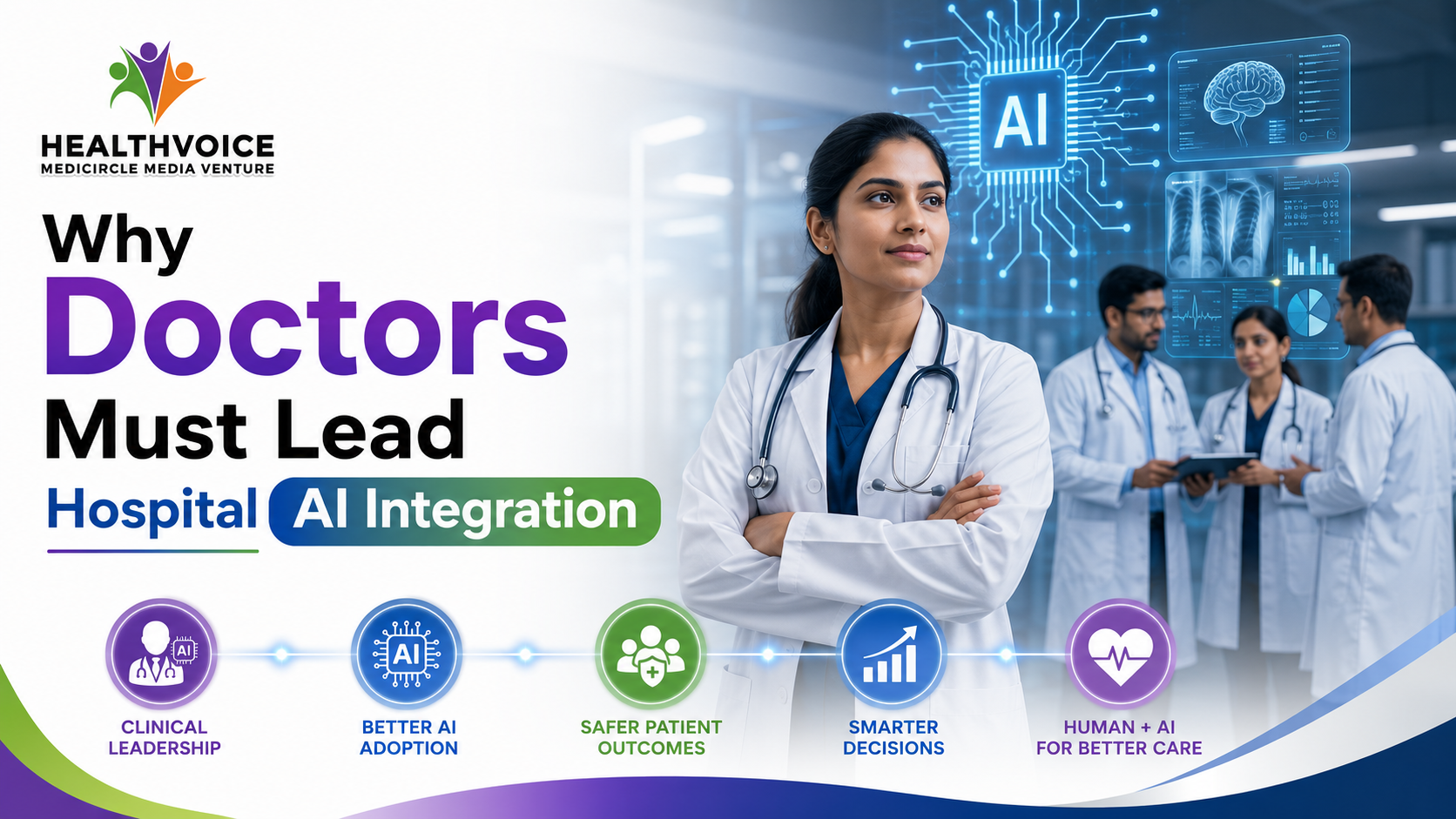
Why Doctors Must Lead Hospital AI Integration
Modern medicine is in the middle of a massive digital shift, with smart algorithms and predictive tools promising to ease workloads, speed up diagnoses, and make hospital operations run smoothly. From premier healthcare hubs in major metros to growing tier-2 diagnostic facilities across India, medical centers are investing heavily in automated systems. Yet, the real-world success of this digital evolution does not depend on financial budgets or software complexity. Instead, it relies on a fundamental principle: technology only works in a hospital when the doctors who treat patients daily are the ones leading the change from day one.
Data extracted from Google Keyword Planner indicates that high-volume search queries such as artificial intelligence in healthcare and ai in healthcare are expanding rapidly as top institutional search trends. When hospital leadership introduces clinical software purely from a financial or administrative perspective, a massive disconnect occurs. Software developers create highly impressive models using sterile, organized data sets, but real-world clinical practice is unpredictable, deeply personalized, and nuanced. If front-line physicians are not consulted early on, expensive software upgrades quickly turn into frustrating administrative burdens. For digital health solutions to truly thrive across India's unique and diverse patient landscape, hospital systems must adopt a clinical framework where medical professionals actively guide tech deployment.
Technology versus Ward Reality
Deploying smart software in a fast-paced Indian hospital requires a practical understanding of the intense daily pressures experienced by clinical teams. A large portion of healthcare software is built within idealized, controlled settings or modeled after Western health systems. These foreign environments have vastly different patient-to-doctor ratios, distinct electronic charting habits, and different structural setups. Bringing these non-customized platforms straight into an Indian ward without adapting them to local realities is often a recipe for operational failure.
The Administrative Approach
This traditional methodology focuses heavily on lowering institutional costs and processing administrative metrics as rapidly as possible. However, because it bypasses early clinical input, this strategy risks carrying undetected data biases from external, unverified sources directly into the ward. Consequently, it frequently causes severe alert fatigue and widespread staff frustration after the software goes live.
The Physician-Led Approach
This collaborative model maximizes actual clinical utility and prioritizes direct patient outcomes above all else. By involving medical professionals from the beginning, this strategy successfully catches regional health patterns and unique local variations that software engineers might miss. Ultimately, this approach alleviates daily stress and ensures that new digital tools fit smoothly into real, everyday ward routines.
Medical professionals naturally understand the subtle realities of localized health conditions, patient histories, and crowded outpatient clinics. For example, an automated imaging tool might flag a specific chest presentation as an urgent crisis because of its foreign training data, whereas an experienced Indian physician recognizes it immediately as a common, non-emergency regional condition. Excluding medical staff from the planning phases results in rigid software that triggers constant, unnecessary alerts, disrupts patient care, and accelerates professional burnout.
Guarding Patient Safety
Protecting the well-being of patients is the core foundation of medicine, and introducing automated decision tools brings forward entirely new clinical responsibilities. Many complex software models function like a closed box, hiding the exact logical path used to reach a diagnosis or treatment plan. Running an automated medication screening or emergency triage platform without intense clinical verification poses serious risks to patient safety. High-volume research around artificial intelligence and medical diagnosis emphasizes that safety must always remain ahead of commercial speed.
- Correcting Hidden Data Biases: Diagnostic software needs to be trained on diverse medical records that match the distinct genetics, environments, and lifestyles of Indian communities to prevent severe diagnostic blind spots.
- Combating Automation Bias: Medical teams can accidentally become overly dependent on digital screens, assuming the system is always correct and missing subtle physical symptoms that contradict the software output.
- Spotting Complex Anomalies: Experienced doctors are vital for identifying rare disease presentations that standard software models fail to interpret correctly.
When medical teams take charge of reviewing incoming technologies, they function as an essential safety shield. They can stress-test new software against a hospital's past patient records, intentionally challenging the program with complicated, unusual cases to evaluate its accuracy. Doing this thorough work beforehand exposes flaws and software bugs long before the system interacts with a live patient.
Building Staff Trust
A major hurdle to digitizing healthcare is the understandable skepticism felt by experienced medical professionals when asked to rely on automated tools. This pushback is rarely about resisting progress; rather, it comes from a deep sense of professional duty. Because doctors carry the ultimate legal and moral responsibility for a patient's recovery, they are naturally cautious about trusting systems whose internal logic remains completely hidden from them.
Stage 1: Involving Doctors from Day One
Medical institutions must integrate front-line physicians into technology selection committees at the very beginning of the procurement process. This ensures that software is evaluated for its actual clinical utility and daily workflow compatibility rather than just its financial return on investment.
Stage 2: Small, Transparent Field Pilots
Before launching an automation platform across an entire hospital network, teams should run isolated pilot studies within specific departments. Allowing clinicians to test the application alongside their usual routines helps uncover software lag, data entry bottlenecks, and technical glitches without interrupting live patient care.
Stage 3: True Tech-Clinical Partnership
The final phase establishes a collaborative ecosystem where software engineers and medical specialists maintain open communication channels. This long-term partnership ensures continuous system updates, clear legal accountability frameworks, and software updates that naturally adapt to changing clinical realities.
The most sustainable way to build trust is to abandon rigid, top-down implementation strategies and move toward open collaboration. When physicians help choose the software, they can voice essential questions about data privacy, diagnostic accuracy, and liability. Watching an algorithm perform during a clear, small-scale pilot lets clinicians see its value firsthand, turning initial hesitation into active enthusiasm. The introduction of medical artificial intelligence platforms requires transparent transparency to dismantle institutional fear.
Actionable Integration Steps
To create an effective, physician-led environment for new hospital technology, medical organizations should follow structured, clear steps that bring clinical voices into the conversation early. This shift requires moving away from sudden, unannounced system changes and moving toward a careful, phased roll-out strategy.
Form Clinical Tech Committees
Hospitals need to build internal committees that bring together senior specialists, resident doctors, nursing supervisors, and software technicians. This team should evaluate any incoming software based on its everyday usability, clinical safety, and workflow compatibility, rather than judging it purely on cost metrics.
Run Departmental Pilots
Before launching any tool across an entire hospital network, teams must test it in localized departments. Allowing doctors to run the platform alongside their usual tasks helps identify real-world bugs, software lag, and entry errors without putting ongoing patient care at risk.
Define Medico-Legal Responsibilities
Doctors need explicit guidelines regarding legal accountability before adopting automated decision tools into their daily routines. Hospital systems must consult with legal professionals to create transparent frameworks showing exactly where software assistance stops and where human medical judgment takes full command.
Empowering the Community
With the healthcare industry evolving at a lightning pace, keeping open, honest lines of communication open between developers, administration, and medical staff is vital. Informational health hubs play a major part in this shift by breaking down complex technical concepts into practical, relatable insights that make sense to busy doctors and everyday consumers. Popular trends surrounding chatgpt healthcare solutions indicate that the general public is actively searching for answers regarding digital clinical care.
Portals focused on elevating the Indian healthcare conversation help demystify automated tools, share proven success stories from local clinics, and provide balanced views on emerging medical technologies. By cultivating a well-informed audience, these spaces keep the ongoing digital evolution grounded in human reality, clinical safety, and the authentic experiences of our medical workers.
Frequently Asked Questions
Will Doctor Involvement Delay Launch?
While bringing clinicians into the early planning and testing phases might add a brief period to your initial schedule, it saves incredible amounts of time later on. Early input prevents costly system overhauls after launch, eliminates operational bottlenecks, and stops the widespread staff frustration that usually follows a forced software implementation.
Can Small Clinics Afford This?
You do not need massive budgets or large, formal committees to make this work. Smaller healthcare facilities can make great strides simply by appointing one or two clinical champions who are practicing physicians who spend a few hours testing user interfaces and gathering quick feedback from colleagues to ensure the tool meets everyday needs.
What Clears Up Software Disagreements?
Ethical medical practices and current legal frameworks state that final clinical decisions must always belong to the human practitioner. Automated diagnostic tools are built to function as helpful assistants, not standalone authorities; a doctor must always have the freedom to override a digital suggestion based on their physical examination and clinical expertise.
Achieving Harmonious Balance
The future of healthcare in India is deeply tied to digital progress, but the true worth of any clinical tool lies in how well it fits into the daily reality of patient care. Automated systems offer incredible opportunities to reduce paperwork burdens, highlight hard-to-spot diagnostic patterns, and bring quality medical insights to distant areas. However, these benefits can only be reached when technologies serve as supportive partners to a doctor's training, rather than top-down mandates. Incorporating artificial intelligence ai in healthcare correctly ensures that hospitals scale sustainably without threatening traditional therapeutic communication.
By moving toward an implementation model led by doctors, Indian hospitals can ensure new digital software remains safe, practical, and focused on the needs of real patients. When technology creators and medical specialists collaborate openly before software goes live, they build a balanced healthcare system that strengthens human care. Keeping clinicians at the center of innovation protects the sacred relationship between a doctor and patient, ensuring that kind, high-quality care remains the true heart of medicine.
 Team Healthvoice
#HospitalAI #ClinicalLeadership