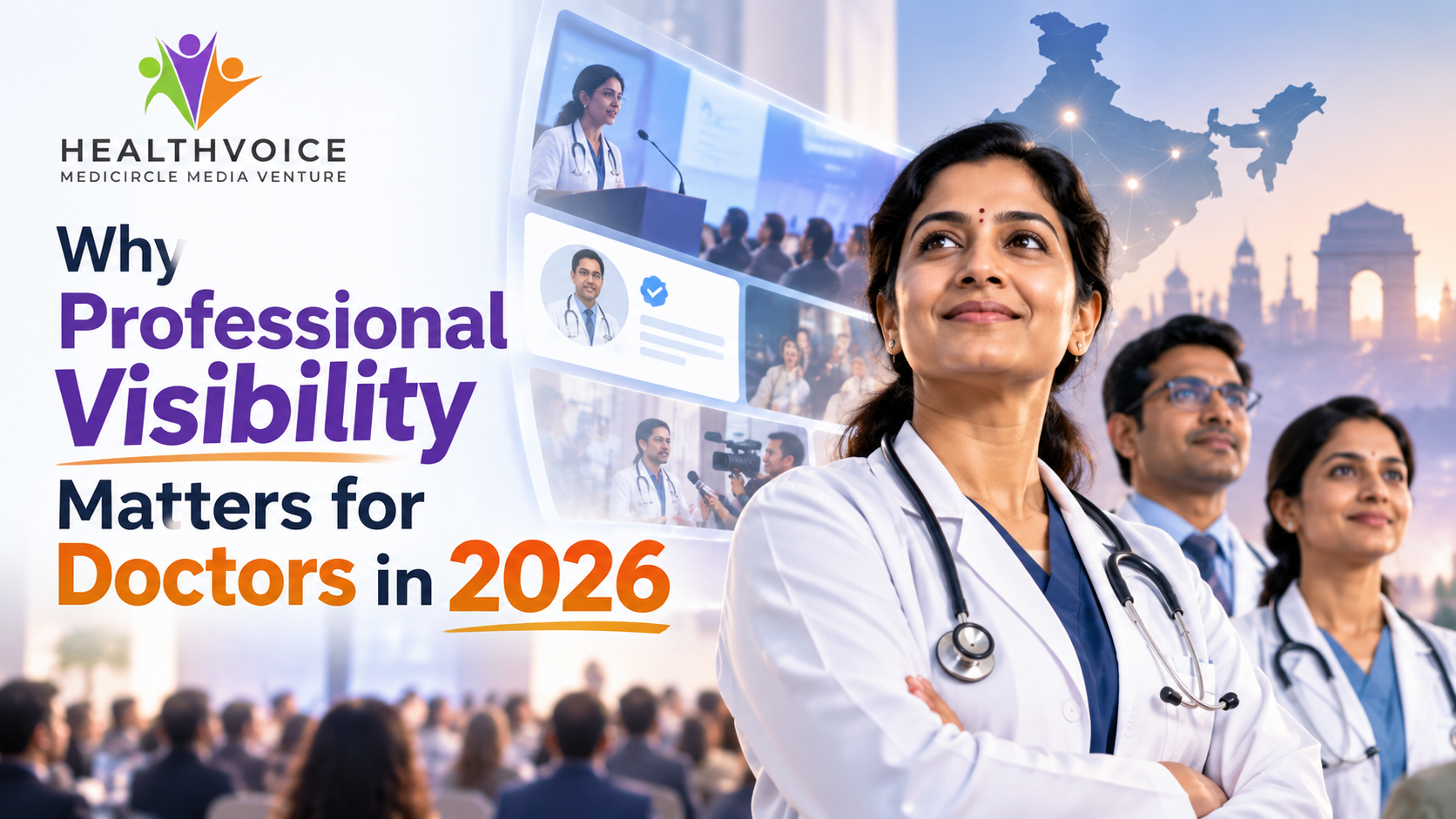
Why Professional Visibility Matters for Doctors in 2026
Professional visibility is a career essential for Indian doctors in 2026, shaping patient trust, peer recognition, and meaningful contribution to an evolving national healthcare ecosystem.
Introduction
The medical profession in India is undergoing a significant transformation. With more than 1.3 million registered allopathic doctors under the National Medical Commission, and thousands of new medical graduates entering the workforce every year, the competition for professional recognition has never been greater. Yet many doctors continue to practice with little to no digital or public presence, assuming that clinical excellence alone will sustain their growth.
In 2026, that assumption is increasingly costly. Patients today research their doctors before booking appointments. Hospital administrators evaluate physician credibility through digital footprints. Medical associations, healthcare brands, and academic institutions seek out doctors who have an established and visible professional identity. The modern healthcare ecosystem rewards not just what a doctor knows, but how effectively that knowledge and expertise are communicated to the world.
Professional visibility for doctors is no longer a luxury or a marketing exercise. It is a core component of a sustainable and respected medical career.
Understanding Professional Visibility in the Medical Context
Professional visibility, in the context of medicine, refers to the ability of a doctor to be seen, heard, recognized, and trusted by patients, peers, institutions, and the broader healthcare community. It encompasses a doctor's digital presence, published work, participation in medical associations, contributions to public health awareness, media engagement, and community reputation.
This is not the same as self-promotion. Authentic professional visibility is built on expertise, credibility, and consistent communication of medical knowledge. When a doctor publishes a well-researched article on a trusted healthcare platform, speaks at a medical conference, contributes to a patient education campaign, or engages meaningfully within a professional community, that doctor is building visible authority, not advertising.
In India, where the urban-rural divide still shapes healthcare access and awareness, doctors who communicate their expertise through credible platforms play an important role beyond their clinics and hospitals. They become sources of trusted information for communities, media, and policymakers.
Why 2026 Is a Turning Point for Doctor Visibility
Several converging forces have made 2026 a particularly critical year for medical professionals to invest in their visibility.
The Ayushman Bharat Digital Mission, commonly known as ABDM, is steadily building a unified digital health ecosystem across India. This infrastructure is creating new expectations around how doctors present themselves, register on platforms, and engage with patients digitally. Doctors who are already active in credible digital spaces are better positioned to benefit from these structural changes.
The rise of health misinformation is another significant driver. Across social media, messaging applications, and online forums, inaccurate health content spreads rapidly. The antidote is not censorship but credible counter-presence. When qualified doctors are visibly active in sharing accurate, evidence-based information, they reclaim the narrative from unverified sources. Their visibility becomes a public health tool.
Additionally, the National Medical Commission has been working toward greater transparency and accountability in medical practice. In this environment, doctors who maintain a clear and professional public identity are not only more trusted but are also better protected reputationally, because their credentials, expertise, and communication record speak for themselves.
The Professional and Career Benefits of Being Visible
For individual doctors, the career advantages of professional visibility are substantial and measurable.
Patient acquisition and retention are directly influenced by how easily a doctor can be found and evaluated online. Studies across healthcare markets consistently show that patients prefer doctors they can research. In India, where urban patients increasingly rely on digital channels to choose healthcare providers, a doctor with a well-maintained professional profile, published articles, or a presence on a respected medical platform is far more likely to attract new patients than a doctor with no online footprint.
Referral networks also strengthen with visibility. When peers can easily find a doctor's areas of specialization, academic contributions, and professional associations, referrals flow more naturally. A gastroenterologist who has written thoughtfully about digestive health on a credible platform becomes the obvious choice for a general practitioner looking to refer a complex case.
Opportunities for academic collaboration, media consultation, and public health advocacy are also more accessible to doctors who have an established visible identity. Hospitals looking to appoint department heads, research institutions seeking clinical contributors, and healthcare companies looking for medical advisors all conduct online searches. The doctor who appears credible, informed, and communicative in digital spaces is the one who receives the call.
How Indian Medical Associations and Healthcare Institutions Benefit
Professional visibility is not only an individual concern. Medical associations, healthcare institutions, and healthcare brands all have a direct stake in the visibility of the doctors associated with them.
When member doctors of a medical association are visible, active, and communicating expert knowledge, the association itself gains credibility and reach. The association's voice becomes amplified through its members. Events, guidelines, and awareness campaigns gain wider circulation. Younger medical professionals see visible role models and are more motivated to engage with association activities.
For hospitals and healthcare institutions, doctors with strong professional visibility function as brand ambassadors without being promotional. A senior cardiologist known for publishing clear and reliable information about heart health builds trust in the institution that employs them. Patients feel safer choosing a hospital when they can connect with and learn from its doctors before they even walk through the door.
Platforms like HealthVoice recognize this interconnection. By offering doctors and medical associations a structured, credible space to share expertise, communicate achievements, and engage with healthcare communities, HealthVoice helps bridge the gap between medical excellence and public recognition. This kind of organized visibility infrastructure is exactly what the Indian healthcare ecosystem needs as it matures.
The Challenges Doctors Face in Building Visibility
Despite the clear benefits, many Indian doctors remain hesitant about investing time in professional visibility. Understanding these barriers is important.
The most commonly cited challenge is time. Clinical practice in India is demanding. Outpatient loads in government hospitals and busy private clinics leave little room for content creation, networking, or platform engagement. This is a genuine and valid concern.
However, professional visibility does not require a doctor to become a full-time content creator. Even a short, well-written article published once a month on a credible medical platform, a thoughtful comment on a healthcare discussion, or participation in a single medical association event creates meaningful and lasting visibility. The key is consistency over volume.
Another barrier is the fear of misrepresentation or misuse of shared information. Doctors worry that their content might be taken out of context or that they could be held responsible for how patients interpret general health information. Ethical visibility, supported by appropriate disclaimers and responsible communication, effectively addresses this concern. Doctors who communicate through established professional platforms operate within safer and more structured communication environments.
Finally, some doctors simply lack awareness of the tools and platforms available to them. In Tier 2 and Tier 3 cities across India, where digital adoption among healthcare professionals is still growing, this information gap can be significant. Bridging this gap is itself part of the visibility mission.
Practical Steps Doctors Can Take to Build Professional Visibility
Building meaningful professional visibility does not require a dramatic overhaul of how a doctor operates. It requires intentional, consistent effort in the right directions.
The first step is establishing a credible digital profile. This means completing and maintaining profiles on respected medical platforms, ensuring qualifications, specializations, and areas of expertise are clearly communicated, and keeping contact and institutional information current.
The second step is knowledge sharing. Contributing articles, clinical observations, or awareness pieces to trusted healthcare publications creates a searchable record of expertise. Writing does not need to be complex or lengthy. Clear, evidence-based, patient-friendly explanations of medical topics establish authority while serving a genuine public information need.
Engaging with medical associations is the third important step. Active participation in association events, committees, and discussions places a doctor within a credible community and expands their professional network organically. Associations also provide platforms for recognition and advocacy that individual doctors often cannot access on their own.
The fourth step is peer engagement. Commenting on, sharing, or responding to the work of other credible medical professionals strengthens community bonds and increases visibility within the profession itself. Medical visibility is not only about patients and public audiences. It is equally about being known and respected within the professional community.
Conclusion
Professional visibility for doctors in 2026 is not about ego or self-promotion. It is about professional sustainability, patient trust, public health responsibility, and meaningful contribution to an evolving healthcare community. India's healthcare ecosystem is growing rapidly, and it needs doctors who are not only excellent in their practice but also present, credible, and communicative in the broader world.
Doctors who build thoughtful professional visibility today are securing not only their own career trajectories but also the trust of the patients and communities they serve. Platforms built around doctor-first communication, like HealthVoice, exist precisely to make this process structured, ethical, and genuinely impactful.
Being visible is no longer optional. It is a professional responsibility.
Frequently Asked Questions
Q1: What does professional visibility mean for doctors in India?
Professional visibility for doctors refers to their presence and recognition across digital platforms, medical communities, publications, and public communication channels. It includes maintaining credible profiles, sharing expert knowledge, participating in medical associations, and being accessible to patients and peers through organized professional channels.
Q2: How does professional visibility help doctors grow their practice?
Doctors with strong professional visibility are more easily found by patients researching healthcare providers. They receive more peer referrals, gain access to academic and advisory opportunities, and build stronger institutional reputations. In India's increasingly digital healthcare environment, visibility directly influences patient trust and career growth.
Q3: Is professional visibility only relevant for specialists or senior doctors?
Professional visibility is valuable for doctors at every stage of their career. Early-career doctors benefit from visibility by establishing their area of expertise and building credibility from the outset. Senior doctors and specialists can extend their influence, contribute to public health discourse, and strengthen their professional legacy through consistent and ethical visibility.
Q4: How can busy doctors build professional visibility without taking time away from patient care?
Doctors do not need to invest large amounts of time to build meaningful visibility. Contributing one well-researched article per month to a trusted healthcare platform, maintaining an updated professional profile, and participating in medical association activities are practical starting points. Consistent small efforts compound into significant long-term visibility.
Q5: What role do platforms like HealthVoice play in doctor visibility?
Platforms like HealthVoice provide doctors and medical associations with a structured, credible, and ethically governed space to share expertise, communicate achievements, engage with peers, and reach healthcare decision-makers. They simplify the process of building professional visibility by offering an organized ecosystem designed specifically for the medical community.
Resources
- National Medical Commission (NMC): India's apex body for medical education and practice regulation, relevant to understanding professional standards for doctors.
- Ayushman Bharat Digital Mission (ABDM): India's national digital health initiative building the digital infrastructure within which doctors increasingly operate.
- World Health Organization India: WHO India country office reports on health communication, physician roles, and healthcare system strengthening.
- Indian Medical Association (IMA): The national body representing Indian physicians, offering professional development resources and association engagement opportunities.
- Ministry of Health and Family Welfare, Government of India: Official source for healthcare policy updates, public health campaigns, and regulatory frameworks relevant to Indian doctors.
Interlinking Keywords
professional visibility for doctors, doctor digital presence India, medical associations India, doctor career growth 2026, healthcare community platform, ABDM digital health, doctor credibility online, HealthVoice platform, medical professional networking, doctor public presence India
Last reviewed by:
Dr. Manthan Tripathi, HealthVoice Editorial and Medical Advisory Team, September 17, 2026
Disclaimer
The information provided in this article is intended for general informational and professional awareness purposes only. It does not constitute medical, legal, or career advice. Doctors and healthcare professionals are encouraged to consult relevant regulatory bodies, institutional guidelines, and qualified advisors before making decisions about their professional practice or public communications. HealthVoice is committed to responsible and ethical healthcare communication.
 Dr. Manthan Tripathi
#DoctorVisibility #MedicalProfessionals