AI in NICU 2026: How Continuous Monitoring Is Improving Neonatal Safety and Critical Care
AI-powered wearable monitoring systems are transforming NICUs by enabling continuous surveillance, early detection of neonatal sepsis and respiratory complications, and reducing false alarms. These innovations are improving neonatal safety, supporting Kangaroo Mother Care, and making advanced critical care more accessible in resource-limited healthcare settings.
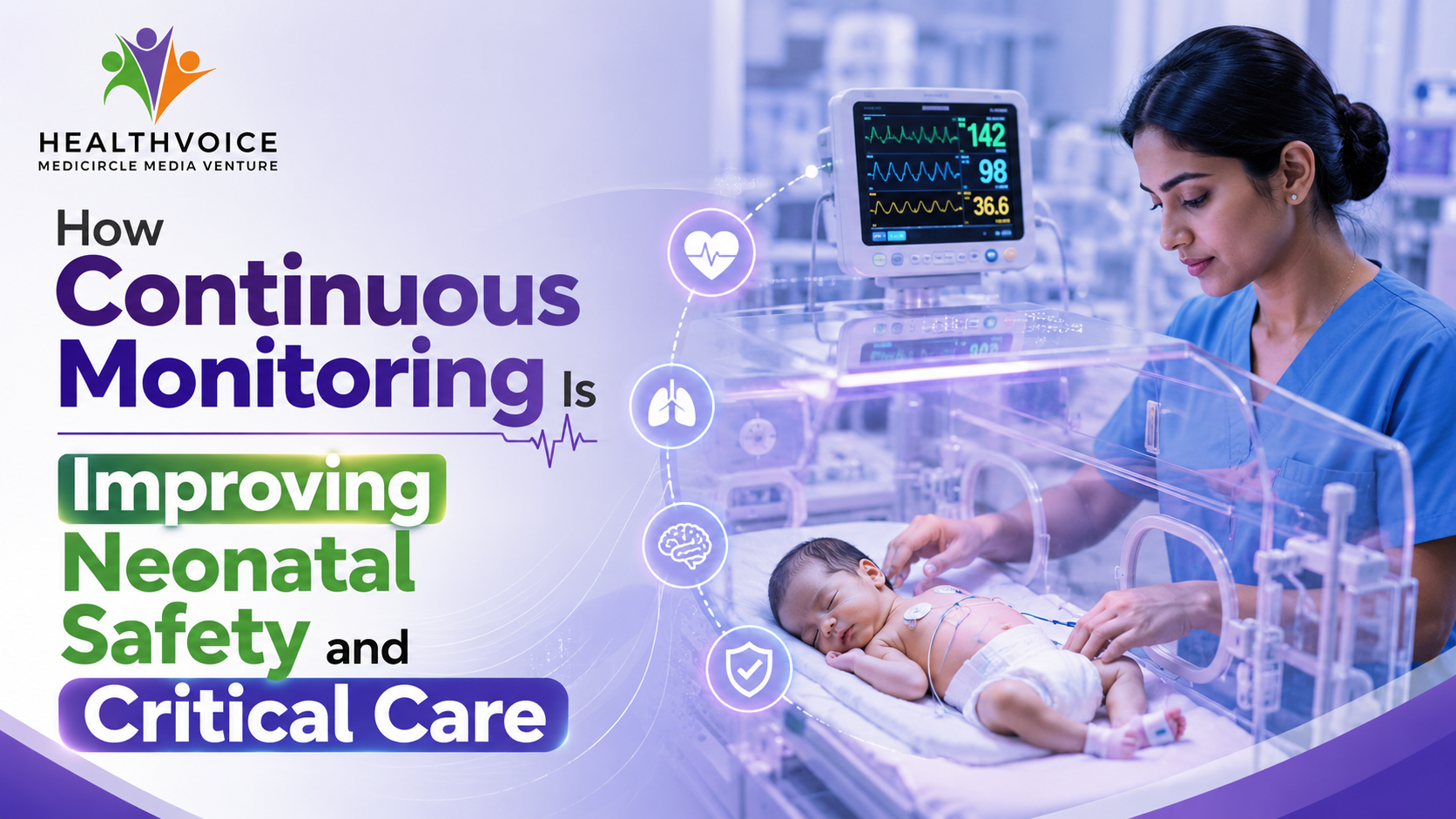
How AI-Powered Continuous Monitoring is Transforming NICU Safety in 2026
Artificial Intelligence (AI) is revolutionizing neonatal intensive care by enabling continuous, real-time monitoring of premature and critically ill newborns. AI-powered wearable devices and predictive analytics are helping Neonatal Intensive Care Units (NICUs) detect life-threatening complications such as neonatal sepsis, apnea, and respiratory distress much earlier, improving survival rates while reducing the burden on healthcare professionals.
The Growing Need for AI in Neonatal Intensive CareThe Neonatal Intensive Care Unit (NICU) is one of the most demanding clinical environments. Premature and critically ill newborns require continuous monitoring because small changes in heart rate, oxygen saturation, respiration, or temperature can rapidly become life-threatening.
Traditional bedside monitoring relies on wired sensors, periodic nursing observations, and alarm-based systems. However, staffing shortages—particularly across public hospitals and resource-limited settings—make continuous surveillance difficult.
AI-powered neonatal monitoring is addressing these challenges by providing uninterrupted, predictive monitoring that supports faster clinical intervention.
Why Traditional NICU Monitoring Has LimitationsConventional monitoring systems often struggle with:
Limited Continuous Observation
High nurse-to-patient ratios can delay recognition of subtle physiological deterioration.
Wired Monitoring Systems
Traditional bedside monitors restrict infant movement and make Kangaroo Mother Care (KMC) more challenging.
Alarm Fatigue
Frequent false alarms caused by movement artifacts reduce response efficiency and contribute to clinician fatigue.
These limitations increase the risk of delayed diagnosis of neonatal emergencies.
AI Wearable Monitoring Is Changing NICU CareWireless Smart Monitoring for Newborns
Indian health-tech innovations such as NemoCare Wellness and Janitri have developed wearable neonatal monitoring platforms that continuously track vital signs using lightweight wireless sensors.
Key Parameters Monitored
- Heart rate
- Respiratory rate
- Blood oxygen saturation (SpO₂)
- Body temperature
- Heart Rate Variability (HRV)
- Perfusion Index (PI)
The collected data is securely transmitted to cloud-based dashboards, allowing clinicians to monitor multiple newborns simultaneously.
Early Detection of Neonatal Sepsis Using AIPredicting Sepsis Before Clinical Symptoms Appear
Neonatal sepsis often develops gradually before obvious symptoms become visible.
AI algorithms continuously analyze:
- Heart Rate Variability (HRV)
- Temperature trends
- Perfusion changes
- Respiratory patterns
Subtle abnormalities can trigger early warning alerts up to 24 hours before conventional clinical diagnosis.
Clinical Benefits
- Earlier blood culture collection
- Prompt antibiotic initiation
- Reduced progression to septic shock
- Lower neonatal mortality
Early intervention significantly improves outcomes in vulnerable newborns.
Supporting Safe Kangaroo Mother Care (KMC)Continuous Monitoring Without Restricting Parent-Infant Bonding
Kangaroo Mother Care is widely recognized for improving neonatal survival and development.
Wireless wearable monitoring allows infants to remain continuously monitored while receiving uninterrupted skin-to-skin care.
If abnormalities such as:
- Oxygen desaturation
- Apnea
- Bradycardia
occur during KMC, the system immediately alerts caregivers and nursing staff for rapid intervention.
Reducing Alarm Fatigue in NICUsSmarter Alerts Through Artificial Intelligence
Traditional monitors frequently generate false alarms due to infant movement or sensor displacement.
AI-powered monitoring platforms filter movement artifacts and prioritize only clinically meaningful alerts.
Benefits
- Fewer false alarms
- Faster response to genuine emergencies
- Reduced clinician fatigue
- Improved patient safety
This creates a quieter and more efficient NICU environment.
Implementing AI Monitoring in the NICUStep 1: Risk-Based Patient Stratification
Infants are categorized based on:
- Gestational age
- Birth weight
- Clinical condition
Customized monitoring thresholds improve early detection.
Step 2: Wireless Sensor Deployment
Lightweight wearable devices replace traditional wired monitoring systems, allowing continuous surveillance across:
- Incubators
- Open cots
- Step-down units
- Kangaroo Mother Care wards
Step 3: Centralized Clinical Dashboard
All patient data is displayed on a centralized dashboard where clinicians can:
- Monitor multiple newborns simultaneously
- Receive prioritized alerts
- Track long-term physiological trends
- Improve nursing efficiency
Step 4: Intelligent Signal Processing
Machine learning algorithms distinguish genuine physiological deterioration from motion artifacts, improving data quality and minimizing unnecessary alarms.
Step 5: Continuous Predictive Analytics
Cloud-based AI continuously evaluates physiological patterns to predict:
- Neonatal sepsis
- Respiratory failure
- Oxygen desaturation
- Hemodynamic instability
This enables proactive rather than reactive neonatal care.
Benefits of AI-Powered NICU MonitoringHealthcare organizations implementing AI-driven neonatal monitoring report several advantages:
Earlier Clinical Intervention
Continuous monitoring enables faster detection of deterioration before symptoms become clinically obvious.
Improved Nursing Efficiency
Centralized dashboards allow a single nurse to supervise multiple infants safely.
Better Patient Outcomes
Early diagnosis supports timely treatment and reduces neonatal complications.
Enhanced Family-Centered Care
Wireless monitoring allows greater parental involvement without compromising safety.
Cost-Effective Critical Care
Affordable wearable technologies expand advanced neonatal monitoring to hospitals with limited resources.
The Future of AI in Neonatal CareArtificial intelligence is expected to further transform neonatal medicine through:
Emerging Innovations
- Predictive sepsis risk models
- Remote NICU monitoring
- AI-assisted respiratory management
- Personalized neonatal risk scoring
- Integration with electronic health records (EHRs)
These advancements will improve neonatal outcomes while making high-quality critical care more accessible worldwide.
ConclusionAI-powered continuous monitoring is redefining neonatal intensive care by enabling earlier detection of critical illnesses, reducing alarm fatigue, and improving workflow efficiency. Wearable technologies from Indian innovators such as NemoCare Wellness and Janitri demonstrate how affordable, intelligent monitoring systems can expand access to ICU-grade neonatal care, ultimately improving survival and quality of care for newborns across diverse healthcare settings.
 Team Healthvoice
#AINICU #NeonatalCare