From Algorithm to Patient: How AI-Discovered Drugs Reach Patients
This article explains how AI-discovered medicines progress from algorithms to patients through validation, trials, regulation, and clinical adoption.
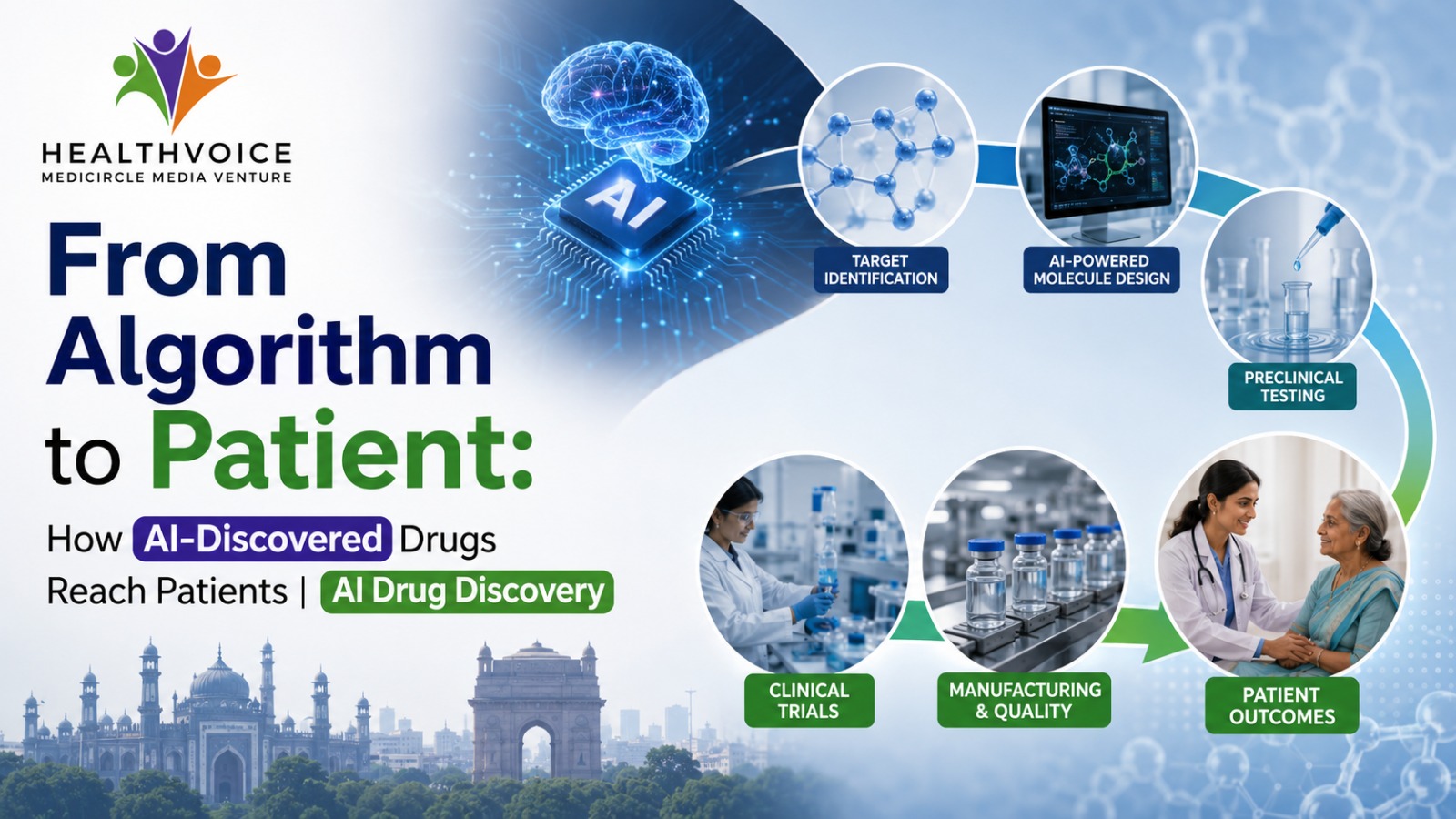
From Algorithm to Patient: How an AI-Discovered Drug Actually Reaches You
Artificial intelligence is transforming pharmaceutical research, but an AI-generated molecule does not become a medicine overnight. Every AI-discovered drug must pass through years of laboratory testing, clinical trials, and regulatory review before it reaches patients. While AI is accelerating drug discovery, the journey from computer algorithm to prescription remains rigorous.
How AI Is Changing Drug Discovery
Traditional drug discovery has relied on years of trial and error, often requiring researchers to test thousands of compounds before identifying a promising candidate. This process is expensive, time-consuming, and carries a high failure rate.
AI platforms are changing this approach by analyzing massive datasets, including protein structures, genetic information, clinical records, and previous drug trial outcomes. Instead of manually screening compounds, AI can rapidly predict which molecules are most likely to become effective medicines.
Step 1: AI Designs Potential Drug Molecules
The first stage involves training AI models to understand disease biology and identify suitable drug targets.
What Happens?
- AI studies biological and chemical datasets.
- It identifies disease-related proteins.
- Millions of virtual molecules are generated and ranked based on potency, safety, selectivity, and manufacturability.
- Only the most promising candidates move forward for laboratory testing.
This dramatically shortens the discovery phase compared with conventional methods.
Step 2: Laboratory Synthesis and Testing
An AI-designed molecule is only a digital prediction until scientists create it in the laboratory.
Early Validation Includes:
- Chemical synthesis
- Protein binding studies
- Cell culture experiments
- Initial toxicity screening
- Stability testing
Most candidate molecules fail during this stage, allowing researchers to eliminate weak options before expensive development begins.
Step 3: Preclinical Development
Successful molecules advance into animal studies to evaluate their overall safety and effectiveness.
Researchers examine:
- Drug absorption and distribution
- Metabolism and elimination
- Therapeutic activity
- Potential side effects
The resulting data are submitted to regulators before human clinical trials can begin.
Step 4: Clinical Trials in Humans
Every AI-discovered drug follows the same clinical trial pathway as conventional medicines.
Phase 1: Safety
A small group of volunteers receives the drug to determine safe dosage levels and identify possible side effects.
Phase 2: Effectiveness
Patients with the target disease receive the treatment to evaluate its effectiveness while continuing safety monitoring.
Phase 3: Large-Scale Validation
Thousands of patients participate in randomized clinical trials comparing the new drug with existing treatments or placebo.
This phase ultimately determines whether the AI-designed medicine performs well in real-world clinical settings.
Step 5: Regulatory Approval
If clinical trials are successful, pharmaceutical companies submit a complete regulatory dossier that includes:
- Manufacturing information
- Laboratory data
- Clinical trial results
- Safety analyses
- Product labeling
Health authorities review the evidence before approving the drug for widespread medical use.
How AI Is Reducing Drug Development Time
Although bringing a medicine to market still generally takes 8 to 12 years, AI is significantly shortening the earliest stages of research.
Key advantages include:
- Faster target identification
- Rapid molecule generation
- Improved candidate selection
- Lower early-stage research costs
- Increased opportunities for rare disease research
These efficiencies allow pharmaceutical companies to advance more promising therapies into clinical development.
Why 2026 Is an Important Year for AI-Designed Drugs
Several AI-designed medicines are expected to reach major Phase II and Phase III clinical milestones during 2026.
These results will help determine whether AI-generated drug candidates perform as successfully in patients as they do in computer simulations and laboratory experiments.
The coming years will reveal whether AI becomes a revolutionary force in medicine or primarily serves as a powerful tool that enhances traditional drug development.
The Future of AI-Driven Medicine
AI is no longer limited to identifying drug candidates. Modern platforms continuously learn from laboratory experiments and clinical trial outcomes, improving future predictions through ongoing feedback.
Rather than replacing scientists, AI is becoming an intelligent partner that helps researchers discover safer and more effective medicines more efficiently than ever before.
As more AI-designed therapies move through clinical trials, healthcare is entering a new era where algorithms contribute directly to the medicines patients receive.
 Team Healthvoice
#AIDrugDiscovery #FutureOfMedicine
