Wearable On-Body Injectors in Oncology 2026: How Subcutaneous Drug Delivery Is Transforming Cancer Care
Wearable on-body injectors are transforming oncology by replacing lengthy intravenous infusions with fast, subcutaneous drug delivery. This innovation improves patient convenience, increases clinical efficiency, and supports the growing shift toward decentralized and home-based cancer care.
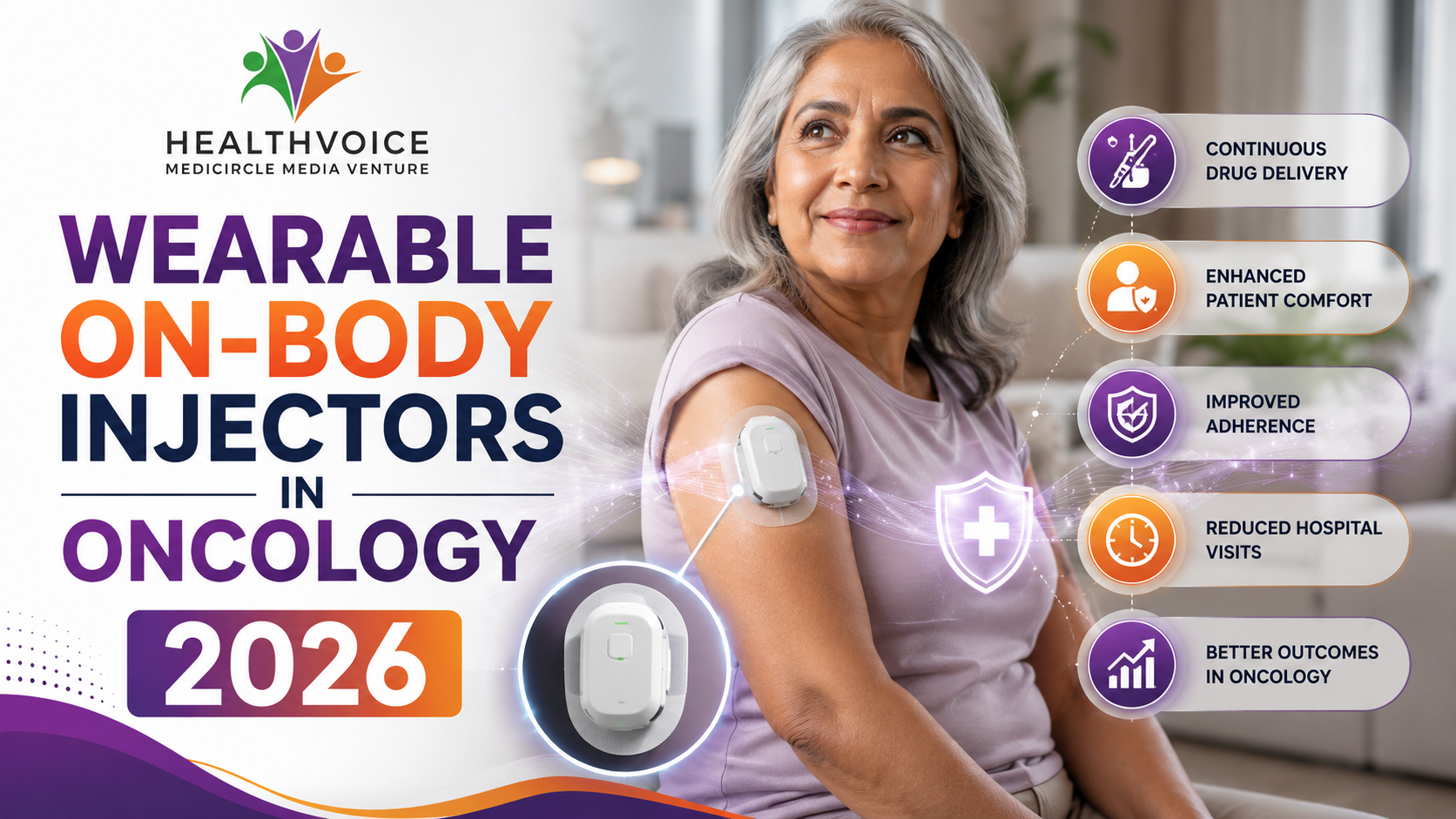
The Untethered Clinic: How On-Body Subcutaneous Delivery Is Transforming Oncology Beyond the Infusion Chair
How Wearable On-Body Injectors Are Redefining Cancer Care Delivery in 2026
For decades, intravenous (IV) infusion therapy has been the cornerstone of monoclonal antibody treatment in oncology. Patients receiving biologics often spend hours connected to infusion pumps while healthcare teams monitor for infusion-related reactions, making infusion chair availability a critical operational resource.
In 2026, this model is rapidly evolving. The European Union approval of subcutaneous (SC) isatuximab delivered through a wearable on-body injector (OBI) represents a major milestone in decentralized cancer care. By reducing infusion time from several hours to approximately 10–13 minutes, wearable delivery systems are improving patient convenience while transforming oncology workflows, nursing operations, and healthcare infrastructure.
Why Oncology Is Moving Beyond the Infusion ChairThe Limitations of Traditional IV Therapy
Conventional IV monoclonal antibody administration requires:
- Venous access or central line placement
- Weight-based drug preparation
- Long infusion durations
- Continuous nursing supervision
- Dedicated infusion chair occupancy
These requirements increase operational costs while limiting patient throughput.
How On-Body Injectors WorkThe Science Behind Subcutaneous Drug Delivery
Unlike intravenous therapy, subcutaneous administration delivers medication into the tissue beneath the skin, allowing gradual absorption through the lymphatic system.
Modern wearable injectors overcome previous limitations of large-volume subcutaneous delivery through advanced engineering.
Key Features of the On-Body Injector
- Battery-free wearable design
- Hidden retractable microneedle
- Automatic flow-rate regulation
- High-concentration hyaluronidase-free formulation
- Delivers a fixed 1400 mg dose in approximately 10–13 minutes
This enables safe, consistent administration without prolonged IV infusion.
Clinical Evidence Supporting Subcutaneous IsatuximabComparable Efficacy With Improved Convenience
Clinical studies have demonstrated that wearable subcutaneous isatuximab provides efficacy comparable to intravenous administration.
Key Findings
- Overall response rates comparable to IV therapy
- Similar long-term disease control
- Higher steady-state drug exposure through subcutaneous delivery
- Consistent pharmacokinetic performance
These results confirm that faster administration does not compromise therapeutic effectiveness.
Operational Benefits for Oncology ClinicsReducing Chair Time and Increasing Capacity
Replacing multi-hour infusions with wearable injectors significantly changes oncology operations.
Benefits for Healthcare Facilities
- Reduced infusion chair occupancy
- Higher daily patient throughput
- Shorter clinic visits
- Lower nursing workload
- Improved scheduling efficiency
This allows oncology centers to optimize both staffing and physical infrastructure.
Simplifying Nursing Workflows
Traditional IV administration requires continuous patient observation.
With wearable injectors, nurses primarily:
- Apply the device
- Verify correct placement
- Initiate drug delivery
- Provide patient education
This frees nursing teams to focus on complex clinical care rather than prolonged infusion monitoring.
Transforming Oncology Pharmacy OperationsFrom Individual Compounding to Standardized Dispensing
Traditional IV therapy depends on:
- Patient-specific dose calculations
- Sterile pharmacy compounding
- Real-time preparation
Wearable subcutaneous delivery introduces:
- Fixed-dose formulations
- Pre-filled manufacturer-prepared devices
- Simplified inventory management
This improves pharmacy efficiency while reducing preparation time.
The Future of Home-Based Cancer CareBringing Oncology Treatment Into the Home
One of the greatest advantages of wearable injectors is their potential to support home-based cancer therapy.
Patients with relapsed or refractory multiple myeloma (RRMM) often require long-term maintenance treatment, making frequent hospital visits physically and emotionally demanding.
Wearable delivery systems offer greater independence while maintaining treatment continuity.
Building Safe Home Administration
Successful home oncology programs require:
Cold Chain Management
- Temperature-controlled transportation
- Continuous storage monitoring
- Digital shipment tracking
Tele-Oncology Support
Hybrid care models may include:
- Home visits by oncology nurses
- Remote video supervision
- Digital treatment monitoring
- Patient education through mobile platforms
These systems help ensure safe and effective treatment outside the hospital.
Improving the Patient ExperienceGreater Comfort and Treatment Satisfaction
Patient-reported outcomes consistently favor wearable subcutaneous therapy.
Commonly reported benefits include:
- Shorter treatment times
- Reduced travel burden
- Greater independence
- Improved quality of life
- Less disruption to daily activities
For many patients, treatment becomes easier to integrate into everyday life.
The Future of Decentralized OncologyFrom Hospital-Based Infusions to Connected Cancer Care
Wearable on-body injectors represent more than a new drug delivery system—they signal a broader transition toward decentralized oncology.
Future cancer care is expected to combine:
- Wearable drug delivery
- Remote patient monitoring
- Tele-oncology services
- Digital pharmacy logistics
- Value-based care models
This integrated approach enables hospitals to deliver high-quality cancer treatment beyond traditional infusion centers.
ConclusionThe introduction of wearable on-body injectors for subcutaneous isatuximab is reshaping oncology care by reducing infusion times, simplifying clinical workflows, and expanding access to home-based treatment. As healthcare systems embrace decentralized care models, wearable biologic delivery has the potential to improve operational efficiency while enhancing patient experience.
The future of oncology is no longer defined by the infusion chair—it is increasingly driven by flexible, connected, and patient-centered care delivered wherever patients need it most.
 Team Healthvoice
#OncologyInnovation #WearableDrugDelivery