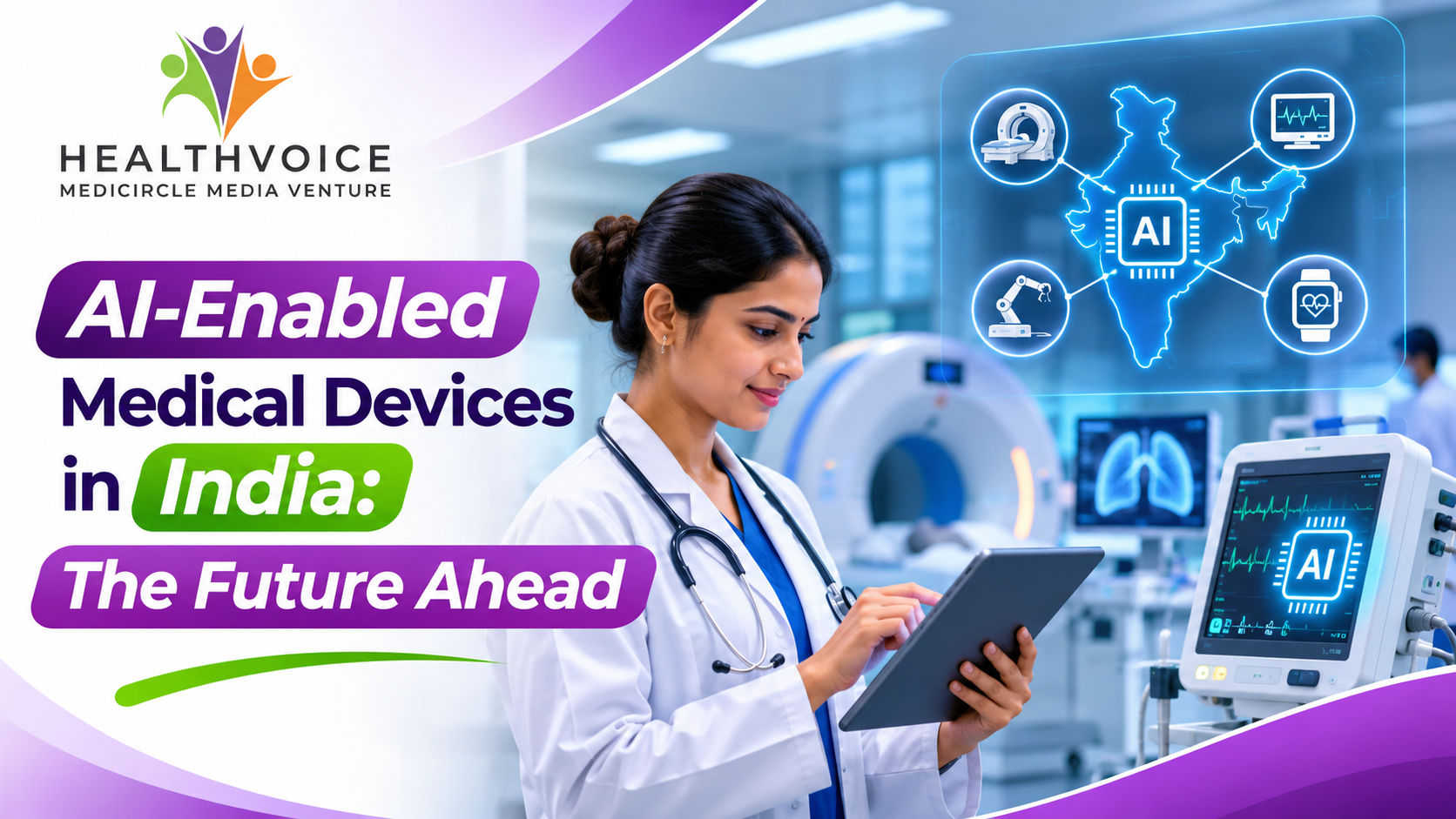
AI-Enabled Medical Devices in India: The Future Ahead
AI-enabled medical devices are transforming Indian healthcare by extending diagnostic reach, bridging doctor shortages, and enabling equitable clinical access across urban and rural populations through intelligent technology.
The Future of AI-Enabled Medical Devices in India
Introduction
India stands at a defining inflection point in its healthcare journey. With a population of over 1.4 billion, a severe shortage of specialist doctors in rural and semi-urban areas, and a rapidly expanding middle class seeking better healthcare outcomes, the country faces both enormous pressure and enormous opportunity. Artificial intelligence, embedded within the next generation of medical devices, is emerging as one of the most significant forces that can address this gap.
AI-enabled medical devices are no longer a distant concept restricted to academic papers or high-end research hospitals in the West. They are becoming a clinical reality across Indian hospitals, diagnostic centres, telemedicine platforms, and even community health programmes. From AI-assisted radiology tools being deployed in tier-2 city hospitals to wearable cardiac monitors used by patients in their homes, the integration of artificial intelligence into medical hardware is accelerating at a pace that demands serious attention from every doctor, medical association, healthcare institution, and health technology company operating in India today.
Understanding where this transformation is headed, what it means for Indian patients and medical professionals, and how the regulatory and institutional ecosystem needs to evolve is no longer optional. It is essential.
Understanding AI-Enabled Medical Devices and Their Role in Indian Healthcare
An AI-enabled medical device is any hardware or software-driven tool that uses machine learning, deep learning, natural language processing, or computer vision algorithms to assist in clinical decision-making, diagnosis, monitoring, or treatment planning. These devices differ from traditional medical equipment in one fundamental way: they learn from data, improve over time, and can often identify patterns that even experienced clinicians may miss under conditions of fatigue or high patient load.
In the Indian context, this distinction carries profound meaning. India has approximately 1.3 doctors per 1,000 population, according to National Health Profile data, compared to the WHO-recommended ratio of 1 per 1,000. In states like Bihar and Uttar Pradesh, this ratio drops even further. AI-enabled devices, in this environment, do not replace doctors. They extend the clinical reach of the doctors who exist.
The categories of AI-enabled medical devices making their presence felt in India include:
- AI-powered diagnostic imaging systems for radiology, pathology, and ophthalmology
- Smart wearable devices for continuous cardiac monitoring and diabetes management
- AI-driven point-of-care testing tools for tuberculosis, sepsis, and anemia screening
- Computer-aided detection systems integrated into endoscopy and colonoscopy equipment
- Predictive monitoring platforms in ICU and neonatal care settings
Each of these represents not just a technological upgrade but a structural transformation in how clinical care can be delivered across geographies and socioeconomic settings in India.
Primary Drivers and Growth Factors in the Indian Market
Several converging forces are driving the adoption of AI-enabled medical devices in India. The first is the sheer scale of unmet diagnostic need. India accounts for a disproportionate global burden of tuberculosis, cardiovascular disease, diabetes, and cancer. Screening these conditions at the population level with the current human workforce alone is not feasible.
The second driver is government policy. The Ayushman Bharat Digital Mission (ABDM) is creating a unified digital health ecosystem by linking patient health records, healthcare providers, and diagnostic services through interoperable digital identities. This infrastructure is directly enabling AI tools to access the structured clinical data they need to function effectively. The National Digital Health Blueprint and the PM-WANI initiative further strengthen the connectivity layer that AI medical devices depend upon.
The third driver is the growth of India's domestic medical technology industry. Indian companies such as Tricog Health, Niramai Health Analytix, Sigtuple Technologies, and Perfint Healthcare are developing AI-powered solutions specifically calibrated for Indian disease patterns, imaging conditions, and clinical workflows. This is significant because AI models trained on Western population data often perform less accurately when deployed on Indian patients. The development of India-specific training datasets and validation studies is a critical component of this progress.
Investment flows are reflecting this momentum. According to NITI Aayog and industry reports, India's healthtech sector has attracted substantial venture capital and government funding in recent years, with AI diagnostics and remote monitoring commanding particular investor interest.
Recognising the Clinical Applications Reshaping Medical Practice
The practical clinical applications of AI-enabled medical devices in India span multiple specialities and care settings. In radiology and imaging, AI algorithms are now capable of detecting pulmonary tuberculosis from chest X-rays, grading diabetic retinopathy from fundus photographs, identifying breast lesions in mammography, and flagging intracranial bleeds in CT scans. Several of these tools have been validated in Indian hospital settings and are being used at scale in both public and private institutions.
In cardiology, AI-enabled electrocardiogram (ECG) devices are being deployed at primary health centres and community health centres across states like Kerala, Telangana, and Karnataka through public-private partnerships. A wearable ECG patch can now transmit real-time cardiac data to a remote cardiologist, enabling timely intervention for patients who would otherwise need to travel hundreds of kilometres to access specialist care.
Pathology is another area witnessing significant transformation. AI-powered digital pathology platforms can analyse slides for cancer markers, infections, and haematological abnormalities with speed and consistency that support pathologists working under high caseloads. In a country where pathologist density is critically low, this is not a luxury. It is a clinical necessity.
In maternal and neonatal health, predictive AI monitoring tools are being explored for early detection of preterm labour risk, fetal distress, and neonatal sepsis in government hospitals. Given that India still carries a significant share of global neonatal mortality, these applications hold enormous public health potential.
Mental health is also beginning to see AI integration through voice-based screening tools and behavioural analytics platforms, though this domain requires far greater ethical scrutiny and regulatory clarity before widespread deployment can be considered responsible.
Diagnosis, Regulation, and the Evolving Framework for AI Medical Devices in India
One of the most critical aspects of AI-enabled medical device adoption in India is the regulatory framework governing these products. Historically, medical device regulation in India was fragmented and largely inadequate. The Medical Devices Rules, 2017, under the Drugs and Cosmetics Act, established a formal classification and approval process, but these rules were designed primarily with conventional hardware devices in mind.
The Central Drugs Standard Control Organisation (CDSCO) has been working to extend its regulatory purview to include software as a medical device (SaMD), which is the category under which most AI-driven diagnostic tools fall. However, the pace of regulatory evolution has not always kept pace with the speed of commercial deployment.
The Bureau of Indian Standards (BIS) and the Department for Promotion of Industry and Internal Trade (DPIIT) are also involved in developing quality and safety standards for emerging health technologies. International frameworks from the US Food and Drug Administration (FDA) and the European Union's Medical Device Regulation (EU MDR) are being studied as reference models, but India needs a regulatory architecture that accounts for its unique healthcare context, including the diversity of clinical environments, infrastructure gaps, and data availability.
Medical associations and bodies such as the Indian Medical Association (IMA) and the National Medical Commission (NMC) have an important role to play in shaping clinical adoption guidelines, validating use cases, and ensuring that AI tools are introduced in a manner that supports rather than undermines physician autonomy and patient safety.
Treatment, Integration, and Management Strategies for Healthcare Institutions
For hospitals, diagnostic chains, and clinical practices seeking to adopt AI-enabled medical devices, a thoughtful integration strategy is essential. Deploying an AI tool without adequate physician training, workflow redesign, or outcome monitoring is unlikely to deliver meaningful clinical benefit and may introduce new risks.
Successful integration typically involves several components. First, clinical champions must be identified within the institution who understand both the technology and the clinical workflow it is meant to support. Second, staff training must go beyond basic operational familiarity to include an understanding of what the AI tool can and cannot do, including its known limitations and potential failure modes. Third, governance structures must be established to audit AI-generated outputs, track clinical outcomes, and maintain accountability.
Data governance is another critical consideration. AI medical devices generate and consume large volumes of patient data. Institutions must ensure compliance with India's Digital Personal Data Protection Act, 2023, and establish clear protocols for data storage, access, and sharing. Patient consent frameworks, particularly in public healthcare settings where digital literacy may be lower, require careful design.
Healthcare platforms and professional communities such as HealthVoice can contribute meaningfully to this phase of adoption by facilitating peer knowledge exchange among doctors, publishing clinical experience reports, and creating structured forums where physicians can discuss the real-world performance of AI tools they are encountering in practice.
Prevention, Equity, and the Path Toward Inclusive AI in Indian Healthcare
One of the most compelling possibilities that AI-enabled medical devices present for India is the democratisation of diagnostic quality across geographies. Historically, a patient in a rural district of Chhattisgarh or a semi-urban town in Rajasthan had access to far lower quality diagnostic services than a patient in a metropolitan hospital in Mumbai or Delhi. AI has the potential to compress this quality gap significantly.
However, this outcome is not automatic. Several equity-related risks must be actively managed. AI models trained predominantly on urban patient data, English-language clinical notes, or imaging equipment used in premium hospitals may perform poorly when deployed in rural settings or on patients from different demographic backgrounds. Ensuring that training data reflects the full diversity of India's population is a scientific and ethical obligation.
Connectivity infrastructure remains a challenge. Many of the most impactful AI medical device applications depend on reliable internet connectivity for real-time data transmission and cloud-based processing. Expanding high-speed connectivity to primary health centres and sub-centres is therefore not just a telecom policy issue. It is a healthcare equity issue.
Affordability is equally important. The cost of AI-enabled devices must fall within a range that enables adoption in government healthcare settings and among private practitioners in smaller towns. Domestic manufacturing incentives under the Production Linked Incentive (PLI) scheme for medical devices are a step in the right direction, but sustained policy focus and health technology assessment frameworks are needed to ensure value-based procurement decisions in both public and private sectors.
Frequently Asked Questions
Q1: What are AI-enabled medical devices and how are they different from traditional medical devices?
AI-enabled medical devices use machine learning or deep learning algorithms to analyse clinical data, assist in diagnosis, or support treatment decisions. Unlike traditional devices that function based on fixed programmed logic, AI devices learn from data patterns and can improve their accuracy over time with exposure to more clinical information.
Q2: Which medical specialities in India are seeing the most significant impact from AI medical devices?
Radiology, cardiology, ophthalmology, and pathology are currently the specialities witnessing the greatest impact in India. AI tools for chest X-ray analysis, ECG interpretation, diabetic retinopathy screening, and digital pathology are among the most widely deployed applications across both public and private healthcare institutions.
Q3: How does India regulate AI-powered medical devices and software as a medical device?
AI-powered medical devices and software as a medical device (SaMD) fall under the regulatory jurisdiction of the Central Drugs Standard Control Organisation (CDSCO) under the Medical Devices Rules, 2017. The regulatory framework is currently evolving to more specifically address the unique characteristics of AI-driven tools, including issues of algorithm transparency, post-market surveillance, and clinical validation requirements.
Q4: Can AI medical devices help address the doctor-patient ratio problem in India?
AI medical devices are not a substitute for doctors but can significantly extend the clinical reach of available physicians. By automating routine screening tasks, flagging high-risk cases, and enabling remote specialist consultations through AI-powered monitoring tools, these technologies can help bridge the access gap in underserved and rural areas where specialist doctors are not available.
Q5: What are the key challenges in adopting AI medical devices in India?
The major challenges include regulatory gaps for AI-specific medical tools, the need for India-specific clinical validation studies, data privacy and governance concerns, affordability barriers for smaller healthcare facilities, infrastructure limitations in rural settings, and the requirement for structured physician training to ensure appropriate and safe use of AI-assisted clinical tools.
Resources
- Central Drugs Standard Control Organisation (CDSCO): India's primary medical device regulatory authority, publishing guidelines, classifications, and approval processes for medical devices, including emerging digital health tools
- NITI Aayog Health Reports: Policy documents and strategy papers on digital health transformation, AI in healthcare, and healthtech investment priorities in India
- Ayushman Bharat Digital Mission (ABDM): Official platform for India's national digital health ecosystem, including standards for health data interoperability relevant to AI medical device integration
- Indian Council of Medical Research (ICMR): India's apex biomedical research body publishing evidence-based guidelines, clinical study protocols, and disease burden data relevant to AI diagnostic validation
- World Health Organization (WHO) India: Country-specific health data, global AI in health policy frameworks, and guidance on ethical deployment of AI in clinical settings
Interlinking Keywords
AI in Indian healthcare, medical device regulation India, ABDM digital health, AI diagnostics India, healthtech India, CDSCO medical devices, AI radiology India, wearable health devices India, telemedicine India, doctor-patient ratio India, AI ECG devices, diabetic retinopathy AI screening, digital health India, NMC guidelines, AI clinical decision support
Last reviewed by:
Dr. Manthan Tripathi, HealthVoice Editorial and Medical Advisory Team, November 3, 2026.
Disclaimer
The information presented in this article is intended for general educational and informational purposes for medical professionals, healthcare institutions, and healthcare industry stakeholders. It does not constitute clinical advice, regulatory guidance, or a recommendation to adopt any specific product or technology. Readers are advised to consult relevant regulatory authorities, institutional ethics committees, and qualified clinical specialists before implementing AI-enabled medical devices in any clinical or diagnostic setting. HealthVoice does not endorse any specific commercial product, manufacturer, or technology vendor mentioned or implied within this content.
 Dr. Manthan Tripathi
#AIMedicalDevices #HealthcareInnovation