Multi-Centre Research: Strengthening Indian Medical Evidence
Multi-centre research offers India a powerful path to generating representative, diverse, and credible medical evidence that truly reflects the country's vast and varied patient population.
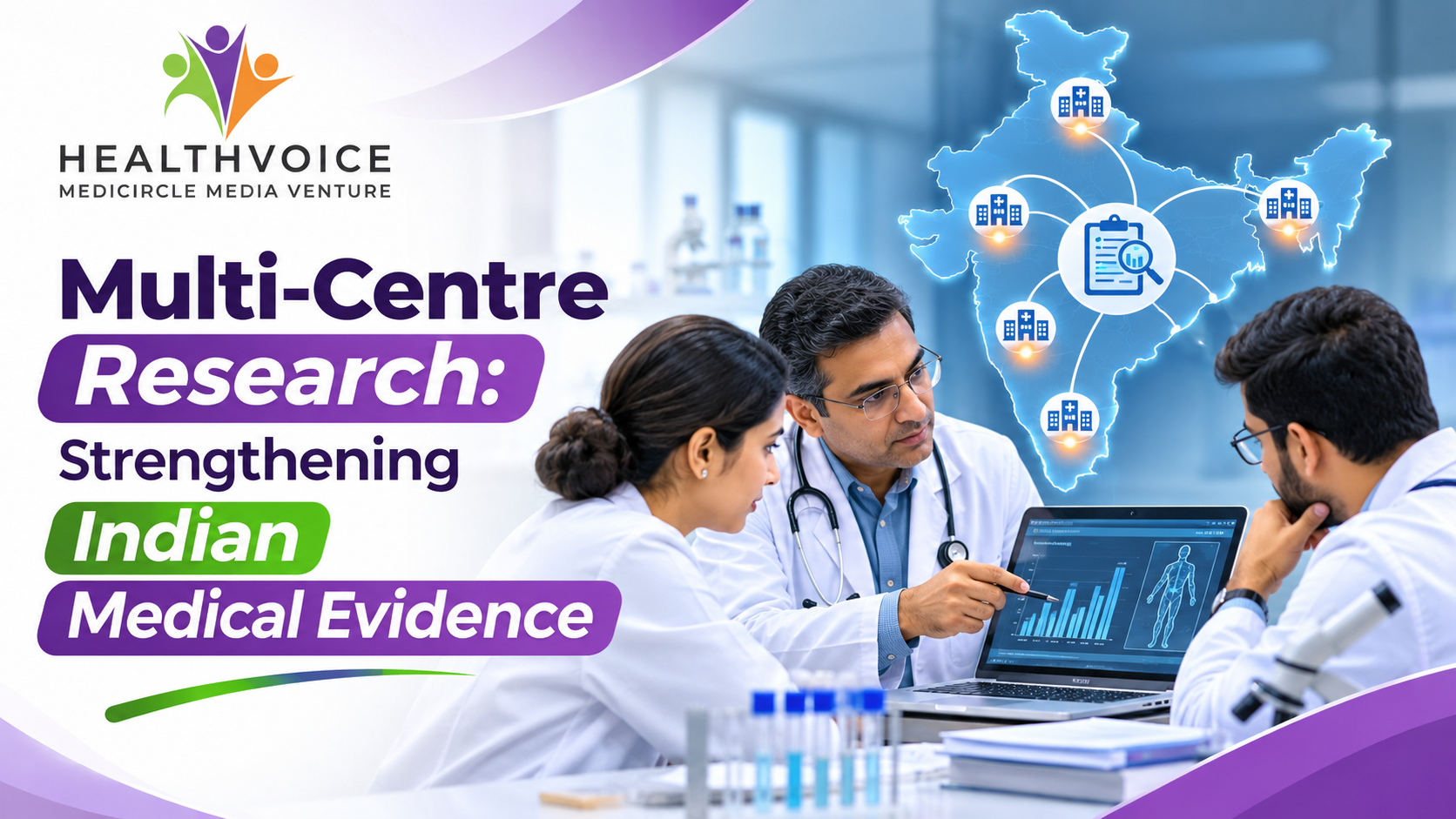
How Multi-Centre Research Can Strengthen Indian Medical Evidence
Introduction
India carries one of the largest and most complex disease burdens in the world. From non-communicable diseases like diabetes, hypertension, and cardiovascular conditions to infectious diseases, maternal health challenges, and emerging public health threats, the country's healthcare landscape is as diverse as its geography and population. Yet, a significant portion of clinical guidelines followed by Indian doctors today draws heavily from research conducted in Western populations, with data generated in environments that often do not reflect Indian genetics, dietary patterns, socioeconomic contexts, or healthcare infrastructure.
This gap is not a minor inconvenience. It is a structural weakness in how Indian medicine operates. Treatment protocols calibrated for European or North American populations may not produce identical outcomes in Indian patients. Reference ranges, drug dosages, disease progression patterns, and even diagnostic thresholds can vary considerably across ethnic and regional groups. The solution to this challenge is not simply producing more research. It is producing better, broader, and more representative research, and multi-centre studies offer perhaps the most powerful mechanism to achieve that goal.
Understanding Multi-Centre Research and Why It Matters for India
Multi-centre research refers to clinical studies, trials, or observational investigations conducted simultaneously across multiple hospitals, medical colleges, or research institutions. Instead of a single hospital or city generating data, the study pool expands to include patients from different states, institutions, and demographic backgrounds, all following a unified research protocol.
For a country as heterogeneous as India, this model is not just useful. It is essential. India has over 700 districts, more than 22 officially recognised languages, wide variation in climate, food culture, occupational patterns, and access to healthcare. A study conducted exclusively at a premier medical institute in Delhi or Mumbai cannot realistically claim to represent the health experiences of patients in rural Bihar, coastal Tamil Nadu, or the tribal communities of Odisha.
Multi-centre research dissolves these boundaries. It enables researchers to capture data that reflects India in its entirety, not just its urban and well-resourced pockets. When findings emerge from such studies, they carry an epidemiological authority that single-centre research simply cannot replicate.
The Current State of Medical Research in India
India does have a strong tradition of medical research. Institutions like the All India Institute of Medical Sciences (AIIMS), the Indian Council of Medical Research (ICMR), the Christian Medical College Vellore, and several state medical universities have produced research that has influenced global thinking. The ICMR alone manages a national network of research centres focusing on specific disease areas.
However, the overall landscape reveals important limitations. The majority of published Indian medical research originates from a relatively small number of elite institutions concentrated in major cities. Regional medical colleges, district hospitals, and smaller healthcare facilities, which together manage the vast majority of India's clinical caseload, remain significantly underrepresented in research output.
This creates a paradox. The institutions that see the most patients, including the most diverse and complex presentations of disease, contribute the least to the evidence base that guides clinical practice. Multi-centre research has the potential to fundamentally reverse this imbalance.
Key Benefits of Multi-Centre Research for Indian Healthcare
The advantages of multi-centre research extend well beyond simply increasing sample sizes. Each benefit connects directly to the quality and applicability of medical evidence in India.
Larger and more diverse patient populations: Sample size is one of the most critical factors in the statistical validity of any clinical study. Multi-centre designs naturally pool patient numbers, enabling studies to detect smaller but clinically meaningful differences between treatments or outcomes. More importantly, the patient mix becomes genuinely representative of India's diversity, including different age groups, comorbidity profiles, dietary backgrounds, and genetic variations.
Regional disease variation captured accurately: India has well-documented regional variations in disease prevalence. The burden of sickle cell disease is highest in tribal populations of central and eastern India. Rheumatic heart disease remains disproportionately common in lower-income states. Iodine deficiency disorders have historically clustered in specific geographic belts. Multi-centre studies allow researchers to document and analyse these regional patterns systematically, producing findings that can guide region-specific public health interventions.
Stronger external validity: Research with strong external validity produces findings that can be reliably applied beyond the study setting. When Indian clinical guidelines are built on multi-centre data drawn from diverse institutions, clinicians across the country can apply those guidelines with greater confidence that the findings are relevant to their patient populations.
Reduced institutional bias: Every hospital has its own patient referral patterns, socioeconomic demographics, and clinical culture. Single-centre studies inherit these institutional characteristics as embedded biases. Multi-centre designs dilute institution-specific influences, producing a cleaner, more generalisable picture of how diseases behave and how treatments perform across the real-world Indian population.
Accelerated recruitment timelines: Rare diseases and low-prevalence conditions can take years to recruit sufficient participants at a single centre. Multi-centre collaboration dramatically shortens recruitment periods, enabling faster completion of trials and quicker translation of findings into clinical practice.
Challenges That Must Be Addressed
Recognising the value of multi-centre research is one thing. Building the infrastructure to support it consistently across India requires confronting real and significant challenges.
Regulatory and ethical coordination: Each participating institution in a multi-centre study must obtain approval from its own Institutional Ethics Committee (IEC). Differences in IEC requirements, review timelines, and documentation standards across institutions can create significant delays and administrative burdens. Harmonising ethics review processes, as the National Medical Commission (NMC) and ICMR have begun to encourage, is a critical priority.
Standardisation of protocols and data collection: For multi-centre data to be meaningfully pooled and analysed, every site must follow identical procedures. Differences in laboratory equipment calibration, patient assessment methods, and data recording practices can introduce variability that undermines the integrity of the combined dataset. Robust site training, centralised monitoring, and digital data capture platforms are necessary to manage this challenge.
Funding and resource inequity: Premier institutions often have dedicated research infrastructure, biostatistical support, and established clinical research coordinators. Regional and district-level institutions may lack all three. If multi-centre research is to genuinely include smaller and peripheral institutions, funding models must be structured to support capacity building at those sites, not merely list them as nominal partners.
Data sharing and intellectual ownership: Questions around who owns multi-centre data, how authorship is allocated, and how findings are published can create friction between collaborating institutions. Clear collaboration agreements, developed before a study begins, are essential to protecting the interests of all participating centres and encouraging genuine engagement.
The Role of Government, Medical Associations, and Digital Platforms
Strengthening multi-centre research in India requires coordinated effort from multiple stakeholders. The ICMR, through its network of national institutes and task forces, is well positioned to serve as a coordinating body for large-scale multi-centre initiatives. The Ministry of Health and Family Welfare can embed multi-centre research requirements into national health programme evaluations, ensuring that government-funded health interventions are subjected to rigorous, representative study.
Medical associations at the national and state level can play a catalytic role by creating research networks among their members. Specialty societies for cardiology, oncology, nephrology, and other disciplines can formalise collaboration frameworks that allow member hospitals to participate in shared research agendas. This kind of structured association-led research collaboration represents a significant and underutilised opportunity in Indian medical science.
Digital platforms and health data infrastructure are increasingly important enablers. The Ayushman Bharat Digital Mission (ABDM), which is building a unified digital health ecosystem across India, creates real potential for federated research on anonymised patient data drawn from multiple institutions simultaneously. As this infrastructure matures, it could dramatically lower the logistical barriers to multi-centre research participation.
Platforms like HealthVoice, which are dedicated to connecting doctors, medical associations, and healthcare communities across India, have a meaningful role to play in this ecosystem. By facilitating professional dialogue, surfacing research opportunities, and amplifying the voices of clinicians from institutions beyond the major metros, such platforms can help build the collaborative culture that multi-centre research requires to flourish.
Building a Culture of Research Collaboration in Indian Medicine
Beyond infrastructure and funding, there is a cultural dimension to multi-centre research that deserves attention. Indian academic medicine has historically been organised around institutional prestige hierarchies, with leading metropolitan hospitals occupying the top of a well-understood pyramid. This structure can discourage smaller institutions from participating as equal partners in research, and can discourage leading institutions from investing effort in recruiting and supporting regional collaborators.
Shifting this culture requires deliberate action. Medical education curricula must give greater attention to research methodology and clinical epidemiology so that doctors at all career stages understand how to contribute meaningfully to collaborative studies. Research contributions should be formally recognised in promotion criteria, fellowship eligibility, and institutional accreditation frameworks. The NMC and the National Board of Examinations have a role in signalling that research participation is a valued dimension of medical professionalism, not merely an activity for academic specialists.
When Indian doctors across all tiers of healthcare see research collaboration as an integral and rewarding part of their professional identity, the supply of willing and capable multi-centre research participants will grow organically.
Conclusion
Indian medicine stands at an important crossroads. The country has the patient population, the clinical expertise, and the growing digital infrastructure to produce world-class medical evidence. What has been missing is a systematic, well-funded, and culturally embedded commitment to multi-centre research as the standard approach for generating that evidence.
When clinical findings are drawn from studies that include patients from diverse states, institutions, and demographic backgrounds, Indian doctors can practice with far greater confidence that the guidelines they follow are grounded in evidence that actually reflects their patients. That alignment between evidence and population is the foundation of truly effective healthcare. Multi-centre research is not an academic luxury. It is a clinical necessity, and India has every reason to make it a national priority.
Frequently Asked Questions
Q1: What is multi-centre research in the context of Indian healthcare?
Multi-centre research refers to clinical studies conducted simultaneously at multiple hospitals or institutions using a shared protocol. In India, this approach is especially valuable because it captures data from diverse geographic regions, ethnic populations, and healthcare settings, producing evidence that is more representative of the country's varied patient demographics than single-centre studies can achieve.
Q2: Why is India-specific medical evidence important?
Medical evidence generated from Western populations may not accurately reflect disease patterns, drug responses, or treatment outcomes in Indian patients. Differences in genetics, diet, environmental exposures, and socioeconomic conditions mean that clinical guidelines developed on foreign data may be suboptimal when applied in Indian clinical settings. Robust India-specific evidence is essential for truly effective and contextually appropriate medical practice.
Q3: What are the biggest obstacles to multi-centre research in India?
The most significant obstacles include inconsistent ethics committee review processes across institutions, challenges in standardising data collection methods, inequitable distribution of research infrastructure and funding, and uncertainty around data ownership and authorship in collaborative studies. Addressing these barriers requires coordinated policy action, capacity building at peripheral institutions, and clear collaboration frameworks developed before studies begin.
Q4: How can smaller hospitals and regional medical colleges participate in multi-centre research?
Smaller institutions can participate through structured research networks organised by specialty associations or coordinating bodies like the ICMR. Digital data collection platforms reduce the infrastructure burden on smaller sites. Targeted funding for research coordinator training and equipment calibration, specifically directed at peripheral institutions, is also necessary to ensure meaningful rather than nominal participation.
Q5: How does the Ayushman Bharat Digital Mission support medical research in India?
The Ayushman Bharat Digital Mission is building a unified digital health ecosystem that creates the potential for federated, anonymised data analysis across multiple institutions simultaneously. As this infrastructure develops, it could significantly lower the logistical and financial barriers to multi-centre research participation, enabling hospitals across India to contribute to a shared national health knowledge base.
Resources
- Indian Council of Medical Research (ICMR): Official body overseeing national health research priorities, funding, and institutional networks in India.
- World Health Organization India Country Office: Provides country-specific health data, research frameworks, and public health guidance relevant to Indian healthcare challenges.
- Ministry of Health and Family Welfare, Government of India: Central authority for health policy, national health programmes, and regulatory frameworks governing clinical research.
- Ayushman Bharat Digital Mission (ABDM): National initiative building India's digital health infrastructure, with implications for federated research and health data utilisation.
- National Medical Commission (NMC): Regulatory body overseeing medical education and practice standards in India, with influence on research recognition in medical careers.
Interlinking Keywords
Multi-centre clinical trials India, Indian medical research collaboration, ICMR research network, evidence-based medicine India, Ayushman Bharat Digital Mission research, medical association research networks, clinical research India, doctor collaboration platforms India
Last reviewed by:
Dr. Manthan Tripathi, HealthVoice Editorial and Medical Advisory Team, November 3, 2026.
Disclaimer
This article is published for informational and educational purposes only. It does not constitute medical advice, clinical guidance, or a substitute for professional medical consultation. Readers are advised to consult qualified healthcare professionals for any medical decisions, diagnoses, or treatment planning. HealthVoice does not endorse any specific institution, research programme, or clinical intervention referenced in this article. All information is presented in good faith based on publicly available sources and is subject to change as new evidence emerges.
 Dr. Manthan Tripathi
#MultiCentreResearch #MedicalResearchIndia