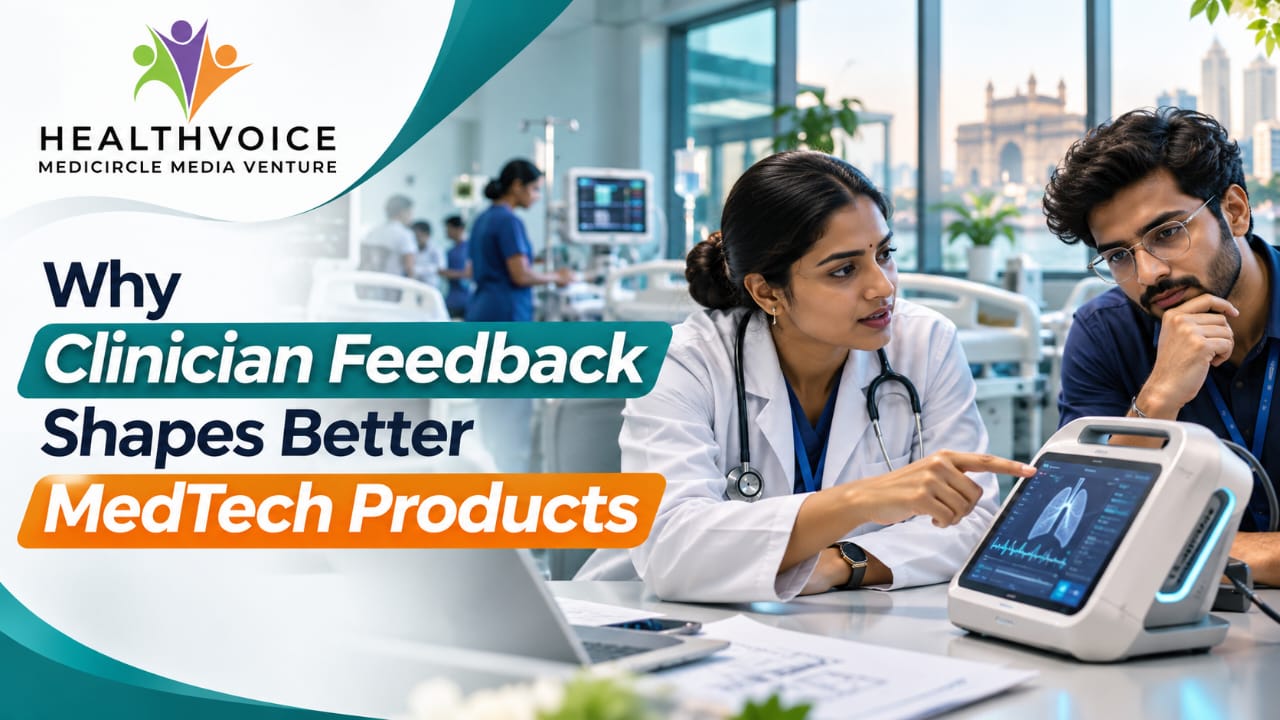
Why Clinician Feedback Shapes Better MedTech Products
Clinician feedback is essential in MedTech product development, ensuring devices are safe, usable, and clinically relevant across India's diverse healthcare settings and regulatory requirements.
Why Clinician Feedback Matters in MedTech Product Development
Introduction
Medical technology has transformed the way diseases are diagnosed, monitored, and treated across the world. From portable glucometers used in rural Indian clinics to AI-powered diagnostic imaging platforms deployed in large tertiary hospitals, MedTech innovations have become deeply woven into the fabric of modern healthcare delivery. Yet, for all the engineering brilliance that goes into building these devices, a significant number of medical products fail to deliver their full intended value once they reach actual clinical settings.
The reason is often not a technical failure. It is a human one. Products are developed without sufficient input from the professionals who will actually use them, the doctors, nurses, surgeons, radiologists, and other frontline clinicians who interact with these tools daily. Clinician feedback is not simply a feature of good product development. It is a foundational requirement for developing MedTech solutions that are safe, effective, and genuinely useful. In India, where the healthcare ecosystem spans highly specialized urban hospitals and under-resourced rural health centres, this need is even more pronounced.
Understanding MedTech Product Development and Where Clinicians Fit In
MedTech product development is a structured process that moves from concept and design through prototyping, regulatory compliance, clinical validation, and commercialization. In each of these stages, decisions are made about how a product will function, what it will measure, how it will be operated, and what outcomes it is expected to support.
Traditionally, many of these decisions have been driven primarily by engineers, product managers, and business teams. Clinicians are sometimes consulted late in the process, often only during the clinical trial or post-market surveillance phase. By that point, significant design decisions have already been locked in, and reversing them is costly and time-consuming.
Integrating clinician feedback early and continuously changes this dynamic. When doctors and clinical professionals are treated as active collaborators rather than passive end-users, the product development process becomes more grounded in clinical reality. Clinicians bring irreplaceable knowledge about patient variability, workflow constraints, procedural nuances, and the practical limitations of real-world healthcare settings that no laboratory simulation can fully replicate.
Why Clinician Feedback Is Indispensable: The Core Reasons
The value of clinician input in MedTech development extends across multiple dimensions, each of which directly affects the quality and impact of the final product.
Clinical Accuracy and Relevance
A device that performs well in a controlled testing environment may behave differently when used on patients with comorbidities, unusual anatomies, or atypical presentation of conditions. Clinicians recognize these variations immediately because they encounter them every day. Their feedback helps MedTech developers understand the full spectrum of clinical scenarios the product must address, leading to more robust and accurate designs.
Usability and Workflow Integration
One of the most common reasons medical devices are underused or misused in clinical settings is poor usability. A device that requires too many steps to operate, generates alerts that are too frequent to be meaningful, or does not integrate well with existing hospital workflows creates friction for clinicians. This friction can lead to workarounds that compromise patient safety. Clinicians are the best source of information about what makes a tool practical and intuitive within a real working environment.
Patient Safety and Risk Identification
Clinicians are trained to think about risk continuously. When they review a prototype or a product specification, they are naturally inclined to ask questions about failure modes, edge cases, and potential adverse outcomes. This clinical perspective on risk is qualitatively different from engineering-focused risk analysis and adds a critical layer of safety evaluation that can prevent serious harm to patients.
Regulatory Compliance in India
In India, the Central Drugs Standard Control Organisation (CDSCO) regulates medical devices under the Medical Devices Rules, 2017. Regulatory submissions increasingly expect evidence of clinical evaluation and user validation. Engaging clinicians formally in the development process generates documentation and real-world clinical data that strengthens regulatory submissions and helps MedTech companies navigate India's evolving compliance landscape more effectively.
How Clinician Feedback Is Collected and Applied in MedTech Development
The collection of clinician feedback is not a single event. It is an ongoing process that should be embedded at every major stage of product development.
During the early discovery and needs assessment phase, MedTech developers conduct structured interviews and ethnographic observation with clinicians to understand unmet needs, existing workflow pain points, and the clinical environment in which the product will be deployed. In India, this often means visiting both private tertiary hospitals in cities like Mumbai, Delhi, and Bengaluru as well as district hospitals and primary health centres in states like Uttar Pradesh, Bihar, and Rajasthan, where the operational context can be strikingly different.
As the product moves into prototyping, structured usability testing with clinicians becomes essential. Clinicians interact with working or simulated prototypes and provide detailed feedback on ease of use, clarity of output, alarm management, and ergonomic fit. Iterative cycles of feedback and redesign at this stage prevent expensive corrections later.
During clinical validation, clinicians provide feedback not only on clinical outcomes but also on the quality of the product experience, identifying any gaps between what the device promises and what it actually delivers in practice. Post-market surveillance, which is a regulatory requirement for many device categories under CDSCO norms, also depends on structured clinician reporting to capture real-world performance data.
The Indian MedTech Context: A Growing Opportunity With Unique Demands
India's MedTech sector is one of the fastest-growing in Asia. The Indian medical devices market is projected to reach approximately 50 billion US dollars by 2030, driven by rising disease burden, expanding health insurance coverage under schemes like Ayushman Bharat PM-JAY, and government initiatives under the Production Linked Incentive (PLI) scheme for medical devices.
However, India's clinical landscape presents unique challenges that make local clinician engagement even more critical for MedTech companies. The diversity of healthcare infrastructure across states means that a device optimized for a well-equipped private hospital in Chennai may be entirely impractical in a community health centre in Chhattisgarh. Local clinicians understand these contextual differences in ways that global MedTech teams simply cannot without direct engagement.
Indian clinicians also deal with a distinct epidemiological burden. High rates of tuberculosis, diabetes, cardiovascular disease, and infectious diseases create specific clinical demands that require solutions calibrated for Indian patient populations. Feedback from Indian doctors is therefore not simply a local adaptation exercise. It is a scientific necessity when developing products for the Indian market.
The Ministry of Health and Family Welfare's push toward digital health through the Ayushman Bharat Digital Mission (ABDM) also creates new integration requirements for MedTech products. Devices that generate patient data must increasingly be capable of interoperating with the ABHA (Ayushman Bharat Health Account) ecosystem. Clinicians working within this system are best positioned to advise on how devices should capture, display, and transmit data in ways that align with these national digital health standards.
Barriers to Effective Clinician Engagement in MedTech Development
Despite the clear benefits, clinician engagement in MedTech product development often falls short of what is needed. Several barriers contribute to this gap.
- Time constraints on clinicians are a significant factor. Doctors in India, particularly those working in public health systems, carry extremely high patient loads and have limited bandwidth for participation in research or product development activities outside their clinical duties.
- Lack of structured mechanisms for engagement is another challenge. Many MedTech companies, especially early-stage startups, do not have formal clinical advisory processes or established relationships with medical institutions and professional bodies.
- Geographic and institutional fragmentation within India's healthcare system makes it difficult to gather feedback that is representative of the full diversity of clinical settings and patient populations.
- There is also a historical gap in trust between the medical community and the commercial MedTech sector, particularly when clinicians feel their feedback is not genuinely incorporated into product decisions.
Addressing these barriers requires deliberate institutional effort, including partnerships with medical colleges, support from medical associations, and digital platforms that make feedback participation convenient and professionally meaningful for clinicians.
Building Effective Clinician Feedback Mechanisms: Key Principles
MedTech companies that succeed in making clinician feedback a genuine driver of product quality tend to share several common practices.
They establish clinical advisory boards early, bringing together specialists across relevant disciplines who provide structured input at defined milestones in the product development cycle. They invest in site visits to diverse clinical environments, including tier 2 and tier 3 cities in India, to ensure their understanding of clinical reality is not limited to well-resourced urban hospitals. They create transparent feedback loops that demonstrate to clinicians how their input has shaped product decisions, which builds trust and encourages ongoing participation. They also collaborate with medical associations and professional bodies, which serve as credible intermediaries between the clinical community and the MedTech sector.
Platforms like HealthVoice, which are dedicated to amplifying doctor voices and enabling meaningful engagement between healthcare professionals and industry, play an important role in this ecosystem. By facilitating structured communication between clinicians and healthcare stakeholders, such platforms help bridge the gap between clinical expertise and product innovation in a way that benefits the entire healthcare community.
Frequently Asked Questions
Q1: What is the role of clinician feedback in MedTech product development?
Clinician feedback provides MedTech developers with direct insight into real-world clinical needs, workflow requirements, usability challenges, and patient safety concerns. It ensures that products are designed to work effectively in actual healthcare settings rather than only in controlled development environments.
Q2: At what stage should clinicians be involved in MedTech product development?
Clinicians should be involved from the earliest discovery and needs assessment phase, continuing through prototyping, clinical validation, and post-market surveillance. Early and continuous engagement produces better outcomes than consulting clinicians only at the end of the development cycle.
Q3: How does clinician feedback support regulatory approval in India?
In India, CDSCO regulations require clinical evaluation and user validation data for many device categories. Formal clinician engagement during development generates this evidence and strengthens regulatory submissions under the Medical Devices Rules, 2017.
Q4: Why is clinician feedback particularly important for MedTech companies operating in India?
India's diverse healthcare infrastructure, unique epidemiological burden, regional workflow variations, and the requirements of the Ayushman Bharat Digital Mission make local clinician input essential for developing products that are safe, relevant, and operationally viable across different tiers of the Indian healthcare system.
Q5: How can MedTech companies overcome barriers to clinician engagement in India?
Companies can overcome these barriers by partnering with medical colleges and associations, leveraging digital platforms designed for professional healthcare engagement, establishing structured clinical advisory boards, and creating transparent feedback mechanisms that demonstrate how clinician input is incorporated into product decisions.
Resources
- Central Drugs Standard Control Organisation (CDSCO): India's primary regulatory body overseeing medical devices under the Medical Devices Rules, 2017, with guidelines on clinical evaluation and market authorization.
- Ayushman Bharat Digital Mission (ABDM): National digital health initiative establishing the ABHA ecosystem and interoperability standards relevant to MedTech product integration in India.
- Indian Council of Medical Research (ICMR): Apex body for biomedical research in India, publishing evidence-based guidelines and epidemiological data essential for clinically grounded MedTech development.
- World Health Organization (WHO) India: Provides global and region-specific frameworks for health technology assessment and medical device regulation applicable to Indian MedTech development.
- Ministry of Health and Family Welfare (MoHFW), Government of India: Key policy body overseeing healthcare delivery, device regulation, and public health scheme implementation, including Ayushman Bharat PM-JAY.
Interlinking Keywords
MedTech product development India, clinician feedback healthcare, medical device regulation CDSCO, Ayushman Bharat Digital Mission MedTech, doctor engagement medical technology, clinical advisory board MedTech, healthcare innovation India, medical device usability, ABDM interoperability, HealthVoice doctor community
Last reviewed by:
Dr. Manthan Tripathi, HealthVoice Editorial and Medical Advisory Team, November 2, 2026.
Disclaimer
The content published in this article is intended for informational and educational purposes only. It is directed at healthcare professionals, MedTech industry stakeholders, and informed readers with an interest in healthcare innovation and medical technology. This article does not constitute medical advice, clinical guidance, or regulatory counsel. Readers are advised to consult qualified medical, legal, or regulatory professionals for specific guidance related to their products, practices, or patient care decisions. HealthVoice does not endorse any specific MedTech product, company, or service mentioned or implied in this article.
 Dr. Manthan Tripathi
#ClinicianFeedback #MedTechInnovation #MedicalTechnology