Digital Health Innovations Transforming India's Healthcare Ecosystem
Digital health innovations, including AI, telemedicine, mHealth apps, and EHRs, are reshaping India's healthcare delivery, expanding access, and empowering doctors and patients across urban and rural settings.
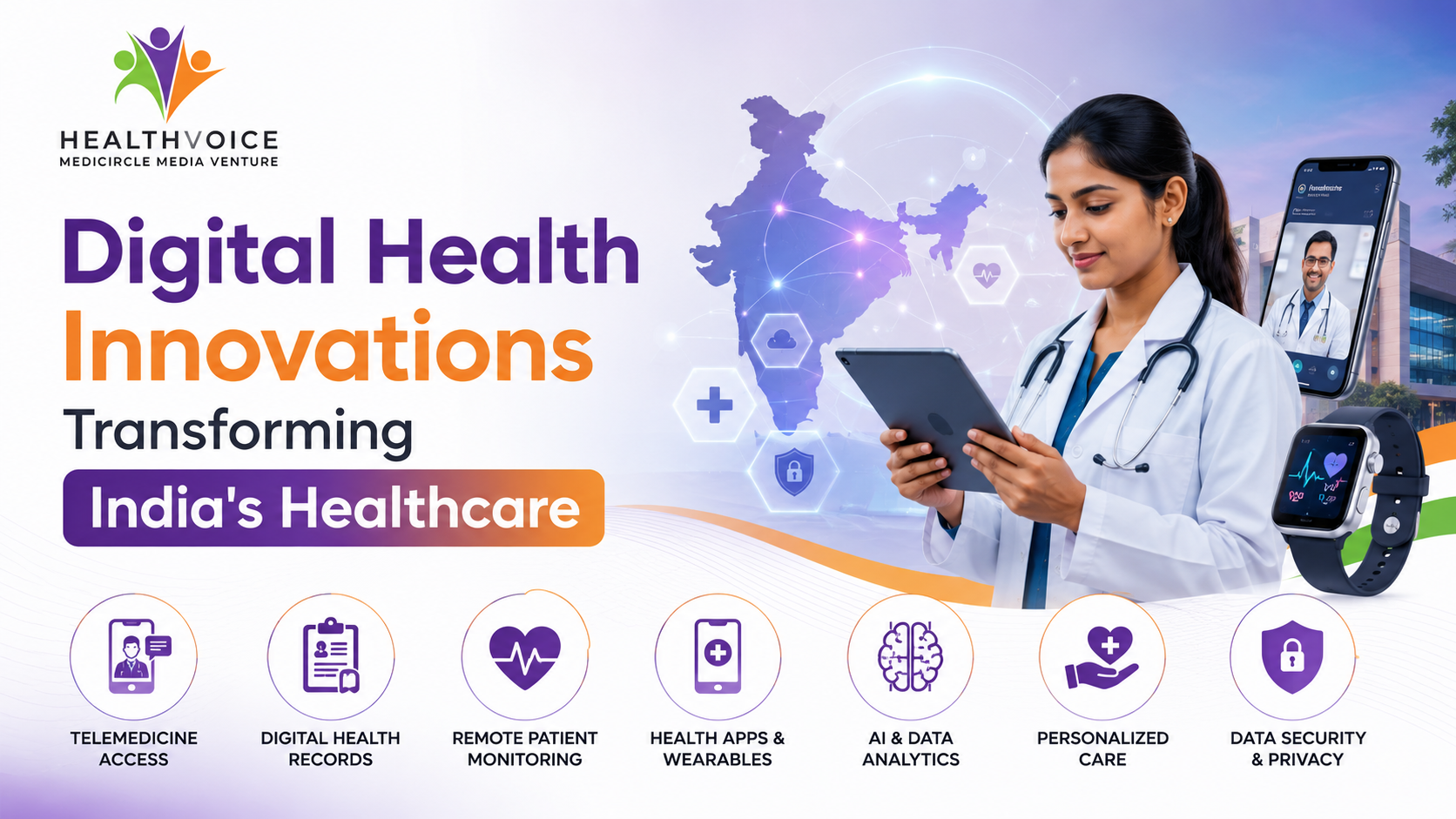
Introduction
India's healthcare system stands at a defining crossroads. With a population exceeding 1.4 billion, a significant burden of both communicable and non-communicable diseases, and a persistent shortage of specialist doctors in rural and semi-urban regions, the country's health infrastructure has long struggled to meet demand at scale. Digital health innovations are now emerging as a decisive force that can bridge this gap, not by replacing the doctor-patient relationship, but by strengthening it in ways that were previously impossible.
The numbers tell a compelling story. India has more than 700 million active internet users and one of the world's largest smartphone user bases. Mobile penetration in Tier 2 and Tier 3 cities has accelerated dramatically over the past five years, and the Government of India has actively recognised the transformative potential of healthcare technology through landmark initiatives such as the Ayushman Bharat Digital Mission (ABDM). These conditions have created a foundation on which a new era of digitally powered healthcare can be built.
For doctors, medical associations, and healthcare institutions across India, understanding and engaging with digital health innovations is no longer optional. It is a professional and ethical imperative. Platforms like HealthVoice, which serve as trusted bridges between doctors, associations, and healthcare stakeholders, are uniquely positioned to amplify this conversation and accelerate the adoption of responsible, patient-centered digital health practices within the Indian medical community.
Understanding Digital Health and Its Expanding Scope in India
Digital health is a broad and evolving field that encompasses the use of information and communication technologies to support and improve health and healthcare delivery. It includes tools such as telemedicine platforms, artificial intelligence (AI)-driven diagnostic systems, mobile health (mHealth) applications, electronic health records (EHRs), wearable biosensors, big data analytics, and digital therapeutics.
In the Indian context, the scope of digital health is particularly expansive. The ABDM, launched by the National Health Authority, envisions a unified digital health ecosystem where every citizen has a unique Ayushman Bharat Health Account (ABHA) number, enabling seamless sharing of health records across providers. This foundational infrastructure is what makes large-scale digital health innovation not just possible but sustainable.
India's National Digital Health Blueprint, developed by the Ministry of Health and Family Welfare, lays out principles of interoperability, privacy, security, and inclusivity for the entire digital health ecosystem. These policy frameworks signal to doctors, hospitals, healthtech companies, and medical associations that the government is committed to building a digitally enabled healthcare future.
It is important to distinguish between different layers of digital health. At the most basic level, there are tools that improve administrative efficiency, such as appointment scheduling software and digital billing systems. At a more sophisticated level, there are clinical decision support systems powered by AI that assist doctors in making accurate diagnoses. At the most advanced level, there are precision medicine platforms that integrate genomic data, lifestyle information, and clinical history to design personalised treatment pathways for individual patients. India is currently navigating all three layers simultaneously, which makes this moment in healthcare history particularly significant.
Key Digital Health Innovations Reshaping Indian Healthcare
Telemedicine and Virtual Care
Telemedicine has arguably been the most visible digital health innovation in India in recent years. The COVID-19 pandemic served as a powerful accelerator, compelling doctors, hospitals, and patients to embrace virtual consultations almost overnight. The release of the Telemedicine Practice Guidelines by the Medical Council of India in 2020, updated subsequently by the National Medical Commission (NMC), gave formal regulatory sanction to this mode of care and set the stage for its long-term integration into mainstream medical practice.
Today, telemedicine is enabling specialists in metropolitan cities to consult with patients in distant districts of Rajasthan, Odisha, and the Northeast without either party needing to travel. Platforms operating within India's regulatory framework are facilitating thousands of virtual consultations daily across specialties including dermatology, psychiatry, endocrinology, and general medicine. For rural patients who previously had to travel several hours to see a specialist, this represents a fundamental shift in access to quality care.
Medical associations across India are also beginning to leverage telemedicine to conduct continuing medical education (CME) sessions, peer consultations, and interdisciplinary case discussions. This opens new possibilities for member engagement and professional development that go well beyond the annual conference model.
Artificial Intelligence in Diagnosis and Clinical Decision Support
Artificial intelligence is transforming how diseases are detected, diagnosed, and managed. In India, where the ratio of radiologists to patients remains critically low, AI-powered imaging analysis tools are already being deployed in some leading hospitals to assist in reading chest X-rays, detecting diabetic retinopathy, interpreting electrocardiograms, and screening for cervical cancer from colposcopy images.
The Indian Council of Medical Research (ICMR) has been actively involved in evaluating and promoting AI tools for disease surveillance and epidemiological research. AI-based models are now being used for tuberculosis detection, which is particularly relevant in India given that the country accounts for a significant share of global TB burden. The National Tuberculosis Elimination Programme has integrated digital tools, including AI-assisted chest X-ray analysis, to accelerate case finding in high-burden districts.
Beyond radiology, AI-powered clinical decision support systems are helping doctors in busy outpatient settings by flagging potential drug interactions, recommending evidence-based treatment protocols, and predicting patient deterioration in intensive care units. These tools do not diminish the role of the physician. They enhance it by providing data-driven insights that support and validate clinical judgment.
Mobile Health Applications and Patient Empowerment
India's vast and growing mobile user base has made mHealth one of the most impactful vectors for healthcare innovation. Mobile applications are now being used across the healthcare continuum, from maternal health tracking during pregnancy to chronic disease management for conditions like diabetes, hypertension, and asthma.
The government's own CoWIN platform, used for COVID-19 vaccine registration and certification, demonstrated India's capacity to deploy mobile health infrastructure at a national scale with remarkable speed. Applications like e-Sanjeevani, India's national telemedicine service, have clocked millions of consultations since their launch, connecting patients in underserved areas with doctors across the country.
In the private sector, a growing number of healthtech startups are developing condition-specific mHealth apps tailored to Indian users. These applications account for factors such as local language support, dietary preferences relevant to Indian cuisine, and integration with government health schemes like Ayushman Bharat Pradhan Mantri Jan Arogya Yojana (AB-PMJAY). The result is a more culturally sensitive and contextually relevant digital health experience for Indian users across socioeconomic strata.
Electronic Health Records and Data Interoperability
One of the most foundational yet least visible digital health innovations is the shift toward electronic health records. India has historically relied on paper-based medical records, which are easily lost, difficult to share, and impossible to analyse at scale. The adoption of EHR systems, accelerated by the ABDM framework, is beginning to change this.
Under the ABDM, linked health records stored through ABHA-enabled platforms allow patients to grant doctors access to their complete medical history during a consultation, regardless of which hospital or clinic previously treated them. This continuity of information is critical for managing chronic diseases and preventing medical errors due to incomplete clinical history.
For hospitals and clinics adopting NABH-accredited standards, EHR implementation is increasingly becoming a quality requirement. The National Health Stack, an open digital infrastructure developed by the National Health Authority, provides the technical backbone for this interoperability, ensuring that different healthcare systems can communicate with each other securely and efficiently.
Wearables and Remote Patient Monitoring
Wearable health technology, including smartwatches, continuous glucose monitors, and cardiac event monitors, is gaining traction among health-conscious urban Indians. These devices enable real-time tracking of vital parameters such as heart rate, blood oxygen levels, sleep patterns, and physical activity.
In clinical settings, remote patient monitoring (RPM) using connected devices is being explored for post-discharge follow-up of cardiac and diabetic patients, reducing the need for frequent hospital visits while maintaining clinical oversight. Some hospitals in cities like Bengaluru, Mumbai, and Chennai have already piloted RPM programmes for high-risk patients, with encouraging results in terms of early detection of deterioration and reduction in hospital readmissions.
The long-term potential of wearables in India lies in preventive healthcare. Given that non-communicable diseases such as cardiovascular disease, type 2 diabetes, and chronic respiratory conditions now account for a growing proportion of India's disease burden, tools that enable early identification of risk and lifestyle modification could have an enormous public health impact.
Challenges in Implementing Digital Health at Scale in India
Despite the promise of digital health innovations, several significant challenges must be acknowledged and addressed for these technologies to deliver equitable benefits across India's diverse population.
The digital divide remains the most pressing concern. While urban India has benefited from improved internet connectivity and smartphone penetration, large sections of rural India, particularly among older populations and economically disadvantaged communities, continue to face barriers of connectivity, digital literacy, and device access. An innovation that reaches only those who already have access to quality healthcare does not advance health equity. It may, in fact, deepen existing disparities.
Data privacy and security present another critical challenge. India's Digital Personal Data Protection Act, 2023, establishes a framework for data governance, but implementation and enforcement at the ground level remain works in progress. Patients must be able to trust that their health data will not be misused by technology companies or third parties. Doctors must be confident that digital health platforms they use meet the highest standards of data security. Without this trust, adoption will remain limited.
Regulatory clarity and clinical validation are also areas requiring attention. Not all digital health tools available in the Indian market have been validated through rigorous clinical trials. Doctors need reliable, evidence-based information about which tools meet the standard of care and which remain experimental. Medical associations and bodies like the NMC and ICMR play a crucial role in providing this guidance.
Finally, the burden of digital health adoption falls disproportionately on individual doctors and small clinics that may lack the technical resources, training, and support needed to integrate new technologies into their practice. Scaling digital health in India requires investment not just in technology, but in healthcare workforce training and change management at every level of the system.
The Role of Medical Associations and Doctor Communities in Digital Health
Medical associations are uniquely positioned to accelerate the responsible adoption of digital health innovations in India. As trusted professional bodies, they can curate evidence-based information about digital health tools, set standards for their use, advocate for appropriate regulatory frameworks, and provide their members with the training and resources needed to navigate a rapidly evolving technological landscape.
Platforms that serve the medical professional community, such as HealthVoice, can complement the work of associations by providing doctors with a credible space to discuss digital health experiences, share clinical insights, highlight innovations that are making a difference in practice, and engage with healthcare brands and healthtech companies in an informed and ethical manner. When doctors and their associations speak with a unified, credible voice about digital health, they help shape a safer and more effective ecosystem for patients and the entire healthcare system.
Prevention and the Future of Proactive Digital Health in India
The greatest long-term promise of digital health lies not in treating disease after it occurs, but in preventing it before it begins. Predictive analytics, population health management platforms, and AI-driven risk stratification tools are now capable of identifying individuals at high risk of developing specific conditions years before symptoms appear.
In a country like India, where lifestyle-related risk factors such as physical inactivity, high-salt diets, tobacco use, and stress are widespread, proactive digital health interventions could prevent millions of cases of heart disease, stroke, diabetes, and cancer. Community health workers equipped with mobile-based assessment tools can screen large populations efficiently. Digital health dashboards accessible to district health officers can enable targeted public health responses based on real-time data.
India's Ayushman Bharat Health and Wellness Centres (HWCs) are already piloting digital tools for primary care delivery at the community level. The integration of preventive health screening with digital health platforms within these centres represents one of the most promising models for proactive healthcare in a resource-constrained environment.
As digital health innovations continue to evolve, the medical community's engagement will be decisive. Doctors who understand these tools, advocate for their appropriate use, and share their clinical experiences openly are the most important drivers of a healthier, more digitally empowered India.
Frequently Asked Questions
Q1: What is digital health and why is it important for India?
Digital health refers to the use of digital technologies such as telemedicine, artificial intelligence, mobile health applications, electronic health records, and wearable devices to improve healthcare delivery and patient outcomes. For India, digital health is particularly important because it can extend quality healthcare access to underserved rural and semi-urban populations, improve disease surveillance, support chronic disease management, and reduce the burden on overstretched physical healthcare infrastructure.
Q2: How is the Indian government supporting digital health innovation?
The Government of India has launched several major initiatives to advance digital health, including the Ayushman Bharat Digital Mission (ABDM), which aims to create a unified digital health ecosystem with interoperable health records for every citizen. Other key programmes include the e-Sanjeevani national telemedicine platform, Ayushman Bharat Health and Wellness Centres integrating digital primary care tools, and the National Digital Health Blueprint guiding policy for the sector. The National Medical Commission has also issued telemedicine practice guidelines to regulate and support virtual care.
Q3: What role does artificial intelligence play in Indian healthcare today?
Artificial intelligence is being used in Indian healthcare for a growing range of applications, including AI-assisted analysis of chest X-rays for tuberculosis detection, screening tools for diabetic retinopathy, clinical decision support systems that assist doctors in treatment planning, and predictive analytics for disease surveillance. Research bodies such as the ICMR are evaluating AI tools for evidence-based integration into national health programmes, and several tertiary care hospitals are already deploying AI in their diagnostic departments.
Q4: What are the main barriers to digital health adoption in India?
The primary barriers to digital health adoption in India include the digital divide between urban and rural populations in terms of internet access, smartphone ownership, and digital literacy; concerns about patient data privacy and security; the lack of clinical validation for many commercially available health applications; inadequate training and support for healthcare professionals to adopt new technologies; and limited digital infrastructure in smaller hospitals and clinics. Addressing these barriers requires coordinated action from the government, medical associations, healthtech companies, and the medical community.
Q5: How can doctors and medical associations engage more effectively with digital health?
Doctors and medical associations can engage more effectively with digital health by staying informed about clinically validated digital tools through continuing medical education, participating in digital health policy discussions at national and state levels, sharing practice-based experiences with digital health technologies through professional networks and platforms, advocating for patient data protection and ethical AI use, and collaborating with healthtech companies in developing and evaluating tools that address real clinical needs. Platforms dedicated to the medical community play a valuable role in facilitating these conversations and ensuring that the doctor's voice remains central to India's digital health journey.
Resources
- Ministry of Health and Family Welfare, Government of India: Official guidelines, policies, and updates on digital health initiatives including ABDM and telemedicine regulations
- National Health Authority (NHA), India: Information on the Ayushman Bharat Digital Mission, ABHA health accounts, and the National Health Stack framework
- Indian Council of Medical Research (ICMR): Evidence-based research, AI validation studies, and national health data relevant to digital health implementation in India
- World Health Organization (WHO) Global Strategy on Digital Health 2020 to 2027: International framework and best practices for advancing digital health for universal health coverage
- PubMed and National Library of Medicine (NLM): Peer-reviewed research on digital health technologies, telemedicine, AI diagnostics, and mHealth outcomes globally and in India
INTERLINKING KEYWORDS:
telemedicine in India, artificial intelligence in healthcare, Ayushman Bharat Digital Mission, electronic health records India, mHealth applications India, ABDM digital health ecosystem, remote patient monitoring, digital health policy India, AI diagnostics India, doctor digital health tools
Last medically reviewed by:
HealthVoice Medical Editorial Board on August 3, 2026
Medical Disclaimer:
The content published in this article is intended for informational and educational purposes only. It is not a substitute for professional medical advice, diagnosis, or treatment. Readers should always consult a qualified and registered medical professional for any health-related decisions or concerns. HealthVoice does not endorse any specific digital health product, application, or platform mentioned in this article. All statistics and policy references are based on publicly available information and are subject to change as per evolving government guidelines and research findings.
 Team Healthvoice
#DigitalHealthIndia #HealthcareInnovationIndia