CGM in India: Diabetes Tech, Apps and Remote Care
CGM, diabetes apps and remote monitoring are reshaping Indian diabetes care, yet affordability, infrastructure gaps and workflow challenges continue to limit adoption despite strong supporting clinical evidence.
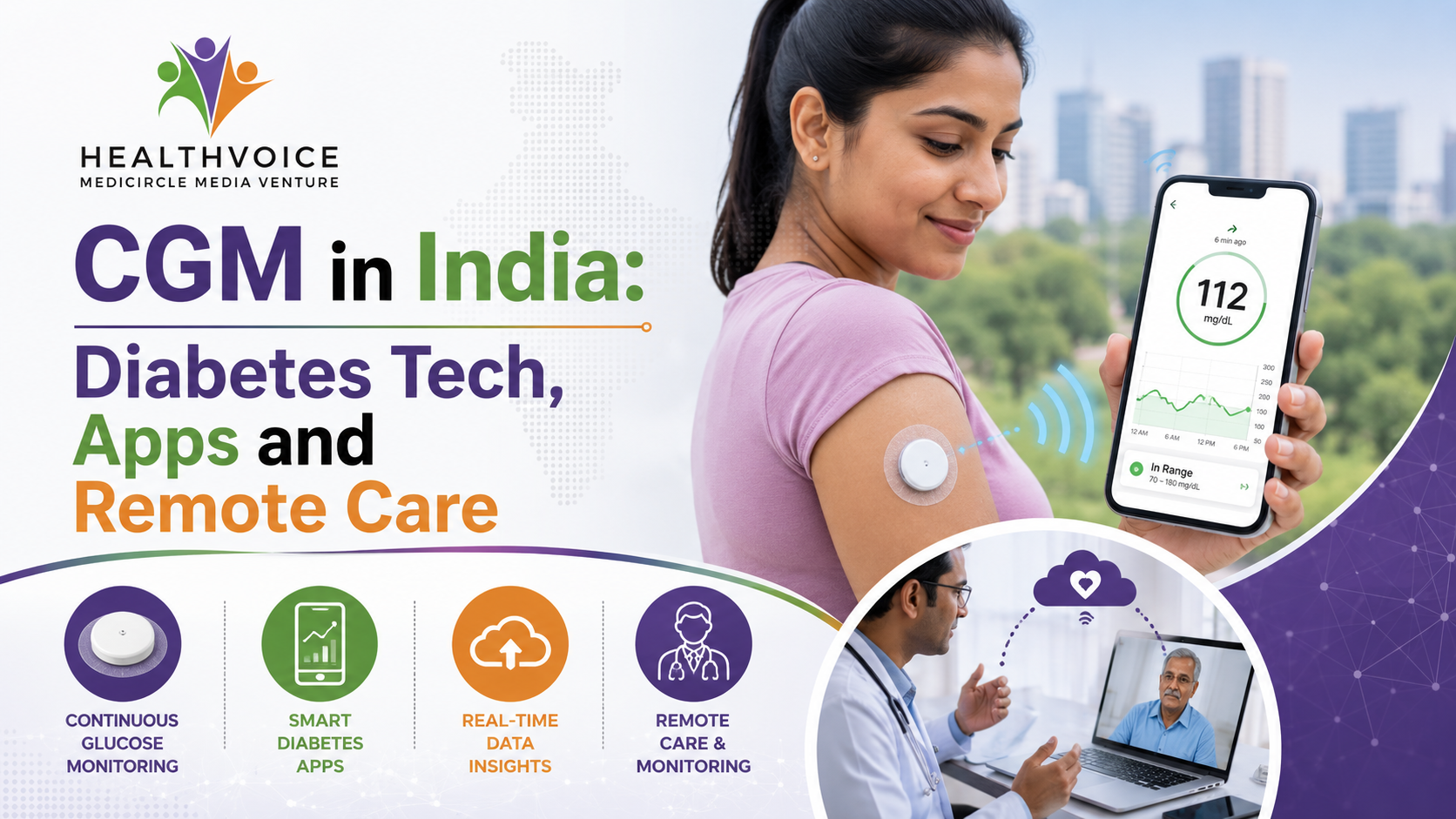
Diabetes Technology in India: How CGM, Apps and Remote Monitoring Are Changing Everyday Practice
Introduction
India now carries one of the largest burdens of diabetes in the world, with recent national estimates from the ICMR-INDIAB study placing the number of adults living with diabetes at over 101 million, alongside 136 million more with prediabetes. This scale of disease, combined with limited healthcare resources across large parts of the country, has pushed digital tools from the margins of diabetes care into the center of clinical conversation. Continuous glucose monitoring, mobile applications for insulin titration and lifestyle tracking, and remote monitoring platforms are no longer experimental additions to a diabetes clinic. They are becoming part of how endocrinologists, diabetologists, general physicians and diabetes educators approach day-to-day patient management.
For doctors and healthcare associations, this shift matters beyond individual patient outcomes. It touches how clinics are structured, how much time a consultation takes, how nursing and educator staff are trained, and how healthcare technology companies engage with the medical community. Understanding where this technology genuinely helps, and where it still falls short in the Indian context, allows clinicians to make informed decisions rather than reactive ones. This article looks closely at continuous glucose monitoring, diabetes apps, and remote monitoring as they are actually being used in Indian practice today, along with the barriers that continue to limit their reach.
Understanding the Technology Landscape
Digital health tools in diabetes broadly fall into a few categories that Indian clinicians now encounter regularly. Continuous glucose monitoring, or CGM, uses a small sensor worn on the skin, usually on the upper arm, to measure glucose in the interstitial fluid every few minutes. Unlike a glucometer reading, which captures a single moment in time, CGM builds a continuous picture of glucose trends across the day and night, including patterns that a patient would never detect through routine fingerstick testing, such as nocturnal hypoglycemia or a sharp rise after a specific meal.
FreeStyle Libre Pro, a professional and blinded CGM, has been available in India since 2015, and the intermittently scanned FreeStyle Libre 1 was introduced in the country in 2020. Alongside these, cloud-based platforms such as LibreView allow ambulatory glucose profile reports to be generated and shared between patients and healthcare professionals, which has meaningfully changed how consultations are structured in clinics that have adopted the workflow.
Diabetes apps form a second layer of this ecosystem. These range from insulin dose calculators, such as apps supporting basal insulin titration, to broader lifestyle and nutrition platforms that many Indian patients already use informally. Remote monitoring and telemedicine platforms complete the picture, allowing follow-up consultations, glucose data review, and therapy adjustments to happen without a patient traveling to a clinic, which has particular relevance in a country where specialist diabetes care remains concentrated in urban centers.
Why CGM Adoption Still Lags Behind Its Potential in India
Despite this steady technological progress, actual CGM adoption across India remains limited and uneven. Current use is concentrated among a relatively small group, largely people with type 1 diabetes, those on intensive insulin therapy, and patients who can afford the ongoing cost of sensors. Penetration into the far larger population of people with type 2 diabetes managed on oral therapy remains minimal.
Several factors explain this gap, and they extend well beyond simple awareness. Affordability sits at the top of the list. CGM devices in India are regulated under the Central Drugs Standard Control Organisation, but there is currently no national reimbursement pathway for CGM, and the technology is not covered under Ayushman Bharat, the Employees' State Insurance scheme, or most state insurance programs. This means the cost of ongoing sensor use falls almost entirely on the patient, which puts it out of reach for a large share of the population even when clinicians would otherwise recommend it.
Geography compounds the affordability problem. Device availability continues to concentrate in tier 1 and select tier 2 cities, and rural patients often face a double burden of limited access to specialist diabetes care alongside limited access to the technology itself. Environmental factors specific to India also play a role that is easy to underestimate. Heat, humidity and perspiration during the summer months can affect sensor adhesion and increase the likelihood of early sensor detachment, which understandably discourages continued use among patients who have had a poor first experience with a device.
There are also behavioral and cultural dimensions that Indian clinicians are increasingly recognizing. Frequent CGM alerts can disturb sleep and generate anxiety rather than reassurance, a pattern sometimes described as alarm fatigue. Younger patients, in particular, report discomfort or embarrassment about wearing a visible device in school, college or workplace settings. Dietary diversity across Indian regions, with variable carbohydrate content and meal timing, can also make CGM data harder to interpret without structured training, both for patients and for the clinical staff reviewing the reports.
Clinical Evidence Supporting CGM Use in Indian Practice
The evidence base for CGM in India, while still evolving, is more substantial than many clinicians realize. A retrospective study of 148 patients with type 2 diabetes found that three months of professional CGM use reduced mean HbA1c from 8.6 percent at baseline to 8.0 percent. A separate six-month study in 296 patients with type 2 diabetes reported a clinically meaningful HbA1c reduction, and a large multicenter Indian study involving over 5,000 people with type 1 and type 2 diabetes found that ambulatory glucose profile data generated through flash glucose monitoring led to significant improvements in glycemic outcomes.
More recent narrative review work has placed these findings in a broader clinical context. Among adults with type 2 diabetes using CGM in India, published data indicates moderate but clinically meaningful HbA1c reductions in the range of 0.6 to 0.8 percent, along with improvements in time-in-range and reductions in hyperglycemic exposure. Reports from clinical practice have also documented fewer symptomatic hypoglycemic episodes and improved self-management confidence among users. That said, robust long-term Indian data on complication rates, standardized patient-reported outcomes and cost-effectiveness remains limited, which is precisely why national diabetes registries and India-specific outcome studies are being called for by clinical experts in this space.
Time-in-range, alongside time-below-range and time-above-range, has increasingly gained ground as a complementary metric to HbA1c in Indian consensus recommendations. This shift matters clinically because HbA1c reflects an average over two to three months and can mask significant glycemic variability, including asymptomatic nocturnal hypoglycemia, that CGM captures directly.
Diabetes Apps and Remote Monitoring in Everyday Clinical Use
Smartphone penetration in India has created fertile ground for diabetes apps to move from novelty to routine use. Apps offering automated insulin dose titration support, such as those helping patients adjust basal insulin based on glucose trends, have shown that higher engagement correlates with better fasting blood glucose target achievement. Broader lifestyle and nutrition apps, some incorporating India-specific dietary guidance, are also being used to support behavior change alongside standard therapy.
Remote monitoring has found particularly strong footing in telemedicine-based diabetes follow-up. During periods when in-person visits were difficult, structured programs combining glucose data review with scheduled remote consultations proved that follow-up quality did not have to depend entirely on physical clinic visits. This experience has left a lasting mark on how many Indian diabetes centers now structure ongoing patient management, especially for stable patients on established treatment plans who mainly need periodic review rather than a full physical examination.
For doctors and clinics, this shift toward digital follow-up also raises practical questions around workflow. Reviewing continuous glucose data and app-generated reports takes time, and without dedicated support staff to manage this data flow, physicians can find themselves overwhelmed rather than supported. Indian expert panels reviewing this issue have consistently recommended that clinics build a defined role, whether through a diabetes educator or trained nursing staff, dedicated to CGM initiation, data review and patient communication, rather than adding this responsibility informally onto an already stretched physician schedule.
Building the Right Workflow for CGM and Digital Tools in Practice
Clinics that have successfully integrated CGM and related digital tools into their workflow tend to share a few common features. Dedicated personnel, often diabetes educators or trained nurses, handle the practical steps of sensor initiation, patient education on the associated mobile app, and linking patient accounts to the clinic's data management system. This single change alone addresses one of the most frequently cited barriers among healthcare professionals, which is simply not having the time or staff bandwidth to support CGM within routine consultations.
Structured education also makes a measurable difference. Clinics that provide clear, simple patient materials, ideally in regional languages given India's linguistic diversity, tend to see better sustained engagement with CGM and related apps. On the clinician side, moving from informal peer-to-peer learning about CGM interpretation toward more structured training, whether through continuing medical education modules or manufacturer-led programs, helps ensure that ambulatory glucose profile reports are read consistently and translated into clear treatment decisions rather than being set aside due to time pressure or unfamiliarity.
Follow-up protocols matter just as much as initiation. Recommendations from Indian expert panels suggest that CGM data should guide no more than one or two treatment modifications per review session, based on at least fourteen days of data, which helps avoid the kind of reactive overcorrection that can occur when clinicians attempt to respond to every fluctuation visible in a glucose trace. For patients with type 2 diabetes who are not on intensive insulin therapy, intermittent CGM use, typically involving ten to fourteen days of sensor wear a few times a year, is increasingly recognized as a pragmatic and more affordable way to gain the same pattern-recognition benefits without the ongoing cost of continuous use.
The Road Ahead: Policy, Infrastructure and Digital Integration
The future of diabetes technology in India will likely depend as much on policy and infrastructure as on the devices themselves. Integration with the Ayushman Bharat Digital Mission remains limited at present, and closer alignment between CGM platforms, diabetes apps and a patient's broader digital health record under their ABHA ID could meaningfully reduce fragmentation in how glucose data, prescriptions and consultation notes are stored and shared across providers.
Reimbursement reform is arguably the single change that would do the most to widen access. India-specific models involving full, partial or condition-based reimbursement, prioritizing groups such as children and young people with type 1 diabetes, pregnant women with diabetes, and patients on multiple daily insulin injections, have been proposed by clinical experts as a starting point rather than an all-or-nothing national rollout. Public-private partnerships are also being explored as a way to extend CGM access and remote monitoring support into rural and semi-urban regions where specialist diabetes care is otherwise thin on the ground.
Device design suited to Indian conditions, including more heat-resistant adhesives, discreet form factors, and predictive rather than purely reactive alert systems, is expected to reduce some of the behavioral barriers that currently limit sustained use. None of this replaces the fundamentals of good clinical care, but it does mean that CGM, diabetes apps and remote monitoring are steadily moving from being tools used by a narrow, well-resourced patient group toward becoming a more standard part of how diabetes is managed across Indian healthcare settings, provided the accompanying infrastructure, training and policy support keep pace.
Conclusion
Diabetes technology in India stands at a genuinely transitional point. The clinical evidence for CGM, diabetes apps and remote monitoring is strong enough to justify their place in routine practice, yet affordability, infrastructure gaps, and workflow challenges within clinics continue to hold back wider adoption. For doctors and healthcare associations, the opportunity lies in building structured, well-staffed workflows around these tools rather than treating them as isolated add-ons, while continuing to advocate for the reimbursement and policy support that would make this technology accessible beyond a narrow, urban, well-resourced patient base. As India's diabetes burden continues to grow, the clinics and associations that invest early in understanding and integrating these tools thoughtfully will be best placed to deliver more proactive, data-informed care to the patients who need it most.
Frequently Asked Questions
Q1: Is continuous glucose monitoring covered under any government health scheme in India?
At present, CGM devices are not covered under Ayushman Bharat, ESI, or most state insurance schemes in India, and there is no dedicated national reimbursement pathway. Most people with diabetes currently bear the cost out of pocket, which remains one of the largest barriers to wider adoption.
Q2: Can continuous glucose monitoring help patients with type 2 diabetes who are not on insulin?
Yes. Intermittent or short-term CGM use, typically ten to fourteen days of sensor wear a few times a year, can help people with type 2 diabetes and their doctors identify glucose patterns, understand the impact of specific meals, and guide therapy adjustments even without daily insulin injections.
Q3: Does hot and humid weather affect CGM sensor performance in India?
Heat, humidity, and perspiration can affect sensor adhesion and increase the risk of early sensor detachment in some individuals. Choosing sensors with adhesives suited to warm climates, securing the sensor site properly, and following manufacturer guidance can help reduce these issues.
Q4: What is the difference between CGM and self-monitoring of blood glucose?
Self-monitoring of blood glucose using a glucometer provides a single glucose reading at one point in time. CGM records interstitial glucose values continuously through the day and night, revealing trends, post-meal spikes, and overnight lows that a single fingerstick reading would miss.
Q5: Are diabetes management apps reliable for patients in India?
Several diabetes apps available in India, including those with insulin titration support and lifestyle tracking, have shown reasonable usability and clinical value in published studies. However, quality varies widely across apps, so clinicians are best placed to guide patients toward apps that are clinically validated and suited to their treatment plan.
 Team Healthvoice
#ContinuousGlucoseMonitoring #DigitalDiabetesCare
