End-of-Life Decisions in ICU: Ethics and Communication Guide
This article examines clinical triggers, ethical principles, and communication strategies for end-of-life decision making in Indian ICUs, highlighting family dynamics, legal context, and institutional measures supporting compassionate, well-informed critical care.
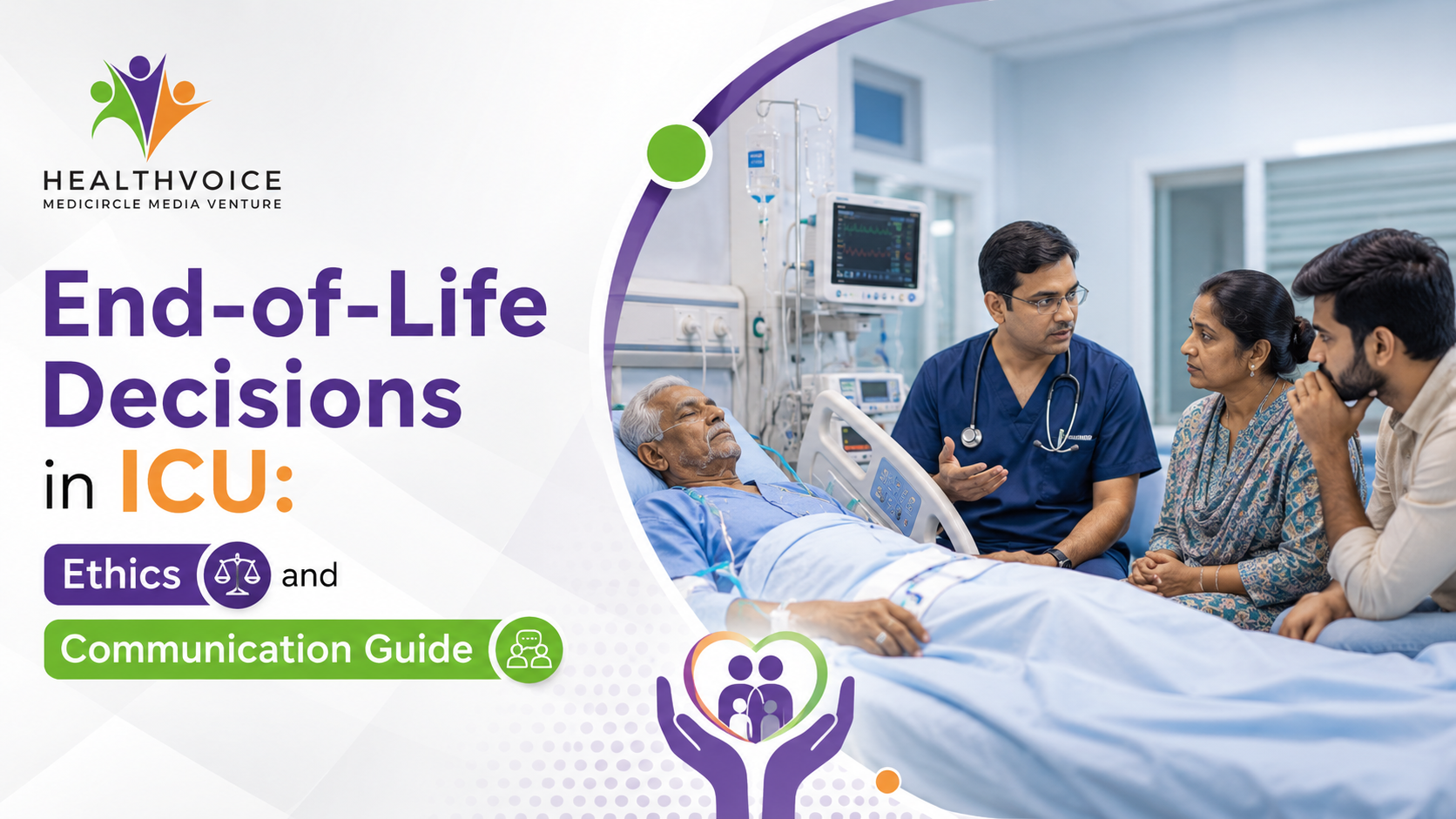
End-of-Life Decisions in ICU: Clinical, Ethical and Communication Challenges
Introduction
Intensive care units exist to save lives, yet a significant proportion of patients admitted to Indian ICUs will not survive their critical illness. When curative treatment no longer serves the patient's interest, the focus of care must shift toward comfort, dignity, and honouring the patient's wishes. This transition, often called end-of-life decision-making, is among the most demanding aspects of critical care practice. It requires doctors to integrate clinical judgement, ethical reasoning, and compassionate communication, often within compressed timeframes and amid intense emotional pressure from families.
For Indian intensive care teams, the challenge is compounded by unique social and legal realities. Joint family decision-making customs, diverse religious beliefs about death and the afterlife, variable health literacy, and a relatively young legal framework around withdrawal of life support all shape how these conversations unfold. Understanding these dynamics is essential not only for clinicians working in critical care but also for hospital administrators, palliative care teams, and medical associations seeking to strengthen institutional practices around end-of-life care.
This article examines the clinical realities that trigger end-of-life discussions, the ethical principles that guide decision-making, the communication frameworks that have proven effective in ICU settings, and the specific considerations relevant to Indian healthcare practice.
Understanding End-of-Life Decision Making in the ICU
End-of-life decision making in intensive care refers to the process by which clinicians, patients, and families determine the appropriate goals of treatment when a patient's prognosis for meaningful recovery is poor. This can include decisions to withhold certain interventions, withdraw ongoing life-sustaining treatments such as mechanical ventilation, or transition fully to comfort-focused palliative care.
Globally, research consistently shows that intensive care unit deaths are rarely sudden events. Most occur after a period of deliberation involving the treating team and the patient's family. A study of critical care nurses found that ethical dilemmas frequently arise when life-sustaining treatments continue despite minimal survival prospects, creating a difficult balance between avoiding prolonged suffering and respecting the family's hope for recovery.
In India, where ICU bed availability is limited relative to population needs, particularly in tier two and tier three cities, these decisions also carry resource allocation implications. The National Health Policy and various state-level critical care guidelines increasingly recognise that appropriate end-of-life care planning is not only an ethical necessity but also a means of ensuring that intensive resources are directed toward patients who can benefit most.
Common scenarios prompting end-of-life discussions include irreversible brain injury, multi-organ failure unresponsive to maximal therapy, advanced metastatic cancer with ICU complications, and prolonged mechanical ventilation without neurological recovery. In each scenario, the central question becomes whether continued aggressive treatment aligns with the patient's values and realistic chances of benefit.
Clinical Triggers and Risk Factors Leading to End-of-Life Discussions
Several clinical situations commonly necessitate end-of-life conversations in the ICU. Recognising these early allows the care team to initiate timely, structured discussions rather than reactive ones during a crisis.
Patients with severe traumatic brain injury or anoxic brain damage following cardiac arrest often show limited neurological recovery despite aggressive support. Multi-organ dysfunction syndrome, particularly when three or more organ systems fail simultaneously, carries an extremely poor prognosis despite advanced supportive therapies such as renal replacement therapy and vasopressor support. Patients with advanced malignancies who develop sepsis, respiratory failure, or other acute complications while already battling a terminal illness represent another frequent scenario.
Age and comorbidity burden also influence prognosis assessments. Elderly patients with pre-existing frailty, advanced dementia, or multiple chronic conditions such as uncontrolled diabetes and chronic kidney disease are statistically less likely to survive prolonged critical illness with good functional recovery. India's growing burden of non-communicable diseases, as tracked by ICMR surveillance data, means intensivists increasingly encounter patients whose critical illness sits atop years of accumulated chronic disease, complicating both prognosis and family expectations.
A particularly important but underdiscussed factor in Indian ICUs is the gap between family expectations and clinical reality. Many families, influenced by optimism, social pressure, or limited prior exposure to critical illness, may not initially recognise how grave the prognosis is. This gap, if not addressed early through honest and compassionate communication, frequently becomes the root of later conflict and prolonged, non-beneficial treatment.
Recognising When Curative Goals Should Shift to Comfort Care
Identifying the right moment to discuss a shift in care goals requires both clinical acumen and attentiveness to non-verbal and verbal cues from the patient and family. Certain signs suggest the conversation should not be delayed further.
Persistent deterioration despite optimised treatment, an inability to wean from ventilatory support over an extended period, recurrent cardiac arrests, or a documented irreversible neurological state are clear clinical indicators. Equally important are signs from the family side, such as repeated questions about prognosis, expressions of exhaustion from prolonged ICU visits, or direct requests to understand "how much longer."
Critical care nurses, who often spend more continuous time at the bedside than physicians, are frequently the first to notice subtle signs that a patient is approaching the end of life, including changes in facial expression, breathing patterns, or responsiveness. Their observations are a valuable, sometimes underutilised, source of clinical information that should be incorporated into the team's overall assessment.
It is worth noting that recognising the need for a goals-of-care conversation does not mean abandoning hope or care. Rather, it represents a shift in what "doing everything" means for the patient, moving from aggressive curative measures to ensuring comfort, dignity, and meaningful time with loved ones.
Ethical Foundations Guiding End-of-Life Decisions
Medical ethics offers four foundational principles that consistently guide end-of-life decision making across healthcare settings: autonomy, beneficence, non-maleficence, and justice. Each plays a distinct role in ICU practice.
Autonomy refers to the patient's right to make decisions about their own care, including the right to refuse or discontinue treatment. In India, awareness and use of advance medical directives remain limited compared to Western countries, meaning that most decisions rely heavily on family input rather than documented patient wishes. This makes thorough, repeated conversations with family members about what the patient would likely have wanted especially important.
Beneficence requires that interventions genuinely serve the patient's wellbeing, while non-maleficence obligates clinicians to avoid causing unnecessary harm or prolonging suffering through futile treatment. These two principles often come into tension when families request continuation of aggressive therapy that the treating team believes offers no meaningful benefit. Justice concerns the fair allocation of limited critical care resources, an especially relevant consideration in India's resource-constrained public healthcare settings.
A landmark legal development shaping ethical practice in Indian ICUs was the Supreme Court's 2018 ruling in the Common Cause case, which recognised the right to die with dignity and laid out a framework for honouring advance directives and permitting withdrawal of life support under defined institutional safeguards. This judgment, along with subsequent clarifications, has given Indian intensivists clearer legal grounding for decisions that were previously made in a grey zone, though implementation across hospitals remains inconsistent and many clinicians still proceed cautiously due to medico-legal concerns.
Organ donation decisions add a further layer of ethical complexity. Coordinating the dignity of a dying or deceased patient with the time-sensitive needs of organ preservation requires careful, sensitive handling, particularly when family members have differing views or when the patient's own documented wishes regarding donation conflict with family preferences after death.
Communication Strategies for Difficult ICU Conversations
Effective communication is consistently identified in clinical research as the single most important factor influencing how families experience end-of-life decision making, often mattering more to satisfaction and psychological outcomes than the clinical decision itself.
Structured frameworks have been developed specifically to support these conversations. The SPIKES protocol guides physicians through setting up an appropriate environment, assessing the family's current understanding, inviting them to indicate how much information they want, delivering knowledge in clear language, addressing emotional responses with empathy, and summarising next steps. A complementary framework known as VALUE focuses specifically on family meetings in the ICU context, encouraging clinicians to value family statements, acknowledge emotions, listen actively, understand the patient as a person rather than only a case, and elicit questions from family members.
Research has demonstrated that families who participate in well-structured, proactive communication using these approaches experience significantly less anxiety, depression, and complicated grief in the months following a loved one's death in the ICU. This finding has direct relevance for Indian hospitals, where structured communication training for intensivists and critical care nurses remains inconsistent across institutions.
Breaking bad news requires particular care. Clinicians should avoid premature reassurance, since statements like "everything will be fine" can undermine trust if the patient's condition later worsens. Equally, hallway conversations or informal updates delivered by multiple team members can create confusion; designating a single consistent point of contact for the family substantially improves clarity and reduces conflict.
A distinct challenge in the Indian context is the cultural practice, observed across many communities, of family members wishing to shield the patient from a poor prognosis. While well-intentioned, this can conflict with the patient's right to information about their own condition. Skilled clinicians navigate this by gently exploring the family's concerns, explaining the importance of patient involvement where feasible, and finding a respectful middle ground that honours both cultural sensitivity and the patient's dignity.
Family Dynamics and Shared Decision-Making in the Indian Context
Family-centred decision-making is the norm in most Indian hospitals, reflecting broader cultural values around collective responsibility and care for elders. Unlike some Western settings where individual patient autonomy is paramount, Indian families often expect to be deeply involved in, and sometimes to lead, decisions about a relative's care, even when the patient is conscious and capable of expressing preferences.
This dynamic is not inherently problematic, but it does require clinicians to adapt their communication approach. Family meetings should ideally include the primary decision-makers within the family structure, which in many cases includes adult children, spouses, and sometimes extended family elders whose opinions carry significant weight. Identifying who holds genuine decision-making authority within a family early in the admission can prevent later confusion or conflict.
Disagreements between family members are common and can significantly complicate end-of-life discussions. Differences in geographic location, with some family members residing abroad and only able to participate by phone or video call, financial considerations regarding continued treatment costs, and varying emotional readiness to accept a poor prognosis can all contribute to internal family conflict. In these situations, a single family meeting involving all key stakeholders, even if logistically challenging to arrange, tends to produce better outcomes than sequential conversations with different family members.
Religious and spiritual considerations also shape decision-making in distinctive ways across India's diverse population. Beliefs about the soul's journey, the timing and manner of death, and rituals surrounding dying can influence family preferences regarding withdrawal of treatment, location of death, and post-death care. Sensitivity to these beliefs, including involving chaplains, religious leaders, or designated spiritual support where available, can meaningfully ease the family's experience without compromising clinical appropriateness.
Institutional and Systemic Measures to Support Better Outcomes
Hospitals and healthcare associations have an important role in strengthening how end-of-life care is delivered across Indian ICUs. Institutional ethics committees, increasingly encouraged under NABH accreditation standards, provide a structured mechanism for resolving conflicts between care teams and families when consensus cannot be reached through direct discussion.
Formal training in communication skills for critical care physicians and nurses remains underdeveloped in many Indian medical curricula. Professional associations and continuing medical education programmes have an opportunity to address this gap by incorporating structured frameworks such as SPIKES and VALUE into intensivist and critical care nursing training, alongside simulation-based practice for difficult conversations.
Standardised protocols for advance care planning, although still nascent in India compared to countries with established frameworks, can help patients with chronic, life-limiting illnesses document their preferences before a crisis occurs. Encouraging this conversation earlier in a patient's disease trajectory, ideally led by primary care physicians or specialists managing chronic illness, reduces the burden of decision-making that otherwise falls entirely on family members during an acute crisis.
Multidisciplinary palliative care integration within ICUs, even in a consultative capacity, has shown benefit in reducing prolonged non-beneficial treatment and improving family satisfaction. Indian tertiary care centres are gradually expanding palliative care services, though availability in tier two and tier three cities remains limited, representing an area where healthcare associations and platforms supporting doctor collaboration can contribute meaningfully to knowledge sharing and best-practice dissemination.
Platforms that connect intensivists, palliative care specialists, and critical care nursing associations can play a valuable role here, not by replacing clinical training, but by giving healthcare professionals a credible space to share protocols, discuss challenging cases, and learn from peer institutions navigating similar ethical and communication challenges across the country.
Conclusion
End-of-life decision making in the intensive care unit sits at the intersection of clinical judgement, ethical principle, and deeply personal human experience. For Indian critical care teams, this intersection carries additional layers of complexity shaped by family-centred decision customs, diverse religious and cultural beliefs, and an evolving legal framework around withdrawal of life support. What remains constant across all these dimensions is the value of clear, honest, and compassionate communication.
Doctors who approach these conversations with structured frameworks, genuine empathy, and respect for both patient autonomy and family dynamics consistently report better outcomes, not only in terms of family satisfaction but also in reducing the moral distress experienced by the care team itself. As India's critical care infrastructure continues to expand, strengthening institutional support for ethics consultation, communication training, and palliative care integration will be essential to ensuring that end-of-life care matches the same standard of excellence increasingly seen in acute critical care delivery.
Frequently Asked Questions
Q1: What makes end-of-life decision making in the ICU so difficult for doctors and families in India?
It combines clinical uncertainty about prognosis with family-centred decision customs, diverse religious beliefs about death, and a legal landscape that has only recently provided clear guidance on withdrawal of life support, making each case uniquely complex.
Q2: Is withdrawing life support legal in India?
Yes. Following the Supreme Court's Common Cause judgment, withdrawal or withholding of life-sustaining treatment is legally permitted under defined safeguards, including institutional medical board review and consideration of advance directives where available.
Q3: What communication strategies help doctors deliver bad news to ICU families?
Structured frameworks such as SPIKES and VALUE help physicians prepare the setting, gauge family understanding, communicate clearly, and respond to emotional reactions with empathy, which research links to reduced family distress.
Q4: Why do Indian families sometimes want to withhold a poor prognosis from the patient?
This often stems from a cultural impulse to protect loved ones from distress, rooted in collective family values. It can create tension with the patient's right to information, requiring sensitive negotiation by the care team.
Q5: How can hospitals reduce ethical conflict in ICU end-of-life cases?
Institutional ethics committees, structured communication training for staff, early and proactive family meetings, and standardised advance care planning protocols all help reduce conflict and improve decision-making clarity.
 Team Healthvoice
#ICUEthics #CriticalCare
